
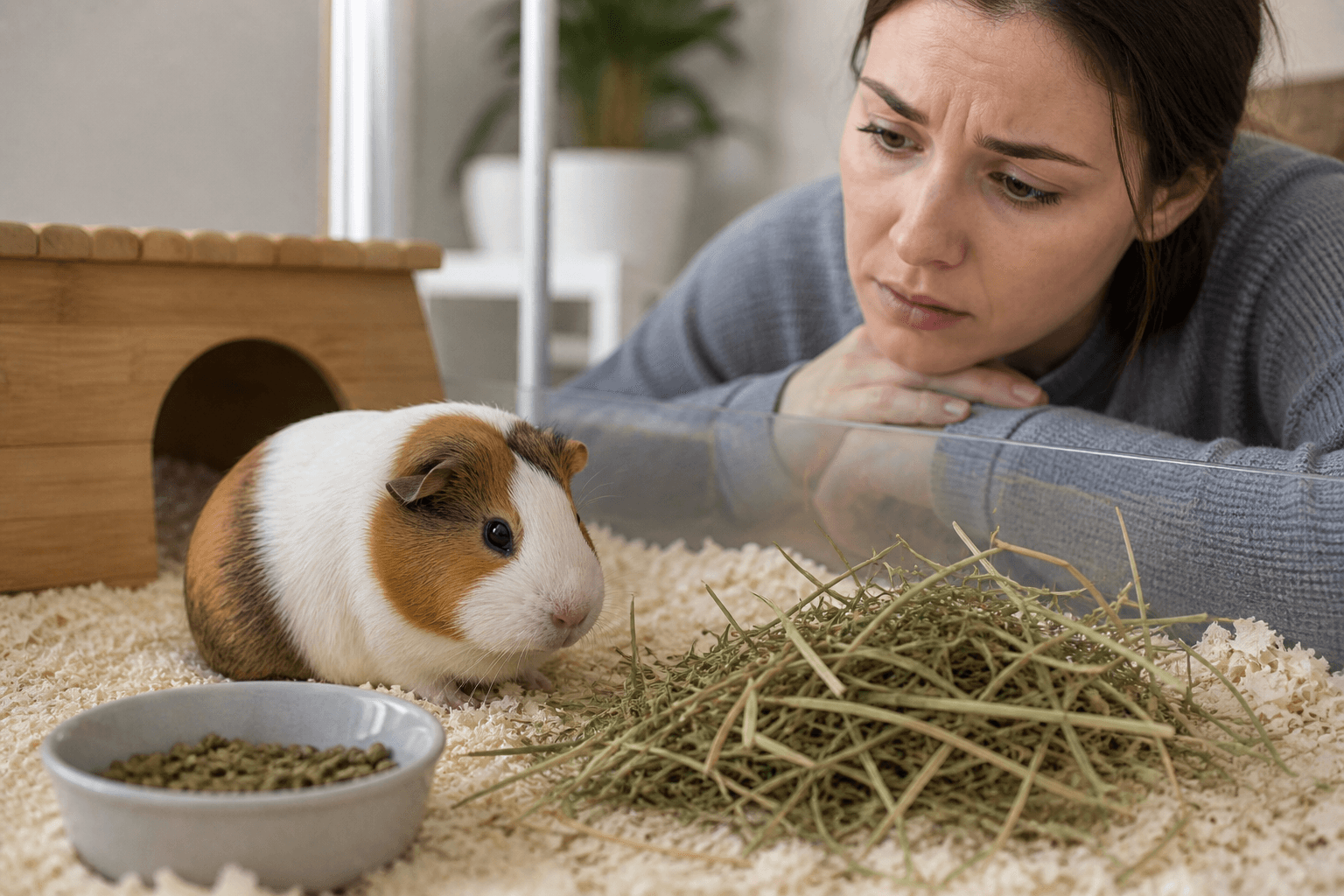
Quick Answer: A guinea pig not eating is always serious. Guinea pigs need constant fiber intake to keep the gut moving, and even a short period without food can lead to weakness, gut slowdown, dehydration, dental pain, and life-threatening decline. If your guinea pig stops eating hay, pellets, vegetables, or refuses favorite foods, treat it as urgent and contact a veterinarian experienced with small mammals.
Guinea pig not eating is one of the most urgent warning signs in small pet care. A guinea pig not eating should never be treated like a dog or cat skipping one meal. Guinea pigs are grazing animals, and their digestive system is designed to keep moving throughout the day. When a guinea pig not eating problem starts, the gut can slow down, pain can increase, gas can build up, and the pet can become weak very quickly. This is why appetite loss in guinea pigs is not a “wait and see for two days” situation.
I am Dr Zahid Afzal at General Veterinary Hospital Lahore, and this complete guide is written for guinea pig owners who want practical, medically responsible advice. In Pakistan, guinea pigs are becoming more popular as small pets, especially among families who want a gentle, quiet, and friendly animal for children. But many owners are not fully aware that guinea pigs are delicate herbivores with very specific diet, vitamin C, dental, housing, and emergency care needs.
At General Veterinary Hospital Lahore, small pets are often brought in late because owners did not realize how serious appetite loss can be. A guinea pig may first stop eating hay, then eat only soft vegetables, then sit quietly in a corner. Some owners think the pet is just bored with food. Others try changing vegetables or offering bread, biscuits, fruit, or random treats. Unfortunately, this delay can allow dental disease, gut stasis, respiratory infection, pain, or vitamin C deficiency to worsen.
A healthy guinea pig should be alert, interested in food, producing droppings, moving around, and eating hay throughout the day. If your guinea pig is sitting still, refusing hay, losing weight, drooling, passing fewer droppings, breathing noisily, or becoming weak, the problem needs quick attention. This guide explains the causes, warning signs, home checks, emergency supportive care, syringe feeding basics, diet correction, housing management, prevention, and when veterinary care is essential.
Why Appetite Loss Is So Dangerous in Guinea Pigs
Guinea pigs are hindgut fermenters. Their digestive tract depends on continuous fiber intake, especially from hay. When food intake drops, gut movement can slow. When gut movement slows, the guinea pig feels worse and eats even less. This creates a dangerous cycle.
The cycle often looks like this:
Pain, stress, dental disease, infection, or poor diet → reduced eating → less fiber entering the gut → gut slowdown → gas and discomfort → more appetite loss → weakness and dehydration.
This is why a guinea pig that refuses food is considered more urgent than many owners expect. If a guinea pig is not eating and not passing normal droppings, the situation becomes even more serious.
Normal Guinea Pig Eating Behavior
A healthy guinea pig spends much of the day eating, nibbling, exploring, and chewing hay. Hay is not just food. It is also essential for dental wear and gut movement. Guinea pig teeth grow continuously, so chewing hay helps wear them down naturally.
If your guinea pig suddenly becomes quiet, refuses hay, ignores favorite vegetables, or produces fewer droppings, treat it seriously.
Emergency Signs in a Guinea Pig Not Eating
Some cases need veterinary care immediately. Do not wait if your guinea pig shows any of the following:
- Not eating anything
- Not passing droppings or passing very few droppings
- Sitting hunched or fluffed up
- Weakness or inability to move normally
- Drooling or wet chin
- Difficulty chewing
- Weight loss
- Bloated or painful abdomen
- Fast, noisy, or labored breathing
- Nasal discharge or crusty eyes
- Severe diarrhea
- Head tilt or inability to balance
Common Causes of Guinea Pig Not Eating
Overgrown teeth, sharp points, jaw pain, drooling
Gut stasis, gas, poor fiber, sudden diet change
Vitamin C deficiency, weak joints, poor healing
Respiratory infection, pain, urinary disease, stress
1. Dental Disease
Dental disease is one of the most important reasons a guinea pig stops eating. Guinea pig teeth grow continuously. If the teeth do not wear properly, sharp edges, overgrowth, bridges, or jaw pain can develop. The guinea pig may still look interested in food but cannot chew comfortably.
Owners often say, “He wants to eat but drops the food,” or “She smells vegetables but does not chew.” This is a classic pattern of mouth pain. Some guinea pigs stop eating hay first because hay needs more chewing. Later, they may refuse pellets and vegetables too.
Signs of dental problems include:
- Drooling or wet chin
- Food falling from the mouth
- Chewing slowly
- Picking up food but dropping it
- Weight loss despite interest in food
- Bad smell from the mouth
- Swelling near the jaw
- Reduced hay eating
At General Veterinary Hospital Lahore, many guinea pigs with appetite loss are found to have dental pain. Owners may not see the back teeth at home, so the mouth can look normal from the outside. This is why dental examination by a veterinarian is important.
2. Gut Stasis or Gut Slowdown
Gut stasis means the digestive tract is not moving properly. It can happen because of pain, dental disease, low fiber intake, dehydration, stress, sudden diet change, infection, or another illness. Once the gut slows, the guinea pig becomes more uncomfortable and eats even less.
Common signs include:
- Reduced appetite
- Small, dry, or fewer droppings
- Hunched posture
- Bloated abdomen
- Quiet behavior
- Grinding teeth from pain
- Reduced movement
This is one of the reasons owners should monitor droppings daily. Droppings are like a daily health report. If food intake drops and droppings become fewer, smaller, or absent, the situation is urgent.
3. Vitamin C Deficiency
Guinea pigs cannot make their own vitamin C, so they must receive it from diet or appropriate supplementation. Vitamin C is essential for healthy skin, joints, gums, blood vessels, wound healing, and general strength. Deficiency can cause pain, weakness, dental problems, poor appetite, swollen joints, and difficulty moving.
Signs of vitamin C deficiency may include:
- Poor appetite
- Weakness
- Painful or swollen joints
- Reluctance to move
- Rough coat
- Bleeding gums
- Dental problems
- Slow healing
At General Veterinary Hospital Lahore, some guinea pigs are fed mostly carrots, lettuce, bread, grains, or random vegetables without a proper vitamin C plan. They may look normal at first, but over time they can become weak, painful, and less interested in food. Vitamin C deficiency is preventable with correct diet and guidance.
4. Respiratory Infection
Guinea pigs are sensitive to respiratory illness. A guinea pig with breathing discomfort may stop eating because breathing and chewing at the same time becomes difficult. Respiratory infections can worsen quickly, especially if the cage is damp, dusty, poorly ventilated, or exposed to cold drafts.
Signs include:
- Sneezing
- Noisy breathing
- Nasal discharge
- Crusty eyes
- Reduced appetite
- Weight loss
- Sitting quietly
- Labored breathing
Do not treat respiratory signs at home with random antibiotics. Some medicines are unsafe for guinea pigs. A veterinarian should choose treatment carefully.
5. Pain from Any Cause
Guinea pigs often hide pain. They may not cry like dogs or cats. Instead, they may stop eating, sit still, avoid movement, grind teeth, or become less interactive. Pain can come from dental disease, injury, arthritis, bladder stones, urinary infection, skin wounds, foot sores, abdominal gas, or reproductive disease.
A guinea pig that suddenly stops eating should always be considered painful until proven otherwise. Appetite loss is often one of the first signs owners notice.
6. Urinary Problems and Bladder Stones
Urinary tract disease can make guinea pigs stop eating because of pain. Bladder stones are especially important. A guinea pig with urinary pain may squeak while urinating, pass blood, strain, sit hunched, or become less active.
Watch for:
- Blood in urine
- Straining to urinate
- Crying or squeaking while urinating
- Wet bottom
- Reduced appetite
- Hunched posture
If urinary pain appears with appetite loss, veterinary care should not be delayed.
7. Poor Diet or Sudden Diet Change
Diet mistakes are extremely common in guinea pigs. A proper guinea pig diet should be based mainly on unlimited good-quality hay, small amounts of fortified pellets, fresh vitamin C-rich vegetables, and clean water. Treats should be limited.
Common feeding mistakes include:
- Too little hay
- Too many fruits
- Too many grains or seeds
- Feeding bread or biscuits
- Old pellets with reduced vitamin C
- Sudden vegetable changes
- No vitamin C plan
Sudden diet changes can upset the gut. If a guinea pig is introduced to too many new vegetables quickly, gas or diarrhea can occur. New foods should be introduced gradually.
8. Stress and Environmental Problems
Guinea pigs are prey animals. They are easily stressed by loud noises, rough handling, loneliness, predator smell, new cages, overcrowding, extreme heat, cold drafts, and sudden changes. Stress can reduce appetite and trigger gut slowdown.
At General Veterinary Hospital Lahore, owners sometimes bring guinea pigs after moving them to a new room, changing cage mates, or placing the cage near dogs, cats, loud children, or noisy household areas. The guinea pig may stop eating because it does not feel safe.
Stress signs include:
- Hiding constantly
- Freezing in one place
- Reduced eating
- Weight loss
- Teeth chattering
- Trying to escape handling
9. Heat Stress
Guinea pigs do not tolerate heat well. In Lahore summers, heat stress is a real risk. A hot room, direct sunlight, poor ventilation, or cage placement near windows can quickly make a guinea pig weak and unwilling to eat.
Signs of heat stress include:
- Lethargy
- Fast breathing
- Lying flat
- Drooling
- Weakness
- Not eating
Heat stress is an emergency. Move the guinea pig to a cooler area and seek veterinary advice. Do not shock the animal with ice-cold water.
10. Recent Surgery, Medication or Illness
After surgery or illness, guinea pigs may stop eating due to pain, stress, nausea, or medication effects. This is dangerous because appetite support is often needed quickly. A guinea pig recovering from any procedure should be monitored closely for food intake and droppings.
How to Check a Guinea Pig Not Eating at Home
Before or while arranging veterinary care, you can gather important information. Be gentle and avoid stressing the guinea pig further.
Weighing Your Guinea Pig
Guinea pigs should be weighed regularly using a digital kitchen scale. Weight loss may be the first sign of disease, even before appetite loss becomes obvious. A small drop can be important because guinea pigs are small animals.
A weekly weight record is helpful for healthy pets. A sick guinea pig should be weighed more often under veterinary guidance. If weight is dropping and appetite is poor, veterinary care is needed.
What to Do Immediately If Your Guinea Pig Stops Eating
If your guinea pig refuses food, take these steps while arranging veterinary advice:
- Offer fresh hay immediately
- Offer favorite safe greens such as bell pepper or coriander
- Check droppings
- Check water intake
- Keep the guinea pig warm but not hot
- Reduce stress and noise
- Do not force rough handling
- Contact a veterinarian
If the guinea pig is weak, bloated, not passing droppings, drooling, or breathing abnormally, do not rely on home care alone.
Syringe Feeding a Guinea Pig: When It Is Needed
Syringe feeding may be needed when a guinea pig is not eating enough on its own, but it should be done carefully and ideally under veterinary guidance. The goal is to provide fiber and calories while the real cause is diagnosed and treated.
Syringe feeding is not a cure. It is supportive care. If dental pain, infection, gut stasis, urinary disease, or another illness is present, feeding alone will not solve the problem.
What to Use for Syringe Feeding
The best option is a veterinary recovery food made for herbivores. If that is not immediately available, softened guinea pig pellets may be used temporarily by soaking them in warm water until they form a smooth mash. The mixture should be soft enough to pass through a syringe but not watery and nutritionally weak.
Do not syringe feed bread, milk, sugary foods, human baby food with unsafe ingredients, or oily mixtures. Guinea pigs are herbivores and need fiber-based support.
Basic Syringe Feeding Safety
- Use a small feeding syringe
- Feed slowly from the side of the mouth
- Allow time to chew and swallow
- Keep the guinea pig upright, not on its back
- Stop if the guinea pig struggles severely, coughs, or cannot swallow
- Clean the face after feeding
- Continue offering hay and fresh food
At General Veterinary Hospital Lahore, we show owners the correct method when syringe feeding is needed. Many owners are afraid to do it at first, but with calm handling and proper guidance, it can support recovery while treatment begins.
What Not to Do When a Guinea Pig Is Not Eating
- Do not wait two or three days
- Do not give random antibiotics
- Do not give dog or cat medicines
- Do not force fruit or sugary foods
- Do not give milk
- Do not ignore reduced droppings
- Do not assume the pet is just bored
- Do not separate bonded guinea pigs unnecessarily unless advised
Some antibiotics that are safe for dogs and cats can be dangerous for guinea pigs. Medication should be chosen carefully by a veterinarian.
Correct Guinea Pig Diet for Prevention
A strong diet is the best prevention against many appetite and gut problems. The daily diet should be built around hay, not pellets or treats.
1. Unlimited Hay
Good-quality grass hay should be available all the time. Timothy hay, orchard grass, or similar grass hays are commonly used in adult guinea pigs. Hay keeps the gut moving and helps wear the teeth.
2. Fortified Guinea Pig Pellets
Pellets should be made specifically for guinea pigs and should contain stabilized vitamin C. Pellets should be fresh because vitamin C breaks down over time. Old pellets may no longer provide enough vitamin C.
3. Fresh Vegetables
Fresh vegetables provide moisture, enrichment, and vitamin C. Bell pepper is commonly useful because it is vitamin C-rich and usually well accepted. Coriander, romaine-type leafy greens, and other safe vegetables can be used in rotation.
4. Vitamin C Support
Vitamin C may be supplied through diet or supplementation when needed. Supplementation should be discussed with a veterinarian, especially for sick, pregnant, young, or deficient guinea pigs.
5. Clean Water
Fresh water should always be available. Some guinea pigs prefer bowls, others use bottles. Both must be cleaned regularly.
Foods to Avoid
Some foods are unsafe or unsuitable for guinea pigs. Avoid:
- Chocolate
- Bread
- Biscuits
- Milk and dairy products
- Meat
- Onion and garlic
- Seeds and nut mixes
- Very sugary fruits in large amounts
- Rabbit pellets as the main diet
- Moldy vegetables or hay
Guinea pigs are not small versions of rabbits, cats, or hamsters. Their diet must be species-specific.
Housing Problems That Reduce Appetite
Housing affects appetite more than many owners realize. A guinea pig kept in a small, dirty, noisy, hot, or stressful cage may stop eating or gradually lose condition.
Good housing should include:
- Spacious enclosure
- Dry, clean bedding
- Hiding area
- Good ventilation
- No direct sunlight overheating
- No cold drafts
- Safe flooring
- Companionship if appropriate
Wire flooring should be avoided because it can injure feet. Dirty bedding can cause skin and respiratory problems. Damp bedding increases smell, bacteria, and stress.
Companionship and Appetite
Guinea pigs are social animals. A lonely guinea pig may become stressed and less active. However, pairing must be done carefully because fighting can also cause stress and injury. Compatible companionship can improve confidence, feeding behavior, and general welfare.
If one guinea pig in a bonded pair stops eating, the other may still appear normal. Do not assume the environment is fine just because the cage mate is eating. The sick guinea pig may have an individual medical problem.
How Veterinarians Diagnose a Guinea Pig Not Eating
Veterinary diagnosis begins with history and examination. The vet may ask about diet, hay intake, pellets, vegetables, vitamin C, droppings, urine, weight changes, cage setup, bedding, respiratory signs, and recent stress.
The examination may include:
- Weight check
- Mouth and dental assessment
- Abdominal palpation
- Hydration check
- Respiratory examination
- Skin and foot check
- Urine assessment if urinary signs are present
- X-rays if dental roots, gut gas, stones, or internal disease are suspected
In many guinea pigs, more than one problem is present. For example, dental pain may reduce hay intake, reduced hay may slow the gut, and gut pain may further reduce appetite. Treatment must address the whole chain.
How Treatment Works
Treatment depends on the cause. A guinea pig with dental disease needs a different plan from one with respiratory infection or vitamin C deficiency. Common treatment areas include:
Dental Treatment
Overgrown or abnormal teeth may need correction by an experienced veterinarian. Pain control and assisted feeding may be needed during recovery.
Gut Support
Gut stasis may require fluids, pain relief, assisted feeding, gut motility support, and treatment of the original cause.
Vitamin C Correction
Vitamin C deficiency requires proper supplementation and diet correction. Severe cases may need veterinary treatment.
Respiratory Treatment
Respiratory infections need careful antibiotic selection and supportive care. Do not use random medications.
Pain Control
Pain relief is often essential because a painful guinea pig will not eat properly. Only guinea pig-safe veterinary medication should be used.
Recovery Monitoring at Home
After veterinary care begins, home monitoring is extremely important. Owners should track appetite, droppings, weight, activity, and comfort.
Simple Guinea Pig Appetite Severity Chart
Daily Guinea Pig Care Checklist to Prevent Appetite Problems
- Provide unlimited fresh hay
- Give fresh water daily
- Use guinea pig-specific pellets
- Provide vitamin C-rich vegetables
- Remove spoiled vegetables quickly
- Check droppings every day
- Watch hay intake, not just pellet intake
- Clean wet bedding
- Check breathing and activity
- Weigh weekly
Common Owner Mistakes
- Thinking a guinea pig can safely skip meals like a dog
- Feeding too little hay
- Using rabbit pellets instead of guinea pig pellets
- Depending only on carrots or lettuce
- Ignoring vitamin C
- Waiting too long when droppings decrease
- Missing dental disease because front teeth look normal
- Using random antibiotics or home remedies
- Keeping the cage in heat, drafts, or noisy areas
- Not weighing the guinea pig regularly
Practical Lahore Home Example
A good home setup for a guinea pig in Lahore should include a spacious cage or pen in a cool, quiet, well-ventilated room. The cage should not be placed in direct sunlight, near kitchen smoke, beside loud speakers, or in an area where dogs and cats can scare the guinea pig. Hay should be available all the time. Water should be fresh. Bedding should stay dry. Vegetables should be clean and introduced gradually.
During summer, keep the room cool without direct AC drafts. During winter, avoid cold floor drafts. Guinea pigs need stable comfort, not sudden extremes. Many appetite problems start from stress, heat, poor diet, or dirty bedding before owners realize anything is wrong.
Frequently Asked Questions
How long can a guinea pig go without eating?
A guinea pig should not go long without food. Even several hours of not eating can become concerning, especially if droppings reduce. If your guinea pig is not eating, contact a veterinarian as soon as possible.
Why is my guinea pig not eating hay but eating vegetables?
This often suggests dental pain or early chewing discomfort. Hay requires more grinding than soft vegetables. A guinea pig refusing hay should be checked.
Can I syringe feed my guinea pig at home?
Syringe feeding may be needed, but it should be done carefully and ideally with veterinary guidance. It supports nutrition but does not replace diagnosis and treatment.
What does it mean if my guinea pig is not eating and not pooping?
This is urgent. It may suggest gut stasis or severe illness. Veterinary care should not be delayed.
Can vitamin C deficiency make a guinea pig stop eating?
Yes. Vitamin C deficiency can cause weakness, pain, dental problems, poor appetite, and serious illness. Guinea pigs need vitamin C from diet or appropriate supplementation.
Why is my guinea pig drooling and not eating?
Drooling with appetite loss strongly suggests dental or mouth pain and needs veterinary examination.
Should I give antibiotics if my guinea pig stops eating?
No. Some antibiotics are dangerous for guinea pigs. Medication should only be used under veterinary guidance.
Final Thoughts
Guinea pig not eating is one of the most important emergencies small pet owners must recognize early. A guinea pig not eating may have dental disease, gut stasis, vitamin C deficiency, respiratory infection, urinary pain, heat stress, poor diet, or another hidden illness. Because guinea pigs are prey animals, they often hide weakness until the problem is already serious.
At General Veterinary Hospital Lahore, we regularly remind owners that appetite, hay intake, droppings, and weight are the four daily health signals of a guinea pig. If any of these changes, take action early. Fresh hay, vitamin C, clean housing, good ventilation, safe vegetables, correct pellets, and regular monitoring can prevent many problems. But once a guinea pig stops eating, home care alone is not enough if signs are worsening.
If your guinea pig refuses hay, stops eating, passes fewer droppings, drools, loses weight, breathes abnormally, or sits weak and hunched, arrange veterinary care without delay. Early treatment can make the difference between recovery and a life-threatening emergency.
