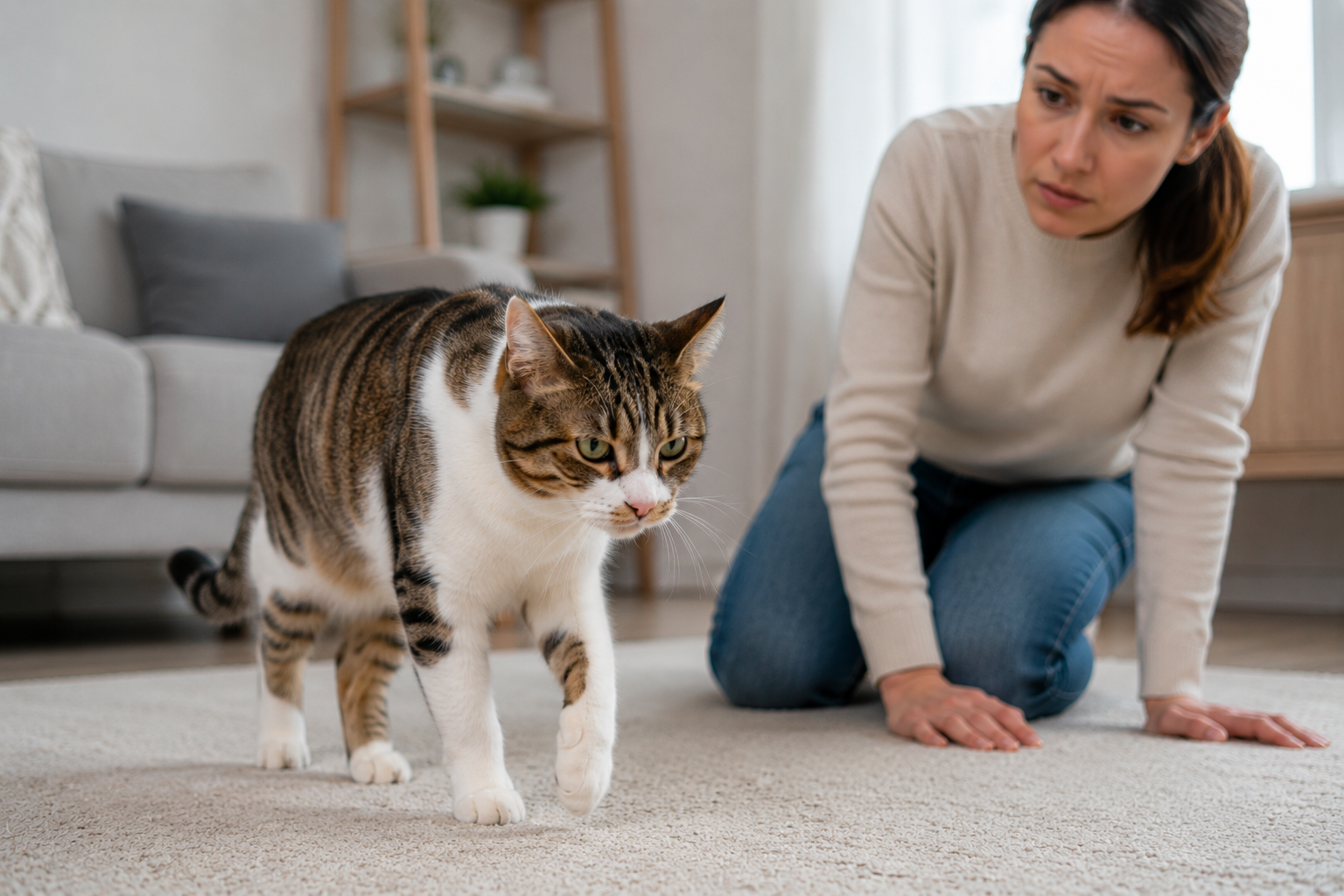
Quick Answer: Cat limping usually means pain, injury, swelling, paw discomfort, arthritis, a bite wound, nail injury, sprain, fracture, or joint problem. A mild limp after a small jump may improve with rest, but sudden limping, not putting weight on the leg, swelling, bleeding, hiding, fever, loss of appetite, or limping after a fall needs veterinary attention. Cats hide pain very well, so even a quiet limp should not be ignored.
Cat limping is one of the most common signs that something is painful in the leg, paw, nail, joint, bone, muscle, or spine. A cat limping may still walk around, eat a little, or hide quietly, but that does not mean the problem is minor. Cats are naturally skilled at hiding pain, so when a cat limping problem becomes visible, the discomfort may already be significant. Limping can happen because of a simple paw irritation, but it can also be caused by a bite wound, abscess, fracture, dislocation, arthritis, ligament injury, nerve problem, or serious trauma.
At General Veterinary Hospital Lahore, cat owners often say, “Doctor, meri cat chal tou rahi hai lekin one leg properly use nahi kar rahi.” Sometimes the cause is a small thorn, overgrown nail, or mild soft-tissue injury. But we also see cats with hidden bite wounds, painful abscesses, fractures after falls, and older cats with arthritis that owners mistook for laziness. This is why cat limping should always be observed carefully.
The most important question is not only “Which leg is limping?” but also “Can the cat put weight on it?” A cat that is slightly limping but still walking may need prompt care if it does not improve. A cat that cannot bear weight, cries, hides, has swelling, bleeding, or holds the leg at an odd angle should be treated as urgent.
This guide explains the common causes of cat limping, how to check safely at home, when it is an emergency, what not to do, and how veterinarians diagnose and treat limping in cats.
Is Cat Limping Always Serious?
Cat limping is always a sign of discomfort, but the seriousness depends on the cause. A tiny object stuck in the paw may be easy to treat. A mild strain may improve with rest. But a fracture, abscess, infected wound, torn nail, dislocation, or nerve injury can worsen if ignored.
Cats rarely exaggerate pain. If a cat is limping, hiding, refusing food, or avoiding movement, the cat is usually uncomfortable. Even if the cat is not crying, pain may still be present.
Common Causes of Cat Limping
Thorn, glass, nail injury, pad wound
Fall, jump, sprain, fracture, dislocation
Bite wound, abscess, swelling, fever
Arthritis, joint disease, old injury, nerve pain
1. Paw Injury or Something Stuck in the Paw
A small thorn, splinter, glass piece, sharp seed, nail fragment, or hard object stuck between the toes can make a cat limp suddenly. Indoor cats may step on broken plastic, pins, rough flooring, or small household objects. Outdoor cats may step on thorns, sharp stones, wires, or glass.
Signs of a paw problem include:
- Licking one paw repeatedly
- Holding the paw up
- Limping suddenly
- Swelling between toes
- Bleeding from paw pad
- Refusing to let the paw be touched
If the object is very superficial and easily visible, it may sometimes be removed gently. But if it is deep, painful, bleeding, or the cat resists, do not force it. Forcing the paw can worsen injury and make the cat aggressive from pain.
2. Torn, Broken or Overgrown Nail
Nail problems are a common but often missed cause of cat limping. A torn nail can be very painful and may bleed. An overgrown nail can curl into the paw pad, especially in senior cats, inactive cats, or cats who do not scratch enough.
At General Veterinary Hospital Lahore, we sometimes see older indoor cats limping because a nail has grown into the pad. The owner may not notice because the cat hides the paw and still walks slowly. Regular nail checks are important, especially in senior cats.
3. Sprain or Soft-Tissue Injury
Cats jump, climb, run, twist, and land quickly. A wrong landing from a bed, cupboard, wall, balcony, or sofa can strain muscles, tendons, or ligaments. A mild sprain may cause limping without obvious swelling.
However, it is not always possible to tell a sprain from a fracture at home. If the limp is severe, sudden, or the cat cannot bear weight, veterinary examination is safer.
4. Fracture or Dislocation
A fracture is a broken bone. A dislocation means a joint has moved out of normal position. These can happen after falls, road accidents, being stepped on, fights, door injuries, or high jumps.
Warning signs include:
- Leg hanging at an unusual angle
- Severe pain
- Not putting weight on the leg
- Swelling
- Crying or growling when touched
- Sudden hiding after trauma
Do not try to straighten the leg at home. Keep the cat calm and transport carefully.
5. Bite Wound or Abscess
Cat fights are a very common cause of limping, especially in cats that go outdoors or live with other cats. A bite wound may look tiny from outside, but bacteria can be pushed deep under the skin. After a day or two, swelling, pain, fever, and abscess formation may appear.
Many abscess cases at General Veterinary Hospital Lahore come with the complaint of sudden limping. The owner may not see any wound at first. On examination, there may be a small puncture, swelling, heat, pain, or pus hidden under fur.
Signs of bite wound or abscess include:
- Sudden limping after outdoor activity
- Swelling on leg or body
- Pain when touched
- Fever or dullness
- Loss of appetite
- Bad-smelling discharge if abscess opens
If your cat is also not eating, the guide on why cats stop eating explains why appetite loss can be a serious warning sign in cats.
6. Arthritis in Older Cats
Arthritis is very common in senior cats but often missed. Unlike dogs, cats may not show obvious limping every day. Instead, they may jump less, sleep more, avoid stairs, stop grooming properly, or become irritable when touched.
Arthritis-related limping may be worse after rest or cold weather. The cat may walk stiffly, hesitate before jumping, or stop using high places. Some owners think the cat is simply “getting old,” but arthritis is painful and can be managed.
General pain signs can be subtle in cats. The article on cats hiding pain can help owners notice early behavior changes before limping becomes severe.
7. Hip, Spine or Nerve Pain
Sometimes the problem is not in the paw or leg itself. Pain from the hip, spine, pelvis, or nerves can change the way a cat walks. A cat may drag a leg, walk weakly, stumble, or avoid jumping.
Possible causes include trauma, disc disease, nerve injury, pelvic injury, old fractures, or neurological disease. These signs need veterinary assessment, especially if the cat is weak, uncoordinated, or dragging the leg.
8. Insect Bite, Sting or Swelling
A bee sting, insect bite, or local allergic swelling can cause sudden paw discomfort. The paw may become swollen, tender, or itchy. The cat may lick the area repeatedly and limp.
Most mild cases are localized, but swelling of the face, breathing difficulty, vomiting, collapse, or severe weakness can suggest a more serious allergic reaction and needs urgent care.
9. Burns or Hot Surface Injury
Cats can burn paw pads by stepping on hot surfaces, stoves, heaters, chemicals, or very hot outdoor flooring. In Lahore summers, outdoor surfaces can become extremely hot. Burns may cause limping, licking, redness, peeling, or wounds on the pads.
Never apply harsh chemicals, toothpaste, oils, or random creams to burns. Paw burns should be checked because infection and pain can worsen quickly.
10. Cancer or Bone Disease
Less commonly, persistent limping may be due to bone disease, tumors, or chronic joint problems. This is more likely when limping continues, worsens, or appears with swelling, weight loss, reduced appetite, or behavior change.
Weight change in cats should also be taken seriously. The guide on cat losing weight explains why gradual weight loss can indicate hidden disease.
Front Leg vs Back Leg Limping
The affected leg can give clues, but it does not confirm the diagnosis by itself.
When Cat Limping Is an Emergency
Seek urgent veterinary care if your cat has:
- Not putting weight on the leg
- Leg at a strange angle
- Severe swelling
- Bleeding or open wound
- Known fall or road accident
- Sudden dragging of leg
- Severe pain when touched
- Limping with fever, hiding, or not eating
- Weakness or collapse
- Cold back legs or sudden severe back-leg pain
How to Safely Check a Limping Cat at Home
Only check your cat if it is calm and not aggressive from pain. A painful cat may bite or scratch even if it is normally gentle.
You can gently observe:
- Which leg is affected
- Whether the cat can put weight on it
- Whether there is swelling
- Whether paw pads are cut or burned
- Whether a nail is broken or overgrown
- Whether the cat is licking one area
- Whether appetite and energy are normal
Do not squeeze the leg, rotate joints, pull the paw, or force the cat to walk. These actions can worsen injury.
What Not to Do
- Do not give human painkillers
- Do not force the cat to walk
- Do not massage a swollen or fractured leg
- Do not apply random creams to open wounds
- Do not try to straighten a twisted limb
- Do not ignore limping that lasts more than 24 hours
- Do not assume the cat is fine because it is not crying
Human pain medicines can be extremely dangerous for cats. Pain relief should only be given under veterinary guidance. Cats process many medicines differently from humans and dogs, so even a small wrong dose can be harmful.
Safe Home Care for Mild Limping
If the limp is very mild, there is no swelling, no wound, no fall history, and the cat is eating and acting normally, you can limit activity while arranging observation. Keep the cat indoors, reduce jumping, provide easy access to food, water, and litter box, and monitor closely.
Use a low-entry litter box if the cat is painful. Keep food and water nearby so the cat does not need to climb stairs or jump. Soft bedding can help the cat rest comfortably.
If the limp does not improve, worsens, or lasts more than a day, arrange a veterinary examination.
How to Transport a Limping Cat
Transport should be calm and careful. A sore cat may struggle if forced through a narrow carrier door. A carrier with a removable top is ideal because the cat can be gently lowered in.
- Use a secure carrier
- Place a soft towel inside
- Support the body gently
- Avoid bending the injured leg
- Keep the car quiet and calm
- Do not let the cat roam freely in the car
Handling matters because rough movement can worsen pain and injury.
How Veterinarians Diagnose Cat Limping
Diagnosis begins with history and examination. The veterinarian may ask when the limp started, whether there was a fall, whether the cat goes outdoors, whether there was a fight, and whether the cat is eating normally.
Depending on the case, diagnosis may include:
- Paw and nail examination
- Checking for wounds or abscesses
- Joint movement assessment
- Temperature check if infection is suspected
- X-rays for fracture, dislocation, arthritis, or bone disease
- Blood work if infection or systemic illness is suspected
- Neurological assessment if weakness or dragging is present
At General Veterinary Hospital Lahore, we often find that the cause is hidden under fur or between toes. This is why a limp should not be judged only by looking from a distance.
How Cat Limping Is Treated
Treatment depends on the cause.
Paw object or small wound
The object may need safe removal, wound cleaning, pain relief, and infection prevention.
Torn nail
A broken or infected nail may need trimming, cleaning, pain relief, and sometimes antibiotics if infection is present.
Sprain or soft-tissue injury
Rest, pain management, and controlled activity may be needed. Severe cases require further diagnosis.
Fracture or dislocation
X-rays are usually needed. Treatment may involve splinting, surgery, strict rest, or referral depending on the injury.
Abscess or bite wound
Abscesses may need drainage, wound care, antibiotics, pain relief, and follow-up.
Arthritis
Arthritis is managed with pain control, weight management, joint support, environmental changes, and long-term care planning.
Simple Cat Limping Severity Chart
Preventing Limping and Leg Injuries in Cats
- Keep windows and balconies secure
- Trim nails regularly
- Check senior cats for overgrown nails
- Keep sharp objects off the floor
- Use safe scratching posts
- Reduce fights between cats
- Keep arthritic cats from jumping too high
- Provide soft bedding and low-entry litter boxes for older cats
Prevention is especially important for indoor cats in apartments, outdoor cats that fight, and senior cats with stiffness or nail overgrowth.
Frequently Asked Questions
Why is my cat limping but not crying?
Cats often hide pain and may not cry even when they are uncomfortable. Limping itself is a pain sign and should be monitored seriously.
Why is my cat limping suddenly?
Sudden limping may be caused by a paw injury, torn nail, fall, sprain, bite wound, abscess, fracture, or dislocation.
Can a cat limp heal on its own?
Very mild soft-tissue injuries may improve with rest, but limping that persists, worsens, or comes with swelling, wound, or loss of appetite needs veterinary care.
Should I give pain medicine to my limping cat?
No human pain medicine should be given. Many human painkillers are toxic to cats. Only use medication prescribed by a veterinarian.
When should I take my limping cat to the vet?
Seek care urgently if your cat cannot bear weight, has swelling, bleeding, a strange leg angle, severe pain, fever, hiding, loss of appetite, or limping after a fall or accident.
Final Thoughts
Cat limping is never something owners should dismiss as simple laziness. A cat limping may have a minor paw irritation, but the cause may also be a bite wound, abscess, torn nail, sprain, fracture, arthritis, nerve pain, or trauma. Because cats hide pain, even a quiet limp can be an important warning sign.
At General Veterinary Hospital Lahore, early examination often makes treatment easier. A small infected bite can be treated before it becomes a large abscess. A nail problem can be corrected before it becomes deeply painful. A fracture can be identified before repeated movement worsens injury. Owners can help by recording the walking pattern, checking the paw gently, and avoiding unsafe medicines.
If your cat is mildly limping but otherwise normal, monitor closely and restrict jumping. If the limp is sudden, severe, painful, swollen, associated with a wound, or lasts more than 24 hours, arrange a veterinary check. If your cat cannot put weight on the leg, has a strange limb angle, is weak, hiding, or not eating, seek urgent veterinary care.