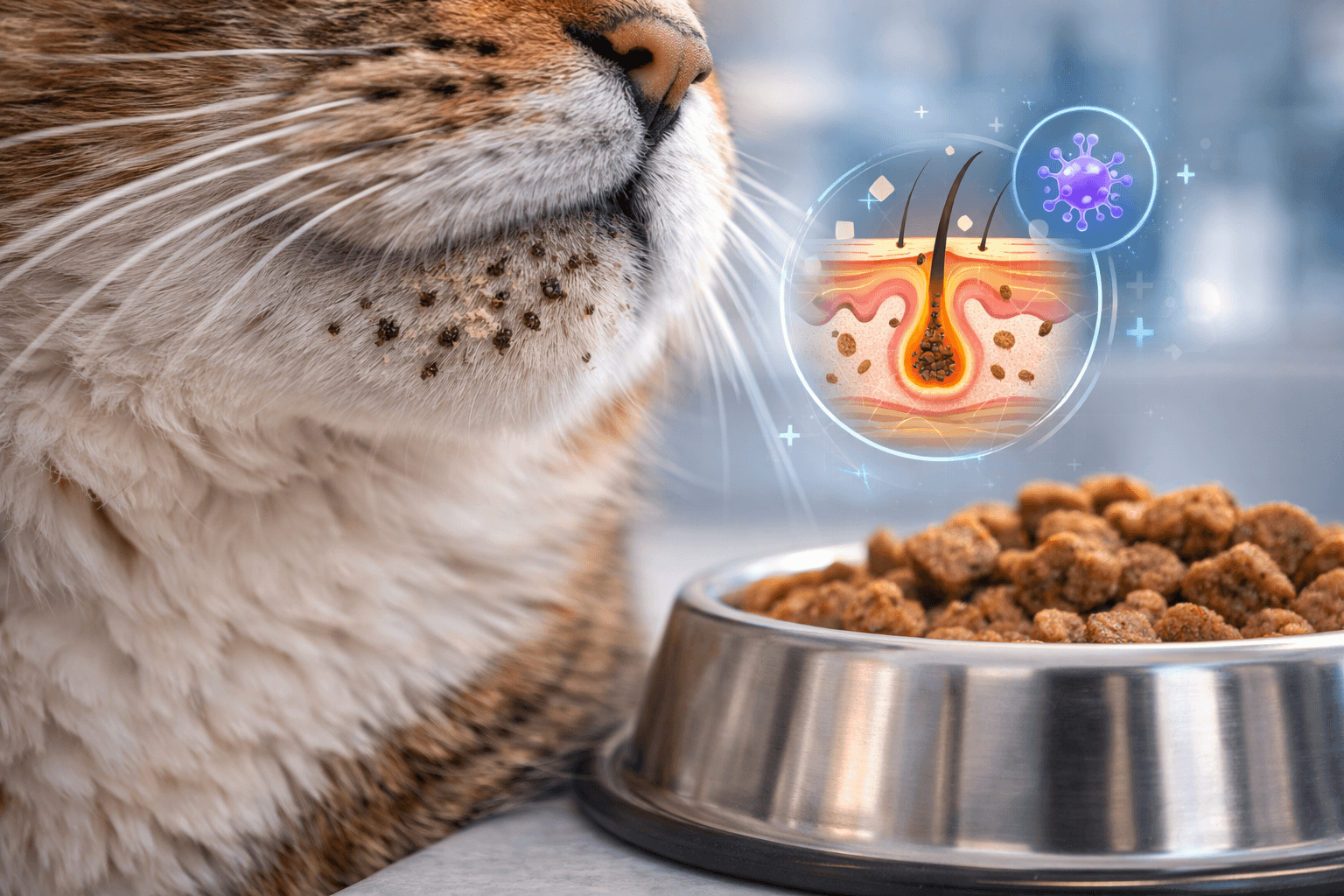
Cat acne usually starts as tiny black dots on the chin that look like dirt—then owners realize the “dirt” won’t wipe off. Cat acne is common, often mild, and very treatable, but cat acne can become painful if it turns into an inflamed rash, pimples, or a swollen infected chin. The key with cat acne is doing simple, safe care early (and avoiding harsh home remedies that burn the skin). This guide explains what cat acne looks like, what causes it, how to treat it at home, and when you should see a vet.
- What cat acne is (and what it is not)
- How to recognize blackheads vs infection
- Safe home care steps that work
- What to avoid (common “remedies” that make it worse)
- When it’s urgent and needs veterinary treatment
- A real anonymized case from General Veterinary Hospital Lahore
Related internal guides you may also use:
- Cat Ear Infection / Ear Mites Home Care Guide
- Complete Cat Nutrition Guide 2025
- Cat Poisoning Emergency Guide
Contents
- What is cat acne?
- What it looks like (blackheads vs pimples)
- Causes and risk factors
- How to confirm cat acne at home
- Mild acne vs infected chin acne
1) What is cat acne?
Cat acne is a skin condition where hair follicles on the chin (and sometimes lower lip) become plugged with keratin and oil. Those plugs form comedones—basically feline “blackheads.” In many cats it stays mild: small black specks, minimal redness, and no discomfort. In other cats, the follicles become inflamed and infected, leading to pimples, scabs, swelling, and pain.
Cat acne is not a reflection of poor hygiene or “dirty cats.” It can happen in indoor-only cats and well-groomed cats. The chin is a high-contact zone: food bowls, grooming, rubbing on surfaces, and moisture all play a role.
2) What it looks like (blackheads vs pimples)
Owners describe cat acne in a few classic ways:
- “Black pepper” on the chin
- Black crusts near the lower lip
- Small bumps that feel gritty
- Redness and scabs on the chin
- Swollen chin that looks puffy
| What you see | Most likely meaning | What to do |
|---|---|---|
| Tiny black dots, no swelling | Mild acne / blackheads | Start gentle cleaning + bowl changes |
| Red bumps, scabs, mild itch | Inflammation; early infection possible | Warm compress + antiseptic approach; watch closely |
| Swollen chin, pus, pain, bleeding | Infected acne / folliculitis / abscess risk | Vet visit—may need prescription medication |
3) Causes and risk factors
There is no single cause for cat acne. Think of it as “follicles + oil + friction + microbes + moisture.” The most common contributors are:
- Plastic bowls: scratches in plastic can hold bacteria and oils. (This is one of the most practical changes you can make.)
- Moisture left on the chin: wet food residue + saliva can irritate skin and promote bacterial overgrowth.
- Overgrooming or rubbing: friction can inflame follicles.
- Stress and immune factors: some cats flare during stressful periods.
- Allergies or skin sensitivity: some cats have “reactive skin” and flare more easily.
- Underlying infections: bacteria or yeast can worsen inflammation.
4) How to confirm cat acne at home (simple check)
You can do a quick, gentle check without irritating the skin:
- Good lighting: use a phone flashlight and look closely at the chin and lower lip.
- Feel the texture: blackheads often feel gritty or rough under your finger.
- Try a damp cotton pad: true blackheads usually do not wipe away like dirt.
- Look for redness or swelling: these suggest inflammation.
Do not squeeze the blackheads like human acne. Cats have delicate skin; squeezing can tear follicles and push infection deeper.
5) Mild acne vs infected chin acne (how to judge)
This is the most important decision point. Mild acne is mostly a hygiene/maintenance problem. Infected acne becomes a medical problem.
- Chin swelling that looks puffy or “thick”
- Pus, bleeding, or wet crusts
- Obvious pain when you touch the chin
- Rapid worsening over 24–72 hours
- Your cat stops eating or becomes withdrawn
If your cat becomes unwell after a home product or chemical exposure, treat that as a possible poisoning concern and use: Cat Poisoning Emergency Guide.
6) Safe home care plan for cat acne (step-by-step)
Most mild cat acne improves with three things: better bowls, gentle cleaning, and keeping the chin dry. Here’s a simple plan that is safe for most cats.
Step A: Change bowls (the easiest high-impact fix)
- Switch to stainless steel or ceramic bowls.
- Wash bowls daily with hot water and dish soap; rinse thoroughly and dry.
- If you use a water fountain, clean it on schedule and scrub all parts that hold slime/biofilm.
Step B: Clean the chin gently (don’t scrub)
The goal is to reduce oil, debris, and microbes without damaging skin.
- Use a warm damp cotton pad to soften the area first.
- Then wipe gently—no harsh rubbing.
- After wiping, pat dry so moisture doesn’t sit on the chin.
Step C: Warm compress for inflamed bumps
- Use a warm (not hot) compress for 3–5 minutes once or twice daily.
- This can help reduce swelling and loosen debris.
| Situation | Home care focus | Expected improvement |
|---|---|---|
| Blackheads only, no redness | Bowl change + gentle wipe + keep dry | Often improves in 1–3 weeks |
| Red bumps and mild scabs | Warm compress + gentle cleaning + monitor | Should look calmer in 3–7 days |
| Swollen, painful, oozing chin | Do not keep experimenting | Vet care needed (may need prescription meds) |
7) What to avoid (dangerous myths & irritating “remedies”)
Many cats get worse because well-meaning owners use products designed for humans or household cleaning. Avoid these:
- Undiluted Dettol, bleach, alcohol, hydrogen peroxide: can burn skin and delay healing.
- Essential oils (tea tree, eucalyptus, etc.): can be toxic to cats and irritating to skin.
- Human acne creams: many contain ingredients unsafe if licked.
- Scrubbing with rough brushes: causes micro-injury and deeper infection.
- Squeezing blackheads: can rupture follicles and create abscesses.
If your cat is exposed to a harsh chemical or starts drooling, vomiting, acting confused, or breathing oddly afterward, treat it as an emergency and use: Cat Poisoning Emergency Guide.
8) When to see the vet (practical thresholds)
See a vet if:
- Swelling is increasing or the chin looks “puffy”
- There is pus, bleeding, or a bad smell
- Your cat seems painful, hides, or resists eating
- No improvement after 10–14 days of correct home care
- Acne keeps returning despite bowl changes and hygiene
9) What the vet may do (so you know what to expect)
Veterinary treatment depends on severity. A vet may examine the chin closely, check for parasites or ringworm if needed, and look for secondary infection. Treatments may include:
- Topical antiseptic/antibacterial products chosen for cats
- Prescription topical antibiotics for infected follicles
- Oral antibiotics if infection is deeper or spreading
- Anti-inflammatory medication if swelling and discomfort are significant
- E-collar if scratching and rubbing are worsening the area
10) Prevention plan (stop cat acne from coming back)
Cat acne can be a one-time event, but some cats flare repeatedly. Prevention is mostly about reducing oil + bacteria buildup on the chin and keeping feeding equipment clean.
Daily habits that reduce flare-ups
- Use stainless steel/ceramic bowls and wash daily.
- Wipe your cat’s chin gently after messy wet meals (then pat dry).
- Keep water fountains clean and free of slime/biofilm.
- Avoid oily residues around the mouth by keeping bowls shallow and easy to clean.
Nutrition and skin resilience
Diet does not “cause” acne by itself, but consistent nutrition supports skin health and reduces inflammation in sensitive cats. If you want a practical feeding framework (portioning, diet types, routine), use: Complete Cat Nutrition Guide 2025.
11) Why cat acne keeps returning (common reasons)
- Plastic bowls or old scratched bowls still in use
- Multi-cat homes where bowls are shared and not cleaned daily
- Skin sensitivity or allergies (chin reacts easily)
- Chronic moisture from drooling, messy eating, or chin folds
- Secondary infection not fully resolved (needs vet-guided treatment)
12) When chin acne might be something else
Not every “black chin” is acne. A vet may consider other possibilities if the pattern is unusual or not improving:
- Ringworm (especially if patchy hair loss appears)
- Mites or parasites (itching, crusts in other areas)
- Allergic dermatitis (widespread itch, ear issues, recurrent skin flares)
- Abscess from a bite or scratch (rapid swelling, pain, pus)
If your cat also has ear itch or head shaking, skin issues may overlap—see: Cat Ear Infection / Ear Mites Home Care Guide.
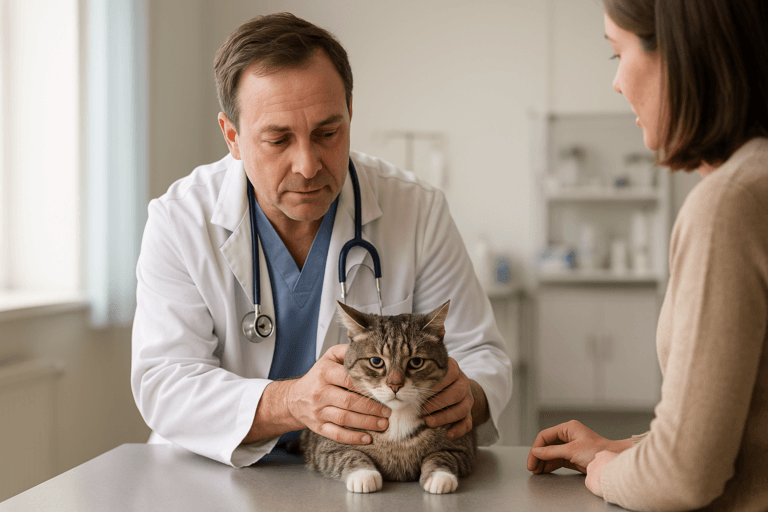
13) Real case from General Veterinary Hospital Lahore (anonymized)
A young adult indoor cat was brought to our clinic because the owner noticed “black dirt” on the chin that kept coming back. They had tried wiping it with strong antiseptic at home, but within a few days the chin became red and scabby, and the cat started rubbing its face on furniture. On exam, the chin had classic comedones (blackheads) with early folliculitis—small inflamed bumps—and mild swelling from irritation.
We focused on two things: removing the trigger and calming the skin. The household was using a scratched plastic bowl that had been in use for a long time. We advised switching to stainless steel, washing bowls daily, and using a gentle vet-appropriate cleansing routine rather than harsh chemicals. Because the chin was inflamed, we also used a targeted treatment plan to reduce bacterial overgrowth and inflammation. Within a week the redness reduced significantly, and by a few weeks the blackheads were minimal. The owner’s biggest “aha” moment was realizing that strong cleaners were not “stronger medicine”—they were causing chemical irritation and making the acne worse.
14) FAQs about cat acne
Are cat chin blackheads always acne?
Most commonly, yes—but parasites, ringworm, and irritation can look similar. If it spreads, becomes painful, or doesn’t improve with correct bowl hygiene and gentle care, see a vet.
Can I pop or squeeze the blackheads?
No. Squeezing can tear follicles, push bacteria deeper, and create abscesses. Gentle cleaning is safer.
Does cat acne mean my cat is dirty?
No. Many clean, indoor cats get acne. It’s usually about follicles and contact factors (bowls, moisture, skin sensitivity), not “unclean cats.”
How long does it take to improve?
Mild acne often looks better within 1–3 weeks after bowl changes and gentle care. Infection should improve faster once proper treatment is started.
When should I worry about poisoning from home products?
If you applied something and your cat starts drooling, vomiting, acting weak, or breathing oddly, treat it as an emergency: Cat Poisoning Emergency Guide.
15) Final note
Helpful internal guides: