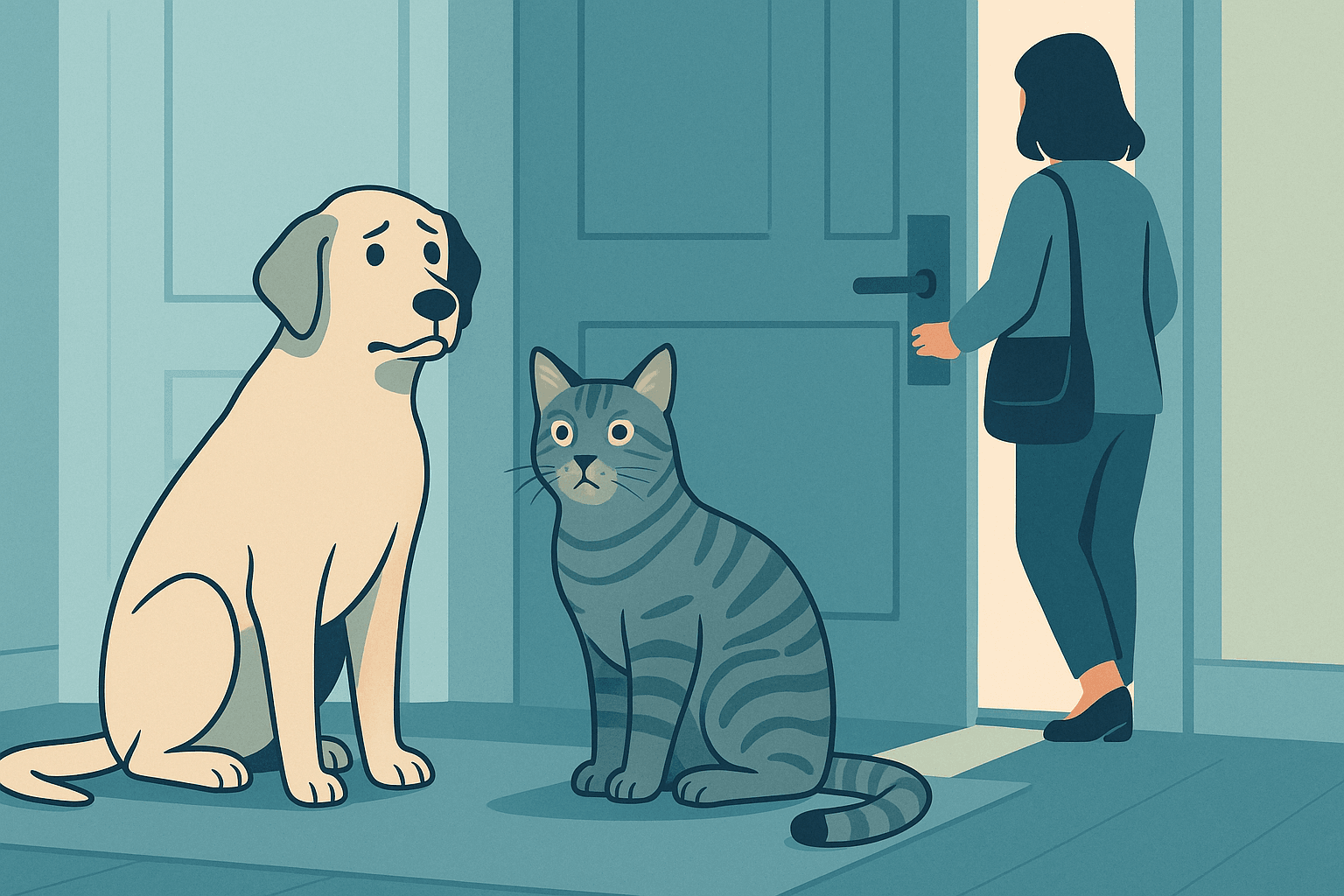
Separation anxiety in dogs and cats is one of the most difficult problems for pet owners to live with. Your pet looks normal when you are at home, but the moment you leave, they panic – barking, crying, scratching doors, breaking things or soiling the house. Many families feel guilty and frustrated, and some even think about giving their pet away.
This step-by-step guide is written by a veterinarian to help you understand what separation anxiety in dogs and cats really is, how to recognise the signs, and how to start a safe home training plan. You can use this article together with your main behaviour pillar page, Pet Behavior Problems & Training Guide | Vet-Approved 2025, for a complete behaviour toolkit.
Remember: anxious pets are not “naughty”. Separation anxiety in dogs and cats is an emotional disorder and needs calm, structured treatment – not punishment.
Contents
- What Is Separation Anxiety in Dogs & Cats?
- Signs of Separation Anxiety in Dogs
- Signs of Separation Anxiety in Cats
- Why Separation Anxiety Develops
- How Vets Diagnose Separation Anxiety
- Home Calming Plan: First 4 Weeks
- Training Steps for Dogs
- Training Steps for Cats
- Setting Up a Calming Environment
- When Medications Are Needed
- Common Mistakes That Make Anxiety Worse
- Preventing Separation Anxiety in Puppies & Kittens
- FAQs About Separation Anxiety in Dogs & Cats
- Medical & Legal Disclaimer
1. What Is Separation Anxiety in Dogs & Cats?
Separation anxiety in dogs and cats means intense distress when they are separated from the person they are strongly attached to. Their brain does not see “alone time” as normal; it feels like danger or abandonment. That is why they show panic behaviours that disappear when the owner returns.
Key features of separation anxiety:
- Behaviour starts shortly before, or within 10–20 minutes after, the owner leaves.
- Behaviour is much milder or absent when the owner is home.
- Damage or house soiling happens only when the pet is alone or separated.
- The pet often follows the owner from room to room when they are home.
Separation anxiety in dogs and cats is different from boredom, lack of exercise or simple bad manners. Those problems respond quickly to more walks and training. True separation anxiety usually needs a full plan: medical check, behaviour program and sometimes medication.
2. Signs of Separation Anxiety in Dogs
Dogs with separation anxiety often show a “storm” of signs together. Not every dog shows all of them, but the pattern is usually clear once you watch closely or record video.
Common signs in dogs
- Vocalisation: barking, whining or howling that continues for minutes or hours after you leave.
- Destruction: chewing doors, frames, blinds, furniture, cushions or crate bars.
- House soiling: urine or faeces indoors, even in previously house-trained dogs.
- Escape attempts: trying to dig under doors, jump through windows or break crates.
- Physical stress signs: panting, drooling, pacing, trembling, refusal to eat treats.
- Clingy behaviour when you are home: “Velcro dog” that cannot relax away from you.
Some owners only discover separation anxiety in dogs after setting up a simple camera; the dog may appear calm when they leave but starts panicking a few minutes later.
3. Signs of Separation Anxiety in Cats
Separation anxiety in cats is more subtle but just as real. Cats may not destroy furniture like dogs, but they show their stress in other ways.
Common signs in cats
- Vocalisation: loud meowing, crying or yowling when you leave or return.
- Inappropriate urination: peeing on the owner’s bed, clothes or suitcase.
- Destructive behaviour: scratching doors, shredding curtains, knocking objects down.
- Over-grooming: licking the belly, legs or tail until fur becomes thin or bald.
- Changes in appetite: not eating alone, or overeating due to stress.
- Clinginess: following the owner, sleeping directly on them, reacting strongly to doors closing.
Because cats hide pain and illness very well, any new behaviour change should be checked by a vet. For example, urinary disease, vomiting or weight loss may need tests similar to those you describe in your article on home treatment for cat vomiting.
4. Why Separation Anxiety Develops
The exact cause of separation anxiety in dogs and cats is different for every animal. Normally there is a mix of genetics, early experiences and life events.
Risk factors
- Early separation or poor socialisation: puppies or kittens sold too young, or kept isolated.
- Rescue background: shelter pets and street rescues have often lost homes before.
- Big changes in routine: owner moving house, changing job hours, divorce, new baby.
- Traumatic events when alone: thunderstorm, fireworks, burglary, sudden illness.
- Genetic sensitivity: some breeds and lines are simply more anxious by nature.
Sometimes separation anxiety in dogs and cats appears after a medical illness or painful episode. That is why a full health check is step one of every behaviour plan.
5. How Vets Diagnose Separation Anxiety
A proper diagnosis matters because separation anxiety in dogs and cats can look similar to other issues, such as boredom, incomplete toilet training or certain neurological conditions.
What your vet will do
- Take a detailed history: age, adoption story, daily routine, when behaviour started.
- Ask you to record videos of your pet for the first 30–60 minutes after you leave.
- Perform a full physical exam, including teeth, joints, skin and ears.
- Run tests if needed: bloodwork, urine tests, imaging or parasite checks.
After this, your vet can confirm separation anxiety in dogs and cats, rule out medical disease and suggest a tailored plan. In complex cases, they may refer you to a certified behaviourist or offer an online vet consultation follow-up.
6. Home Calming Plan: First 4 Weeks
This 4-week starter plan is designed for mild to moderate separation anxiety in dogs and cats. Severe cases, or any pet that hurts itself, should be managed closely with a vet from the beginning.
Week 1 – Health, routine and observation
- Complete a vet check and treat pain, skin problems or parasites (see your parasite control guide).
- Fix a predictable schedule for feeding, walks, play and sleep.
- Start a “calm diary”: record when anxiety appears and what triggers it.
- Set up a simple camera or phone to record your pet when alone.
Week 2 – Short alone-time training
- Choose a safe “relax zone” – crate, room, or cat tree area.
- Give a special chew or food puzzle there while you sit nearby.
- Close the door or crate for just 5–20 seconds, then open before panic starts.
- Repeat 5–10 times a day in very short sessions.
Week 3 – Leaving cues & micro-departures
- Practice “fake departures”: pick up keys, put on shoes, then sit down again.
- Mix real micro-departures: step outside for 30–60 seconds while your pet has a treat.
- Increase only one element at a time – either duration or distance, not both.
Week 4 – Building duration
- Slowly build up alone-time to several minutes, then 10–15 minutes.
- If your pet shows anxiety on camera, go back to a slightly shorter, easier step.
- Continue daily practice; small, consistent steps are the key to treating separation anxiety in dogs and cats.
7. Training Steps for Dogs With Separation Anxiety
Dogs usually respond well to a structured training plan combined with environmental support.
1. Teach a “relax on mat” behaviour
- Place a soft mat or bed in the relax zone.
- Whenever your dog steps on the mat, quietly say “good” and give a small treat.
- Gradually wait for the dog to lie down before rewarding.
- Practice this when you are home and the house is quiet.
2. Pair departures with something amazing
- Use a stuffed Kong or long-lasting chew that only appears during alone-time.
- Give the chew, wait until your dog is focused on it, then step out for a tiny period.
- Return before they finish the chew in the early stages.
3. Use management tools wisely
- Crates can help some dogs feel secure, but cause panic in others. Introduce slowly.
- Baby gates can keep dogs away from doors and windows that trigger barking.
- For some dogs with separation anxiety in dogs and cats, a safe room is better than a small crate.
8. Training Steps for Cats With Separation Anxiety
Separation anxiety in cats responds to the same basic principles but needs a cat-friendly approach.
1. Build independent play and resting spaces
- Add vertical shelves, cat trees and window perches so the cat has “high safe zones”.
- Place soft bedding or blankets that smell like you in these areas.
2. Reward calm alone-time
- Offer lickable treats, puzzle feeders or hunting-style toys shortly before you leave.
- Start with short periods where you are in another room with the door mostly closed.
3. Reduce over-attachment
- Avoid letting the cat sit on your lap for many hours every day.
- Encourage quiet time on a favourite bed near you rather than directly on you.
Cats with serious separation anxiety in cats may benefit from pheromone diffusers and vet-prescribed calming medications alongside training.
9. Setting Up a Calming Environment
A good environment makes behaviour therapy for separation anxiety in dogs and cats much more successful.
For dogs
- Provide enough daily physical exercise appropriate to age and health.
- Schedule sniff walks and games, not just quick toilet trips.
- Use steady background noise to block sudden sounds from outside.
- Remove items that could injure your dog during panic (glass, wires, toxic plants).
For cats
- Offer multiple litter trays in quiet areas, far from food and water.
- Rotate toys and puzzles regularly so they feel “new”.
- Keep some curtains half-closed to limit outside stress triggers.
10. When Medications Are Needed
Some pets have such severe separation anxiety in dogs and cats that they cannot learn while in a state of panic. In these cases, medication prescribed by a vet can temporarily reduce anxiety so training becomes possible.
- Daily anti-anxiety medicines may be used for several months.
- Short-acting situational medicines can help during early training steps.
- Supplements (omega-3, calming nutraceuticals) may support the plan in milder cases.
Only your veterinarian can choose safe medicines for your pet. Never give human anxiety drugs without veterinary guidance.
11. Common Mistakes That Make Separation Anxiety Worse
Even loving owners sometimes accidentally make separation anxiety in dogs and cats harder to treat. Try to avoid:
- Shouting or punishing: this teaches your pet that being alone plus your arrival is scary.
- Unpredictable absences: disappearing suddenly for long hours after weeks at home.
- Moving too fast: jumping from 2 minutes alone to 2 hours in one step.
- Using punishment-based trainers: these methods often increase fear and aggression.
12. Preventing Separation Anxiety in Puppies & Kittens
Good habits in the first months of life can prevent most cases of separation anxiety in dogs and cats.
Puppies
- Use a crate or playpen for short, positive alone-time from day one.
- Pair alone-time with safe chews and soft bedding.
- Avoid taking the puppy everywhere and never teaching them to be alone.
- Follow structured routines similar to your puppy feeding & schedule guide so their day feels predictable.
Kittens
- Encourage solo play with tunnels, balls and climbing trees.
- Teach gentle handling and short separations early.
- Offer hiding spots where kittens can rest without constant attention.
13. FAQs About Separation Anxiety in Dogs & Cats
1. How do I know if my pet really has separation anxiety?
If your pet mainly shows distress when you prepare to leave or shortly after you go, and is normal when you are home, it is very likely separation anxiety in dogs and cats. Video recording and a vet check are the best ways to confirm.
2. Can separation anxiety be completely cured?
Many pets improve so much that the problem is almost invisible in daily life. Others remain sensitive but can cope well with structured routines and management.
3. Will getting another pet fix the problem?
Usually not. Separation anxiety is about being away from a specific person, not about being alone with no animals. In some cases, adding another pet can even increase stress.
4. How long will treatment take?
For mild separation anxiety in dogs and cats, you may see progress within 4–6 weeks. Moderate or severe cases often take several months. Steady, patient work is more important than speed.
5. When should I ask for professional help?
Always seek help if your pet injures itself, damages property badly, refuses to eat alone, or if home training for a month brings no improvement. An online vet consultation can be a good first step if you live far from specialists.
Medical & Legal Disclaimer
This article is for general education only. It cannot examine your pet or replace an in-person consultation with your veterinarian. Separation anxiety in dogs and cats can look similar to other serious medical and behaviour disorders. Always consult a licensed veterinarian before starting or changing any treatment, training plan or medication.