
Feline Lower Urinary Tract Disease (FLUTD): Causes, Signs & Treatment
FLUTD in cats isn’t a single disease but an umbrella term for several conditions affecting a cat’s bladder and urethra, all producing broadly similar symptoms with very different underlying causes. This guide explains the real causes behind FLUTD, including the surprisingly common condition most owners have never heard of, the critical emergency specific to male cats, and what genuinely effective management looks like.
FLUTD in cats: The Most Common Cause: Feline Idiopathic Cystitis
Unlike dogs, where bacterial urinary tract infections are the most frequent cause of urinary symptoms, cats most commonly suffer from feline idiopathic cystitis, bladder wall inflammation without a bacterial infection present at all. “Idiopathic” means the exact cause isn’t fully understood, but strong research links it to stress and the body’s stress-response system interacting with the bladder lining, rather than any infectious agent. This is a genuinely important distinction, since it means antibiotics, the default treatment reflex for urinary symptoms, often do nothing for the underlying cause in these cats. Stressors linked to flare-ups include changes in the household, new pets or people, environmental changes, conflict with other cats, and even seemingly minor disruptions to routine that a cat experiences more intensely than an owner might expect.
FLUTD in cats: Other Causes of FLUTD
Bladder stones or crystals. Mineral deposits forming in the bladder can irritate the lining and, particularly in male cats, become lodged in the narrow urethra.
Urethral plugs. A mix of mucus, cells, and crystalline material can form a physical plug, again primarily a male cat risk given anatomy.
Bacterial infection. Actually uncommon as a primary cause in younger cats, though more frequently seen in senior cats, often alongside another underlying condition like kidney disease or diabetes.
Anatomical abnormalities or, rarely, tumors. Less common causes that may be considered particularly in cats with recurrent or treatment-resistant symptoms.
FLUTD in cats: Recognizing the Symptoms
Straining to urinate. Visible effort, sometimes vocalizing, while attempting to urinate.
Frequent trips to the litter box. Often producing only small amounts each time.
Blood in the urine. Pink-tinged or visibly bloody urine is a common sign across nearly all FLUTD causes.
Urinating outside the litter box. Cats sometimes associate the box itself with the pain of urinating and begin avoiding it, urinating on soft surfaces like bedding or bathmats instead.
Excessive licking of the genital area. A response to discomfort in the area.
Vocalizing or visible distress in the litter box. Crying out during attempts to urinate.
| Presentation | Likely cause | Urgency |
|---|---|---|
| Frequent small urinations, blood, no obstruction | Idiopathic cystitis, mild stones/crystals | Vet visit within a day or two |
| Straining hard, little/no urine, especially male cat | Urethral obstruction | Emergency — same-hour care needed |
| Senior cat, recurrent infection-type symptoms | Possible bacterial infection or underlying disease | Vet visit for testing and workup |
FLUTD in cats: The Male Cat Emergency: Urethral Obstruction
This is the single most critical piece of information in this entire guide: a male cat’s urethra is considerably narrower than a female’s, making male cats specifically vulnerable to a complete urethral blockage from stones, plugs, or severe inflammation-related swelling. A blocked cat cannot urinate at all despite repeated, increasingly desperate attempts, and toxins that would normally be eliminated in urine rapidly build up in the bloodstream. This is a genuine, immediately life-threatening emergency; without prompt treatment, a fully blocked cat can die within one to two days from the resulting metabolic crisis. Any male cat straining repeatedly with little or no urine actually produced needs emergency veterinary attention immediately, not a wait-and-see approach, regardless of the time of day.
FLUTD in cats: Diagnosis and Treatment
Diagnosis typically involves a urinalysis to check for infection, crystals, and blood, and imaging such as an X-ray or ultrasound to look for stones. For idiopathic cystitis, since no infection or stones are found, treatment focuses on pain management, stress reduction, and increasing water intake rather than antibiotics. For stones, treatment depends on the type and size, ranging from a specific dissolution diet to surgical removal for larger stones. A blocked male cat requires emergency stabilization, sedation, and catheterization to relieve the obstruction, followed by hospitalization to correct the metabolic disturbances the blockage caused, a considerably more involved and costly treatment than managing idiopathic cystitis alone.
FLUTD in cats: Managing FLUTD Long-Term
The Diet-Stress-Bladder Connection
Diet plays a genuinely supportive role in FLUTD management, working alongside, not instead of, stress reduction for idiopathic cystitis specifically. Wet food naturally increases water intake compared to dry kibble alone, producing more dilute urine that’s less irritating to an already inflamed bladder lining. Some therapeutic urinary diets are formulated to help manage urine pH and mineral content, reducing the risk of crystal formation that can complicate idiopathic cystitis or contribute to stone formation independently. It’s worth understanding that diet alone rarely resolves idiopathic cystitis without addressing the stress component, since the underlying inflammatory process is driven by the nervous and stress-response systems rather than diet composition alone. The most effective long-term management typically combines appropriate diet, meaningful environmental stress reduction, and consistent monitoring, rather than treating any single intervention as a complete solution on its own.
What a Flare-Up Actually Feels Like for Your Cat
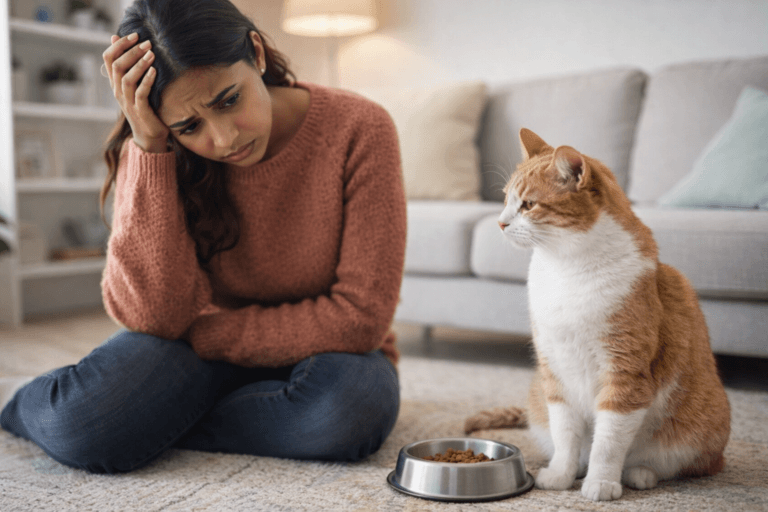
Understanding the cat’s experience during a FLUTD flare helps build empathy for behavior that might otherwise seem like defiance or a training regression. The pain and urgency of an inflamed, irritated bladder is genuinely significant, and a cat straining and vocalizing in the litter box, or avoiding it entirely after associating it with pain, is responding to real physical distress rather than acting out. This understanding matters practically too: punishing a cat for urinating outside the box during a flare only adds stress on top of physical discomfort, potentially worsening the underlying stress-linked inflammation rather than correcting a behavior problem, since the accident itself was a symptom, not misbehavior.
A Practical Closing Note
If you take one thing away from this guide, let it be this: any male cat straining with little or no urine is a true emergency, not a wait-and-watch situation, while a female cat with milder urinary symptoms usually has time for a same-day or next-day vet visit rather than an immediate emergency dash. Knowing this distinction, and acting on it quickly when it matters, is genuinely one of the most protective pieces of knowledge a cat owner can have.
Enrichment Ideas That Genuinely Help
Since stress reduction is a real, evidence-backed part of managing idiopathic cystitis, specific enrichment choices matter more than generic advice to “reduce stress.” Vertical space, cat trees, shelves, or window perches, gives cats a sense of security and territory in multi-cat homes where floor-level conflict is common. Puzzle feeders and rotating toys provide mental stimulation that reduces boredom-related stress, particularly for indoor-only cats with limited environmental variety. Predictable daily routines around feeding and interaction times help cats feel secure, since unpredictability itself is a recognized stressor for many cats. Pheromone diffusers, designed to mimic calming feline facial pheromones, are sometimes recommended by veterinarians as a supplementary tool, though they work best alongside, not instead of, genuine environmental and resource improvements.
Frequently Asked Questions
Is FLUTD the same as a UTI?
Not usually. True bacterial urinary tract infections are relatively uncommon in younger cats with FLUTD symptoms; feline idiopathic cystitis, a non-infectious, stress-linked inflammation, is the most common underlying cause instead.
Why are male cats at higher risk for emergencies?
Male cats have a narrower urethra than females, making them specifically vulnerable to a complete blockage from stones, plugs, or swelling, a life-threatening emergency not typically seen in female cats.
Can stress really cause bladder problems in cats?
Yes, feline idiopathic cystitis is strongly linked to the body’s stress response affecting the bladder lining, which is why environmental stress reduction is a genuine, evidence-supported part of treatment.
Do antibiotics help with FLUTD?
Only if a bacterial infection is actually present, which is less common than owners often assume; antibiotics don’t address idiopathic cystitis, the most frequent underlying cause.
Can FLUTD come back after treatment?
Yes, cats with one episode face meaningfully elevated risk of recurrence, which is why long-term management, not just treating a single flare, matters for reducing future episodes.
Published Research: Antibiotic Resistance in Feline Urinary Infections
Our clinical team’s peer-reviewed study reviewed 200 feline bacterial infection cases at our own hospital and found urinary infections carried the highest antibiotic resistance burden of any site studied, with E. coli the most common organism involved, underscoring why proper culture testing matters when infection is suspected rather than defaulting to guesswork.
Afzal, Z., Hina, I., Aziz, M.T., Yaqub, T., Baig, I. and Rafaqat, F. (2026) ‘Antimicrobial Resistance Patterns of Bacterial Isolates from Feline Clinical Infections in a Private Veterinary Practice in Lahore, Pakistan’, Bioscience Insights, 3(1), pp. 234–246.
By Dr. Zahid Afzal, DVM — General Veterinary Hospital, Lahore. This article is for general education and does not replace a full physical examination or personalized treatment plan from your own veterinarian. If a male cat is straining with little or no urine output, seek emergency care immediately.


2 Comments