Guinea pig dental problems: Guinea Pig Dental Disease: Key Warning Signs
Guinea pig dental disease can begin quietly. A pet may still approach food yet chew slowly, drop pieces, avoid hay or gradually lose weight. Because guinea pig teeth grow continuously, painful abnormalities of the incisors, cheek teeth or tooth roots can interfere with eating and can trigger secondary gastrointestinal problems. This veterinarian-written guide explains what owners should watch for, how dental disease is diagnosed, what treatment may involve and why early assessment matters.
Guinea pig dental problems: Emergency alert
A guinea pig that stops eating, produces very few or no droppings, becomes weak, develops marked facial swelling, has difficulty swallowing or breathing, or appears severely painful needs prompt veterinary care. Dental disease can lead to reduced fibre intake and gastrointestinal hypomotility; do not wait for the teeth to look obviously abnormal.
Guinea pig dental problems: Quick answer: what are the signs of dental problems in guinea pigs?
Eating changes
Dropping food, slow chewing, refusing hay, choosing only soft foods, taking food then backing away, or complete appetite loss.
Face & mouth
Drooling, wet chin, bad odour, facial asymmetry, swelling, eye discharge, jaw movement changes or visibly abnormal incisors.
Whole-body clues
Weight loss, smaller droppings, reduced activity, hiding, poor coat condition and signs of gastrointestinal slowdown.
Guinea pig dental problems: Why guinea pig teeth are different
Guinea pigs are specialized herbivores whose incisors and cheek teeth continue to grow. Normal chewing of fibrous foods helps create the prolonged side-to-side jaw movement that wears the teeth. Dental health is therefore not simply about the four front teeth that an owner can see. The premolars and molars sit deeper in the mouth and can develop clinically important abnormalities even when the incisors look fairly normal.
This is one reason dental disease may be missed at home. A guinea pig can have elongated cheek teeth, abnormal tooth angles, painful soft-tissue contact, root elongation or infection without dramatic front-tooth overgrowth. A proper veterinary assessment considers the entire mouth, the jaw, body weight, diet and secondary effects on gastrointestinal function.
Guinea pig dental problems: What causes overgrown teeth and dental disease?
Insufficient effective chewing
Hay is important because it requires sustained chewing and provides the fibre guinea pigs need. A diet dominated by pellets, treats or easily consumed foods may reduce the amount of time spent performing normal grinding movements. Diet is not the only cause of dental disease, but feeding practices are an important part of prevention and long-term management.
Malocclusion
Malocclusion means the opposing teeth do not meet and wear in a normal way. Once abnormal wear develops, tooth shape can worsen progressively. Cheek teeth may become elongated or develop points and ridges that alter chewing. The visible incisors may also become uneven because the animal is no longer using the jaw normally.
Trauma or tooth damage
A fractured tooth, jaw injury or damage to supporting structures can alter alignment. A broken incisor is not always an emergency by itself, but pain, bleeding, inability to eat, abnormal regrowth or suspected jaw injury requires veterinary assessment. Never attempt to clip or reshape teeth at home.
Root and jaw disease
Some dental disorders involve structures below the gum line. Root elongation, bone changes and abscesses can cause pain, facial swelling, eye or nasal signs and persistent eating difficulty. These problems are a major reason skull imaging may be recommended even when a quick look at the mouth does not explain the symptoms.
Age and chronic disease
Dental disease can occur at different ages and may become recurrent. Chronic illness, pain elsewhere in the body or periods of reduced eating can also change chewing behaviour. A veterinarian therefore looks beyond the teeth when the history suggests another condition may be contributing.
Guinea pig dental problems: Dental warning signs: what owners may notice
| Observation | What it can suggest | Recommended response |
|---|---|---|
| Refusing hay but accepting soft vegetables | Painful chewing or early dental dysfunction | Arrange a veterinary dental assessment |
| Food falls from the mouth | Cheek-tooth dysfunction, pain or impaired chewing | Prompt examination |
| Wet chin or drooling | Oral pain, difficulty chewing or swallowing | Prompt examination |
| Uneven or excessively long incisors | Malocclusion or secondary abnormal jaw use | Do not clip at home; seek veterinary care |
| Facial swelling | Possible tooth-root infection or abscess | Urgent veterinary assessment |
| Weight loss despite approaching food | Inadequate intake, dental pain or systemic disease | Weigh and arrange examination |
| Fewer/smaller droppings | Reduced fibre intake and gastrointestinal slowdown | Treat as an important warning sign |
Veterinary tip: Do not use the appearance of the incisors alone to decide whether your guinea pig has healthy teeth. Significant cheek-tooth and root disease can be hidden from view.
Guinea pig dental problems: Why refusing hay is an important clue
One of the most useful observations an owner can make is not simply whether the guinea pig eats, but what it is willing to eat. A guinea pig with dental discomfort may still show interest in food and may manage soft leaves, finely cut vegetables or pellets while avoiding coarse hay. This can create a false sense of security because the pet is technically still eating.
Selective eating matters because hay supports both dental wear and gastrointestinal health. If painful chewing leads to less hay consumption, the animal may ingest less fibre and produce smaller or fewer droppings. That can progress toward the emergency picture discussed in our Guinea Pig Not Eating emergency guide. Linking these two topics is clinically important: dental disease is a cause, while appetite loss and gut slowdown may be consequences.
How a veterinarian examines guinea pig teeth
The consultation starts with history. Useful details include changes in hay consumption, favourite foods, chewing speed, drooling, weight trend, faecal output, previous dental procedures and how quickly the problem developed. If possible, bring a record of recent body weights and describe the normal diet accurately.
The physical examination usually includes body condition, hydration, facial symmetry, jaw palpation, the eyes and nose, the visible incisors and an oral assessment. Because the guinea pig mouth is narrow and the cheek teeth extend far back, a complete view may be difficult in an awake patient. Pain, stress and food material can further limit what can safely be seen.
Why sedation or anaesthesia may be needed
A controlled oral examination under appropriate sedation or anaesthesia may allow a veterinarian to evaluate cheek-tooth surfaces and soft tissues more thoroughly and perform treatment safely. The decision depends on the individual patient, suspected problem and clinical stability. Anaesthetic planning for a sick exotic mammal should be individualized rather than approached as a routine one-size-fits-all procedure.
When skull X-rays or other imaging are useful
Looking inside the mouth shows only part of each tooth. Imaging can provide information about roots, jaw bone, tooth alignment and deeper disease. Skull radiographs may be recommended for recurrent guinea pig dental problems, facial swelling, suspected root elongation, unexplained eye or nasal signs, jaw pain or when the oral findings do not fully explain weight loss.
In more complex cases, advanced imaging may provide additional anatomical detail where available. The goal is not to image every guinea pig automatically, but to choose diagnostics that answer the clinical question. Dental disease that repeatedly returns after simple trimming deserves investigation for a deeper underlying problem.
How overgrown guinea pig teeth are treated
Treatment depends on which teeth are affected and why. Dental correction is more precise than simply making a tooth shorter. The veterinarian aims to restore a functional shape and reduce painful contact while avoiding damage to the tooth, tongue, cheek or jaw.
Incisor correction
Abnormally long or uneven incisors may require reshaping with appropriate dental equipment. Clipping with household cutters is unsafe because teeth can split or fracture and the underlying cause may remain untreated. Incisor abnormalities can also be secondary to cheek-tooth disease, so correcting only the visible front teeth may not solve the problem.
Cheek-tooth correction
Elongated or irregular premolars and molars may need careful burring or contouring using suitable instruments. The exact procedure is determined by the oral findings. The objective is functional chewing and relief of traumatic contact rather than aggressive removal of tooth material.
Abscesses and infected dental disease
Dental abscesses can be challenging because guinea pig pus is often thick and deeper tooth or bone involvement may be present. Management can require imaging, surgery, treatment of the diseased tooth, wound management, analgesia and carefully selected antimicrobial therapy. Antibiotic choice must be species-appropriate; never use leftover medication from another pet.
Pain control and supportive care
Dental pain can suppress eating even after the mechanical problem is addressed. Veterinarian-prescribed analgesia, fluid support and nutritional support may therefore be part of the treatment plan. A guinea pig that has eaten poorly may need simultaneous management of gastrointestinal hypomotility and dehydration.
Dental trimming vs comprehensive dental treatment
| Approach | What it addresses | Limitation |
|---|---|---|
| Looking at incisors only | Visible front-tooth abnormalities | Can miss cheek teeth and roots |
| Simple shortening of a visible tooth | Excess visible length | May not correct shape, alignment or cause |
| Complete oral examination | Incisors, cheek teeth and oral soft tissues | May require sedation/anaesthesia |
| Skull imaging | Roots, jaw and deeper structures | Chosen according to clinical need |
| Comprehensive treatment plan | Dental abnormality plus pain, nutrition and underlying disease | Some chronic cases require repeat care |
Can guinea pig dental disease cause gut stasis?
Yes, dental pain can contribute to a dangerous cycle. Pain reduces chewing; reduced chewing lowers food and fibre intake; reduced intake can slow gastrointestinal motility; gas and discomfort can then suppress appetite further. This is why a dental patient should be assessed as a whole animal rather than as a set of teeth.
Owners should monitor droppings closely. Smaller, drier or less frequent faeces can be an early sign that intake has fallen. Complete appetite loss, absent droppings, marked abdominal distension, weakness or severe pain requires urgent veterinary attention. Our rabbit GI stasis guide explains similar principles of fibre-dependent gastrointestinal function in another hindgut-fermenting small mammal, although diagnosis and treatment must always be species- and patient-specific.
What to feed a guinea pig with dental problems
The long-term goal is usually to preserve a high-fibre diet and normal chewing whenever possible. Unlimited good-quality grass hay should remain the dietary foundation for healthy guinea pigs. A measured amount of a nutritionally complete guinea-pig pellet and appropriate fresh vegetables complement the diet, while vitamin C intake must be adequate because guinea pigs cannot synthesize it themselves.
During active dental disease, however, a patient may be physically unable or unwilling to chew enough. A veterinarian may recommend a commercial herbivore recovery food or another assisted-feeding plan once the patient has been assessed. The amount, frequency and method should reflect body weight, hydration, swallowing ability and the underlying diagnosis.
Do not make soft food the permanent solution to painful teeth. A guinea pig may appear better because it can swallow soft food, while the underlying dental abnormality continues to progress. Soft feeding is supportive care when indicated, not a substitute for diagnosis.
Assisted feeding: when is it appropriate?
Assisted feeding can be important for a guinea pig that cannot maintain adequate intake, but it should be used thoughtfully. Before force-feeding, a veterinarian may need to consider severe abdominal distension, obstruction, swallowing difficulty and the patient’s overall stability. An animal that cannot swallow normally should not simply be syringe-fed at home.
When assisted feeding is appropriate, technique matters. The guinea pig should be positioned naturally rather than placed on its back. Small amounts are offered carefully, allowing time to chew and swallow. Owners should follow the product and veterinary instructions rather than improvising a high-volume feeding schedule.
Recovery after a dental procedure
Recovery should be judged by function, not simply by the fact that a procedure was completed. Useful signs include renewed interest in hay, normal chewing, stable or increasing body weight, normal hydration and restoration of normal faecal output. Some guinea pigs begin eating readily after pain is controlled; others need supportive nutrition while inflamed oral tissues settle or while chronic disease is managed.
Ask the veterinarian what changes would require re-examination. Persistent drooling, inability to eat hay, renewed weight loss, swelling or recurrent abnormal incisors may indicate that further dental assessment is needed. Chronic malocclusion and root disease can require scheduled monitoring or repeat procedures.
How to monitor dental health at home
Weekly checks
Weigh your guinea pig on the same digital scale, note hay consumption, look at the size and number of droppings, and watch how confidently food is chewed.
Daily awareness
Notice wetness under the chin, food dropping, unusual jaw movements, facial swelling, eye discharge, reluctance to eat hay and any sudden change in appetite or activity.
Body weight is particularly valuable because gradual loss can occur before an owner sees obvious body-condition changes under the coat. A persistent downward trend deserves investigation even if the guinea pig still comes to the food bowl.
Preventing dental problems
1. Provide unlimited grass hay
Hay supports prolonged chewing and normal gastrointestinal function. Keep it clean, dry and readily available. Guinea pigs that routinely ignore hay deserve a review of diet, hay quality and dental health rather than simply being offered more pellets.
2. Avoid pellet-heavy feeding
Pellets are concentrated and easy to consume. They should not displace the animal’s normal hay intake. Use a product formulated for guinea pigs and follow appropriate feeding guidance for the individual animal.
3. Supply appropriate vitamin C
Guinea pigs require dietary vitamin C. Provide fresh suitable foods and a properly stored complete guinea-pig diet, and discuss supplementation with your veterinarian when necessary. Good general nutrition supports oral and systemic health, although vitamin C alone does not prevent every dental disorder.
4. Do not rely on hard objects to grind teeth
The goal is normal fibrous chewing, not forcing the guinea pig to gnaw extremely hard objects. Appropriate hay and safe enrichment are preferable to attempting to mechanically wear teeth with unsuitable materials.
5. Arrange regular health checks
Routine veterinary examinations establish body-weight trends and may identify concerns before a crisis develops. Guinea pigs with previous malocclusion, root disease or abscesses often need individualized follow-up schedules.
Common mistakes owners should avoid
| Mistake | Why it can be harmful | Better approach |
|---|---|---|
| Clipping incisors at home | Can fracture or split teeth and misses deeper disease | Veterinary dental assessment and appropriate equipment |
| Assuming front teeth tell the whole story | Cheek-tooth/root disease may be hidden | Complete oral evaluation when symptoms suggest dental disease |
| Waiting because the guinea pig still eats vegetables | Selective soft-food eating may indicate pain | Investigate refusal of hay or altered chewing early |
| Treating weight loss with extra treats | May mask inadequate fibre intake without treating disease | Identify the cause and use a veterinary nutrition plan |
| Using leftover antibiotics | Some drugs can dangerously disrupt guinea pig gut flora | Use only veterinarian-prescribed, species-appropriate medication |
Frequently asked questions
How do I know if my guinea pig’s teeth are overgrown?
Visible long or uneven incisors can be a clue, but many important problems involve the cheek teeth or roots. Difficulty eating hay, food dropping, drooling, weight loss and smaller droppings are reasons for a veterinary oral assessment even if the front teeth look normal.
Can I trim my guinea pig’s teeth myself?
No. Household clippers can fracture teeth and do not address cheek-tooth or root disease. Dental correction should be performed with appropriate equipment after the problem has been properly assessed.
Why does my guinea pig eat vegetables but not hay?
Soft foods can be easier to chew than fibrous hay. Selective refusal of hay can therefore be an early sign of oral or dental pain. Because hay is important for both tooth wear and gut function, this pattern should not be ignored.
Do guinea pig teeth grow back?
Guinea pig teeth grow continuously. That makes normal wear essential and also means an alignment problem can recur. The prognosis and follow-up schedule depend on whether the problem is temporary trauma, chronic malocclusion, root disease or another condition.
How often do guinea pigs need their teeth trimmed?
Healthy guinea pigs should not require routine tooth trimming simply because their teeth grow continuously. When repeated dental correction is necessary, the interval is individualized according to the diagnosis and rate of recurrence. Repeated trimming without investigating the cause is not ideal.
Can dental problems make a guinea pig stop pooping?
Dental pain can reduce food and fibre intake, which can lead to fewer and smaller droppings and gastrointestinal hypomotility. Complete loss of appetite or faecal output is urgent and should not be managed as a dental problem alone.
Can an abscess come from a guinea pig tooth?
Yes. Dental infection can involve tooth roots, surrounding tissues and jaw bone. Facial swelling warrants veterinary assessment because successful management may require more than antibiotics alone.
When is it an emergency?
Seek urgent veterinary care if your guinea pig has stopped eating, has markedly reduced or absent droppings, is weak or collapsed, has a severely distended abdomen, cannot swallow, has breathing difficulty, develops rapidly increasing facial swelling or appears to be in severe pain. Guinea pigs can deteriorate quickly when pain prevents normal feeding.
GVH veterinary takeaway
Guinea pig dental disease is often more complex than an overgrown front tooth. Changes in hay intake, chewing and body weight may appear before dramatic oral signs. Early veterinary assessment helps distinguish simple visible abnormalities from cheek-tooth, root or jaw disease and reduces the risk that dental pain progresses to severe appetite loss and gastrointestinal complications.
Concerned about your guinea pig’s teeth?
If your guinea pig is refusing hay, dropping food, drooling or losing weight, arrange a prompt veterinary examination. Dental disease often requires a complete oral assessment and sometimes skull imaging; an online discussion cannot replace a hands-on dental examination.
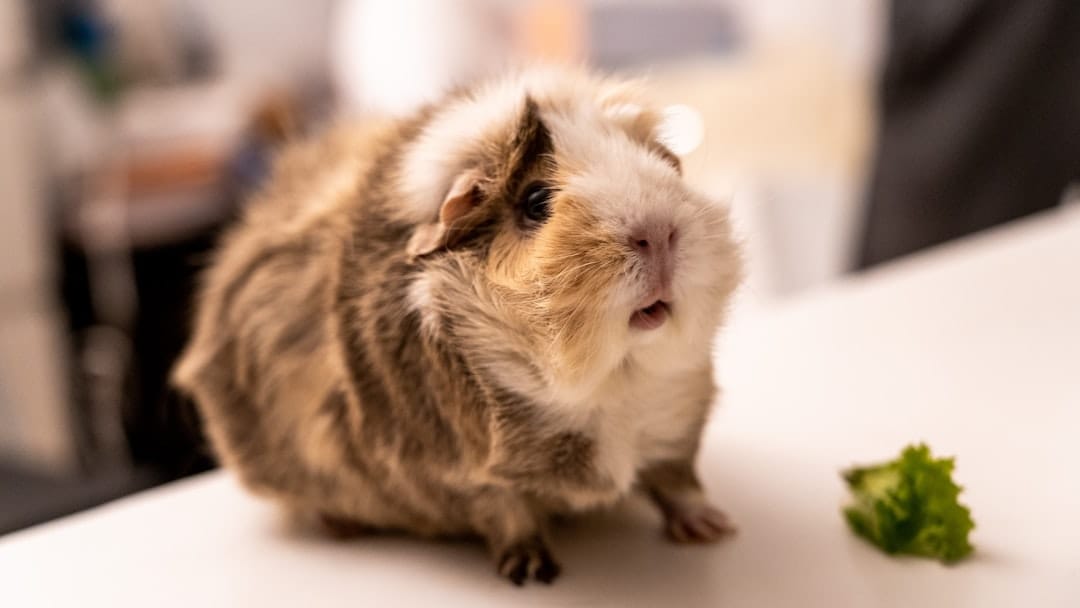
Featured photo by Yuhan Du on Unsplash.
Related GVH small-pet guides
If your guinea pig is already eating less or has stopped eating, read our complete Guinea Pig Not Eating emergency guide. For another small-herbivore emergency resource, see Rabbit Not Eating: GI Stasis Signs, Causes and Treatment. You can also browse the Small Pets category for additional veterinary education.
References & veterinary resources
This owner guide is based on established principles of exotic companion mammal medicine: continuously growing guinea pig dentition, the importance of fibrous chewing, complete oral examination, imaging when deeper dental disease is suspected, species-appropriate medication safety, and early nutritional support when intake falls. Clinical recommendations must be individualized after examination by a veterinarian experienced with guinea pigs.
Related reading: see our guides to guinea pig not eating and guinea pig squeaking when peeing.
Medical disclaimer: This article provides general veterinary education and is not a substitute for examination, diagnosis or treatment by a qualified veterinarian. Dental disease, appetite loss and reduced faecal output in guinea pigs can become urgent.