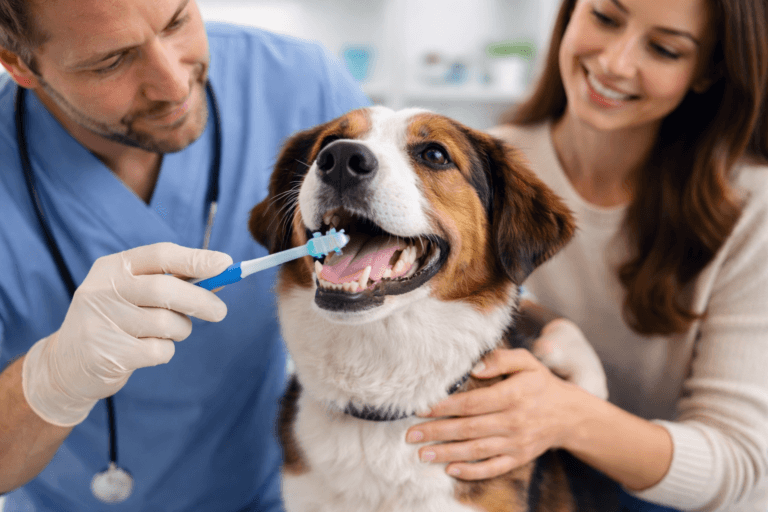
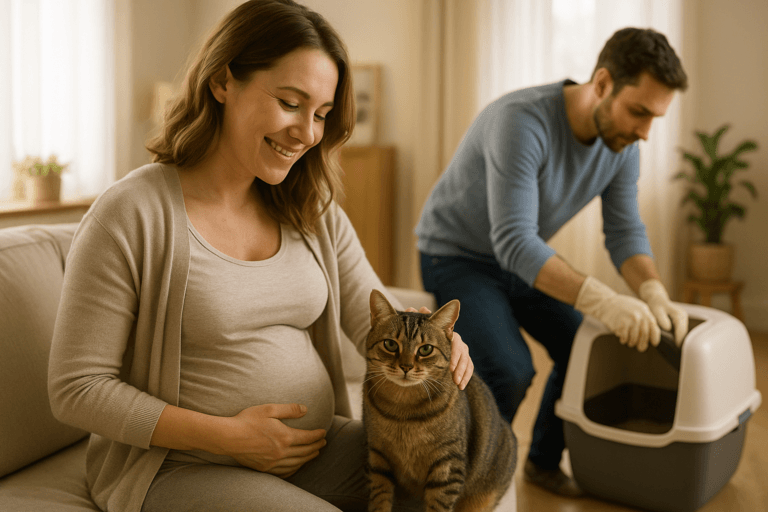
How old is your pet in human terms? Comparing pet ages in human years can make an animal’s rapid development easier to understand, but the result is a guide, not a biological measurement. A birthday tells you how long an animal has lived. Its life stage, health history and everyday abilities tell you much more about the care it needs.
There is no single multiplier for every pet. Dogs and cats mature quickly at first, and different animals follow different timelines. Use an age comparison to start a care conversation; use veterinary advice to decide what to do next.
What pet ages in human years actually mean
People often use “dog years” or “cat years” when they really mean a human-age equivalent. A five-year-old dog has lived five calendar years. An online tool may compare that point in its life with human middle adulthood, but it has not examined the dog, measured its organs or predicted how many birthdays remain.
Four ideas are worth separating before reading a chart:
- Chronological age: the time since birth, usually recorded in years and months.
- Human-equivalent age: an estimated comparison produced by a chosen chart or model.
- Life stage: a category such as growing, adult or senior, used to organise care.
- Individual condition: the animal’s actual health, mobility, body condition and ability to carry out normal activities.
Those categories can point in different directions without contradicting each other. Two animals born on the same day may have different medical needs. An active older pet still benefits from appropriate monitoring, while a younger animal with illness may need substantial support. A reassuring comparison should never outweigh a new symptom.
For an approximate comparison, you can use the pet age calculator by selecting your animal and entering its known age. Treat the result as an estimate rather than an assessment of health or remaining lifespan.
Using pet ages in human years without overreading the number
Treat the result as a conversation prompt. Ask whether your pet’s current routine still suits its life stage, whether you have an accurate weight record, and when its next examination is due. Avoid treating an equivalent age as permission to breed, change medication, reduce food or stop exercise. Those decisions require information that an age field cannot supply.
Why multiplying every animal’s age by seven falls short
The familiar seven-to-one rule suggests a straight line: every extra animal year adds exactly seven human years. That misses the rapid development of young dogs and the differences between animals. A puppy’s first year includes changes that do not resemble a human child simply turning seven.
UC Davis explains the limitations of the seven-year rule and discusses both practical comparisons and research based on DNA methylation in Labrador Retrievers. Research models and owner-facing charts answer different questions. A formula studied in one breed should not be presented as an exact clinical test for every dog, much less for birds, rabbits or horses.
This also explains why two calculators can disagree. They may use different starting points, size categories, interpolation or rounding. Before deciding that one result is more accurate, check the method and population behind it. More decimal places do not automatically mean better evidence.
Dog years compared with human years
Body size and breed matter when discussing canine ageing. A small dog and a giant dog do not necessarily enter later life on the same schedule. The AAHA canine life-stage guidance uses age alongside characteristics such as size and breed rather than relying on a human-age number alone.
The table below illustrates the simple medium-dog comparison described by UC Davis: approximately 15 human years at the first birthday, another nine during the second year, and about five for each subsequent year. Later values are arithmetic examples of that convention, not measurements or a universal breed chart.
| Dog’s calendar age | Illustrative human equivalent |
|---|---|
| 1 year | 15 years |
| 2 years | 24 years |
| 3 years | 29 years |
| 5 years | 39 years |
| 7 years | 49 years |
| 9 years | 59 years |
| 11 years | 69 years |
For example, calling a seven-year-old medium dog “about 49” can help a family think about changing needs. It cannot establish that the dog has arthritis or needs a particular diet. If getting into the car has become difficult, describe that change to the vet instead of assuming the comparison explains it.
For practical follow-up, our senior dog nutrition guide covers feeding questions, while our arthritis home-care guide discusses comfort and mobility alongside veterinary treatment.
Cat years, human comparisons and feline life stages
Cat-age tables also vary. Rather than presenting one convention as the only correct answer, it helps to name the source. The Cornell Feline Health Center’s senior-cat article uses approximately 16 human years at age one, 21 at age two, and four more for each later year. The following examples follow that specific convention.
| Cat’s calendar age | Illustrative human equivalent |
|---|---|
| 1 year | 16 years |
| 2 years | 21 years |
| 5 years | 33 years |
| 10 years | 53 years |
| 12 years | 61 years |
| 15 years | 73 years |
For planning care, a life-stage framework can be more useful than debating a few human-equivalent years. The 2021 AAHA/AAFP feline guidelines distinguish kittens under one year, young adults aged one through six, mature adults aged seven through ten, and seniors over ten. The individual cat’s condition still determines the plan.
A change in jumping, grooming, appetite or litter-box use deserves attention regardless of what a chart says. Keep those observations separate from the age estimate when talking to your vet. Our guide to subtle signs of feline pain explains observations owners can easily overlook.
Rabbits, hamsters, guinea pigs, birds and horses
For other animals, pet ages in human years should be handled with particular caution. A website may offer a convenient comparison, but a usable calculator interface is not proof that a universally accepted conversion exists. Different species have different development, husbandry and health requirements. The useful question is what the animal needs at its present stage.
| Animal | Why a shared multiplier is unhelpful | What to discuss instead |
|---|---|---|
| Rabbit | Rabbit development and care do not follow a dog’s timeline. | Eating, droppings, mobility, grooming and preventive care. |
| Hamster | A hamster’s much shorter life cannot be translated using a cat’s chart. | Species, known birthday, weight trend and access to essential resources. |
| Guinea pig | Its biology and dietary requirements differ from those of a hamster. | Food intake, chewing, body condition and comfortable movement. |
| Bird | “Bird” includes many species with very different life histories. | Exact species, records, diet, perching ability and activity. |
| Horse or pony | Calendar age alone does not describe workload, teeth or physical condition. | Dental care, feeding, movement and an individual management plan. |
Small mammals: look beyond the birthday
Merck’s biological data for pet rodents demonstrate why grouping all small mammals together is misleading. A hamster and a guinea pig differ in maturity and typical longevity. A rabbit is not a rodent, and it needs its own care framework.
When making an appointment, record the species and approximate birth date rather than only the equivalent age produced by a tool. Include any change in food consumption, droppings, weight or movement. These details give the clinician something concrete to investigate. Do not dismiss reduced eating as a predictable birthday milestone.
For rabbits, Merck’s routine-care guidance provides species-specific context. For guinea pigs, its routine-care advice highlights examinations and signs of illness. Our guinea pig not eating guide addresses an important problem that should not be explained away by age.
Birds: identify the species before interpreting age
Ask for the exact species when someone says a bird is “old.” A budgie and a large parrot cannot sensibly share one generic bird-age conversion. If the age is uncertain, keep the estimate clearly marked in the records instead of allowing an online result to turn it into a known birthday.
Useful observations include whether the bird reaches its usual perches, eats the same foods and behaves normally in its familiar environment. Merck discusses age-related disease in pet birds, including problems that require an avian assessment rather than a new conversion factor. Our budgie care guide offers broader husbandry context.
Horses: match management to the individual
A human-age equivalent can make a horse’s age relatable, but it does not decide whether the horse should work, retire or change feed. The AAEP’s older-horse advice focuses on a management plan, including nutrition and appropriate care. Discuss teeth, body condition, soundness and the intended workload with an equine veterinarian.
Bring a description of the horse’s actual routine. “Still does the same work” is less useful than explaining distance, pace, recovery, turnout and any recent difficulty. Compare the animal with its own earlier baseline rather than with a human athlete of an estimated equivalent age.
Turn the age comparison into a useful care record
The most helpful outcome of checking pet ages in human years is often a better set of questions. Make a short record that another family member could understand. Include the real birthday where known, the date the information was entered, and any uncertainty about adoption or previous history.
A practical appointment checklist
- Species, breed or type, and calendar age.
- Current food, treats, supplements and medicines.
- Recent weight measurements, with dates and units.
- Changes in appetite, drinking, toileting, sleep or movement.
- A short video of an intermittent concern, if safe to obtain.
- The last examination and any recommended follow-up.
A description such as “takes two attempts to reach the sofa this week” is more informative than “seems 80 in human years.” Likewise, note whether a food bowl is untouched, rather than writing only that the pet has become fussy. Keep the record factual, without trying to diagnose the cause yourself.
Ask the vet which observations matter for your particular animal and how often to record them. An owner should not have to collect every possible measurement. A manageable routine that you can maintain is more useful than a complicated spreadsheet abandoned after a few days.
Changing care without making age-based assumptions
Review the environment before buying products labelled for older pets. Is food easy to reach? Can the animal rest undisturbed? Are floors secure and routes familiar? Record difficulties and discuss safe adaptations with the treating team. A comfortable setup still needs to match the species and the individual’s abilities.
Do not automatically add supplements, cut protein or sharply reduce activity because a calculator displays a senior equivalent. Bring the existing feeding and exercise plan to the consultation. Our cat nutrition guide explains why food suitability depends on more than an appealing label.
Changes should have a purpose that everyone in the household understands. If a clinician recommends an adjustment, ask what improvement to watch for, when to report back and what signs mean the plan needs reassessment. Keep the age comparison as background context rather than using it to judge whether treatment is worthwhile.
Questions about pet ages in human years
Can an age calculator tell how long my pet will live?
No. A human-equivalent result does not provide an individual survival forecast. An animal’s care and medical decisions should not be based on subtracting its age from a website’s average lifespan. Discuss prognosis with the clinician who knows its condition.
Why do two charts give different answers?
Check whether they use the same species, dog-size category and comparison method. Even the early reference points for cats can differ between published conventions. Use a clearly labelled source and avoid treating a small numerical disagreement as a diagnosis.
What if I do not know my adopted pet’s birthday?
Use the best available estimate and label it as approximate. Adoption paperwork, previous veterinary records and a clinician’s assessment may help establish a useful age range. A calculator cannot recover a missing birth date from appearance or behaviour.
Does a coat colour need its own age-conversion model?
A coat description alone should not be treated as evidence of a distinct ageing model. If a calculator offers many labels, read what each selection changes. Ask whether the underlying method actually differs or whether the labels simply help users find a familiar animal type.
Is an equivalent human age enough to choose a senior diet?
No. Take the current diet, body condition and health history into account with your vet. A food change needs an individual reason and a way to judge the result. The number displayed by an age tool cannot establish nutritional requirements.
Make the comparison count
Pet ages in human years can be a useful way to appreciate how quickly an animal moves through life. The value is in the conversation it starts: what has changed, which care tasks are due, and what support would make daily life easier? Keep the calendar age accurate, recognise uncertainty and pay attention to the animal in front of you.