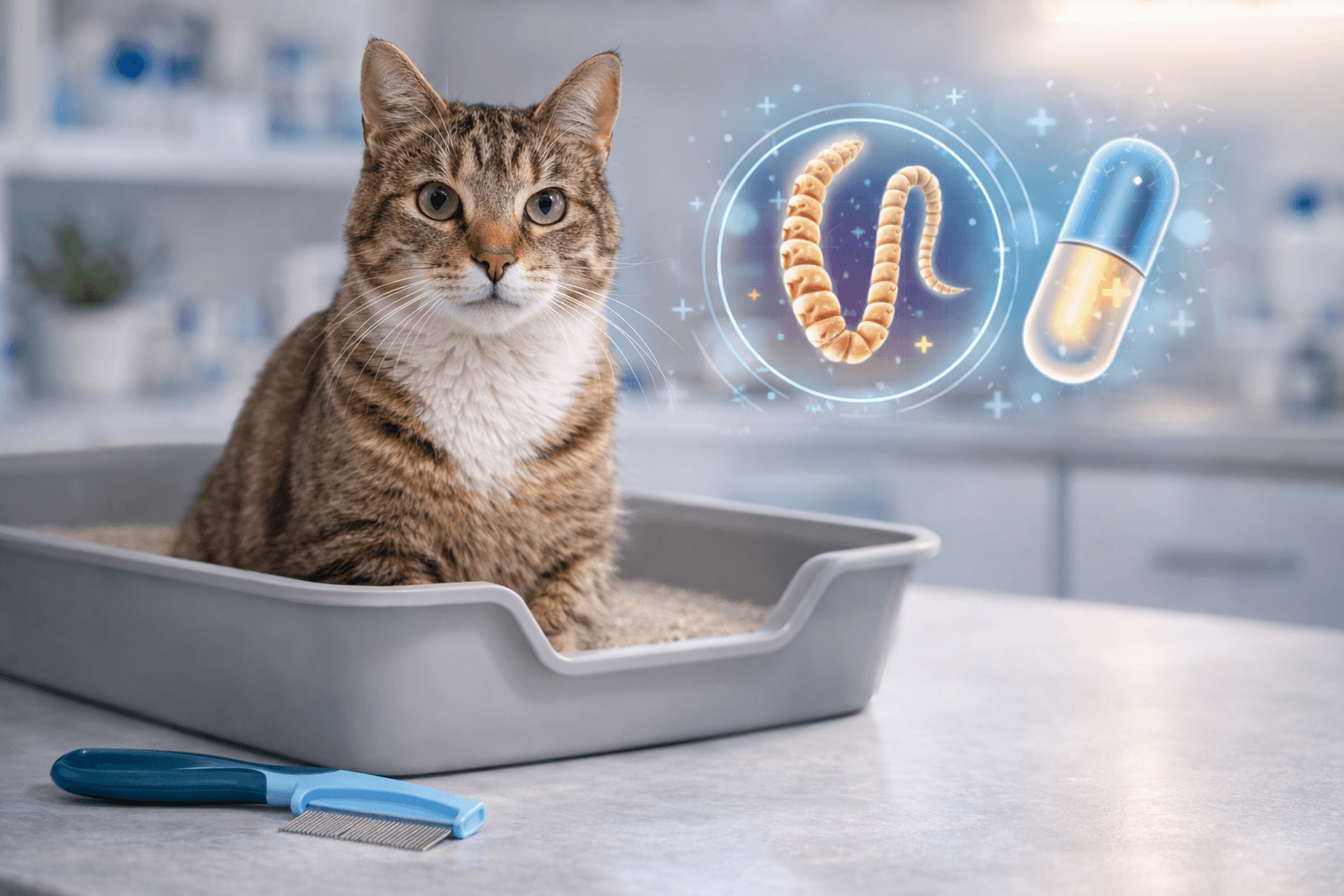
Tapeworms in cats are one of the most common parasite problems owners discover at home—usually because they see tiny “rice grains” near the litter box, stuck to fur around the tail, or moving on bedding. Tapeworms in cats are often linked to fleas, so treating tapeworms in cats properly usually means treating fleas too. The good news is that most cases are straightforward to fix with the right dewormer and a simple prevention plan. This guide explains what those rice-like segments really are, how cats get tapeworms, how to treat them safely, and how to stop them from coming back.
Quick takeaways:
Most “rice grains” are tapeworm segments (proglottids) from Dipylidium.
Fleas are the #1 reason tapeworms recur—flea control matters as much as deworming.
Not all dewormers treat tapeworms—your product must include tapeworm coverage.
Most cats feel normal; the main signs are segments, itching, or scooting.
Tapeworms are flat, segmented intestinal parasites. Unlike roundworms (which look like spaghetti), tapeworms are long and ribbon-like, made of many segments. The adult worm lives in the small intestine and releases segments that pass out in the stool. Each segment can contain eggs. Owners typically notice the segments—not the whole worm.Tapeworms in cats are common worldwide. Many infected cats look completely fine, which is why owners often discover the problem by accident. While tapeworms are usually not life-threatening, they are still a parasite infection that should be treated properly—especially if there are children in the home, multiple pets, or if the cat has ongoing flea exposure.
Key point: Seeing segments means there is an adult tapeworm in the intestine. Treatment should target the adult worm and the source (often fleas).
2) What are the “rice-like segments” you see?
The “rice grains” or “sesame seeds” owners describe are usually tapeworm segments (called proglottids). They can look:
White or cream-colored, like dried rice
Golden-brown when dried on bedding
Sometimes moving slowly when freshly passed
You may see them:
On the fur around the anus or tail base
On bedding, sofas, or rugs where your cat sleeps
In the litter box (often stuck on stool or nearby)
Simple home check: If the “grain” is flat and seed-like, it’s often a tapeworm segment. If it looks like moving tiny white threads, other parasites may be involved. A vet exam or a photo can help confirm.
3) How cats get tapeworms (the flea link)
Most pet cats get tapeworms through fleas. The most common species is Dipylidium caninum. Here’s the simple cycle:
A flea larva in the environment ingests tapeworm eggs.
The flea develops into an adult flea carrying tapeworm larvae.
Your cat grooms and swallows the flea.
The tapeworm develops into an adult in the intestine.
Segments are released and you see “rice grains.”
This is why cats can get tapeworms even if you “never see fleas.” Fleas can be hidden in the environment or removed by grooming before you spot them. If you have tapeworms, assume flea exposure until proven otherwise, and follow this guide:
Fleas in Cats: Complete Home Treatment & Prevention Guide.
Tapeworms in cats: Can indoor-only cats get tapeworms?
Yes. Fleas can enter on human clothing, visitors’ pets, shared corridors, and even through small gaps (or they arrive on a newly adopted cat/dog). Tapeworms can also occur in outdoor-hunting cats through other species (more on that below), but fleas are still the most common cause overall.
4) Symptoms of tapeworms in cats
Many cats have few or no obvious symptoms. When signs do occur, they often include:
Rice-like segments near tail, bedding, or litter area
Scooting or licking the rear end (segments can irritate)
Mild itchy bottom or restlessness
Occasional digestive upset (less common; can overlap with other causes)
If your cat has diarrhea, don’t assume tapeworms are the only reason—diet changes, infections, and other parasites can also cause it. Use:
Cat Diarrhea: Causes & Treatment.
5) Types of tapeworms (why it matters)
In cats, the two most discussed tapeworm routes are:
Dipylidium caninum: the flea-associated tapeworm (most common in pet cats).
Taenia species: often linked to hunting/ingesting rodents or small prey.
Both are treated with the correct tapeworm medication, but the prevention plan differs. If fleas are the source, flea control must be part of the solution. If hunting is the source, prey control and supervised outdoor time matter more.
In Part 2, you’ll get a step-by-step treatment plan (what works, what doesn’t), how to confirm infection correctly, and how to stop repeat infections.
6) How to confirm tapeworms in cats (home + vet)
Most owners correctly suspect tapeworms based on segments. Still, confirming matters because not every “white speck” is a tapeworm segment. Here’s a practical approach:
At-home confirmation tips
Take a clear photo of the segment near a coin for size reference.
Use tape to collect a segment stuck to fur or bedding (place it in a small sealed bag).
Check the tail base after your cat wakes up from sleep (segments often appear then).
At the vet
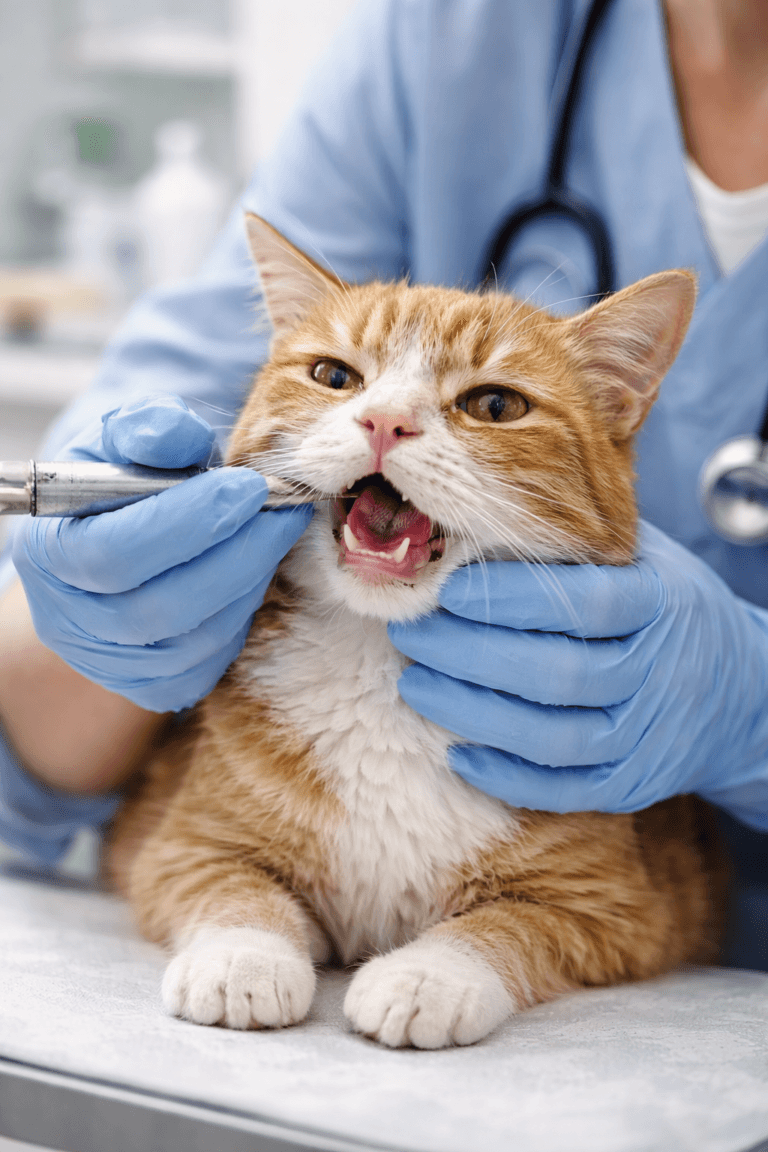
A vet can often identify segments by appearance. Stool tests sometimes miss tapeworms because eggs are released in segments and may not be evenly distributed in stool. That’s why owners often see segments even when a routine stool flotation is negative.
Common scenario: You see rice-like segments at home but the stool test is negative. That does not rule out tapeworms.
7) Treatment: what actually kills tapeworms in cats
The most important rule: not all dewormers treat tapeworms. Many products cover roundworms/hookworms but do not reliably kill tapeworms. Tapeworm-specific treatment is usually required.
8) What to expect after treatment (segments may still appear briefly)
After correct treatment, many cats stop shedding segments quickly, but you may still see some segments for a short time. This does not always mean treatment failed. However, ongoing segments beyond the expected window often indicate reinfection (usually fleas) or incomplete control.
If segments keep appearing: treat fleas aggressively and speak with your vet about repeat tapeworm dosing and household risk factors.
9) The flea connection: why reinfection happens so often
Tapeworms are often “easy to kill” but “easy to get again.” If fleas remain in the home or on pets, a cat can swallow another flea while grooming and restart the cycle. Many households treat the cat once and skip environmental flea control—then tapeworms return in weeks.Follow this step-by-step plan for cat + home flea control:
Fleas in Cats: Complete Home Treatment & Prevention Guide.
10) Home cleaning plan (simple, realistic)
Vacuum carpets, sofas, and pet sleeping areas frequently during the first weeks of flea control.
Wash bedding on hot cycle and dry thoroughly.
Clean resting zones where your cat sleeps most (that’s where flea eggs accumulate).
Treat all pets in the household (cats and dogs) if fleas are present or suspected.
In Part 3, you’ll get a long-term prevention plan, a real clinic case from General Veterinary Hospital Lahore, and FAQs (including children safety and multi-pet homes).
11) Long-term prevention (stop tapeworms from coming back)
The long-term plan depends on how your cat got tapeworms. For most cats, the prevention “core” is flea control plus routine parasite care. If your cat hunts, additional strategies matter.
If fleas were the source (most common)
Use a consistent flea prevention plan (especially in warm/humid seasons or multi-pet homes).
Clean bowls, bedding, and sleeping areas routinely.
Check the coat weekly with a flea comb if your cat is prone to reinfestation.
If hunting was the source (Taenia-type tapeworms)
Reduce prey exposure (supervised outdoor time, indoor enrichment).
Consider routine deworming intervals recommended by your vet based on lifestyle.
Most cat tapeworm cases in households are flea-associated. Human infection with the flea tapeworm is uncommon but can occur if a person (usually a child) accidentally ingests an infected flea. This is another reason flea control is not optional when tapeworms are present.
Practical family safety: treat fleas, wash hands after handling pets, and avoid allowing cats/dogs to sleep on toddlers’ bedding during active infestations.
13) When to worry (and when not to panic)
Tapeworms are usually not an emergency, but you should contact a vet if:
Your cat is a kitten, elderly, or medically fragile
There is ongoing diarrhea, vomiting, weight loss, or poor appetite
Segments persist despite correct treatment + flea control
Your cat seems painful around the anus or has swelling
14) Real case from General Veterinary Hospital Lahore (anonymized)
A young indoor cat was brought to our clinic because the owner noticed small “rice grains” on the bedding and around the tail. The cat seemed otherwise normal, but the family was worried about contagion and whether it was a serious illness. On exam, the cat’s coat looked healthy, but we found evidence consistent with flea exposure (even though the owner had not seen fleas). This is common—cats often groom fleas away before owners notice.We explained the most likely diagnosis: flea-associated tapeworm (Dipylidium). The treatment plan had three parts: a tapeworm-specific dewormer to eliminate the adult worm, a household flea-control plan (treating all pets, not just the cat), and simple environmental cleaning focused on sleeping areas. The owner’s previous mistake was using a dewormer that did not reliably cover tapeworms and skipping flea control because “I don’t see fleas.” After correct treatment and consistent flea prevention, the segments stopped appearing and there was no recurrence on follow-up.
Takeaway: If you treat tapeworms but ignore fleas, you often get tapeworms again. Flea control is the prevention “lock.”
15) FAQs about tapeworms in cats
Why do I see segments but my cat seems fine?
Many cats have minimal symptoms. The main “visible” sign is segment shedding. Treatment is still recommended to eliminate the parasite and prevent household spread risks.
Do tapeworms cause diarrhea?
They can, but many cats with diarrhea have other causes (diet change, infections, other parasites). If diarrhea persists, use:
Cat Diarrhea: Causes & Treatment.
How long until the rice-like segments stop?
With correct tapeworm treatment, shedding often reduces quickly. Continued shedding usually suggests reinfection (often fleas) or that the product did not cover tapeworms.
Can I treat only the cat?
If fleas are involved, treating only the cat is often not enough. You need to treat all pets and the home environment to stop the cycle. Follow:
Fleas in Cats Guide.
If you’re seeing “rice grains,” treat the cat for tapeworms and treat fleas at the same time. Recurrence usually means fleas were missed or prevention wasn’t consistent.
Further reading For additional context, see VCA: Internal Parasites in Dogs. This resource does not replace an examination or an…
One Comment
The connection between fleas and tapeworms is eye-opening! It makes sense now why the fleas keep coming back even when you treat for worms. It really is a two-part job—fleas and tapeworms both need attention.








The connection between fleas and tapeworms is eye-opening! It makes sense now why the fleas keep coming back even when you treat for worms. It really is a two-part job—fleas and tapeworms both need attention.