
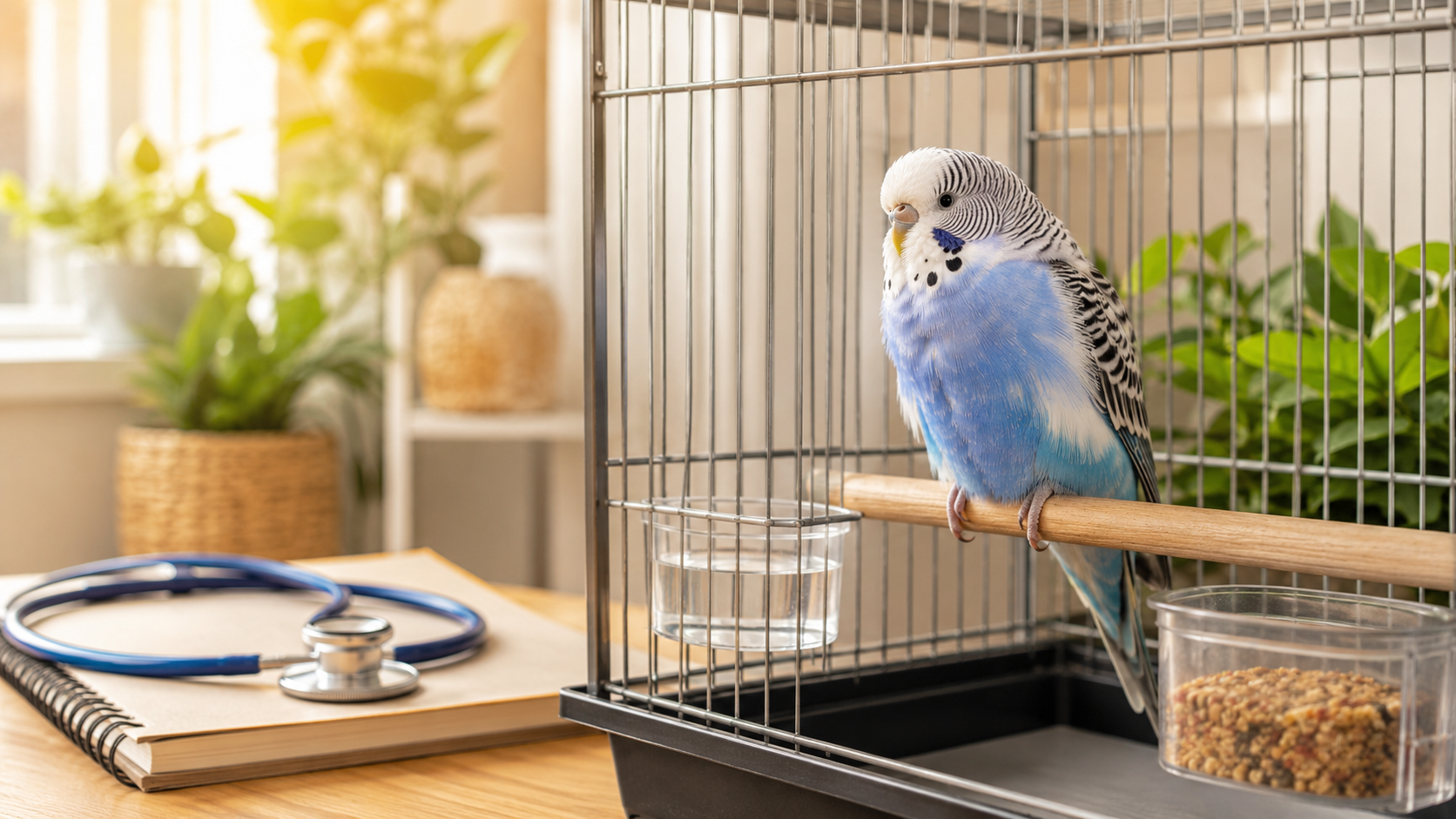
Budgie Health & Emergency Guide
A budgie fluffed up can be completely normal for a short time, especially when the bird is resting, preening, sleepy, or trying to stay warm. But a budgie fluffed up for hours, sitting quietly, sleeping more, eating less, breathing differently, or sitting at the bottom of the cage may be showing an early sign of illness. Because budgies are small birds and can decline quickly, owners should never ignore a budgie fluffed up with weakness, poor appetite, diarrhea, tail bobbing, weight loss, or unusual posture.
Budgies are lively, intelligent, social birds. A healthy budgie usually moves around the cage, chirps, preens, eats regularly, responds to familiar people, and shows interest in its surroundings. So when a normally active budgie becomes quiet and stays puffed up, many owners feel worried — and they should pay attention.
Fluffed feathers are not a disease by themselves. They are a body signal. A budgie may fluff its feathers to trap warm air, relax before sleep, dry after bathing, or stretch after preening. The problem begins when the fluffed appearance comes with behavior change. A bird that looks like a soft round ball, keeps eyes half-closed, avoids food, stays low in the cage, or stops interacting may be sick.
At General Veterinary Hospital Lahore, Dr Zahid Afzal DVM often explains bird cases to owners with a simple rule: do not judge a budgie only by feather position. Watch the whole bird — posture, breathing, droppings, appetite, weight, activity, and cage position. A budgie that fluffs briefly and then plays is different from a budgie that stays fluffed, sleepy, and withdrawn.
This guide is written for budgie owners in the US, UK, Canada, Australia, and other English-speaking countries who want a practical, veterinary-style explanation of when fluffed feathers are normal and when urgent care may be needed.
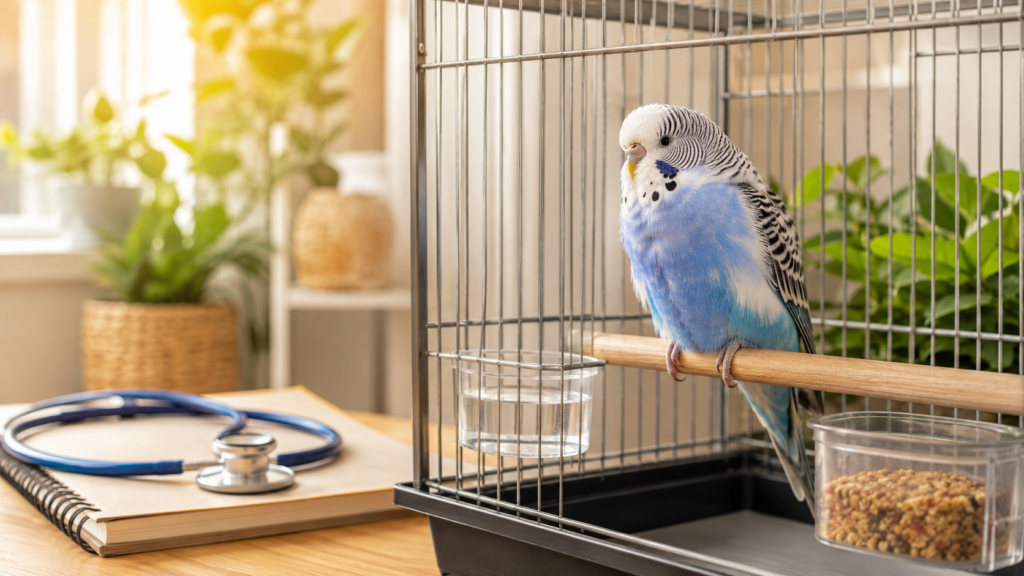
Budgie fluffed up: Usually Less Concerning
- Fluffs briefly while resting
- Returns to normal activity
- Eats and drinks normally
- Normal droppings
- Bright eyes and alert posture
- Responds to people and sounds
Budgie fluffed up: More Concerning
- Fluffed for hours
- Sleepy or weak
- Eating less or not eating
- Sitting at bottom of cage
- Tail bobbing or breathing effort
- Diarrhea or abnormal droppings
Emergency Warning
A budgie sitting fluffed up and not eating should be treated seriously. Seek urgent avian veterinary care if your budgie is at the bottom of the cage, breathing with effort, tail bobbing, unable to perch, vomiting, bleeding, straining, cold to touch, extremely sleepy, or showing sudden weakness.
Why Do Budgies Fluff Up Their Feathers?
Budgies fluff their feathers for several reasons. Feathers help birds control body temperature. When a budgie fluffs up, tiny air spaces form between the feathers, helping the bird stay warmer. This is normal during rest, cool room temperatures, or after bathing.
Budgies may also fluff briefly during preening. They loosen feathers, shake, stretch, and then smooth everything back into place. A relaxed budgie may look slightly puffed during a nap but should still be balanced, responsive, and able to return to normal activity.
Illness-related fluffing is different. A sick budgie may stay puffed for long periods because it is conserving energy, feeling cold, or trying to cope with discomfort. The bird may look round, quiet, heavy, and withdrawn. The eyes may appear sleepy. The bird may stop chirping, avoid toys, and remain on one perch or on the cage floor.
How Long Is Too Long for a Budgie to Stay Fluffed Up?
There is no exact minute-by-minute rule, but a healthy budgie should not remain fluffed and inactive for hours during the day. If your budgie fluffs for a short nap, then wakes, eats, chirps, and moves normally, it is usually less worrying. If the bird remains puffed, quiet, and sleepy through normal active hours, that is a warning sign.
Owners should be especially careful with small birds because they can hide illness until they are already weak. A budgie may look “a little quiet” in the morning and be much worse by evening. Early action matters.
If this is your first budgie or you are still learning normal behavior, your existing budgie care guide is a helpful internal resource for housing, diet, taming, and routine health monitoring.
Vet Insight from Dr Zahid Afzal DVM
In budgies, small changes can be important. A quiet, fluffed bird that stops eating is more concerning than a bird that fluffs briefly after bathing or before sleep. The safest habit is to compare today’s behavior with your bird’s normal daily routine.
Normal Reasons a Budgie May Look Fluffed Up
1. Resting or Sleeping
A budgie may look slightly puffed while resting. This can happen during daytime naps or at night when the bird is settling. A relaxed resting budgie may tuck one foot, grind the beak softly, blink calmly, and remain balanced on the perch.
This is usually normal if the bird wakes easily, moves normally, eats well, and has normal droppings. The key difference is that a healthy resting budgie looks comfortable, not weak.
2. Feeling Cold
A budgie may fluff up to stay warm if the room is cool, drafty, or suddenly colder than usual. Cold stress is more likely near windows, air-conditioning vents, open doors, or poorly insulated rooms. A bird may also feel chilled after bathing if the room is not warm enough.
If your budgie is bright, eating, and active but fluffs more in a cool room, check the environment. Move the cage away from drafts, keep room temperature stable, and avoid placing the cage directly near heaters or vents. Sudden temperature swings can stress small birds.
3. Preening and Feather Maintenance
Budgies spend time caring for their feathers. During preening, they may fluff, shake, stretch wings, scratch gently, and rearrange feathers. Molting birds may also look a little untidy or spend more time preening.
Normal preening should not come with bald patches, bleeding, severe itching, heavy feather loss, crusting, or weakness. If feather changes are severe, persistent, or paired with illness signs, a veterinary check is safer.
4. Mild Stress or Temporary Fear
A budgie may briefly puff up after a scare, loud sound, new object, cage move, new pet, or unfamiliar person. Some birds freeze, become quiet, or change posture when nervous.
Stress-related fluffing should improve once the bird feels safe. If the bird stays fluffed, stops eating, or remains withdrawn long after the trigger is gone, illness should be considered.
When a Fluffed Budgie May Be Sick
A budgie puffed up illness pattern usually includes more than feather fluffing. Watch for changes in energy, appetite, breathing, droppings, balance, posture, and cage position.
| Sign You Notice | Why It Matters | What to Do |
|---|---|---|
| Fluffed and sleepy | May indicate weakness, fever, pain, or systemic illness | Monitor closely and contact an avian vet if persistent |
| Fluffed and not eating | Small birds can decline quickly without food | Seek urgent veterinary advice |
| Sitting at bottom of cage | May suggest severe weakness, pain, egg binding, or emergency illness | Urgent avian vet care |
| Tail bobbing while breathing | Can indicate breathing effort | Emergency assessment is recommended |
| Diarrhea or changed droppings | May indicate digestive illness, stress, infection, diet issue, or egg-related problem | Check diet and seek vet advice if ongoing or severe |
Common Health Problems That Can Make a Budgie Sit Fluffed Up
1. Respiratory Illness
A budgie with respiratory illness may sit fluffed up, breathe faster, show tail bobbing, open-mouth breathing, clicking sounds, nasal discharge, sneezing, crusted nostrils, or reduced chirping. Because birds have a sensitive respiratory system, breathing difficulty should be taken seriously.
Do not put oils, strong sprays, smoke, scented candles, or kitchen fumes near a sick bird. Keep the environment calm and seek avian veterinary care if breathing looks abnormal.
2. Digestive Upset or Diarrhea
A fluffed budgie with wet droppings, stained feathers around the vent, reduced appetite, or weight loss may have a digestive problem. Diet changes, stress, infection, parasites, spoiled food, or other illness can affect droppings.
Droppings are one of the best home clues for bird health. If your budgie has diarrhea, your existing article on budgie diarrhea causes and treatment can help readers understand warning signs and home observations.
3. Egg Binding in Female Budgies
Female budgies can develop egg binding, a serious condition where an egg becomes stuck and cannot pass normally. Affected birds may sit fluffed up, strain, sit low or at the bottom of the cage, breathe with effort, have a swollen abdomen, pass fewer droppings, become weak, or stop eating.
Egg binding can become life-threatening. Do not squeeze the abdomen or try to remove an egg at home. Keep the bird warm and calm, then seek urgent avian veterinary help. Your detailed article on egg binding in budgies should be internally linked whenever a female budgie is fluffed, weak, and straining.
4. Poor Diet and Nutritional Weakness
A seed-only diet can contribute to poor nutrition over time. Budgies need a balanced diet appropriate for their species, with careful introduction of pellets, vegetables, and safe foods depending on the bird’s health and habits. Poor nutrition can affect immunity, feathers, weight, energy, and reproductive health.
Diet changes should be gradual. Some budgies refuse unfamiliar foods at first, and sudden changes can reduce intake. Owners should monitor weight and eating carefully during any transition.
5. Injury, Pain, or Weakness
A budgie may sit fluffed up if it is injured or painful. Falls, wing injuries, foot problems, night frights, cage accidents, or attacks from another pet can cause subtle signs. Birds may hide pain until they are unable to perch normally.
Look for limping, wing droop, blood feathers, swelling, reluctance to move, poor grip, or staying at the bottom of the cage. A bird that cannot perch needs prompt attention.
Home Observation Checklist
Before contacting the vet, write down these details. They can help the clinic understand how urgent the case may be.
- How long has the budgie been fluffed up?
- Is the bird eating seed, pellets, vegetables, or treats normally?
- Is the bird drinking more or less than usual?
- Are droppings normal, watery, green, black, bloody, or reduced?
- Is the bird perched normally or sitting at the bottom?
- Is there tail bobbing, open-mouth breathing, or clicking?
- Has the cage location, diet, temperature, or routine changed?
- Could the bird be female and egg-bound?
What You Can Do Safely at Home While Arranging Help
If your budgie is fluffed up but still alert, breathing normally, and eating, you can begin with careful observation and supportive care. If your bird is weak, not eating, breathing abnormally, or sitting at the bottom of the cage, do not delay veterinary help.
Keep the Bird Warm and Calm
A sick budgie may struggle to maintain body temperature. Keep the cage in a warm, quiet, draft-free room. Avoid sudden heat, direct heater contact, or overheating. The goal is gentle warmth and low stress.
Reduce Handling
Handling can exhaust a weak bird. Unless the bird is in danger, avoid chasing, grabbing, or forcing interaction. Calm observation is better than repeated disturbance.
Make Food and Water Easy to Reach
If the bird is weak but still moving, place food and water where it can reach them easily. If the bird is at the bottom of the cage, shallow dishes may be safer than high feeders. Do not force-feed unless instructed by an avian veterinarian, because aspiration and stress are risks.
Separate From Other Birds if Needed
If you have multiple birds and one appears sick, separation may help reduce stress and allow better monitoring of food intake and droppings. Keep the sick bird warm and within sight or hearing if separation causes panic, but avoid bullying or competition from cage mates.
Avoid Home Medication
Do not give human medicine, leftover antibiotics, random supplements, essential oils, or internet remedies. Birds are small and sensitive. The wrong product or dose can be dangerous.
Call a Vet Soon
Fluffed for several hours, quieter than usual, mild appetite drop, mild droppings change, recent stress, or mild feather change.
Emergency Care
Not eating, sitting at cage bottom, breathing effort, tail bobbing, severe weakness, bleeding, straining, collapse, or suspected egg binding.
What an Avian Vet May Check
A veterinary visit for a budgie sitting fluffed up may include a physical exam, body weight check, droppings review, crop assessment, breathing assessment, mouth and nostril exam, feather and skin check, and discussion of diet and cage setup. Depending on the signs, the vet may recommend fecal testing, swabs, imaging, blood testing, or supportive care.
Body weight is especially important in birds. A few grams can matter. Owners may not notice weight loss by looking at the bird because feathers hide body condition. This is one reason regular weighing and well-bird checks can be valuable.
Your broader bird care guide can support readers who want to improve housing, diet, and preventive care after the immediate issue is addressed.
How to Prevent Future Health Problems
Not every illness can be prevented, but good care reduces risk and helps owners notice problems earlier.
- Keep the cage away from drafts, smoke, fumes, aerosols, and sudden temperature changes.
- Provide a balanced budgie-appropriate diet rather than relying only on seed.
- Clean food and water dishes daily.
- Monitor droppings, appetite, posture, and activity every day.
- Offer safe exercise and enrichment.
- Use safe perches of appropriate size and texture.
- Avoid unsafe toys, loose threads, toxic plants, and kitchen fumes.
- Book routine wellness checks with a bird-experienced veterinarian when possible.
Prevention is not only about avoiding disease. It is about knowing your bird so well that you notice small changes early. A budgie that is normally loud but becomes quiet, normally playful but stays still, or normally hungry but leaves food should get your attention.
Simple Daily Budgie Health Scan
Once a day, look at your budgie for one quiet minute. Ask yourself:
- Is my budgie sitting normally or puffed up?
- Are the eyes bright and open?
- Is breathing quiet and easy?
- Is the tail still or bobbing?
- Is my budgie eating normally?
- Are droppings normal today?
- Is the bird active at its usual times?
This small habit can help you catch illness before it becomes severe.
FAQs About a Budgie Fluffed Up
Why is my budgie fluffed up?
Your budgie may be resting, preening, cold, stressed, or sick. Brief fluffing can be normal. Fluffing that lasts for hours or comes with sleepiness, poor appetite, abnormal droppings, or weakness is more concerning.
Is a budgie sitting fluffed up always sick?
No. Budgies can fluff normally during rest, sleep, or preening. The concern is when the bird stays fluffed, quiet, sleepy, or less active than usual.
What does it mean if my budgie is fluffed up and sleepy?
A budgie fluffed up and sleepy during normal active hours may be unwell. If this continues, or if the bird is eating less, sitting low, or breathing differently, contact an avian vet.
What if my budgie is fluffed up and not eating?
This is serious. Budgies are small and can weaken quickly without food. Keep the bird warm and calm, and seek urgent veterinary advice.
Why is my budgie sitting at the bottom of the cage?
A budgie sitting at the bottom of the cage may be weak, injured, egg-bound, severely stressed, or seriously ill. This should be treated as urgent, especially if the bird is fluffed, sleepy, or not eating.
Can cold make a budgie puff up?
Yes. Budgies may puff up to trap warm air when cold. But a cold bird should still be alert and active once warmed. Persistent puffing with weakness or appetite loss is not normal.
Should I cover the cage if my budgie is fluffed up?
A partial cover may reduce stress and drafts, but do not trap the bird in poor ventilation or darkness if you need to monitor breathing and activity. Warmth, calm, and veterinary advice are more important than simply covering the cage.
Final Takeaway
A budgie fluffed up for a short rest may be normal. A budgie fluffed up for hours, sleepy, not eating, breathing with effort, sitting at the bottom of the cage, or passing abnormal droppings may be sick and should not be ignored.
The safest approach is to look at the whole bird: appetite, droppings, breathing, posture, cage position, energy, and response to the environment. If your budgie looks weak or different from normal, act early. In small birds, waiting too long can turn a treatable problem into an emergency.
Medical disclaimer: This article is for educational purposes only and does not replace veterinary examination, diagnosis, or treatment. If your budgie is not eating, breathing abnormally, sitting at the bottom of the cage, bleeding, straining, or severely weak, contact an avian veterinarian urgently.







3 Comments