
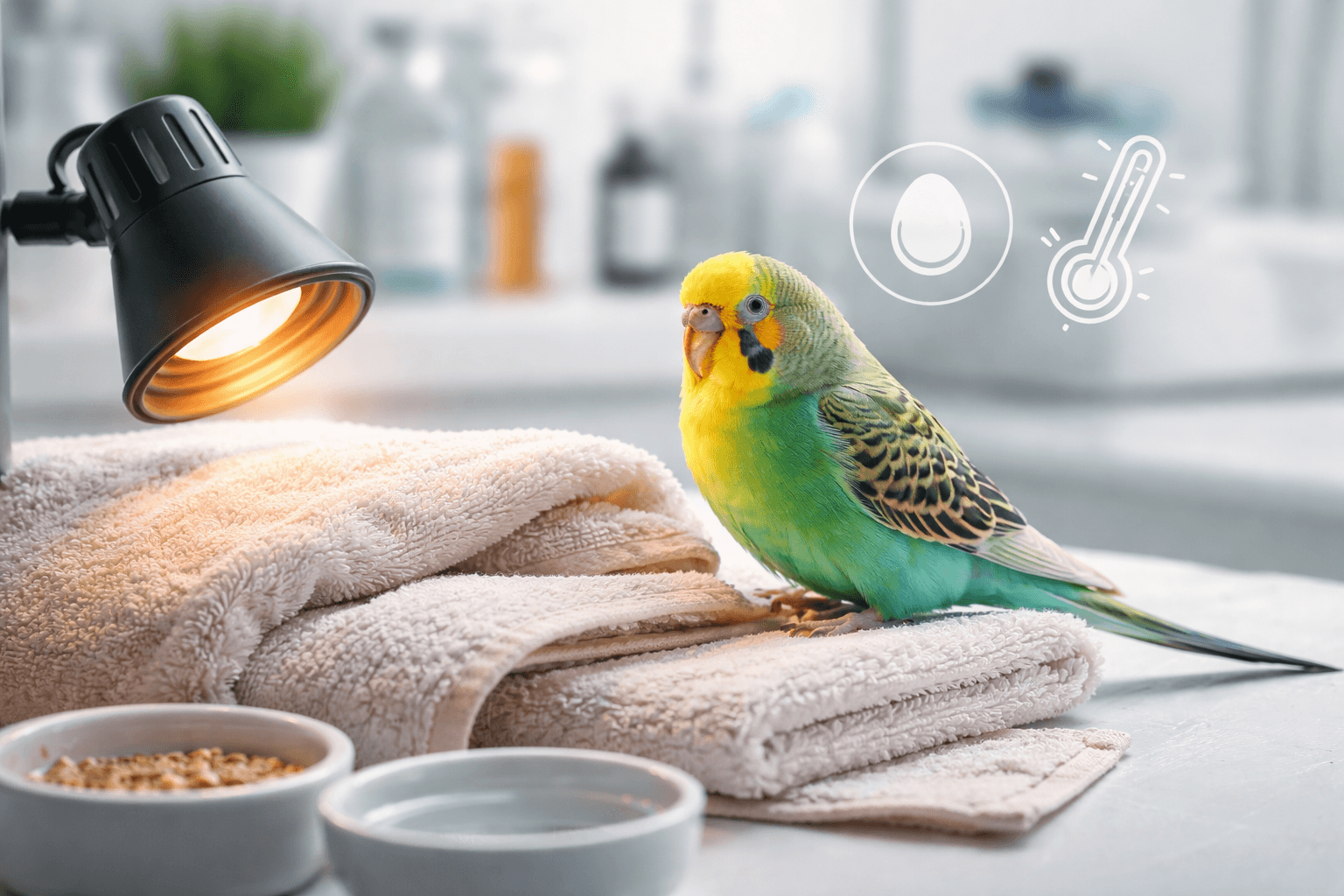
Egg binding in budgies is one of the most time-sensitive emergencies in pet birds. Egg binding in budgies means a female budgie is unable to pass an egg normally, and egg binding in budgies can become life-threatening within hours because it affects breathing, circulation, and the ability to pass droppings. If you suspect egg binding in budgies, the most important rule is: provide gentle warmth, reduce stress, and contact an avian vet urgently. This guide will help you recognize early warning signs, do safe first aid at home, understand what vets do, and prevent egg binding in the future.
- Early signs of egg binding vs normal nesting behavior
- Immediate first aid steps that are safe at home
- Danger signs that mean “emergency vet now”
- Why egg binding happens (calcium, nutrition, age, breeding triggers)
- What professional vet treatment looks like
- How to prevent repeat egg binding and chronic egg laying
- A real anonymized case from General Veterinary Hospital Lahore
Related internal guides to keep open:
Contents
- What is egg binding in budgies?
- Normal egg laying vs egg binding
- Early signs (what owners notice first)
- Emergency signs (when to rush to the vet)
- Why egg binding happens (common causes)
1) What is egg binding in budgies?
Egg binding means an egg is stuck in the reproductive tract and cannot be passed normally. In budgies, this is especially dangerous because they are small birds with delicate breathing and circulation. A stuck egg can press on internal organs, reduce blood flow, and make it hard to breathe. It can also block droppings, leading to rapid weakness and toxin buildup.
Egg binding is not the same as “she’s taking a long time to lay.” Some birds may sit quietly before laying an egg, but egg binding typically comes with signs of distress, weakness, or abnormal posture. If you are unsure, it’s safest to treat the situation urgently—because early help can save a life.
2) Normal egg laying vs egg binding
Budgies usually lay eggs in a calm, quiet nesting routine. Many owners notice increased nesting behavior first, such as spending more time in a nest box, chewing, rearranging bedding, or being protective of a corner. A healthy laying bird may look a bit heavier in the abdomen and may pass a large dropping before laying.
Egg binding is different. The bird may repeatedly strain without success, sit fluffed and weak at the cage bottom, or appear uncomfortable. She may breathe faster, tail-bob, or keep changing positions like she can’t settle. In some cases, the vent looks swollen or stained, and droppings may stop or become tiny.
| Situation | More typical of normal laying | More typical of egg binding |
|---|---|---|
| Energy & posture | Quiet, alert, still perching at times | Fluffed, weak, sitting low or on cage floor |
| Breathing | Normal breathing | Fast breathing, tail bobbing, open-mouth breathing |
| Droppings | Normal droppings, sometimes one larger dropping before laying | Very small droppings or no droppings |
| Straining | Short effort then egg laid | Repeated straining with no egg |
3) Early signs of egg binding in budgies
Egg binding often starts with subtle behavior changes. Catching it early can prevent collapse. Common early signs include:
- Fluffed feathers and staying still more than usual
- Sitting low on a perch or spending time at the cage bottom
- Frequent straining or “pushing” movements without result
- Tail bobbing or increased breathing effort
- Reduced appetite or refusing favorite foods
- Droppings become small, dry, or less frequent
- Swollen vent or staining around the vent area
4) Emergency signs: go to an avian vet immediately
- Open-mouth breathing or severe tail bobbing
- Collapse, inability to stand, or extreme weakness
- No droppings (or tiny droppings only) for several hours
- Bleeding from the vent or tissue protruding
- Cold feet, pale appearance, or unresponsive behavior
5) Why egg binding happens (common causes)
Egg binding is usually not “bad luck.” It typically happens when the body cannot produce or pass an egg safely. Common causes include:
- Low calcium (weak contractions + weak shell)
- Poor nutrition (seed-only diet, low vitamins/minerals)
- Dehydration (dry tissues make passing harder)
- Low warmth / poor environment (cold can reduce muscle function)
- Very young or older hens (immature or weakened reproductive muscles)
- Oversized egg or abnormal egg shape
- Chronic egg laying (body becomes depleted)
- Lack of exercise/obesity
Diet is a major driver of egg-laying health. If your budgie diet is mostly seeds, or you are unsure what “balanced” looks like, use: Budgie Care Guide and Bird Care Guide.
6) First aid for suspected egg binding (safe steps at home)
First aid does not “replace” a vet for egg binding, but it can stabilize your budgie while you arrange urgent care. The safest first-aid goals are:
- Warmth (supports muscle function and circulation)
- Humidity (helps tissues stay moist)
- Low stress (stress worsens breathing and exhaustion)
- Rapid vet contact (because deterioration can be fast)
Egg binding in budgies: Step A: Provide gentle warmth (most important first aid)
- Move your budgie to a small hospital cage or a small carrier lined with a towel.
- Provide external heat so one side is warm and the other side is cooler (so the bird can move away if too hot).
- Aim for a comfortably warm environment—not “hot.” If your budgie pants or holds wings away, reduce heat.
Why warmth helps: Egg laying requires coordinated muscle contractions. Cold or fluctuating temperatures can reduce muscle function, worsen shock risk, and make breathing harder.
Step B: Increase humidity safely
- Place a shallow bowl of warm water near the heat source (not where the bird can fall in).
- Alternatively, allow the bird to be in a warm, steamy bathroom for a short period while supervised.
- Humidity should support comfort, not cause overheating.
Step C: Reduce stress and handling
- Keep lighting low and noise minimal.
- Avoid repeated catching, squeezing, or belly pressing.
- Keep other birds away.
Step D: Hydration and nutrition support (only if stable)
If your budgie is alert and swallowing normally, you can offer:
- Fresh water close to her resting spot
- Moist foods (for example, fresh leafy greens) if she shows interest
If she is very weak, not swallowing, or struggling to breathe, do not force liquids—this can lead to aspiration.
Step E: Contact an avian vet and prepare information
When you call, have these details ready:
- How long she has been showing signs
- Whether she has laid eggs before
- Diet (seed-only vs pellets + greens + calcium sources)
- Any nest box, mirror, or breeding triggers in the cage
- Droppings pattern (normal vs reduced/absent)
7) What to avoid (common harmful “home remedies”)
- Oils or lubricants in the vent (can worsen contamination or cause injury)
- Human painkillers (many are toxic to birds)
- Rough handling and repeated catching
- Cold baths or chilling the bird
- Waiting overnight “to see what happens”
If you want a broader bird health foundation (safe housing, diet, stress reduction), these help: Bird Care Guide and Budgie Care Guide.
8) What the vet may do (professional treatment)
Veterinary treatment depends on how stable the budgie is and where the egg is positioned. Typical clinic care can include:
| Vet treatment | Purpose | When used |
|---|---|---|
| Warmth + oxygen support | Stabilize breathing and circulation | Weakness, breathing effort, shock risk |
| Fluids | Correct dehydration and support circulation | Most cases with reduced droppings or weakness |
| Calcium support | Improve muscle contraction and egg passage | Suspected low calcium / weak contractions |
| Imaging (X-ray) | Confirm egg position, size, and complications | When diagnosis needs confirmation |
| Assisted egg removal | Resolve obstruction safely | If egg does not pass with stabilization |
9) Why egg binding can recur (and why prevention matters)
Many budgies that bind once are at risk of binding again, especially if the root cause is ongoing (seed-only diet, calcium deficiency, chronic egg laying, nest triggers). Prevention is not optional—it’s the long-term solution.
10) Prevention: how to reduce egg binding risk in budgies
The best prevention is to reduce breeding triggers and support strong muscle function and egg quality. Most egg-binding risk factors are manageable at home with better diet, environment control, and routine habits.
Step 1: Fix the diet (seed-only is a common root problem)
Many budgies are fed mostly seeds. Seeds are tasty but often low in key nutrients, especially calcium and vitamin A. Over time, this can weaken the reproductive tract and contribute to soft-shelled eggs or poor contractions.
- Use a balanced feeding approach with pellets (where appropriate), leafy greens, and varied vegetables.
- Offer calcium sources suited to birds (your vet can guide safe options).
- Keep hydration consistent—fresh water daily, clean bowls, and moisture-rich foods.
Use these internal references for diet and care structure: Budgie Care Guide and Bird Care Guide.
Step 2: Reduce breeding triggers (this is huge)
Budgies can lay eggs even without a male, and many household triggers push the body into “breeding mode.” If your budgie is prone to laying, reduce these triggers:
- Remove nest boxes or enclosed “nest-like” huts
- Reduce dark corners, drawers, and under-furniture nesting access
- Avoid mirror bonding (mirrors can stimulate hormonal behavior)
- Control light cycles (avoid extended daylight hours)
- Limit high-fat “breeding” foods if chronic laying is an issue
Step 3: Encourage healthy movement and body condition
- Encourage safe flight or active play daily where possible
- Avoid obesity (overweight birds can have more difficulty laying)
- Provide perches of varied sizes to support normal posture
Step 4: Watch for early warning signs before the crisis
If your hen has laid before, you can often spot early risk days before a binding emergency:
- Repeated nesting behavior with increasing fatigue
- Droppings becoming less frequent
- Less interest in food
- More time sitting fluffed and quiet
11) Real case from General Veterinary Hospital Lahore (anonymized)
A female budgie was brought to our clinic after the owner noticed she was sitting at the cage bottom, fluffed, and breathing with visible tail bobbing. She had been spending a lot of time in a nest-like corner, and droppings had become smaller over the day. The owner initially thought she was “just tired,” but the rapid change in posture and breathing was the key red flag.
On examination, the bird was weak and clearly distressed. We focused on stabilization first—warming, hydration support, and careful assessment. Imaging confirmed an egg that was not progressing normally. With controlled supportive treatment and professional assistance, the egg was managed safely, and the bird’s breathing improved as the pressure resolved. The follow-up plan was the most important part: the household removed breeding triggers (nest-like spaces and excessive daylight), improved diet balance, and added a structured calcium plan guided by bird-safe practices. The owner reported no recurrence after environment and diet were corrected—because the root triggers were finally removed rather than repeatedly “treating emergencies.”
12) FAQs about egg binding in budgies
How fast can egg binding become fatal?
In small birds, deterioration can happen within hours if breathing and droppings are affected. If your budgie is weak, breathing hard, or not passing droppings, treat it as urgent.
Can a budgie be egg-bound without a male?
Yes. Female budgies can lay unfertilized eggs. Egg binding risk is related to the act of laying and the body’s condition, not fertility.
Can I feel the egg by touching the belly?
Do not press the abdomen. Eggs can break, and internal injury can occur. A vet can confirm egg position safely with imaging.
Is a warm bath safe first aid?
Warmth and humidity can help, but soaking and stress can worsen shock in weak birds. Gentle external warmth and minimal handling are safer.
My budgie keeps laying eggs—what should I do?
Chronic egg laying needs a prevention plan: remove nest triggers, control light cycles, and optimize diet. Use: Budgie Care Guide.
13) Final note
Helpful internal guides:







4 Comments