Cat Behavior & Health Guide
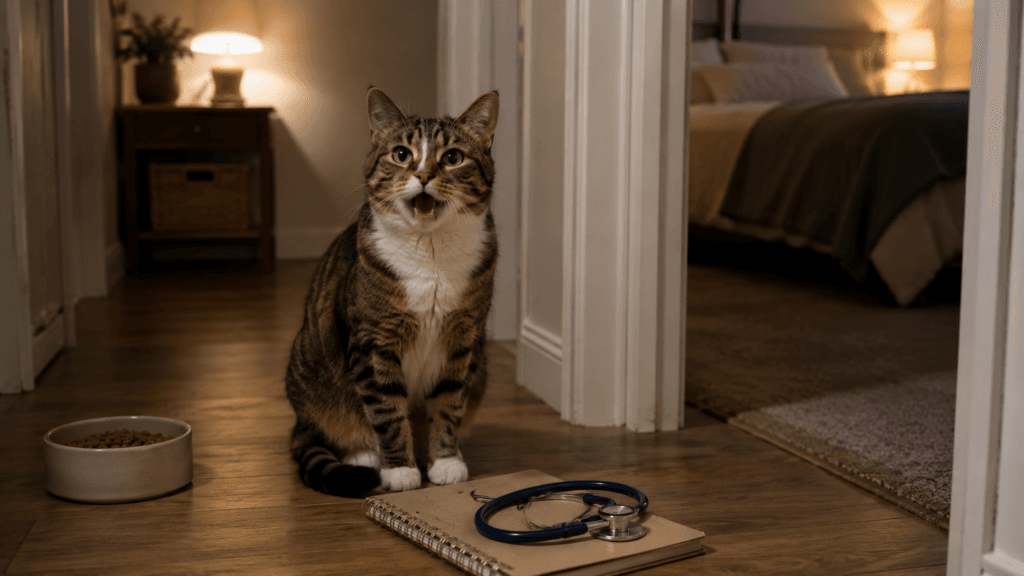
A cat meowing at night can leave the whole house awake, but the reason is not always simple. Some cats meow at night because they are hungry, bored, lonely, or following a learned routine. Other cats vocalize after dark because of pain, anxiety, poor vision, high blood pressure, kidney disease, hyperthyroidism, or age-related cognitive changes. If your cat meowing at night is new, louder than usual, paired with weight loss, thirst, litter box changes, hiding, or confusion, it should be treated as a health clue rather than just annoying behavior.
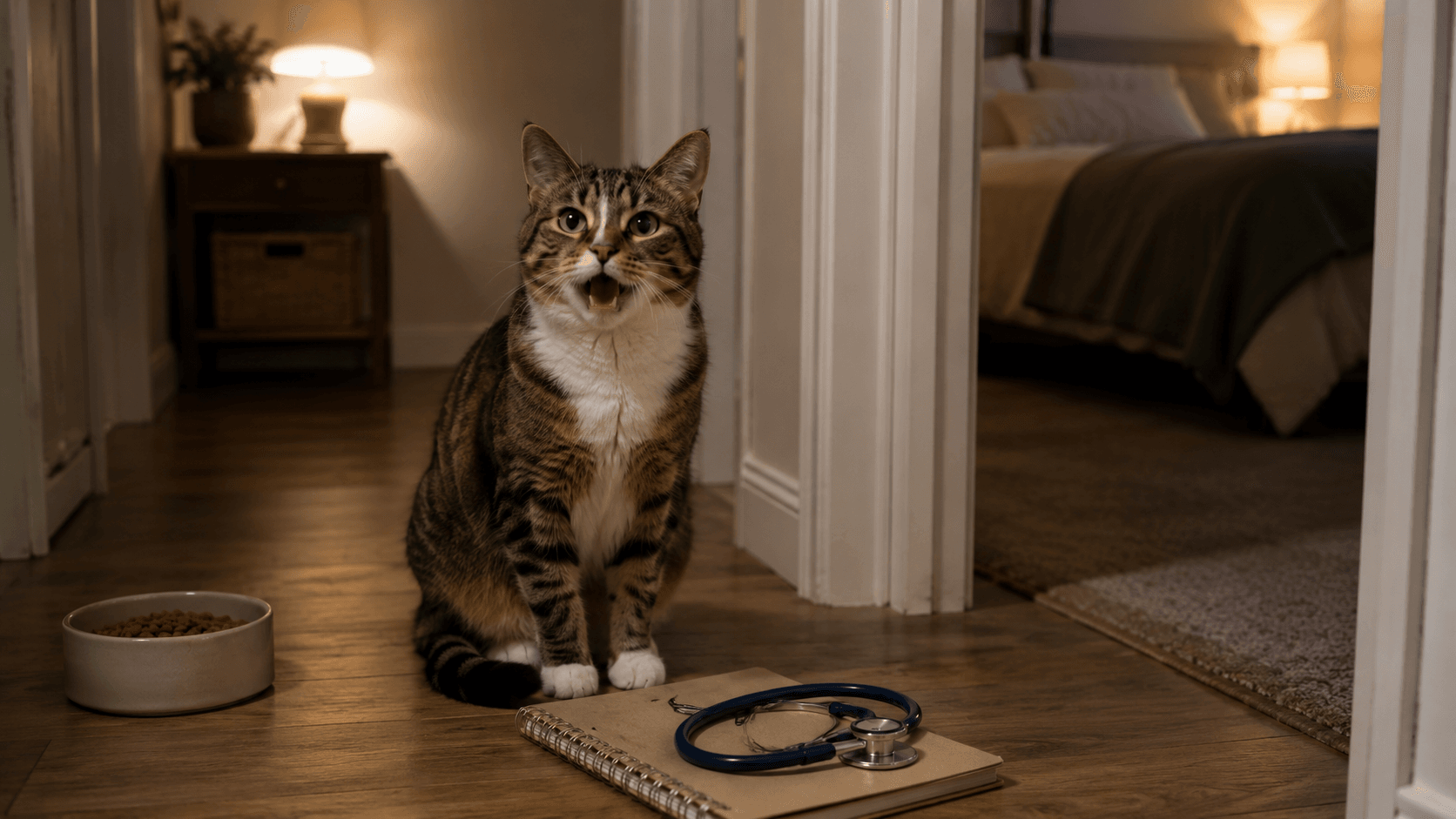
Night-time meowing is one of those cat problems that sounds harmless until it becomes a pattern. A cat may yowl in the hallway at 3 a.m., cry outside a bedroom door, walk around the house vocalizing, or sit near the food bowl demanding attention. For some cats, this is a behavioral routine. For others, it is the first sign that something has changed physically or emotionally.
At General Veterinary Hospital Lahore, Dr Zahid Afzal DVM often reminds cat owners that a vocal cat is not automatically a dramatic cat. Cats use sound when they want food, comfort, access, help, or attention. The important question is whether the meowing is normal for that individual cat or whether it has changed in timing, tone, intensity, or frequency.
This guide is written for cat owners in the US, UK, Canada, Australia, and other English-speaking regions who want a practical, veterinary-style explanation. It will help you separate normal night noise from warning signs that deserve a veterinary exam.
Quick Check: Is Night Meowing Urgent?
Book a vet appointment soon if your cat is meowing at night and you also notice any of these signs:
- Weight loss, increased appetite, or a thin body despite eating well
- Drinking more water or urinating more often
- Vomiting, diarrhea, constipation, or reduced appetite
- Bad breath, drooling, pawing at the mouth, or difficulty chewing
- Hiding, limping, stiffness, aggression, or reluctance to jump
- Confusion, staring, pacing, getting stuck in corners, or disturbed sleep
- Sudden loud yowling, collapse, breathing trouble, seizures, or severe distress
Why Do Cats Meow at Night?
Cats are naturally active during dawn and dusk, and many adjust their sleep patterns around the household routine. A cat may sleep during the day while people are working, then become alert at night when the home is quiet. If the cat has learned that meowing brings food, play, or bedroom access, the behavior can repeat every night.
However, sudden night vocalization deserves more respect. Cats are skilled at hiding discomfort during the day. At night, when the house is silent and stimulation is low, discomfort, confusion, hunger, or anxiety may become more obvious. This is especially common in senior cats.
A useful way to understand the problem is to ask: “Is my cat asking for something, reacting to something, or showing a symptom?” The answer often becomes clearer when you look at age, appetite, thirst, litter box habits, weight, and mobility.
Behavior Pattern
Meowing happens near feeding time, bedroom doors, or play areas. The cat is otherwise healthy, stable in weight, and quiets with a routine change.
Medical Pattern
Meowing is new, louder, restless, painful-sounding, or paired with weight loss, thirst, poor appetite, hiding, vomiting, or litter box changes.
Senior Cat Pattern
Meowing happens with pacing, confusion, staring, poor vision, sleep disruption, or anxiety in an older cat that used to be calm at night.
1. Hunger, Feeding Routine, or Learned Attention
The most common non-medical reason for a cat crying at night is simple: the cat expects something. If your cat gets breakfast early, receives a treat after meowing, or is fed whenever you wake up, the cat may learn that night noise works.
This does not mean the cat is being “bad.” Cats repeat what gets results. If meowing brings food once or twice, some cats will keep testing the system. Automatic feeders, measured evening meals, puzzle feeders, and a consistent routine can help break the cycle.
Still, hunger should not be dismissed if the appetite has changed. A cat that is suddenly hungry all the time, losing weight, restless, or yowling more may need testing for hyperthyroidism, diabetes, digestive problems, or other disease. Your article on why cats lose weight is a strong internal link for this situation.
2. Boredom and Lack of Evening Activity
Indoor cats need hunting-style activity. If a cat spends the day sleeping and has no structured play before bedtime, it may become active when people want to sleep. This is especially common in young cats, single indoor cats, and cats living in quiet apartments or homes with predictable routines.
A better evening routine can make a major difference. Try ten to fifteen minutes of wand-toy play, followed by a small measured meal. This mimics a natural hunt, eat, groom, and sleep cycle. Rotate toys, add climbing spaces, use food puzzles, and offer safe window viewing during the day.
Do not respond to every night meow with food or attention if your cat has been medically cleared. Responding repeatedly teaches the cat that louder meowing creates a better result. The goal is not punishment; the goal is a stable routine that gives attention before bedtime, not at 3 a.m.
Vet Insight from Dr Zahid Afzal DVM
When a cat starts vocalizing at night, the most useful detail is whether the cat has changed in other ways. A healthy young cat that wants play is different from a senior cat losing weight, drinking more, or walking around confused. The meow is the sound; the body changes tell the story.
3. Pain That Becomes More Noticeable at Night
Pain is a major reason cats vocalize, especially when the sound is sudden, sharp, repeated, or different from normal. Cats may meow at night because moving around hurts, jumping down is uncomfortable, arthritis is worse after resting, dental pain flares, or an internal problem causes nausea or discomfort.
Many cats do not limp dramatically. Instead, they stop jumping onto favorite furniture, sleep more, hide, growl when touched, avoid stairs, miss the litter box, or become less tolerant of handling. Some cats vocalize only when they move, use the litter box, or try to settle.
If you suspect pain, connect readers with your guide on subtle signs cats are hiding pain. If the cat also has mouth odor, drooling, chewing difficulty, or pawing at the face, your article on bad breath in cats is a natural internal link.
4. Hyperthyroidism in Older Cats
Hyperthyroidism is one of the classic medical causes of cat yowling at night, especially in middle-aged and senior cats. It happens when the thyroid gland produces too much thyroid hormone, speeding up the body’s metabolism.
A cat with hyperthyroidism may seem restless, hungry, thin, vocal, anxious, overactive, or unable to settle. Owners may notice weight loss despite a good or increased appetite, more thirst, more urination, vomiting, diarrhea, a rough coat, or a fast heartbeat. Night-time meowing may be one of the behaviors that finally makes the owner realize something is wrong.
This topic should internally link to your existing article on hyperthyroidism in cats. It is one of the most relevant supporting pages for this article and helps build topical authority around senior cat health.
5. High Blood Pressure and Vision Changes
Some cats vocalize at night because they feel disoriented or anxious when vision changes. High blood pressure can occur with conditions such as kidney disease or hyperthyroidism and may affect the eyes. A cat with sudden vision trouble may bump into objects, hesitate on stairs, have wide pupils, seem nervous in dim light, or cry more in unfamiliar spaces.
If a cat suddenly yowls, acts confused, or seems unable to see normally, veterinary attention should not be delayed. Eye changes can be time-sensitive, and blood pressure measurement may be important in older cats.
Your cat eyes guide is a useful internal link when discussing pupil changes, eye appearance, and vision concerns.
6. Kidney Disease and Night Restlessness
Chronic kidney disease is common in older cats and can cause several changes that indirectly lead to night vocalization. A cat may feel nauseous, dehydrated, uncomfortable, hungry but unwell, or restless. Owners may notice increased thirst, larger urine clumps, weight loss, poor appetite, vomiting, bad breath, constipation, or dull coat.
Night meowing alone does not diagnose kidney disease. But night meowing plus increased drinking, weight loss, litter box changes, or vomiting should prompt testing. Blood work, urinalysis, blood pressure checks, and body weight tracking can help your vet understand what is happening.
For readers with senior cats, link to your article on cat kidney disease symptoms, stages, and treatment. If the cat is not eating well, also link to why a cat is not eating.
Night Meowing Clues: What the Pattern May Mean
| What You Notice | Possible Cause | What to Do |
|---|---|---|
| Meows near food bowl before breakfast | Learned routine, hunger, early feeding habit | Use measured meals or an automatic feeder |
| Meows and loses weight despite eating | Hyperthyroidism, diabetes, digestive disease, other illness | Book vet exam and blood/urine testing |
| Meows after using litter box | Urinary pain, constipation, arthritis, stress | Check litter habits and contact a vet |
| Senior cat paces and yowls at night | Cognitive dysfunction, pain, hypertension, vision loss | Senior cat health check |
| Meows with hiding, aggression, or touch sensitivity | Pain, injury, dental disease, internal illness | Avoid forcing handling; schedule exam |
7. Feline Cognitive Dysfunction in Senior Cats
Old cat meowing at night is often linked to age-related changes, especially if the cat seems confused or unsettled. Feline cognitive dysfunction is sometimes compared to dementia-like change in people. It can affect sleep cycles, memory, awareness, social behavior, and litter box habits.
Signs may include pacing, staring at walls, getting stuck behind furniture, seeming lost in familiar rooms, sleeping more during the day, waking at night, crying without an obvious reason, or seeking more reassurance. Some cats become clingier, while others become irritable or withdrawn.
There is no single home test for cognitive dysfunction. A vet usually needs to rule out pain, kidney disease, hyperthyroidism, high blood pressure, vision problems, and other medical issues first. Once other causes are addressed, environmental support can help: night lights, predictable routines, easy litter box access, comfortable bedding, and gentle evening interaction.
8. Litter Box Pain, Urinary Problems, or Constipation
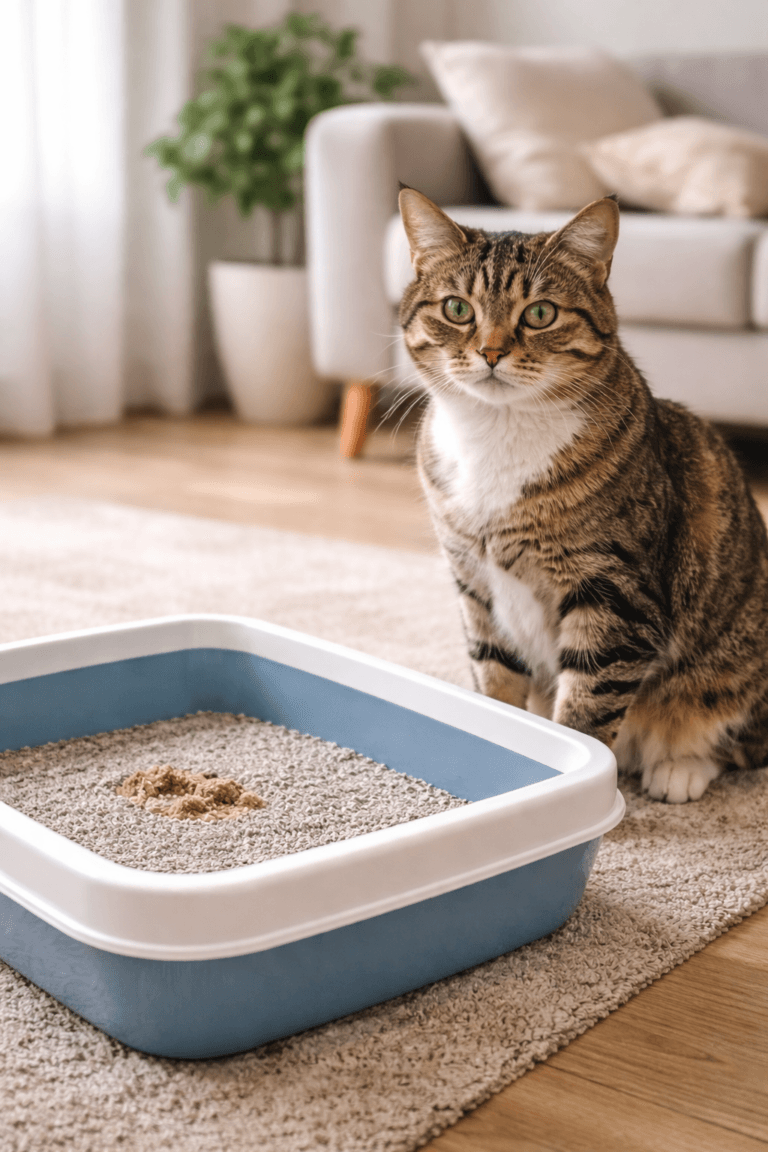
A cat vocalizing at night may be uncomfortable in or around the litter box. Urinary pain, bladder inflammation, constipation, anal discomfort, arthritis, or difficulty climbing into the box can all change behavior. Some cats cry before or after using the box. Others visit repeatedly, produce only small amounts, or avoid the box completely.
Male cats with urinary blockage can become critically ill, so straining with little or no urine is an emergency. Other warning signs include frequent trips to the litter box, blood in urine, crying while trying to urinate, vomiting, lethargy, or a painful belly.
Internal links should guide readers to why cats pee outside the litter box, urinary blockage in cats, and constipation in cats depending on the signs they notice.
Emergency Warning
Seek urgent veterinary care if your cat is yowling and cannot urinate, is breathing with difficulty, collapses, has seizures, seems blind suddenly, has a swollen painful belly, vomits repeatedly, or appears severely weak. These signs should not be managed as normal night behavior.
9. Anxiety, Stress, and Environmental Change
Cats may meow at night when they feel insecure. A new home, new baby, new pet, construction noise, schedule changes, moving furniture, loss of a companion, or outdoor cats near windows can all trigger night vocalization. The cat may patrol, cry, hide, spray, overgroom, or seek constant reassurance.
Stress-related meowing is more likely when the cat is otherwise healthy and the timing matches a recent change. Still, stress and illness can overlap. A cat with pain may become anxious. A cat with poor vision may cry more in the dark. A cat with hyperthyroidism may seem restless and emotionally unsettled.
Helpful changes include predictable feeding, quiet sleeping spaces, vertical perches, gentle play, covered resting areas, clean litter boxes, and reducing outdoor-cat triggers near windows. Avoid shouting or punishment. A scared cat does not become calmer because people become louder.
10. Hearing Loss or Sensory Changes
Some older cats become louder because they cannot hear themselves normally or because sensory decline makes them less confident. A cat with hearing loss may startle easily, sleep deeply, ignore calls, or vocalize at a higher volume. Vision decline can also make a cat less comfortable moving through dark spaces.
Night lights, clear walking paths, low-entry litter boxes, and keeping important resources in predictable locations can help. Do not rearrange furniture frequently for a senior cat with poor vision or memory. Consistency is a form of comfort.
What Your Vet May Check
A vet visit for cat meowing at night is not just about stopping noise. It is about identifying whether the cat is uncomfortable, ill, anxious, or confused. The exam and testing plan depends on age and symptoms.
Weight & Body Condition
Weight loss can point toward hyperthyroidism, kidney disease, diabetes, cancer, dental disease, or digestive problems.
Oral Exam
Dental pain can cause night restlessness, bad breath, drooling, reduced appetite, or chewing changes.
Blood Work
Blood tests may screen thyroid hormone, kidney values, liver values, glucose, anemia, and inflammation.
Urinalysis
Urine testing helps assess kidney function, diabetes clues, urinary infection, hydration, and bladder concerns.
Blood Pressure
Important for senior cats, especially when kidney disease, hyperthyroidism, or sudden vision change is suspected.
Pain & Mobility Check
Arthritis, injury, spinal pain, and weakness may change sleep, jumping, litter box use, and vocalization.
Dr Zahid Afzal DVM’s practical approach is to avoid labeling a cat as “attention-seeking” until basic health questions are answered. A behavior plan works best when pain, thyroid disease, kidney disease, blood pressure problems, dental disease, and urinary discomfort have been considered.
Home Plan for a Cat Meowing at Night
If your cat is stable and not showing emergency signs, start with a calm seven-day observation plan. This helps you see patterns and gives your vet better information if the problem continues.
- Write down the time of meowing and what happens before and after it.
- Track appetite, water intake, vomiting, stool, and litter box habits.
- Check whether your cat is losing weight or feeling thinner over the spine and hips.
- Use evening play followed by a measured meal before bedtime.
- Try an automatic feeder if early breakfast begging is the main trigger.
- Provide night lights for senior cats or cats with vision changes.
- Add easy-access litter boxes, especially for older or arthritic cats.
- Avoid rewarding night meowing with repeated treats unless medically needed.
If the meowing continues despite routine changes, or if any health signs appear, book a veterinary appointment.
What Not to Do
Do Not Punish the Cat
Yelling, spraying water, locking the cat away, or frightening the cat can increase stress and make night behavior worse. If the cat is meowing from pain or confusion, punishment is especially unfair and unhelpful.
Do Not Assume It Is “Just Old Age”
Old age is not a diagnosis. Senior cats can have treatable problems such as hyperthyroidism, high blood pressure, dental pain, arthritis, kidney disease, constipation, and urinary discomfort. Night vocalization may be the sign that finally brings attention to the issue.
Do Not Keep Changing Food Randomly
Food changes may help some cats, but random switching can trigger digestive upset or hide appetite patterns. If weight loss, vomiting, or poor appetite is present, use veterinary guidance instead of trial-and-error feeding.
FAQs About Cat Meowing at Night
Why does my cat meow at night for no reason?
There is usually a reason, even if it is not obvious. Common causes include hunger, boredom, learned attention, anxiety, pain, hyperthyroidism, kidney disease, high blood pressure, vision changes, or cognitive dysfunction in older cats.
Why is my old cat yowling at night?
Old cat yowling at night may be linked to cognitive dysfunction, pain, arthritis, hearing loss, poor vision, high blood pressure, kidney disease, or hyperthyroidism. A senior cat with new night vocalization should have a veterinary checkup.
Should I ignore my cat meowing at night?
You can ignore attention-seeking meowing only after health concerns are unlikely. Do not ignore sudden, painful, distressed, or senior-cat vocalization, especially with weight loss, thirst, vomiting, litter box problems, or confusion.
Can hyperthyroidism make cats meow at night?
Yes, hyperthyroidism can make cats restless, hungry, thin, overactive, and more vocal. It is especially important to consider in middle-aged and senior cats with weight loss despite eating well.
Why does my cat cry at night near the litter box?
Crying near the litter box may suggest urinary pain, constipation, arthritis, bladder inflammation, or blockage. A male cat straining with little or no urine needs emergency veterinary care.
How can I stop my cat waking me up at night?
Start with evening play, a measured bedtime meal, a predictable routine, food puzzles, automatic feeders, and avoiding rewards for night noise. If the behavior is new or linked to health signs, see a vet before treating it as a habit.
Final Takeaway
A cat meowing at night may be asking for food, play, comfort, or access. But a cat that suddenly starts yowling, pacing, crying, or vocalizing after dark may also be showing pain, thyroid disease, kidney disease, high blood pressure, vision problems, urinary discomfort, or age-related cognitive change.
The safest approach is simple: study the pattern, check the body signs, improve the evening routine, and do not ignore medical clues. If your cat is older, losing weight, drinking more, using the litter box differently, hiding, vomiting, or acting confused, schedule a veterinary exam. Quiet nights are important, but your cat’s health is more important than the noise itself.
Medical disclaimer: This article is for educational purposes only and does not replace veterinary examination, diagnosis, or treatment. If your cat is distressed, unable to urinate, breathing abnormally, collapsing, vomiting repeatedly, or suddenly blind or confused, contact a veterinarian urgently.