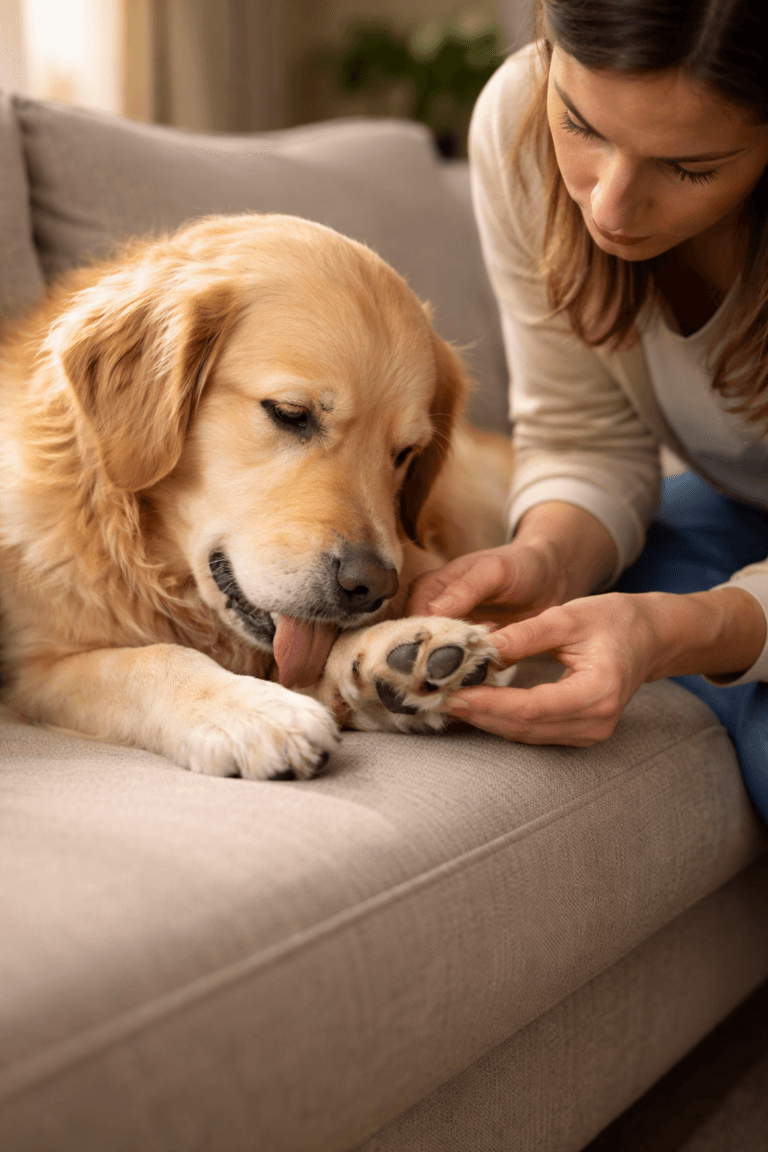
Xylitol poisoning in dogs is an emergency that can begin with an ordinary household accident: a chewed gum packet, a dropped supplement or a dog licking a product intended for people. The dog may look normal when you discover the exposure. That does not make waiting safe. Contact a veterinarian or emergency animal hospital immediately if xylitol may have been swallowed.
This guide is organised around the decisions an owner needs to make: what information to gather, what to avoid doing at home, what monitoring may involve and how to prevent another exposure. If the accident is happening now, use the first action card and call the clinic. Do not read the whole article before seeking help.
Why xylitol poisoning in dogs is dangerous
Xylitol is a sugar alcohol used in some foods and other products. In dogs, ingestion can trigger excessive insulin release and a dangerous fall in blood glucose. Some exposures also cause serious liver injury. These are related concerns, but they are not the same problem, and improvement in one does not automatically rule out the other.
The risk depends on the actual xylitol content, the amount eaten and the dog’s size. A product description alone rarely supplies all that information. Two packets that look similar may have different ingredients or concentrations. A small dog and a large dog also receive different amounts relative to body weight when they eat the same item.
This is why a dose calculation belongs with the veterinary team or an animal poison service. Do not decide that one piece of gum is safe from a social media example involving another brand or another dog. Unknown quantity is a reason to seek professional assessment, not a reason to assume a harmless exposure.
Products to check when a packet is chewed
Xylitol may be present in sugar-free gum, sweets, some nut butters, baked products, oral-care items and certain supplements or medicines. Not every sugar-free product contains it. The ingredient list is more useful than the label on the front. Xylitol may also be marketed as birch sugar or wood sugar.
Check the exact item involved. Photograph the front, the ingredients and any panel that identifies the serving size. If the product came from another country, keep the original-language label and any retailer information. Do not throw away the damaged packet while tidying the room: it may contain the details the clinic needs.
For homemade food, identify the sweetener used and keep its container. A cake may look like an ordinary baked treat while containing a sugar replacement. If somebody else made the food, contact them for the recipe while another person calls the veterinarian. Gathering information should happen alongside arranging care, not before it.
| Possible source | What to take or photograph | Important caution |
|---|---|---|
| Gum or sweets | Exact packet and remaining pieces | Brands and formulations differ |
| Nut butter | Jar and ingredient list | Check before using it for pills |
| Supplement or medicine | Container, strength and leaflet | Other active ingredients may also matter |
| Homemade baking | Recipe and sweetener container | Appearance does not establish ingredients |
Signs to report immediately
Vomiting, unusual tiredness, weakness, unsteady walking, shaking, collapse or seizures can occur with xylitol toxicity. Later liver-related problems may include yellowing of tissues or abnormal bleeding. The presence or absence of a particular sign does not establish whether the exposure is safe. Give the clinic a factual description of what has changed.
If the dog is suddenly staggering, describe when that began and whether the dog can stand. If vomiting occurred, note how many episodes you saw and whether you found product in the material. Do not handle vomit unnecessarily or spend time searching it while the dog needs urgent transport. A photograph can be useful only if it does not delay care.
During a seizure, move nearby hazards away and keep hands out of the dog’s mouth. Do not force food, water or medicine into a dog that is weak, unconscious, seizing or unable to swallow normally. Our scheduled guide to seizure first aid in dogs explains safe handling; suspected poisoning still requires immediate veterinary help.
Why a normal-looking dog still needs assessment
Blood glucose problems can develop quickly, while onset can also be delayed by the product involved. Liver injury may become apparent later. There is no single waiting period an owner can use to declare every exposure safe. A quiet evening after an accident does not replace the monitoring plan recommended by the veterinarian.
Tell the clinic whether the exposure time is known or estimated. “I watched him eat it ten minutes ago” and “I found a torn packet when I returned from work” describe different uncertainties. If the second situation applies, explain when the dog was last definitely away from the product. Do not present an estimate as a confirmed time.
A dog may be eating, wagging its tail or asking to play when you make the call. Report that too, but do not use it to cancel the concern. The team assesses the product and possible dose together with the dog’s condition. Early contact gives them more options than waiting until the dog visibly deteriorates.
Make the first phone call useful
Start with the suspected exposure: “My dog may have eaten a xylitol-containing product.” Then give the approximate weight, time, product name and quantity missing. Mention any symptoms, current medicines and relevant medical conditions. If information is uncertain, say so clearly. A concise account helps the team triage without a long conversation about unrelated history.
One person can call while another gathers packaging and prepares transport. If you are alone, prioritise contact with the clinic. Put the packet in a bag you can take with you. Do not drive while reading ingredient lists or sending messages. Arrange another driver where possible, especially if the dog needs supervision during the journey.
Ask which facility can receive the dog and whether it has the monitoring required. A clinic may direct you to an emergency hospital. Follow that direction rather than making several stops simply because one building is closer. In Lahore, contact an available local veterinary emergency provider; an online message should not replace urgent examination.
Home treatments that can complicate the emergency
Do not make the dog vomit using salt, a finger in the throat or an improvised mixture. Veterinary decisions about vomiting depend on timing, the product and whether the dog remains clinically suitable. A dog with neurological signs or impaired swallowing needs particular caution. Give the team an honest account if somebody has already tried a home method.
Do not assume activated charcoal will solve the problem. It does not effectively bind xylitol. Similarly, a sweet drink, a large meal or a supplement is not a substitute for assessment and monitoring. If the clinic gives a specific first-aid instruction for your dog’s situation, follow that instruction; do not adapt a treatment copied from an unrelated online case.
Avoid blaming the person who dropped the packet while the emergency is unfolding. The immediate tasks are finding the product, contacting care and transporting the dog safely. Discuss prevention afterward. Arguments often lose the very information needed to identify the exposure, especially when a child or visitor is afraid to admit what happened.
What veterinary assessment and treatment may involve
The veterinary team will evaluate the exposure history, examine the dog and assess blood glucose. Depending on risk, monitoring can include liver values and other blood tests. Treatment may involve supervised decontamination where appropriate, intravenous glucose support and management of complications. The plan depends on clinical findings; it is not a standard home recipe. See the Merck clinical overview of xylitol treatment.
Serial tests matter because a single measurement is a snapshot. Ask the veterinarian to explain which risks are being monitored and what would change the plan. A dog may need continued observation even after appearing brighter. Request updates about both current condition and the criteria used to decide when discharge is suitable.
If hospitalisation is advised, ask about expected reassessment times and how you will receive updates. Discuss costs early enough to make practical arrangements, but do not treat a normal initial result as proof that recommended monitoring is unnecessary. The team can explain which parts of the plan address immediate glucose problems and which assess later injury.
Discharge is the beginning of a written follow-up plan
Before taking the dog home, ask for instructions you can read later. These should explain medication, meals, activity, recheck appointments and signs that require an immediate return. Confirm whether further blood tests are needed and exactly when. If two adults share care, both should know the plan rather than relying on a verbal message passed from one to the other.
Use a simple recovery note with the time of each meal, medication and any unusual behaviour. You do not need a complicated spreadsheet. An entry such as “ate usual evening portion, walked normally, no vomiting” gives the clinic useful context if you call. Mark missed medication separately and ask what to do rather than automatically doubling the next dose.
Contact the treating team if appetite changes, vomiting returns, activity drops or you see any concerning sign described in the discharge instructions. The dog vomiting guide offers broader context, but it should not override the plan for a recent poisoning exposure. Follow-up advice from the team that examined the dog takes priority.
Prevent the next exposure room by room
Start with the place where the accident happened. Put gum, sweets and supplements in a closed cupboard the dog cannot open, rather than moving them to another low surface. Bags are common storage gaps: a handbag placed on the floor can provide access even when the kitchen is carefully organised. Give visitors a safe place for bags on arrival.
Check bathroom products and medicines as well as food. A dog that chews containers may reach oral-care products or flavoured supplements. Keep them in secure storage and close the door when necessary. Use toothpaste intended for pets when caring for the dog’s teeth. Our home dental-care guide for dogs explains a safer routine.
For nut butter used to hide tablets, read the ingredient list each time you buy a new jar. Do not assume a familiar label guarantees an unchanged formulation. Keep one clearly identified suitable product for the dog’s use and store human products separately. This prevents well-meaning family members from choosing a different jar because it looks similar.
Prepare children and guests with a simple instruction: never offer the dog gum, sweets, supplements or an unknown snack. If something is dropped, tell an adult immediately. A calm response encourages reporting. The goal is to discover accidents quickly rather than create a rule that people conceal because they expect punishment.
Remember other ingredients and hazards
A product containing xylitol may also contain chocolate, caffeine, medication or packaging that matters clinically. Report the whole item rather than only the sweetener. The clinic needs the product name and all available information to assess combined risks. Keep wrappers or bottles even if you believe you have already identified the principal concern.
The article on chocolate poisoning in dogs covers a different toxin. Its dose guidance should not be used to calculate xylitol risk. Similarly, general pet first-aid advice helps with preparation but does not replace product-specific veterinary assessment.
Store the emergency clinic’s contact details where every caregiver can find them. Include your dog’s current weight and medication list in the same note. Review it when the dog’s treatment changes. This small preparation makes a future emergency call faster without encouraging anyone to manage poisoning independently.
Questions owners commonly ask
My dog ate only one piece of gum. Is that safe?
You cannot establish safety from the piece count alone. Products differ in xylitol content, and dog size matters. Contact the veterinarian with the exact packet and the maximum amount that could be missing.
Does sugar-free always mean xylitol?
No. Check the ingredients. If the packet is missing, torn or unclear, explain that uncertainty to the clinic instead of guessing which sweetener was used.
Can I wait until symptoms appear?
No. Suspected ingestion warrants immediate contact. Waiting can delay care during a period when the dog still looks normal.
Will my dog recover?
Prompt treatment can lead to recovery, but the outcome depends on the exposure and complications. Ask the treating veterinarian for an assessment based on your dog’s examinations and monitoring results.