
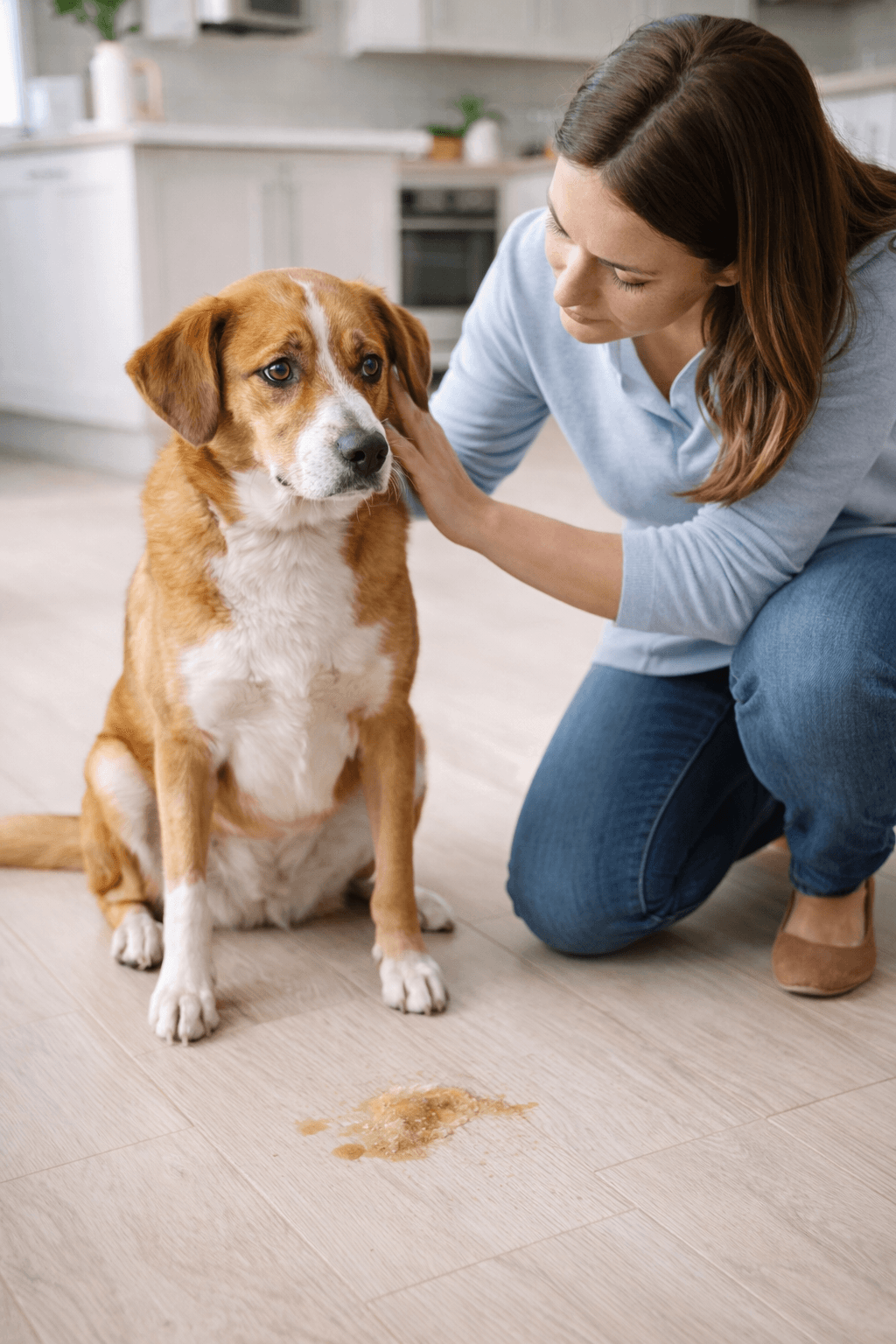
Vomiting in dogs is one of the most common reasons pet parents call or visit a veterinarian. Sometimes it is caused by something simple, such as eating too much or too fast. Other times, vomiting in dogs is the first warning sign of a serious emergency. This vet-approved guide explains what vomiting in dogs really means, common causes, when you can monitor at home, and when you must see a vet urgently.
Our goal is to help you stay calm, understand what might be happening inside your dog’s body, and make the safest decision for your dog’s health.
Vomiting in Dogs vs. Regurgitation: What Is the Difference?
People often use the word “vomiting” for any situation where food or fluid comes back up, but in veterinary medicine vomiting and regurgitation are not the same thing. Understanding the difference helps your vet narrow down the cause faster.
Characteristics of true vomiting in dogs
- Usually preceded by nausea: drooling, lip licking, swallowing repeatedly, restlessness, or hiding.
- Active abdominal effort: you see the belly contract in a heaving or retching motion.
- Material is often partially digested, mixed with yellow bile or foam, and may have a sour smell.
- Dogs may seem lethargic or lose interest in food around the time of vomiting.
Characteristics of regurgitation
- Happens suddenly without warning, effort, or nausea.
- Material is usually undigested food that comes up shortly after eating and often keeps its original shape.
- The dog may seem completely normal before and after the episode.
Both vomiting in dogs and regurgitation can be serious, but they point to different parts of the digestive tract. Vomiting usually indicates a problem in the stomach or intestines, while regurgitation often involves the oesophagus (food pipe) or swallowing issues. Always describe exactly what you saw when you speak to your vet.
When Is Vomiting in Dogs an Emergency?
Not every episode of vomiting in dogs is an emergency. Many healthy dogs vomit once and then go back to normal. However, certain situations need immediate veterinary care because they can be life-threatening if you wait.
Red-flag signs: call a vet or emergency clinic at once if your dog
- Vomits repeatedly (more than 2–3 times in 24 hours) or cannot keep water down.
- Is very weak, collapsed, or unwilling to stand or walk.
- Has a swollen, tight, or painful abdomen, especially if trying to vomit but nothing comes up (possible bloat or GDV).
- Shows blood in the vomit or in the stool (bright red or coffee-ground appearance).
- Has pale, white, or blue gums.
- Has known health problems such as kidney disease, liver disease, diabetes, Cushing’s disease, or heart disease.
- Is a very young puppy, a toy-breed dog, a senior dog, or is very small and thin.
- May have eaten something toxic (rat poison, human medicines, chocolate, grapes, xylitol, etc.), a foreign object, or a sharp bone.
- Has severe diarrhoea as well as vomiting, especially if not vaccinated or if recently adopted from a shelter.
These signs can be associated with conditions such as gastric dilatation–volvulus (bloat), acute pancreatitis, foreign bodies, severe infections like parvovirus, or internal organ failure. All of these require rapid veterinary attention and often hospitalisation.0
How Vets Classify Vomiting in Dogs
To understand how serious vomiting in dogs might be, vets think about two main questions: Is it acute or chronic, and is the dog otherwise bright or clearly unwell?
Acute vs. chronic vomiting
- Acute vomiting starts suddenly and has been present for a short time (hours to a few days). Dietary indiscretion (“garbage gut”), sudden diet change, mild stomach infections, and motion sickness are common causes.1
- Chronic vomiting lasts for weeks, or keeps coming back again and again. Chronic vomiting in dogs raises concern for deeper problems such as chronic enteropathy (IBD), food allergies, endocrine diseases, kidney or liver disease, or even some cancers.2
When you contact your vet, be ready to explain how long the vomiting in your dog has been happening, what the vomit looks like, any changes in diet or treats, and whether your dog is drinking, eating, urinating, and behaving normally.
Common Causes of Vomiting in Dogs
There are many possible causes of vomiting in dogs. Some are mild and self-limiting, while others are life-threatening. Only your veterinarian can make a final diagnosis, but this overview can help you understand what they are looking for.
1. Dietary indiscretion (“garbage gut”)
This is one of the most frequent causes of acute vomiting in dogs. Dogs may raid the trash, eat spoiled food, swallow table scraps that are too fatty, or chew on foreign material such as toys, socks, or sticks. This irritates the stomach and intestines and can cause vomiting, diarrhoea, gas, and abdominal discomfort.3
2. Sudden diet change or food intolerance
Changing your dog’s food too quickly can upset the gut, especially in sensitive dogs. Some dogs also react to certain proteins, grains, or additives. In these cases vomiting in dogs may be accompanied by soft stools, gas, or skin problems like itching and ear infections.
3. Intestinal parasites and infections
Worms (roundworms, hookworms, whipworms), protozoa (Giardia), and some bacterial or viral infections can cause vomiting in dogs, often together with diarrhoea, weight loss, or a dull coat. Regular deworming and vaccination significantly reduce the risk of serious infectious causes such as parvovirus.4
4. Toxins and poisons
Ingestion of chemicals, poisonous plants, human or animal medicines, rodent bait, pesticides, or toxic foods (for example chocolate, grapes, raisins, onions, xylitol) may lead to sudden, often severe vomiting in dogs. These situations should always be treated as emergencies, even if the dog looks normal at first.
5. Foreign bodies and obstructions
Dogs, especially youngsters, sometimes swallow toys, bones, pieces of fabric, corn cobs, or stones that cannot pass through the intestines. This can cause repeated vomiting, abdominal pain, drooling, restlessness, and refusal to eat. Obstructions are painful and can cut off the blood supply to parts of the intestines, so surgery is often required.5
6. Pancreatitis
Pancreatitis is inflammation of the pancreas, often triggered by eating a very fatty meal, a sudden diet change, or sometimes without a clear cause. Dogs with pancreatitis typically have vomiting, abdominal pain, loss of appetite, and lethargy. Some cases are mild, but others are life-threatening and require intensive hospital care.6
7. Kidney or liver disease
When the kidneys or liver are not working properly, toxins build up in the bloodstream and can trigger nausea and vomiting in dogs. Other signs may include increased thirst and urination, weight loss, bad breath, jaundice (yellow eyes or gums), or changes in behaviour.
8. Hormonal and metabolic diseases
Diseases such as diabetes mellitus, Addison’s disease (hypoadrenocorticism), and hyperthyroidism (rare in dogs but seen in some) can all result in vomiting, often with additional signs like weight loss, changes in appetite, or collapse.7
9. Chronic gastrointestinal disease
Chronic vomiting in dogs may be caused by long-standing inflammation of the stomach or intestines (chronic enteropathy/IBD), food allergies, gastric ulcers, polyps, or cancers. These dogs often have weight loss, poor coat quality, intermittent diarrhoea, or changes in appetite. Endoscopy and biopsies are sometimes needed to find the exact problem.8
10. Motion sickness and anxiety
Some dogs vomit in the car because the motion makes them nauseous, or because they become very anxious about travel. Special anti-nausea medicines and careful training can make journeys more comfortable.
A real-life example
At General Veterinary Hospital Lahore, we recently saw a young Labrador who had started vomiting suddenly after a day of playing and chewing on a new rope toy. X-rays showed part of the toy stuck in the small intestine. Emergency surgery removed the obstruction, and with IV fluids and pain relief he made a full recovery. This is a good reminder that repeated vomiting in dogs, especially young dogs, should never be ignored.
How Vets Diagnose the Cause of Vomiting in Dogs
Your veterinarian will begin with a thorough history and physical examination. Because vomiting in dogs has many possible causes, they may recommend a step-by-step approach to testing rather than every test at once.
Typical diagnostic steps may include
- History: recent diet changes, access to trash or toxins, previous illnesses, travel, deworming and vaccination status, and any medications.
- Physical examination: checking hydration, temperature, heart rate, pain, abdominal feel, gum colour, and body condition.
- Faecal testing: to look for worms or Giardia.
- Blood and urine tests: to assess organ function, blood sugar, electrolytes, and signs of infection or inflammation.
- Imaging: X-rays or ultrasound to look for foreign bodies, obstructions, tumours, or changes in the liver, kidneys, pancreas, or stomach.9
- Special tests: pancreatic lipase tests, hormonal tests (for example for Addison’s disease), or bile-acid tests.
- Endoscopy or exploratory surgery: in difficult cases, the vet may need to look directly inside the stomach and intestines or take biopsies.
Although this can sound overwhelming, every test has a purpose. The aim is always to find the cause of vomiting in your dog as quickly and safely as possible so that the right treatment can start.
Safe Home Care for Mild Vomiting in Dogs
Some dogs have a single, mild episode of vomiting but are otherwise bright, playful, and drinking normally. In these very limited situations, careful home care may be appropriate. If you are unsure, always phone your vet for advice before trying home care.
When home care may be reasonable
- Your dog vomited once or twice but now seems comfortable and is acting normally.
- There is no blood in the vomit or stool.
- There is no known toxin exposure and no foreign objects are missing from the house.
- Your dog is a healthy adult with no serious pre-existing medical conditions.
Gentle home-care steps
- Rest the gut for a short time: withhold solid food for 8–12 hours while still allowing small amounts of fresh water. If vomiting continues, stop water and call your vet.
- Offer water in small, frequent amounts: large drinks can trigger more vomiting in dogs. Use small, frequent sips instead.
- Re-introduce food slowly: if there has been no vomiting for 8–12 hours, offer a small meal of a bland diet such as boiled chicken and white rice, or your vet’s recommended gastrointestinal diet.
- Feed little and often: divide food into 4–6 tiny meals for the next 24–48 hours, then gradually transition back to the normal diet over several days.
- Watch closely: if vomiting returns, diarrhoea becomes severe, or your dog seems unwell, stop food and seek veterinary care.
Never give human medicines such as painkillers, anti-inflammatories, or anti-nausea tablets unless your vet has specifically prescribed them for your dog. Many common human drugs are toxic to dogs and can make vomiting in dogs much worse.10
How Vets Treat Vomiting in Dogs
Treatment depends on the underlying cause and on how sick your dog is. Mild, short-term vomiting in dogs may only require a special diet and anti-nausea medication. More serious cases need hospitalisation.
Common treatments may include
- Fluid therapy: subcutaneous or intravenous fluids to correct dehydration and electrolyte imbalances.
- Antiemetic (anti-vomiting) drugs: medications such as maropitant, metoclopramide, or ondansetron to reduce nausea and stop vomiting.
- Gastroprotectants: drugs to reduce stomach acid and protect the stomach lining if ulcers are suspected.
- Pain relief: dog-safe analgesics if there is abdominal pain or pancreatitis.
- Specific treatments: surgery to remove foreign bodies, special diets for pancreatitis or chronic enteropathy, insulin for diabetic dogs, or antidotes for certain poisons.11
Your vet will also give you a personalised home-care plan and explain clear warning signs that mean your dog should be re-checked immediately.
How to Help Prevent Vomiting in Dogs
- Feed a complete, balanced commercial diet or a properly formulated veterinary-approved homemade diet.
- Avoid sudden diet changes; transition to new foods gradually over 7–10 days.
- Keep rubbish bins, compost, and table scraps out of reach.
- Do not allow access to cooked bones, skewers, corn cobs, or objects that can be swallowed.
- Store all medicines, chemicals, and toxic foods safely away from pets.
- Follow your vet’s vaccination and deworming schedule to reduce infectious causes of vomiting in dogs. Link this with general health topics like your dog’s vaccination schedule and diarrhoea treatment.
- Use a secure harness or crate in the car and speak to your vet about medication if your dog suffers from motion sickness.
Frequently Asked Questions About Vomiting in Dogs
1. My dog is vomiting but acting normal. Should I still worry?
If vomiting in dogs happens only once and your dog is bright, playful, and keeping water down, you can often monitor closely at home for 12–24 hours. If vomiting continues, if there is diarrhoea, or if your dog seems even slightly unwell, contact your vet. Subtle early signs can quickly progress.
2. Can I use home remedies for vomiting in dogs?
Online “home remedies” are risky because they may delay proper treatment or include unsafe ingredients. The only safe at-home approach is short fasting, small amounts of water, a bland diet, and close monitoring. Anything more than this should only be done under veterinary guidance.
3. My dog is vomiting yellow foam in the morning. What does that mean?
Some dogs vomit yellow bile on an empty stomach, especially first thing in the morning or late at night. This can sometimes be managed by feeding a small late-night snack or adjusting feeding times, but it can also be a sign of stomach or intestinal disease. If this happens more than occasionally, ask your vet to investigate.
4. Is vomiting in dogs contagious to people?
Most causes of vomiting in dogs are not contagious to humans, but a few infections and parasites can be shared, especially with young children or people with weak immune systems. Good hygiene, handwashing, and regular veterinary care reduce these risks.12
Worried About Your Dog’s Vomiting?
Vomiting in dogs can be frightening to watch, but you are not alone and you do not have to guess. Trust your instincts: if something feels wrong, it is always safer to call a veterinarian.
Want a Complete Home-Care Roadmap for Your Pet?
For step-by-step guidance on everyday health issues, feeding, and emergency first aid for dogs and cats, explore our vet-written Dog & Cat Health Guidebook collection.
View Dog & Cat Health Guidebooks
Need Personalised Advice About Vomiting in Dogs?
If your dog is vomiting and you are unsure what to do, a licensed veterinarian can help you decide whether home care is enough or an in-person visit is needed.
Online consultations are not a substitute for emergency care. If your dog shows any red-flag signs mentioned above, please contact a local emergency clinic immediately.



This post is super helpful in understanding the difference between vomiting and regurgitation! It’s easy to confuse the two, but now I feel more confident about identifying the symptoms in my dog. I also appreciate the reminder that some cases are not as simple as overeating—sometimes it’s more serious.
Thanks for the clear breakdown of vomiting vs. regurgitation— it’s so easy to confuse the two, especially when your dog is in distress. I especially appreciated the emphasis on recognizing when home monitoring isn’t enough, like with persistent vomiting or signs of lethargy. It really helps pet parents stay calm and make informed decisions during an emergency.