
By Dr. Zahid Afzal, DVM – Vet & Pet Health Guide (GV Animal Hospital)
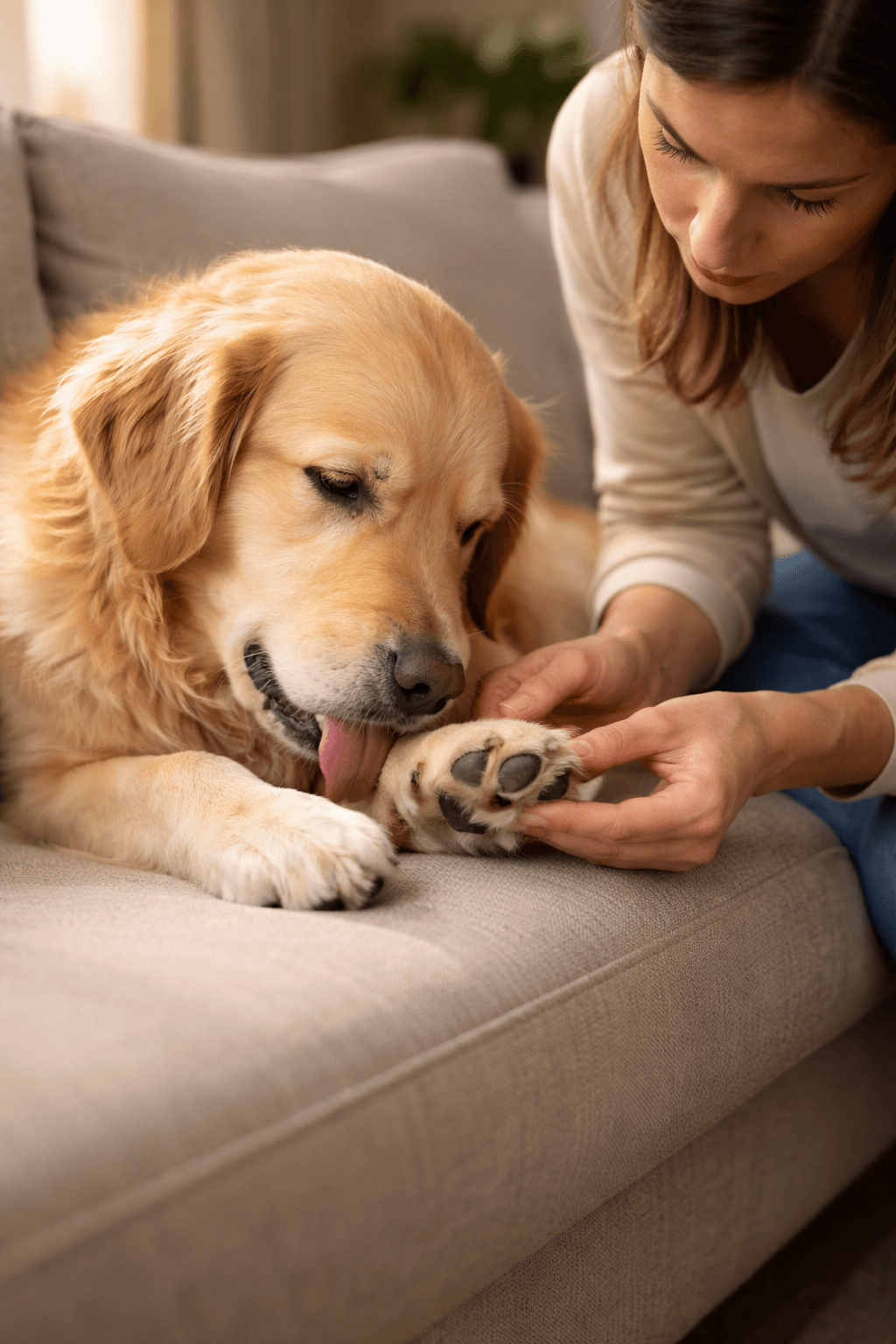
Seeing your dog constantly licking paws can be confusing – is it normal grooming, a skin allergy, pain, or just a habit? As a veterinarian, one of the most common questions I hear in the clinic is: “Why does my dog keep licking his paws all the time?” This guide will help you understand when paw licking is normal and when it is a warning sign that your dog needs a check-up.
We’ll cover the top medical and behavioural causes of paw licking, simple checks you can do at home, safe dog licking paws treatment options, and clear red flags that tell you it’s time to visit your vet or book an online consultation.
Note: This article is for education only and does not replace a physical examination by your veterinarian.
Why do dogs lick their paws: When Is Paw Licking Normal?
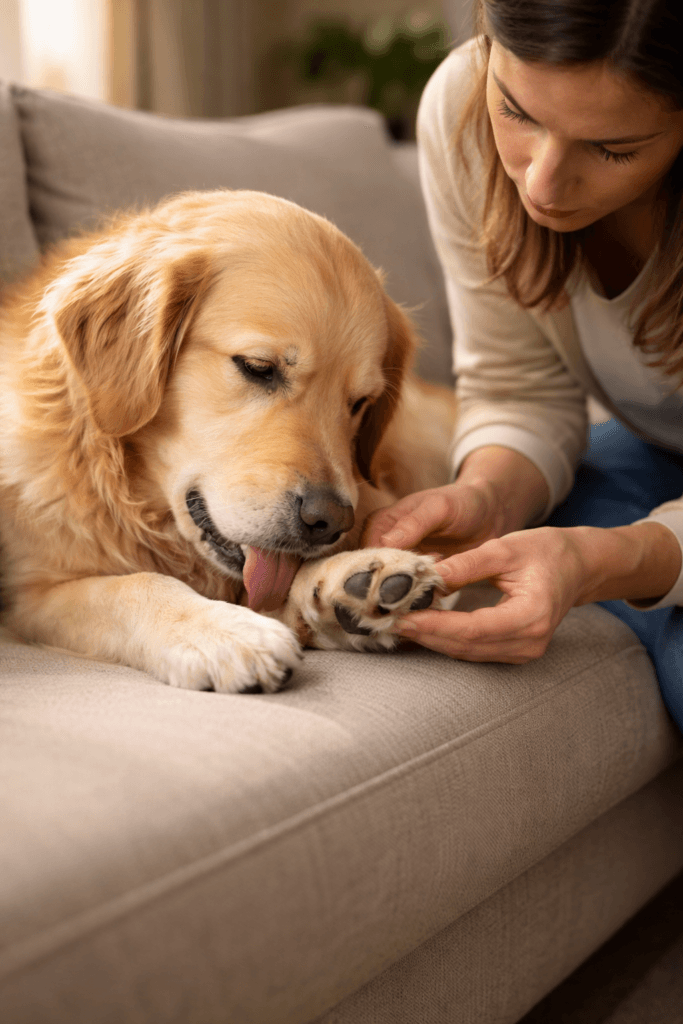
Before we panic about why dogs lick their paws, remember that some licking is completely normal. Dogs use their tongue to clean small bits of mud, remove food particles, and soothe minor irritation after a walk. You might notice your dog licking paws briefly after coming indoors or before settling to sleep – this is usually harmless grooming.
Normal paw licking usually has these features:
- Short episodes (a few seconds to a couple of minutes)
- Happens mainly after walks, playing outside, or before sleep
- No redness, swelling, bad smell, or hair loss between the toes
- Your dog easily stops licking when distracted or asked to stop
If this describes your dog, you probably don’t need to worry. But if your dog keeps licking paws excessively, wakes up at night chewing on feet, or the skin looks red and painful, it is time to look deeper.
Why Do Dogs Lick Their Paws? Quick Overview of Common Causes
When owners ask “why is my dog licking his paws so much?”, the answer is usually one (or more) of these categories:
- Allergies (environmental, food, or flea allergy)
- Skin infections (bacteria or yeast)
- Injuries and foreign bodies (thorns, glass, cuts)
- Parasites (fleas, mites, sometimes ticks or worms causing skin irritation)
- Pain in joints, toes, or nails
- Dry, cracked paw pads or contact irritants (salt, chemicals, hot surfaces)
- Anxiety, boredom, or compulsive behaviour
- Hormonal or immune system disease
- Neurological or nerve pain
Many dogs have more than one problem at the same time. For example, a dog with seasonal allergies may lick paws until the skin becomes infected with bacteria or yeast. That is why excessive paw licking should always be taken seriously and not dismissed as “just a habit”.
For a broader overview of skin disease and allergy patterns, you can also read my detailed article Dog Skin Problems & Allergy Treatment Guide 2025 .
1. Allergies – The Number One Reason Dogs Lick Their Paws
In clinical practice and current dermatology guidelines, allergic skin disease is the most common reason for a dog constantly licking paws. Allergies can be:
- Environmental (atopic dermatitis) – grass, pollen, dust mites, mould, etc.
- Flea allergy – an exaggerated reaction to flea saliva, even from a few bites.
- Food allergy or intolerance – often to proteins like chicken, beef, or dairy.
Typical allergy signs include:
- Red, inflamed skin between toes and around paw pads
- Chewing and licking paws, belly, armpits and ears
- Recurrent ear infections and skin infections
- Brown saliva-stained fur on feet from chronic licking
If your dog keeps licking paws every spring or every time the lawn is watered, allergies are very likely. Management usually includes prescription anti-itch medication, medicated shampoos, strict flea control, and sometimes a vet-guided elimination diet to check for food reactions.
2. Bacterial or Yeast Infections Between the Toes
Constant moisture from licking creates a warm, perfect environment for bacteria and yeast. Once infection starts, paws become more itchy and painful, so your dog licking paws excessively actually makes the problem worse.
Signs of infection include:
- Red or dark brown skin between the toes
- Swollen, thickened areas that may feel warm
- Foul or yeasty smell from the paws
- Pain when you separate the toes or touch the area
In these cases, home remedies alone are not enough. Your vet may prescribe medicated wipes or shampoo, oral antibiotics or antifungal medicine, and an Elizabethan collar to break the licking cycle.
3. Injuries, Foreign Bodies and Nail Problems
Sometimes the answer to “why do dogs lick their paws?” is very simple: something hurts. Common causes include:
- Small cuts or cracks on paw pads
- Grass awns, thorns or tiny stones stuck between the toes
- Burns from hot pavement or chemical irritants like floor cleaners or road salt
- Broken or torn nails
Gently examine each paw in good light. Look and feel between every toe. If your dog pulls the leg back, cries, or the paw is visibly swollen or bleeding, avoid home surgery and see your vet – especially if you suspect a deep foreign body or severe nail damage.
4. Parasites and Itchy Paws
Fleas, mites, and sometimes ticks can make a dog lick or chew the feet intensely. Even when parasites are on other parts of the body, dogs often focus on their paws and legs.
For full parasite prevention plans and deworming schedules, you can review my guides: Dog Worms: Symptoms, Treatment & Deworming Schedule (2025 Vet Guide) and Complete Deworming & Parasite Control Guide for Pets .
If your dog is not on regular vet-approved flea and tick prevention, this is one of the first things your veterinarian will recommend when investigating dog licking paws.
5. Pain in Joints, Toes or Spine
Dogs sometimes lick a paw or leg because something deeper is painful – not just the skin. Arthritis, ligament injuries, or even nerve pain from spinal problems can cause a dog to lick a particular paw or joint repeatedly.
Clues that pain is the main reason your dog keeps licking paws include:
- Licking is focused on one leg or paw
- Limping, stiffness, reluctance to jump or climb stairs
- Yelping when you move the joint through its full range of motion
- Older age or history of trauma
Pain-related licking should always be evaluated by your vet. X-rays, joint exams and neurological tests may be needed. Treatment may include pain relief, joint supplements, weight control and physiotherapy.
6. Dry Skin, Irritants and Weather Changes
Hot pavements in summer, road salt in winter, harsh shampoos, or cleaning chemicals can irritate paw pads. This may lead to dog constantly licking paws after walks or cleaning sessions.
To protect sensitive paws:
- Rinse and gently dry paws after walks on rough, salty or muddy surfaces
- Avoid human soaps and strong disinfectants on paws
- Use dog-safe moisturisers if your vet confirms dry pads (never use human creams like petroleum jelly without advice)
- Consider dog boots for extreme weather or rough hiking terrain
7. Anxiety, Boredom and Compulsive Paw Licking
When medical causes are ruled out, the answer to why dogs lick their paws may be emotional. Some dogs lick their paws to self-soothe when they feel anxious, lonely, or bored. Over time, this can turn into a habit or even a compulsive disorder.
Warning signs of behavioural licking:
- Licking mainly when alone, at night, or during stressful events (storms, fireworks)
- No obvious redness or injury at first, but hair gradually wears away
- History of separation anxiety or other behaviour problems
Behaviour-related licking still damages the skin and can lead to infection. Management includes improving mental stimulation (walks, puzzle toys, training), addressing anxiety, and sometimes using anti-anxiety medication under veterinary supervision.
8. Hormonal and Immune System Diseases
Conditions such as hypothyroidism, Cushing’s disease, and autoimmune skin disease can make the skin more prone to infection and itchiness, including on the paws. Dogs with these problems may show other signs such as weight gain, hair loss on body and tail, increased thirst and urination, or general lethargy.
Blood tests and sometimes skin biopsies are required to diagnose these conditions. Effective treatment of the underlying disease is essential; otherwise, dog licking paws treatment will only give temporary relief.
When to Worry About Dog Licking Paws
Occasional grooming is normal, but you should contact your vet or book an online consultation if:
- Your dog licks or chews paws daily, or wakes at night to lick
- The skin between toes is red, swollen, bleeding, or smells bad
- There are blisters, open sores, or pus
- Your dog is limping, crying, or hiding the paw
- Licking is accompanied by scratching, ear problems, or hair loss elsewhere
- Your dog becomes lethargic, stops eating, or has fever, vomiting or diarrhoea
Some systemic illnesses present with both paw licking and digestive signs. For example, if paw licking occurs together with loose stools or vomiting, review our article Dog Diarrhea Treatment and Home Remedy – Vet Guide and seek veterinary advice promptly.
How Vets Diagnose the Cause of Paw Licking
When you visit the clinic because your dog keeps licking paws, a veterinarian will usually:
- Take a detailed history (diet, flea control, environment, previous treatments)
- Perform a full physical exam, not just check the paws
- Examine paws closely with good lighting and magnification
- Do skin scrapings or tape impressions to look for mites, bacteria and yeast
- Check for fleas and flea dirt, and review deworming and parasite control
- Consider allergy testing or an elimination diet if allergies are suspected
- Order blood tests or joint X-rays if hormonal disease or arthritis is suspected
Clear diagnosis is crucial. Without it, owners often try many home remedies that only mask the problem while the disease quietly progresses.
Safe Home Care for Dogs Licking Their Paws
While you are waiting for a vet appointment, or for mild cases, there are a few safe steps you can take at home. These do not replace professional treatment but can make your dog more comfortable.
Why do dogs lick their paws: 1. Gently Inspect and Clean the Paws
- Rinse paws in lukewarm water to remove mud, salt, or allergens such as grass pollen.
- Pat dry carefully between the toes with a soft towel – avoid vigorous rubbing.
- Check for thorns, grass seeds, small stones, or sticky tar.
2. Prevent Further Self-Trauma
If your dog constantly licking paws has already caused redness or broken skin, continuous licking can turn a mild problem into a severe infection. Using an Elizabethan collar or a soft recovery cone temporarily can protect the area until you reach your vet.
3. Avoid Dangerous Home Remedies
For dogs licking paws, avoid:
- Human creams or steroid ointments without veterinary advice
- Essential oils (many are toxic when licked)
- Human painkillers such as ibuprofen or paracetamol – these can be fatal to dogs
- Covering paws with airtight plastic for long periods (this traps moisture and heat)
If you are looking for how to stop dog from licking paws home remedy, the safest general answer is: keep the area clean and dry, prevent licking with a cone, and seek veterinary advice early.
Treatment Options Your Vet May Recommend
Dog licking paws treatment depends entirely on the underlying cause. Common vet-approved options include:
- For allergies: prescription anti-itch tablets/injections, medicated shampoos, omega-3 supplements, strict flea control, and sometimes allergy testing or special diets.
- For infections: topical wipes, sprays, shampoos, or oral antibiotics/antifungals.
- For injuries: wound cleaning, bandaging, pain relief, and sometimes minor surgery to remove foreign bodies.
- For parasites: modern flea, tick and mite treatments plus thorough environmental cleaning.
- For pain/arthritis: anti-inflammatory medication, joint supplements, weight control, physiotherapy.
- For hormonal disease: long-term hormonal therapy and regular monitoring.
- For anxiety/compulsive disorders: behaviour modification, environmental enrichment, and in some cases anti-anxiety medication.
Preventive health in general also reduces many causes of paw licking. Keeping vaccines, deworming and flea/tick control up to date is essential – you can review the Dog Vaccination Schedule 2025: Cost, Side-Effects & Vet Tips for a full overview.
Diet also matters. Sudden food changes or overfeeding rich treats can worsen allergies and gut upset. If you often share fruits or snacks with your dog, read Can Dogs Eat Strawberries? Vet-Approved Guide to understand how to use people food safely as treats.
Preventing Paw Problems in Everyday Life
- Wipe and dry paws after walks, especially on rough ground, grass, or salted roads.
- Use year-round vet-recommended parasite prevention.
- Keep nails trimmed to a healthy length to avoid breaks and altered gait.
- Maintain a healthy body weight – overweight dogs put more stress on joints and paws.
- Provide daily mental and physical exercise to reduce boredom and anxiety.
- Schedule regular vet check-ups for early detection of skin and joint disease.
FAQ: Quick Answers About Dogs Licking Their Paws
Is it normal for dogs to lick their paws?
Occasional paw licking for grooming is normal. It becomes a concern when your dog keeps licking paws for long periods, every day, or starts to cause redness, swelling, or hair loss.
Can allergies make my dog lick his paws all the time?
Yes. Allergies (especially to grass, dust mites, food or fleas) are the leading cause of dog constantly licking paws. Diagnosis and long-term management usually require a veterinary plan and sometimes special diets or allergy medications.
What home remedy can I use for dog paw licking?
You can gently rinse and dry the paws, prevent further licking with a cone, and use a dog-safe paw balm if your vet confirms dry pads. Avoid human creams, strong antiseptics, and home-made mixtures that your dog might lick off.
When is paw licking an emergency?
Seek urgent veterinary care if paw licking is accompanied by severe swelling, sudden limping, signs of severe pain, bleeding, pus, fever, collapse, or if your dog has chewed the skin raw. Deep infections, burns, or foreign bodies can escalate quickly without treatment.
Need Personal Advice About Your Dog’s Paw Licking?
Every dog is different, and sometimes the safest way to help is to speak directly with a veterinarian who can review your dog’s history, photos, and previous treatment.
🩺 Book Online Vet Consultation with Dr. Zahid
If you are unsure whether your dog’s paw licking is normal or dangerous, it is always better to ask. Early guidance can prevent painful complications and keep your dog comfortable and active.

I appreciate how you explain the importance of paying attention to the context of paw licking. My dog’s licking has definitely increased recently, but after reading this, I realize it might be because of the weather change. Great insight on how to spot the red flags!