A maltese dog is a small companion with a white coat and a long history of living closely with people, but their needs extend well beyond grooming or being carried. Comfortable movement, appropriate food, dental attention, patient training, and respectful handling all matter. Small size does not make a dog a toy or remove the need for choice and ordinary exploration. Plan care around the individual animal’s health and behaviour rather than an image of a permanently portable lap companion.
Maltese dog: understand the companion before the appearance
Breed descriptions often emphasise affectionate, alert, lively behaviour. Those tendencies are not guarantees of a particular personality or an effortless household fit. Some individuals enjoy close physical contact, while others prefer to rest nearby or approach on their own terms. Learn what this dog enjoys instead of assuming the breed name gives permission for constant handling. A small animal may have fewer practical ways to avoid being picked up, which makes noticing turning away or tension especially important.
A Maltese dog can learn ordinary skills and enjoy appropriate exploration just as larger dogs do. Avoid replacing every difficult situation with carrying the animal through it. Sometimes being picked up is necessary for safety, but a longer-term plan may include confidence building, a quieter route, or professional support. Observe the reason for barking, avoidance, or resistance rather than labelling all small-dog behaviour as demanding. Our pet behaviour guide explains how context, fear, and learning can overlap in everyday household difficulties.
Choose health and normal function over tiny-size marketing
Be cautious about labels such as teacup or exceptionally tiny when they are used as selling points. A smaller advertised size is not automatically a healthier or easier companion. Ask about the actual parents, growth, veterinary records, feeding, and any health concerns. Avoid sellers who encourage underfeeding to keep a puppy small or who promise an exact adult dimension from a photograph. Health, comfortable structure, and temperament deserve more attention than an animal’s ability to sit inside a decorative cup.
An assessed adult rescue may offer clearer information about established size and behaviour than a puppy chosen mainly for extreme smallness. If you already have a very small Maltese dog, focus on practical care and veterinary advice rather than comparing them with a breed image. Ask what feeding, handling, and monitoring are appropriate for that individual. A physically small body does not justify ignoring poor growth, weakness, or repeated illness as normal. New signs should be assessed, and a seller’s reassurance should not prevent a veterinary examination.
Make the white coat manageable and comfortable
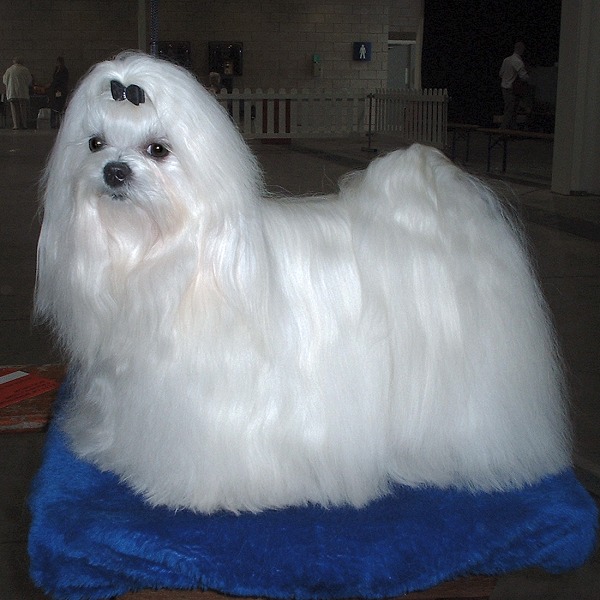
The long fine coat associated with the breed needs a practical grooming routine. A shorter maintained trim may fit some households better than a full-length style, but either requires checking the skin and areas prone to tangling. Ask a competent groomer to demonstrate suitable tools and gentle technique. Brushing the visible surface while knots remain underneath is not effective care. Friction areas and damp hair need attention before they become uncomfortable, and sessions should be short enough for the dog to remain relaxed.
A Maltese dog should not need to endure painful detangling to maintain a particular look. Introduce brushes, combs, drying, and handling gradually with rewards, and seek help when mats sit close to the skin. Do not cut blindly with scissors while pulling a knot away from a moving animal. Our dog skin guide explains why itch, redness, odour, or increased sensitivity may need veterinary assessment. Grooming can reveal a change, but changing shampoo or brushing harder does not diagnose the cause.
Care for the face without making whiteness the goal
Food residue and damp facial hair can need gentle cleaning, especially when the coat is kept longer. Use an appropriate external cleaning method and dry carefully without rubbing the eyes or skin. Do not apply peroxide mixtures, bleaching products, essential oils, or improvised stain-removal recipes near the face. A photograph of bright white hair is not evidence that a preparation is safe for the eye. Ask the veterinarian about persistent wetness, irritation, smell, or a new change in tearing.
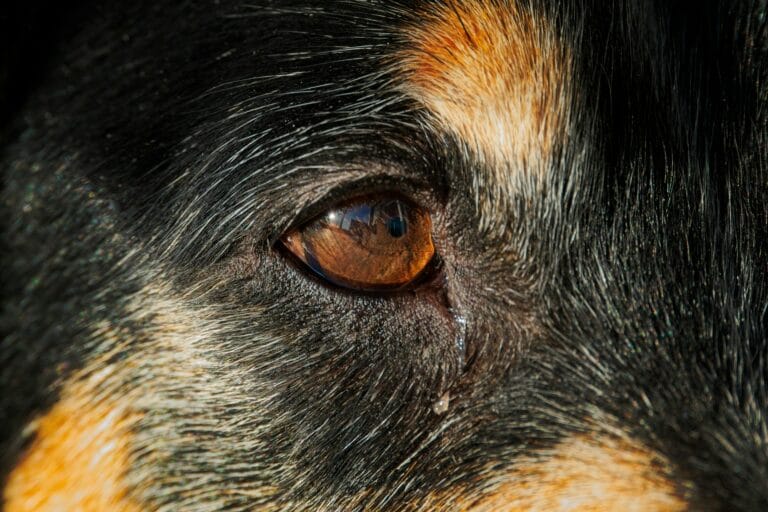
A Maltese dog with pale facial hair may show coloured tear marks more visibly than a dark-coated dog, but colour alone does not establish the cause. Squinting, marked redness, cloudiness, pain, or apparent vision change needs prompt veterinary advice. Our red-eye guide explains warning signs. Keep the goal comfortable eyes and healthy skin rather than removing every mark immediately. Hair that is already stained may remain discoloured after cleaning, and escalating product strength can create a new problem without solving the original concern.
Keep dental care within the normal routine
Small dogs need careful attention to the mouth, including veterinary assessment and a suitable home-care plan. Introduce a small soft brush and appropriate pet toothpaste gradually once the veterinarian considers the mouth comfortable. Do not begin by holding the head tightly and scrubbing painful gums. New bad breath, chewing changes, drooling, or reluctance to have the face touched deserves attention. Continued eating does not prove that every tooth and the surrounding tissues are healthy.
Our dog dental-care guide explains how home brushing supports professional care. A Maltese dog should not be expected to manage dental disease through crunchy treats alone, and a clean-looking visible tooth surface does not rule out problems below the gumline. Ask about appropriate review and treatment rather than attempting to remove deposits with a metal tool at home. Keep each pet’s brush separate and tell every caregiver which products are used so a small mouth is not exposed to a human toothpaste or an unsuitable substitute.
Feed measured complete meals and watch actual intake
Choose an appropriate complete food for life stage, health, and the individual’s needs. Measure portions consistently and include treats used during training or grooming practice. Small extra amounts can contribute meaningfully to a small dog’s daily intake. Ask the veterinary team to help interpret body condition rather than using eagerness for food as the only guide. Keep fresh water available and make bowls stable and easy to approach. Food should not be withheld to maintain an especially small appearance.
Our puppy-feeding guide gives broader context for a growing dog. A young or very small Maltese dog that becomes weak, trembly, unusually sleepy, or unwilling to eat needs prompt veterinary advice rather than an assumption that they are simply fussy. Do not improvise treatment from an online recipe or wait through repeated missed meals while changing flavours. Record what was eaten, when signs began, and any possible exposure to an unsuitable food or medicine so the clinic can assess the actual situation.
Build toilet habits with access and consistent learning
Provide frequent appropriate toilet opportunities according to age, health, and the dog’s established pattern. Choose a manageable route and reward the desired behaviour calmly. Small size is not a reason to scold accidents or assume the animal knows a different rule indoors. Supervision, predictable opportunities, and suitable cleaning help learning. If weather or access makes outdoor toileting difficult, develop a clear consistent plan rather than changing the permitted location unpredictably from day to day.
A Maltese dog that was previously reliable but begins urinating differently needs a health and routine review. Our dog urinary-tract guide explains one possible concern, but frequency, straining, accidents, or increased drinking can have several causes. Do not assume a new problem is spite or a small-dog habit. Repeated attempts with little or no urine, severe discomfort, or obvious illness needs prompt advice. Record the pattern and any recent household change so medical and practical factors can be considered together.
Introduce the outside world without forced greetings
Use suitable secure equipment and choose a quiet manageable environment for early practice. Let the dog observe at a comfortable distance and reward calm engagement. Being small can make nearby traffic, large dogs, hurried feet, and reaching hands feel especially intense. Do not require the animal to greet every person or dog to become sociable. A positive experience can be watching from enough space and then leaving while the dog remains relaxed and able to respond.
A Maltese dog benefits from appropriate sniffing, walking, learning, and play, matched to age and health. There is no universal exercise amount that overrides the individual’s comfort or a veterinary restriction. Avoid repeatedly lifting the dog into an overwhelming interaction and then expecting them to tolerate it politely. Our anxiety guide explains why distress needs gradual support, though outdoor triggers require their own plan. Get qualified reward-based help if barking, lunging, or avoidance is making ordinary outings difficult rather than relying on punishment or perpetual carrying.
Protect the body around furniture, feet and other animals
Check the home from the dog’s height. Gaps, dropped objects, unstable steps, steep furniture access, and crowded doorways may create hazards that a larger dog would encounter differently. Provide good traction and a comfortable resting place where the animal will not be stepped over repeatedly. Teach family members to check before moving a chair or closing a door. Supervise interactions with larger animals and children, even when everyone appears friendly. Differences in body size can turn ordinary enthusiastic movement into an injury.
Lift a Maltese dog only when needed and support the body securely, with professional guidance if pain or mobility problems are present. Do not pick the animal up by the forelimbs or allow children to carry them around as entertainment. Stable low steps or other suitable access may help some dogs, but assess actual use and safety. If the dog suddenly avoids a usual jump, limps, or holds a leg up, seek assessment rather than repeatedly encouraging the movement. A small dog’s discomfort deserves the same attention as a larger animal’s visible injury.
Review breed-relevant screening without predicting disease
The American Kennel Club’s parent-club guidance lists patella evaluation, cardiac examination, and serum bile acids among recommended Maltese breeding-stock checks. Other countries’ programmes may include different recommended screening, so review the actual local scheme and individual records. Ask what each test evaluated and which dog the result identifies. A general statement that a parent was vet checked is not the same as documented relevant screening, while a test result does not guarantee the absence of every future health problem.
Bring available records to the veterinarian and ask for an individual preventive plan. A Maltese dog from rescue may have incomplete family history and still be an excellent companion with appropriate care. Screening information is useful for responsible decisions, not a reason to diagnose a healthy animal from the breed label. New limping, poor growth, unusual weakness, coughing, fainting, or another change should be assessed on its own merits. Avoid buying supplements or restricting normal activity indefinitely because a condition appears on a list without knowing whether it affects the individual.
Plan companionship and comfortable independence
A companion dog may enjoy being near people while still needing to learn calm short separations and undisturbed rest. Build these skills gradually in an appropriate environment rather than suddenly leaving the dog alone for a long period. Keep a predictable routine for food, toilet access, activity, and quiet time. Constant carrying or attention can make the household harder to navigate if the animal has no experience choosing a comfortable place independently. That does not mean affection is a problem; the goal is a flexible routine with choice.
A Maltese dog should have a secure resting area where visitors do not continually reach in to touch them. Explain those boundaries to children and guests. If the animal shows distress when separated, get appropriate professional help rather than assuming they must be left to cry until they give up. Maintain grooming and practical healthcare even when household schedules change. Before holidays or a new work pattern, identify a caregiver who understands the individual rather than choosing someone only because they have experience with another small white breed.
Practise a respectful greeting without automatic carrying
When a visitor arrives, give the dog room to observe from a comfortable distance rather than immediately lifting them into the person’s arms. Reward relaxed interest and let the animal choose whether to approach. A Maltese dog that stays near a bed may simply prefer that position, and quiet observation can be a useful first experience. Explain that touching is optional and that turning away should be respected. If the animal repeatedly barks, retreats or becomes tense, make the situation easier and seek help when needed. The goal is a calm ordinary greeting that preserves confidence, not a photograph of a small dog being held by everyone in the room.
Frequently asked questions about small-companion care
Is the breed allergy-free? No dog is completely hypoallergenic. Lower shedding and a particular coat do not guarantee that a person will have no symptoms. Discuss relevant human allergy concerns with an appropriate healthcare professional before bringing a dog home.
Does a short haircut remove grooming needs? It can make care more manageable, but skin checks, gentle combing where needed, face hygiene, and nail and dental attention still matter. Choose comfort and practical maintenance over a particular appearance.
Can the dog live with children? The answer depends on the individuals, supervision, handling, and the environment. Small size requires protection from rough carrying and accidental injury, while the dog also needs space to opt out of contact.
What should a new owner prioritise first? Arrange a veterinary review, establish food and toilet routines, prepare a comfortable resting area, and introduce handling gently. Learning the dog’s normal behaviour and preferences gives a stronger foundation than buying many decorative accessories or assuming the breed reputation supplies all the training.