Many viral videos and posts claim that women who live with cats may become infertile or lose their pregnancy. These messages are frightening, especially for women who love their cats and are planning a family. As a veterinarian, I see daily how misleading information about cats and pregnancy can create unnecessary fear.
This vet-approved guide explains what science really says about cats and infertility in women, how toxoplasmosis in pregnancy works, what is known about cat litter and miscarriage, and how to live safely with your cat while trying to conceive or during pregnancy.
Key takeaway: Owning a cat does not automatically cause infertility in women. The main concern is infection with a parasite called Toxoplasma gondii, and there are simple ways to reduce this risk.
1. Where Did the “Cats Cause Infertility” Myth Come From?
The myth that cats make women infertile usually comes from confusion between two very different things:
- Infertility – difficulty getting pregnant or carrying a pregnancy to term.
- Pregnancy complications – problems such as miscarriage or birth defects after conception has already happened.
Behind most fear-based content is a parasite named Toxoplasma gondii. Cats are the definitive host for this parasite, which means the parasite can complete its life cycle in a cat’s intestines. Infected cats may shed microscopic eggs (oocysts) in their feces.
From this medical fact, the internet created a much scarier story:
“All cats are dangerous for women. Cats cause infertility, miscarriage and deformed babies, so you must get rid of your cat.”
In reality, the situation is far more nuanced:
- Many indoor cats never become infected with toxoplasma, especially if they eat only cooked or commercial food.
- Even infected cats usually shed oocysts for a short period only, often once in their lifetime.
- Most human infections do not come directly from cats but from undercooked meat and contaminated soil or vegetables.
To understand whether cats can cause infertility in women, we first need to understand how toxoplasmosis actually works.
2. What Is Toxoplasmosis and How Do People Get It?
Toxoplasmosis is an infection caused by the parasite Toxoplasma gondii. People can be infected in several ways:
- Eating undercooked or raw meat that contains tissue cysts (especially pork, lamb, goat and game meats).
- Handling raw meat and then touching the mouth or eating without washing hands.
- Ingesting oocysts from the environment, for example through:
- Soil contaminated with infected cat feces.
- Unwashed fruits and vegetables grown in contaminated soil.
- Rarely, by direct contact with infected cat feces or cat litter and then touching the mouth.
What About Cat Litter?
Toxoplasmosis in pregnancy cat litter guidance is often misunderstood. Cat litter only becomes a real risk when several things happen together:
- The cat is infected with Toxoplasma gondii.
- The cat is currently at the stage of infection where it is actively shedding oocysts.
- The feces have sat in the litter tray for at least 24 hours so that the oocysts can become infectious.
- A person handles the litter, does not wash their hands, and then accidentally ingests the oocysts.
That is a very specific chain of events. With sensible hygiene, the risk from cat litter in pregnancy is extremely low, especially if the cat lives indoors.
3. Does Toxoplasmosis Cause Infertility in Women?
This is the major question behind searches such as “can cats cause infertility in women” or “do cats affect women fertility”.
Research on toxoplasmosis suggests the following:
- If a woman is infected with toxoplasma for the first time during pregnancy, the parasite can cross the placenta and infect the fetus. This may lead to miscarriage, stillbirth, or congenital problems such as neurological disease and eye damage.
- If a woman was infected in the past and has antibodies (immunity), the risk to later pregnancies is generally lower.
- Evidence that toxoplasma directly causes long-term infertility (difficulty ever getting pregnant) is limited. Some small studies show a possible association, but toxoplasma is not considered a common cause of routine infertility.
In daily practice, fertility specialists focus on much more frequent causes of infertility, including:
- Hormonal problems such as PCOS or thyroid disease.
- Tubal damage or endometriosis.
- Male factor infertility (sperm count and quality).
- Age-related decline in egg quality.
For most women, toxoplasmosis is not the main reason for infertility. The key risk is pregnancy complications if infection occurs for the first time during pregnancy, not infertility before pregnancy. That is why accurate information about cats and pregnancy is so important.
4. Are Cats Dangerous for Pregnant Women?
Many women hear that “pregnant women and cats don’t mix.” In reality, the relationship between cats and pregnancy can be safe and positive when simple precautions are followed.
When evaluating risk, consider three main questions:
- Have you been exposed before?
Many adults already carry antibodies from past toxoplasma exposure (often from food, not cats). A blood test from your doctor can sometimes show this. If you are already immune, the risk during future pregnancies is lower. - What is your cat’s lifestyle?
- Indoor-only cat, eating commercial food → very low risk of shedding toxoplasma.
- Outdoor cat that hunts or eats raw meat → higher risk of infection.
- What are your daily hygiene habits?
- Who cleans the litter box?
- Do you wear gloves for gardening?
- Do you wash vegetables and hands before eating?
Most women can safely live with their cats throughout pregnancy if they follow good hygiene and food safety practices.
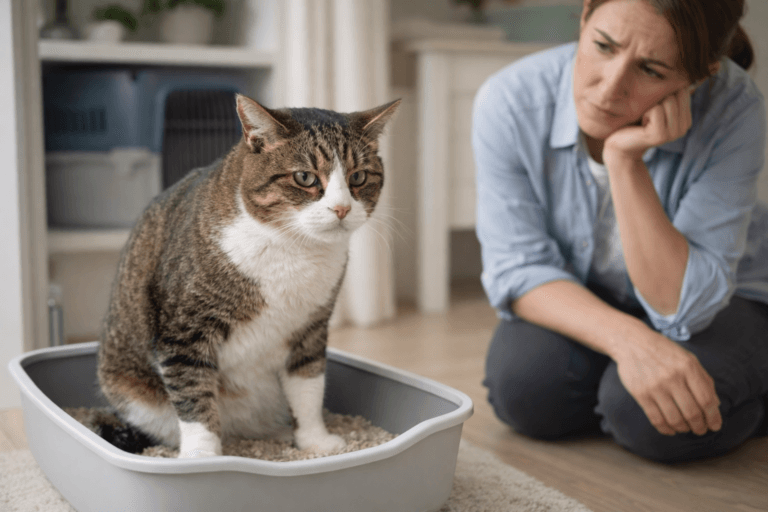
5. Is It Safe to Clean Cat Litter While Pregnant?
The question “is it safe to clean cat litter while pregnant” appears in almost every list of search queries about cats and pregnancy. The general medical recommendation is:
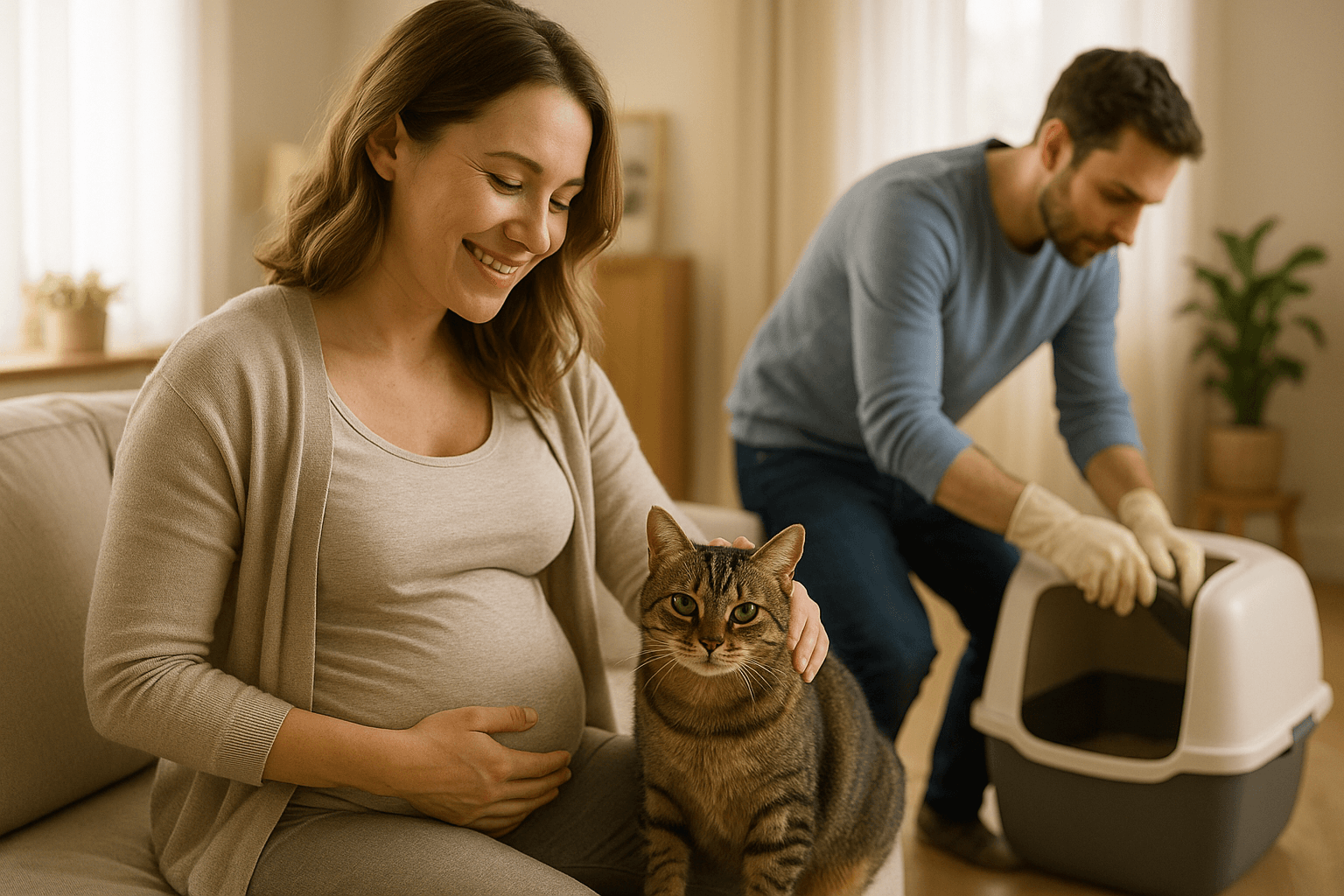
If possible, pregnant women should avoid cleaning the litter box. If there is another adult in the home, ask them to handle litter duties for the entire pregnancy.
However, many women live alone or simply have no one else to help. In that case, litter cleaning can still be done safely using a strict routine:
- Clean the litter box every day. Remove feces before oocysts have time to become infectious.
- Wear disposable gloves whenever you handle cat litter or soil.
- Use a scoop and avoid creating dust when you pour or move litter.
- Do not touch your face while cleaning the litter box.
- Wash hands thoroughly with soap and warm water for at least 20 seconds afterwards.
- Keep litter trays away from the kitchen and food preparation areas.
By following these steps, the risk linked to toxoplasmosis in pregnancy cat litter becomes extremely low, especially if your cat is an indoor-only pet eating commercial food.
6. Pregnancy-Safe Cat Care Tips
These practical guidelines allow women to maintain a close bond with their cats without compromising health.
1. Keep Cats Indoors
Indoor cats are far less likely to hunt rodents or birds that carry toxoplasma. Keeping cats indoors also protects them from accidents, fights, and many infectious diseases.
2. Avoid Raw Feeding
Feeding raw meat is one of the easiest ways for cats to become infected. During pregnancy and while trying to conceive, offer only cooked or commercial cat food.
3. Maintain Good Hand Hygiene
Wash hands after handling cats, litter boxes, soil, raw meat, or unwashed vegetables. This one habit reduces risk from many infections, not just toxoplasmosis.
4. Wear Gloves for Gardening
Soil may be contaminated by outdoor cats. Always wear gloves when gardening or handling soil, then wash hands. Wash home-grown vegetables, herbs, and salad leaves thoroughly.
5. Keep Regular Veterinary Check-Ups
Routine veterinary visits keep your cat healthy, parasite-controlled and less likely to spread infections. Your vet can also give personalised advice about cats and pregnancy based on your household.
6. Avoid Contact With Stray Cats
Stray or unknown cats may carry more parasites. During pregnancy, avoid handling stray cats, especially their feces, and do not feed them raw meat or offal.
7. When Should Pregnant Women Be Extra Cautious?
Most healthy women can keep their cats by following the precautions above. Extra caution and medical advice are needed if:
- You are immunocompromised (for example due to chemotherapy, high-dose steroids or HIV infection).
- You work daily with many cats, soil or raw meat (veterinary staff, shelter workers, farmers, butchers).
- You have a history of recurrent miscarriage or complicated pregnancies – your doctor may recommend infection screening, including toxoplasma tests.
In these situations, do not rely on internet articles alone. Discuss your personal risk with both your obstetrician/gynecologist and your veterinarian.
8. Living With Cats While Trying to Conceive
Women often worry even before pregnancy and search for “does cat cause infertility” or “can cats make you infertile”. In most cases there is no reason to rehome your cat when you start trying for a baby.
Instead:
- Introduce pregnancy-safe hygiene habits now: gloves for litter and gardening, daily litter cleaning, careful hand washing.
- Keep your cat indoors and on commercial food only.
- If you are undergoing fertility treatment, ask your fertility specialist whether they recommend toxoplasma blood testing for you.
By the time you become pregnant, you will already have strong habits that protect both you and your future baby while allowing you to keep your cat.
9. FAQs: Cats, Infertility and Pregnancy
The following common questions are written to match real search queries such as “can cats make women infertile” and “cats and infertility in women”.
1. Can cats cause infertility in women?
No. There is no good evidence that cat ownership by itself causes infertility in women. The concern is a new toxoplasma infection during pregnancy, which can harm the fetus. With proper food hygiene and safe litter handling, the risk from cats is very low.
2. Do cats affect women fertility before pregnancy?
For healthy women, living with a cat does not usually affect fertility before pregnancy. Much more common causes of infertility include hormonal imbalance, age, tubal disease, endometriosis and male factor infertility.
3. Is it safe to clean cat litter while pregnant?
The safest option is to ask someone else to clean the litter. If that is impossible, pregnant women can still clean cat litter safely by wearing gloves, changing litter daily, avoiding dust and washing hands thoroughly. These steps greatly reduce the risk of toxoplasmosis in pregnancy cat litter.
4. Can I keep my cat if I am pregnant or planning pregnancy?
In almost all cases, yes. Major medical and veterinary organisations do not recommend automatically removing cats from the home because of pregnancy. Instead, they emphasise hygiene, cooked food, indoor living and regular vet care.
5. Do indoor cats still carry toxoplasmosis?
Indoor cats that have never eaten raw meat or hunted wildlife are at a much lower risk of toxoplasma infection. While no risk is ever zero, the chance of an indoor-only, commercially fed cat shedding infective oocysts is very small.
6. Should I test my cat for toxoplasma before pregnancy?
Some owners ask about testing, but blood tests in cats can be difficult to interpret and do not always predict future shedding. From a practical point of view, focusing on prevention and hygiene usually provides more benefit than routinely testing every cat.
7. What are the symptoms of toxoplasmosis in humans?
Many adults have no symptoms at all. Others may develop mild flu-like signs such as fatigue, low-grade fever and swollen lymph nodes. In pregnancy or in immunocompromised people, infection can be more serious and must be managed by a medical doctor.
10. Supporting Emotional Wellbeing During Pregnancy
Cats provide emotional comfort, reduce loneliness and help many people manage stress. For some women, removing a beloved cat due to misinformation can cause sadness and anxiety at an already vulnerable time.
Accurate information about cats and pregnancy allows families to protect both their mental health and physical health. With the right precautions, most women can safely keep the cats they love.
11. Final Thoughts: Can Cats Make You Infertile?
The idea that cats directly cause infertility in women is a misunderstanding. The real medical topic is toxoplasmosis in pregnancy, and the main preventable risk factors are often diet and hygiene, not the cat itself.
With simple actions—keeping cats indoors, avoiding raw feeding, practising safe litter-box hygiene, wearing gloves for gardening and following good food safety—women can confidently live with their cats while trying to conceive and throughout pregnancy.
Summary:
- Cats do not automatically cause infertility in women.
- The key concern is primary toxoplasma infection during pregnancy, which can harm the fetus.
- Most human infections come from undercooked meat and contaminated soil or vegetables, not from cuddling cats.
- Good hygiene allows safe coexistence of pregnant women and cats.
If you have specific medical questions about infertility, miscarriage or pregnancy complications, always consult your doctor. For concerns about your cat’s health or behaviour, speak to your veterinarian. Working together, your medical and veterinary teams can give you personalised, science-based advice.
Related Veterinary Guides
Complete Puppy & Dog Vaccination Schedule
Complete Puppy Feeding Guide: Portions, Schedule & Tips
Complete Deworming & Parasite Control Guide for Pets
About Dr Zahid Afzal, DVM
Trusted Medical & Scientific References
- CDC – Toxoplasmosis & Pregnancy
- NHS – Toxoplasmosis
- WHO – Toxoplasmosis Facts
- ACOG – Obstetric Guidelines (USA)
Disclaimer: This article is for educational purposes only and does not replace medical advice. Women who are pregnant or planning pregnancy should consult their doctor for personalised guidance, and cat owners should seek veterinary advice for individual pets.