
By Dr. Zahid Afzal, DVM – Veterinarian & Pet Health Writer
A sudden cough or wheeze can be frightening, especially at night. It can be difficult to tell a cough from an attempt to bring up a hairball. This guide explains the signs to watch for, common causes, safe steps at home and when to seek urgent veterinary care.
Quick note: This article is for education, not a substitute for an in-person exam. If your cat is open-mouth breathing, limp, or breathing very fast, treat it as an emergency and see a vet immediately.
Fast Takeaways: When Is Cat Coughing an Emergency?
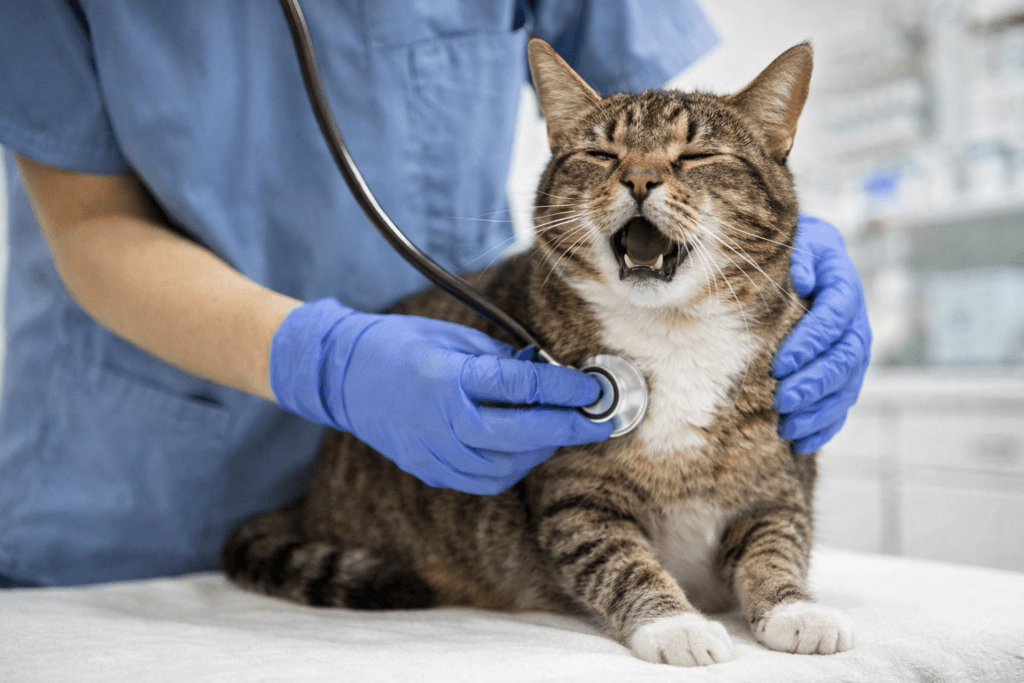
- Emergency right now: open-mouth breathing, blue or grey gums, very fast breathing (more than ~40 breaths per minute at rest), collapse, very distressed cat – go to the nearest vet or emergency clinic.
- Urgent (same day vet visit): repeated bouts of cat coughing over a few hours, wheezing, noisy breathing, reduced appetite, or if your cat also has fever, lethargy, diarrhoea or is vomiting.
- Non-urgent but needs a check: a mild, occasional cough that’s been happening for days or weeks, especially if your cat is older, has known heart disease, or other chronic conditions.
Whenever you’re unsure, it is safer to call your veterinarian and describe exactly what you’re seeing. We would always rather you come in a little early than a little late.
What Do “Coughing” and “Wheezing” Mean in Cats?
People often mix up coughing, gagging, wheezing and even hairball episodes. Understanding the difference is the first step.
What coughing looks like
- The cat stretches their neck out and either sits or crouches low.
- There is a strong contraction of the chest and abdomen.
- You may hear a “huff”, “hack” or “k-k-k” sound.
- Sometimes a small amount of foam, mucus or hairball is produced; sometimes nothing comes out.
What wheezing sounds like
- A whistling or high-pitched noise on breathing out (sometimes in and out).
- Often associated with feline asthma or narrowed airways.
- You may see the sides of the chest working harder with each breath.
Hairball episode vs true cough
Hairball “coughing” usually has more gagging and retching, and often ends with production of a cylindrical clump of hair. True cat coughing can happen even when no hairball appears and is usually more related to the lungs and airways than the stomach.
If your cat regularly brings up hairballs and is otherwise bright, your vet may focus on grooming and hairball control. But if your cat has a dry, repetitive cough with wheezing, we get more concerned about asthma, infection, heart disease or other problems deeper in the chest.
Common Causes of Cat Coughing & Wheezing
There is no single answer for why a cat is coughing. In my consulting room, these are the most common categories I see.
1. Feline asthma (allergic bronchitis)
Asthma is one of the leading causes of recurrent cat coughing and wheezing, especially in young to middle-aged indoor cats. The airways in the lungs become inflamed and narrow, often because of allergies to dust, smoke, perfumes or even certain litters.
- Cough is often dry and repetitive, sometimes worse at night or after exercise.
- Wheezing, rapid breathing or “panting” after mild activity can appear.
- Cats may squat with their neck extended, looking like they are trying to bring up a hairball but nothing appears.
Asthma can range from very mild to life-threatening. Mild cases may just cough occasionally; severe attacks can look like true respiratory distress. Because asthma can look similar to pneumonia or heart disease on the outside, we usually need chest X-rays and sometimes blood tests to be sure.
2. Respiratory infections (viral, bacterial, fungal)
Upper respiratory infections – the “cat flu” group – are common, especially in young or shelter cats. Viruses such as herpesvirus and feline calicivirus primarily affect the nose and throat, but if infection moves deeper, it can irritate the windpipe and lungs.
Signs may include:
- Runny nose, sneezing, watery or sticky eye discharge.
- Fever, dullness, reduced appetite.
- Coughing, especially with phlegm or crackly breathing if pneumonia develops.
Bacterial infection can complicate viral disease, leading to pneumonia. Fungal infections (like aspergillosis) are less common but can also cause chronic nasal discharge and coughing.
3. Heart disease & fluid in the lungs
Heart disease can lead to congestive heart failure, where fluid builds up in or around the lungs. This can cause:
- Soft, persistent coughing or “snicking” sounds.
- Breathing faster at rest, open-mouth breathing, or sudden collapse.
- Cold paws, weakness, and sometimes hind-leg paralysis in cats with blood clots.
Unlike dogs, many cats with heart failure don’t cough much – they simply breathe faster and harder. So any cat with coughing plus increased resting breathing rate should have a heart check, including chest X-rays and an ultrasound if possible.
4. Lung parasites and heartworm
Certain parasites live in or around the lungs and can cause cat coughing, wheezing and intermittent breathing crises.
- Lungworms are more common in outdoor hunters who eat snails or small prey.
- Heartworm, transmitted by mosquitoes, is less common in cats than dogs but can cause dramatic coughing, wheezing and sudden respiratory collapse.
Regular parasite control is already important for other diseases; if you want a refresher, you can read your complete deworming & parasite control guide and the detailed dog worms & deworming schedule (useful if you have both dogs and cats at home).
5. Foreign body, smoke or chemical irritation
Cats are curious. In rare cases I see cats who have inhaled a blade of grass, food particle, or who live in very smoky or dusty environments. These cats may have:
- Sudden onset of violent coughing fits, sometimes after playing with plants or toys.
- Repeated attempts to swallow or gag.
- History of exposure to smoke, sprays, incense or strong cleaning chemicals.
Getting these cats seen quickly is important. Removing an inhaled object or stabilising a cat after smoke inhalation typically requires oxygen and sometimes endoscopy or even surgery.
6. Cancer and other serious diseases
Unfortunately, tumours in or around the lungs, or severe systemic diseases such as FIP (feline infectious peritonitis), can also cause cat coughing and breathing difficulty. These cases are more common in older cats or those with other chronic problems like kidney disease.
Because the causes range from mild to very serious, self-diagnosing cat coughing at home is risky. Observation is helpful, but a vet exam is essential if the cough is frequent, worsening, or accompanied by other signs.
How to Observe Your Cat’s Cough at Home (Before the Vet Visit)
When you call or visit your vet, the details you share are extremely valuable. Here is what I ask my own clients to note.
1. Frequency and pattern
- How often does the cough happen? Once a day, once a week, or every few minutes?
- Is it worse at night, after exercise, or after excitement?
- Does it come in “fits” that last several minutes?
2. Appearance of the episode
It can help to record a short video on your phone. Try to capture:
- Your cat’s posture (crouched, stretched neck, lying on their side).
- Whether anything is produced (foam, mucus, hairball).
- Any wheezing, whistling or crackling sounds.
3. Breathing between episodes
When your cat is calm and sleeping, count their resting breathing rate:
- Watch the chest rise and fall (that is one breath).
- Count for 30 seconds and multiply by two.
Normal resting breathing rate is usually less than 30 breaths per minute. More than 40, especially with effort, is a red flag and needs urgent vet attention.
4. Other symptoms to watch for
- Reduced appetite or refusing food – compare with your usual routine and, if needed, read your article on why your cat is not eating.
- Weight loss, dull coat, hiding more than usual – see also the subtle signs in cats hiding pain.
- Fever, lethargy, vomiting or diarrhoea – the guides on cat diarrhoea and cat vomiting home treatment can help you track these signs.
- Any exposure to poison, plants, human medicines or household chemicals – cross-check with the cat poisoning emergency guide.
What Your Vet Will Do: Diagnosis of Cat Coughing & Wheezing
At the clinic, we combine your observations with a full physical exam and, if needed, tests. A typical work-up may include:
- History taking: indoor vs outdoor, other pets, previous illnesses (for example cat flu or pancreatitis), parasites control, diet.
- Clinical exam: listening to the chest with a stethoscope, checking heart rhythm, lung sounds, temperature, gum colour and body condition.
- Chest X-rays (radiographs): to look for asthma patterns, pneumonia, fluid, tumours or foreign bodies.
- Blood tests: to check for infection, inflammation, organ function, or viral diseases like FIV/FeLV.
- Heart tests: ultrasound (echocardiography) and blood pressure if heart disease is suspected.
- Airway sampling: in some cases, we collect cells and mucus from the airways under light anaesthesia to look for parasites, infection or cancer cells.
Not every cat needs every test. In a mild, young asthmatic cat we may start treatment after X-rays and basic blood tests; in an older cat with weight loss, we may recommend a more complete work-up to be safe.
Home Care for Mild Cat Coughing (Only With Vet Guidance)
Once your veterinarian has ruled out emergencies and given you a plan, there are practical things you can do at home to support your cat’s breathing.
1. Improve air quality
- No smoking indoors. Cigarette smoke is a major trigger for feline asthma.
- Avoid strong scents: perfumes, incense, aerosol sprays, and harsh cleaners can all irritate sensitive airways.
- Use dust-free litter. Some asthmatic cats improve dramatically when we switch to a low-dust or paper-based litter.
- Ventilate well. Fresh air and an air purifier (if available) can reduce airborne irritants.
2. Humidity and comfort
Dry air can worsen coughing. If your vet agrees, you can:
- Run a cool-mist humidifier in the room where your cat sleeps.
- Encourage your cat to rest in a warm, draught-free area.
- Take them into a steamy bathroom for a few minutes (door closed, warm shower running) – never overheat or stress your cat; stop if they seem distressed.
3. Hairball and coat management
If hairballs contribute to occasional cat coughing, focus on grooming and diet:
- Brush regularly, especially long-haired cats, to remove loose hair.
- Use vet-recommended hairball diets or lubricants if appropriate.
- Check for underlying skin or flea issues; for example, if you see persistent scratching or over-grooming, compare with your guide on allergy and skin problems in dogs – similar principles of itch and inflammation apply to cats.
4. Weight management & exercise
Overweight cats have more difficulty breathing and are at higher risk of asthma and heart disease. Your existing resources on complete cat nutrition and general cat facts & care can help you fine-tune diet and activity levels.
5. Give medicines exactly as prescribed
Many asthmatic cats do very well on inhaled corticosteroids (through a spacer mask) plus, sometimes, bronchodilators. Some cats with infections need antibiotics; others with heart disease need diuretics and heart medications. Whatever your vet prescribes:
- Never adjust dose or stop suddenly without checking first.
- Do not use human cough syrups, painkillers or leftover dog medications – these can be toxic to cats. Remember how dangerous certain drugs can be from your article on gabapentin for dogs and always ask before repurposing any medicine.
Red-Flag Signs: When Waiting at Home Is Too Risky
Even if your cat has a known diagnosis like asthma, some situations need immediate veterinary attention, often in an emergency hospital.
- Open-mouth breathing. Cats should almost never breathe with their mouth open.
- Blue, grey or very pale gums. Healthy gums are normally pink.
- Resting breathing rate consistently over 40 per minute or getting higher over a few hours.
- Collapse, wobbliness, or sudden hind-leg weakness.
- Severe distress: wide eyes, flared nostrils, cat refusing to lie down because breathing feels harder in one position.
- Poison exposure (rat poison, human drugs, household chemicals, lilies).
These situations are no longer “watch and wait”. Pick up your cat calmly, transport in a carrier, and go straight to the nearest vet. If you need a refresher on stabilising pets on the way to the clinic, your general emergency first aid guide for dogs & cats is a useful companion piece.
Treatment Options for Common Causes of Cat Coughing
The exact treatment depends entirely on the diagnosis, but here is an overview of what your vet may recommend.
1. Feline asthma
- Inhaled corticosteroids to reduce airway inflammation (given daily through a special cat mask and spacer).
- Bronchodilators for acute flare-ups to help open the airways.
- Environmental management – removing smoke, dust, sprays, perfumed litters and other irritants as discussed above.
Many asthmatic cats live long, comfortable lives as long as guardians follow the plan and monitor breathing rate regularly at home.
2. Respiratory infections and pneumonia
- Supportive care: warmth, hydration, nutrition and sometimes hospitalisation with oxygen therapy.
- Antibiotics: if bacterial infection is suspected or confirmed.
- Nebulisation: in some clinics, we use saline nebulisation to help loosen mucus.
Vaccination against core diseases is key for prevention. If you’re reviewing your cat’s vaccine status, revisit the cat vaccination schedule guide to understand which vaccines protect against respiratory viruses.
3. Heart disease & fluid on the lungs
Cats with congestive heart failure may need:
- Diuretics to remove excess fluid from in and around the lungs.
- Heart medications to support pumping function and reduce strain.
- Low-stress environment – avoid sudden excitement or rough handling.
These cats often need long-term follow up. Monitoring breathing rate at home and keeping notes, just as you would for chronic pyometra recovery or urinary blockage cases, helps us tweak medication doses safely.
4. Parasites and heartworm
- Deworming: specific anti-parasite medications for lungworm, often repeated over several weeks.
- Heartworm: treatment in cats is mainly supportive (oxygen, steroids) because killing the worms directly can be dangerous; prevention is much safer.
- Prevention: year-round parasite control as part of the plan you’ll find in the complete deworming guide.
5. Foreign body, smoke inhalation and cancer
These are less common, but serious:
- Foreign bodies may require endoscopy or surgery to remove.
- Smoke or chemical inhalation needs oxygen, sometimes anti-inflammatories and intensive care.
- Tumours may be managed with surgery, chemotherapy, palliative care or, in some cases, humane euthanasia when quality of life is poor.
Your vet will discuss realistic goals, costs and your cat’s comfort with you, just as they would when treating life-threatening conditions like GDV in dogs or advanced kidney disease in cats.
Can I Use Home Remedies for a Cat Coughing?
This is a question I hear daily in practice. The honest answer is: only after your vet identifies the cause.
- Steam, humidifiers and dust-free litter can help but should not replace medical treatment.
- Honey, herbal syrups and human cough mixtures are not recommended for cats.
- Essential oils and chest rubs can be dangerous – cats are very sensitive to many oils and chemicals.
If you love trying natural approaches, work together with your veterinarian who understands both conventional medicine and safe supportive care. Sometimes simple things like better nutrition, weight control and reduced stress make a huge difference, as you’ll have seen with other chronic issues covered on your blog, from constipation to behavioural problems in the behaviour section.
How to Prevent Future Coughing Episodes
You can’t prevent every case, but you can stack the odds in your cat’s favour.
- Stay up to date on vaccines using the cat vaccination schedule.
- Maintain parasite control following your parasite control guide.
- Feed a balanced diet as outlined in the cat nutrition guide, and keep your cat at a healthy body condition.
- Keep the home air clean: no indoor smoking, minimise incense and perfumed cleaners, choose low-dust litter.
- Monitor chronic conditions like kidney disease or heart disease with regular check-ups.
- Learn your cat’s “normal”. Knowing how your cat usually breathes, eats and behaves makes it easier to spot early changes.
Frequently Asked Questions About Cat Coughing & Wheezing
1. My cat coughs once or twice a week but seems fine. Should I still see a vet?
Yes. Even occasional cat coughing can be an early sign of asthma, heart disease or chronic infection. Your vet may find a treatable problem long before it becomes an emergency. Bring a video of an episode if you can.
2. Can hairballs cause wheezing as well as coughing?
Hairballs mainly cause gagging and retching, but if a cat has both hairballs and sensitive airways, the irritation can trigger coughing and sometimes mild wheezing. Regular grooming and hairball control diets may help, but you still shouldn’t assume hairballs are the only cause without a vet check.
3. Is cat coughing contagious to my other pets?
It depends on the cause. Viral and bacterial respiratory infections can spread to other cats (and sometimes dogs) in the household, especially unvaccinated animals. Asthma, heart disease and cancer are not contagious. Your vet can advise whether you need to separate pets or boost vaccines, similar to your approach in kennel cough in dogs.
4. My cat’s cough started after we moved house. Could stress be to blame?
Stress alone rarely causes coughing, but a change of home can introduce new triggers such as different dust, carpets, cleaning products or outdoor allergens. It can also weaken immunity and allow infections to flare up. Let your vet know about any big changes in your cat’s environment.
5. What should I do at home while I’m waiting for my vet appointment?
Keep your cat calm and indoors, avoid smoke and sprays, and monitor their breathing rate at rest. Do not give human medicines. If at any point your cat starts open-mouth breathing, collapses, or seems extremely distressed, treat it as an emergency rather than waiting.
If your cat is coughing and you feel worried, you are not overreacting – you are being a responsible guardian. With prompt assessment and the right treatment, many causes of cat coughing and wheezing can be managed successfully, and your cat can go back to quiet, comfortable purrs.





2 Comments