

By Dr. Zahid Afzal, DVM – Veterinarian & Pet Health Writer
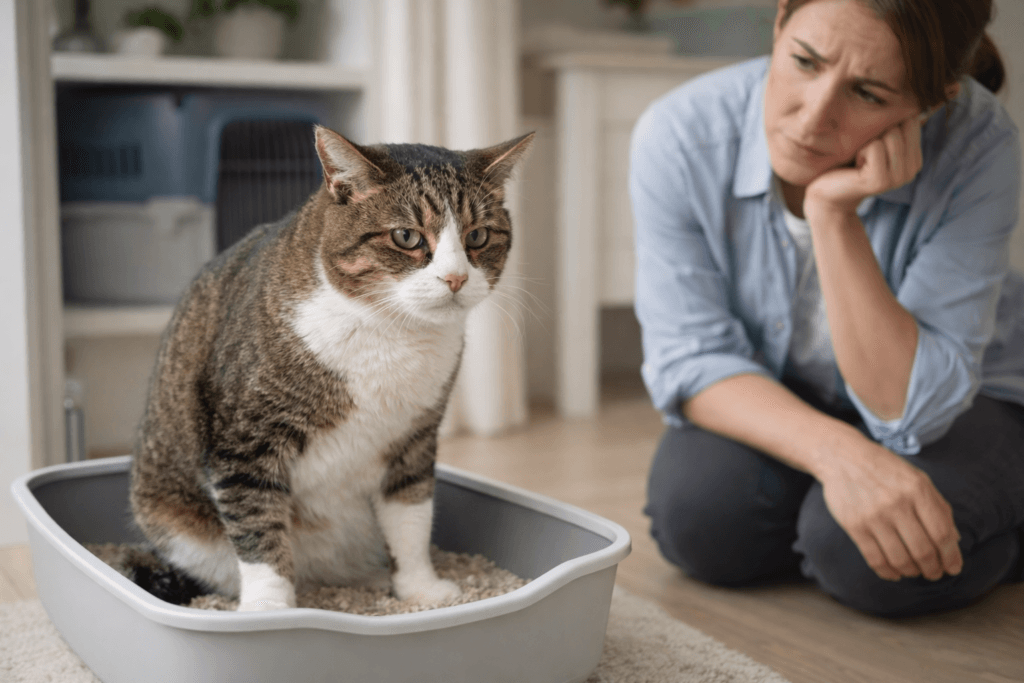
Most cats poop at least once a day. When a cat suddenly stops using the litter tray or only passes hard, dry stools after a lot of straining, we start to worry about cat constipation. A constipated cat can be uncomfortable, in pain and, in some cases, seriously unwell.
In this vet-written guide, we will cover what constipation in cats actually is, common cat constipation symptoms, safe things you can do at home, and clear signs that mean your cat needs urgent veterinary care. You will also find links to more detailed guides on problems like cat diarrhea, cat vomiting, urinary blockage in cats and other emergencies.
What Is Cat Constipation?
Cat constipation means that stool (faeces) moves too slowly through the large intestine, becomes too dry and hard, and is difficult or impossible to pass. Some constipated cats still manage to poop, but the stools are small, hard and infrequent. Others may not pass any poop for several days.
Constipation in cats sits on a spectrum:
- Mild constipation: slightly smaller or harder stools, maybe missing one day, but still otherwise bright and eating.
- Moderate constipation: a constipated cat strains in the litter tray, passes only tiny pellets, or skips bowel movements for 2–3 days.
- Severe constipation / obstipation: the colon is packed with stool, the cat is very uncomfortable, often lethargic, may vomit and may stop eating altogether.
Repeated or severe constipation can lead to megacolon, a condition where the colon becomes stretched and weak. Cats with megacolon often need lifelong management and sometimes surgery, so it is important to address constipation early.
How Often Should a Healthy Cat Poop?
Every cat is a little different, but most healthy adult cats pass stool:
- At least once every 24–36 hours
- With little or no straining
- With stool that is formed but not rock-hard
If your cat has not passed any stool for more than 48 hours, or is repeatedly straining with little result, you are likely dealing with constipation in cats and should pay close attention to the following signs.
Common Cat Constipation Symptoms
Typical signs that a cat is constipated include:
- Straining in the litter tray with little or no stool produced
- Passing hard, dry, small stools or round pellets
- Crying, meowing or leaving the tray quickly as if in pain
- Frequent trips to the litter tray with only urine or no output
- Licking around the anus or tail base more than usual
- Decreased appetite or refusing food
- Vomiting or gagging, especially after straining
- Hiding, being less playful, or seeming generally uncomfortable
Because cats are experts at hiding discomfort, other subtle clues such as changes in posture, less jumping, or using unusual places as a toilet can also indicate that something is wrong. For more help recognising early pain signs, you can review our guide on cats hiding pain.
What Causes Constipation in Cats?
There is rarely just one cause of cat constipation. Often several factors combine to slow down the gut. Common causes include:
- Dehydration: not drinking enough water, especially in cats fed mainly dry food.
- Low-fibre or unsuitable diet: some cats need more moisture or fibre, while others react badly to sudden diet changes.
- Hair ingestion: swallowing hair during grooming can form large hair–stool masses, especially in long-haired cats or cats with skin disease.
- Obesity and inactivity: overweight cats move less, which slows gut motility.
- Painful conditions: arthritis, pelvic fractures or back pain can make it hard for a cat to adopt the normal “pooping posture”. Our article on subtle pain signs is very relevant here.
- Litter tray problems: dirty trays, scented litter or lack of privacy may make a cat hold on instead of going regularly.
- Large intestine disease: inflammation, strictures, tumours or nerve problems affecting the colon.
- Other illnesses: kidney disease, dehydration from diarrhea or vomiting, and some hormonal disorders.
In older cats and cats with chronic diseases such as FIP or long-term kidney problems, constipation is often one piece of a bigger medical picture.
Is It Constipation… or Something More Dangerous?
A constipated cat can look very similar to a cat with urinary blockage or serious intestinal disease. This is one reason why it is risky to treat every litter tray problem at home.
Contact a veterinarian urgently or go to the nearest emergency clinic if your cat shows any of the following:
- Straining in the litter tray with little or no urine coming out (possible urinary blockage – see our detailed guide on urinary blockage in cats).
- Repeated vomiting, especially if nothing is coming up.
- Distended, painful abdomen or crying when you touch the belly.
- Complete loss of appetite for more than 24 hours.
- Severe lethargy, collapse or rapid breathing.
- Blood in the stool or black, tarry faeces.
These are medical emergencies. Use your local vet, or review the general advice in our emergency first aid guide for dogs and cats while you arrange immediate in-person care.
Safe Home Care for a Mildly Constipated Cat
If your constipated cat is still bright, eating reasonably well, and not showing any emergency signs, you can often start with gentle home care while arranging a non-urgent vet appointment. Never ignore cat constipation symptoms that last more than a couple of days.
1. Encourage Hydration
- Offer plenty of fresh water in several bowls around the house.
- Try wide ceramic or glass bowls filled to the brim; some cats dislike narrow, deep bowls that touch their whiskers.
- Many cats drink more from a fountain – consider a pet water fountain if your cat is fussy.
- Feeding more wet food is an easy way to increase water intake. Our complete cat nutrition guide explains how to choose good-quality wet diets.
2. Check the Diet
Sudden food changes, very low-fibre diets or diets that don’t suit your individual cat can trigger constipation in cats. Review what your cat is eating:
- If your cat eats mainly dry food, ask your vet whether a higher-moisture or higher-fibre diet would help.
- Avoid crash diet changes – transition gradually over 7–10 days.
- If you use homemade diets, double-check they are balanced; unbalanced homemade food can lead to dehydration or mineral imbalances. You can compare with our vet-approved homemade cat food recipes.
3. Improve the Litter Tray Setup
Relieving cat constipation also means making it as easy and stress-free as possible for your cat to use the tray:
- Provide at least one tray per cat plus one extra, in quiet, easily accessible locations.
- Use low-sided trays for older or arthritic cats.
- Clean solid waste daily and change the entire litter regularly.
- Many cats prefer unscented, clumping litter; strong fragrances can be off-putting.
4. Encourage Gentle Exercise
Activity stimulates gut movement. Short, frequent play sessions can help a mildly constipated cat as long as they are feeling well enough to participate. Wand toys and “chase” games are ideal. For more ideas on enrichment and indoor play, see the behaviour insights in our general facts about cats article and behaviour section.
What Can I Give My Cat for Constipation?
This is one of the most common questions owners ask. It is very important to understand that many human laxatives, enemas and home remedies can seriously harm a constipated cat.
Never give your cat:
- Human enemas (especially those containing phosphate)
- Human stool softeners or harsh stimulant laxatives unless specifically prescribed for your cat
- Large amounts of cooking oil, butter or ghee
- Random herbal “colon cleanses” or online products without veterinary guidance
Under veterinary supervision, some cats are treated with medications such as lactulose, polyethylene glycol (PEG), or prescription high-fibre or highly digestible diets. The correct choice depends on your cat’s age, body condition, medical history and how severe the constipation is.
If you are unsure what to do for your constipated cat today, contact your local vet or use the contact options on our main site for personalised advice. You can also cross-check your cat’s other symptoms with our guides on cat not eating, vomiting, diarrhea and cat poisoning emergencies.
When Does a Constipated Cat Need an In-Person Vet Visit?
Even with good home care, many constipated cats still need examination and treatment by a veterinarian. Book an appointment as soon as possible if:
- Your cat has not passed any stool for more than 48 hours.
- There is repeated straining or vocalising in the litter tray.
- You can feel a firm, sausage-like mass in the belly, or your vet previously mentioned megacolon.
- Your cat is older, has known kidney disease, heart disease or other chronic problems.
- There is fresh blood or a lot of mucus around the stool.
- Your cat is also vomiting, not eating, or seems weak.
At the clinic, your vet may perform an abdominal palpation, x-rays, blood tests and possibly an enema under sedation or anaesthesia. This helps to clear the colon safely and look for underlying disease.
Constipation in Senior Cats
Older cats are particularly prone to constipation. Reasons include arthritis (making the squatting position painful), dehydration from chronic kidney disease, and reduced gut motility. In senior cats, cat constipation symptoms often appear alongside weight loss, changes in thirst, or dull coat quality.
If your cat is middle-aged or older, it is wise to combine constipation management with a full senior health check. Our article on cat kidney disease explains why kidney blood tests and urine tests are especially important in this age group.
Can Hairballs Cause Constipation in Cats?
Yes, large amounts of hair can contribute to constipation in cats, especially in long-haired breeds like the Norwegian Forest Cat or cats with heavy shedding. Hair can mix with stool and form dry, firm masses that are hard to pass.
To reduce hair-related constipation:
- Brush your cat regularly, especially during shedding seasons.
- Discuss hairball-control diets or supplements with your veterinarian.
- Monitor for coughing, retching or hairball vomiting; our home vomiting guide offers more detail.
Preventing Cat Constipation Long-Term
Once your cat is feeling better, the next step is prevention. A few lifestyle and diet changes can greatly reduce the risk of future constipation episodes.
1. Optimise Diet and Weight
Work with your vet to choose a high-quality, complete and balanced diet that suits your cat’s age, medical conditions and preferences. Our complete cat nutrition guide explains how to calculate daily portions and avoid overfeeding.
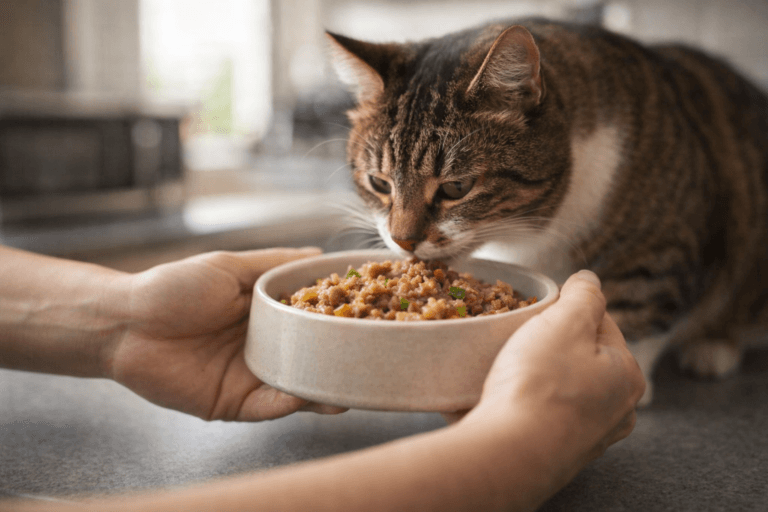
- For some cats, a higher-moisture, mainly wet-food diet helps keep stool softer.
- Others benefit from carefully chosen fibre sources or prescription gastrointestinal diets.
- Keeping your cat at a healthy body condition score reduces the risk of constipation, arthritis and many other problems.
For kittens and young cats, you can review our kitten care guide to set up good nutrition and litter habits early in life.
2. Support Overall Health
Because constipation in cats is often linked to other illnesses, general preventive care is important:
- Keep vaccinations up to date according to our cat vaccination schedule.
- Use appropriate parasite control as outlined in our complete deworming guide.
- Monitor for early signs of infectious disease such as feline calicivirus or FIP.
- Arrange regular health checks, especially for older cats and cats with chronic kidney or heart disease.
3. Create a Cat-Friendly Home Environment
Stress and environmental changes can worsen constipation by altering gut motility and litter habits. To support your cat’s emotional wellbeing:
- Provide hiding spots, vertical perches and scratching posts.
- Keep a predictable routine for feeding, play and quiet time.
- Introduce new pets or people gradually, using the tips from our behaviour articles.
Using Our Symptom Guides, Calculators and Tools
To help you understand your cat’s overall health, we have created several detailed cat-focused resources on this blog. After reading this constipation guide, you may find these particularly useful:
- Why is my cat not eating?
- Home treatment for cat vomiting
- Cat diarrhea causes and treatment
- Cat poisoning emergency guide
- Cats hiding pain – subtle signs
Together with our pet health calculators and symptom checker tools linked in the site’s main menu, these articles can help you judge whether your cat’s constipation is a mild, home-manageable problem or part of a more serious illness.
When in Doubt, Talk to a Vet
Even with the best online information, every constipated cat is different. Age, breed, lifestyle and other diseases all influence the safest treatment. If you are worried that your cat’s constipation is getting worse, or if home care is not helping within 24–48 hours, seek veterinary advice promptly.
You can show this article to your local veterinarian or use the contact options on General Veterinary Hospital Lahore’s websites to get personalised, case-by-case guidance.
Key Takeaways About Cat Constipation
- Cat constipation means stool is too dry and hard, making it difficult or impossible to pass.
- Watch for straining, hard pellets, less frequent pooping, pain and behaviour changes.
- Dehydration, diet, obesity, hair, pain and underlying disease are common causes.
- Never give human enemas or strong laxatives without veterinary supervision.
- Seek urgent help if your cat is also vomiting, very lethargic, not passing urine, or has not pooped for more than 48 hours.
- Long-term prevention focuses on hydration, suitable diet, healthy weight and a low-stress home environment.
Frequently Asked Questions About Cat Constipation
How many days can a cat go without pooping?
Most cats should not go more than 48 hours without passing stool. If your cat has not pooped for two days, especially if there is straining or reduced appetite, treat it as cat constipation and contact your vet.
Can I give my constipated cat olive oil or milk?
A tiny amount of oil in food is unlikely to harm a healthy cat, but it is usually not enough to fix constipation and can cause vomiting or pancreatitis in some cats. Milk often causes diarrhea and abdominal discomfort. It is safer to focus on hydration, diet changes and vet-prescribed treatments rather than home remedies.
Is pumpkin good for cat constipation?
Plain, cooked pumpkin (without sugar or spices) can help some constipated cats because it contains fibre and moisture. However, the correct dose is small – usually a teaspoon or two mixed into food – and it does not work for every cat. Always check with your vet before adding new foods, especially if your cat has kidney disease, allergies or is on a special diet.
Is constipation in cats an emergency?
Mild constipation is uncomfortable but not always an emergency. However, if your cat is very painful, repeatedly straining, not eating, vomiting, or has not pooped for more than 48 hours, it can quickly become serious. Cats with urinary blockage, severe dehydration or megacolon need urgent treatment.
Can stress cause constipation in cats?
Yes. Stress changes gut motility and can make cats avoid the litter tray. New pets, moving house, loud noises or changes in routine can all contribute. Supporting your cat’s emotional wellbeing and providing safe hiding spots can help prevent both constipation and other stress-related problems.
Remember: this article is designed for general education. It is not a substitute for an in-person veterinary examination. If your instincts say that something is wrong with your cat, it is always safer to have them checked.





I am sure this post has touched all the internet viewers, its really really good piece of writing on building up new weblog.