
By Dr. Zahid Afzal, DVM – Licensed Small Animal Veterinarian, General Veterinary Hospital Lahore
A dog ear infection is one of the most common reasons dogs visit the vet, and it can turn a happy pet miserable very quickly.
As a veterinarian at General Veterinary Hospital Lahore, I see cases of dog ear infection almost every single day – from mild redness and itchiness to severe, painful swelling with foul-smelling discharge.
The good news is that when a dog ear infection is recognised early and treated correctly, most dogs recover very well.
In this guide I’ll walk you through the real-life symptoms I see in the clinic, what usually causes these infections, which home-care steps are safe, and when you absolutely must see a vet urgently.
Quick overview (for busy pet parents)
- Most common type: outer ear canal inflammation (otitis externa) – itchy, red, smelly ears.
- Typical signs: head shaking, ear scratching, redness, odour, wax or discharge, pain when the ear is touched.
- Main causes: allergies, moisture, ear mites (especially in puppies), foreign bodies, narrow or hairy ear canals, hormonal or skin disease.
- Home care: gentle cleaning with a vet-approved ear cleaner if the ear drum is intact and the dog is not in severe pain.
- Vet care: always needed for ongoing infections – your vet will examine the ear, look under a scope and prescribe specific medicated drops.
- Emergency: severe pain, head tilt, loss of balance, neurological signs, blood from the ear or swelling around the ear need same-day veterinary care.
How a veterinarian looks at dog ear infections
When a dog arrives at my clinic with a suspected ear problem, I don’t just look at the ear itself.
I ask about diet, skin problems, previous infections, recent bathing or grooming, and general health.
Many dogs with chronic ear disease also have underlying
skin allergies, parasites or hormonal conditions.
Unless we address those underlying issues, the ear may improve for a short time then flare again – which is why some owners feel stuck in a frustrating cycle of “drops, better, worse, repeat”.
A full veterinary assessment usually includes checking the skin, paws and anal region for allergy clues, palpating the lymph nodes, and examining the teeth and mouth.
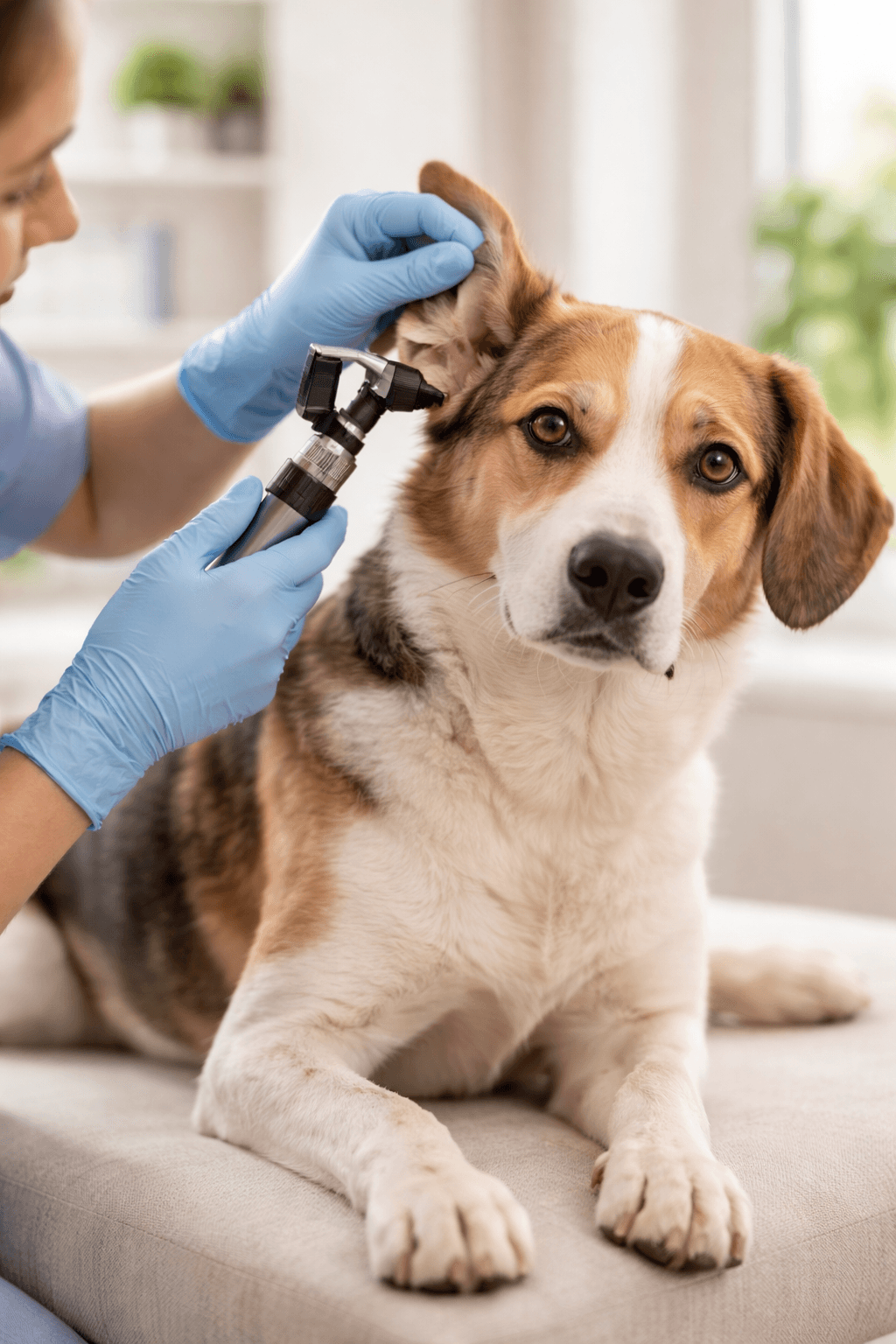
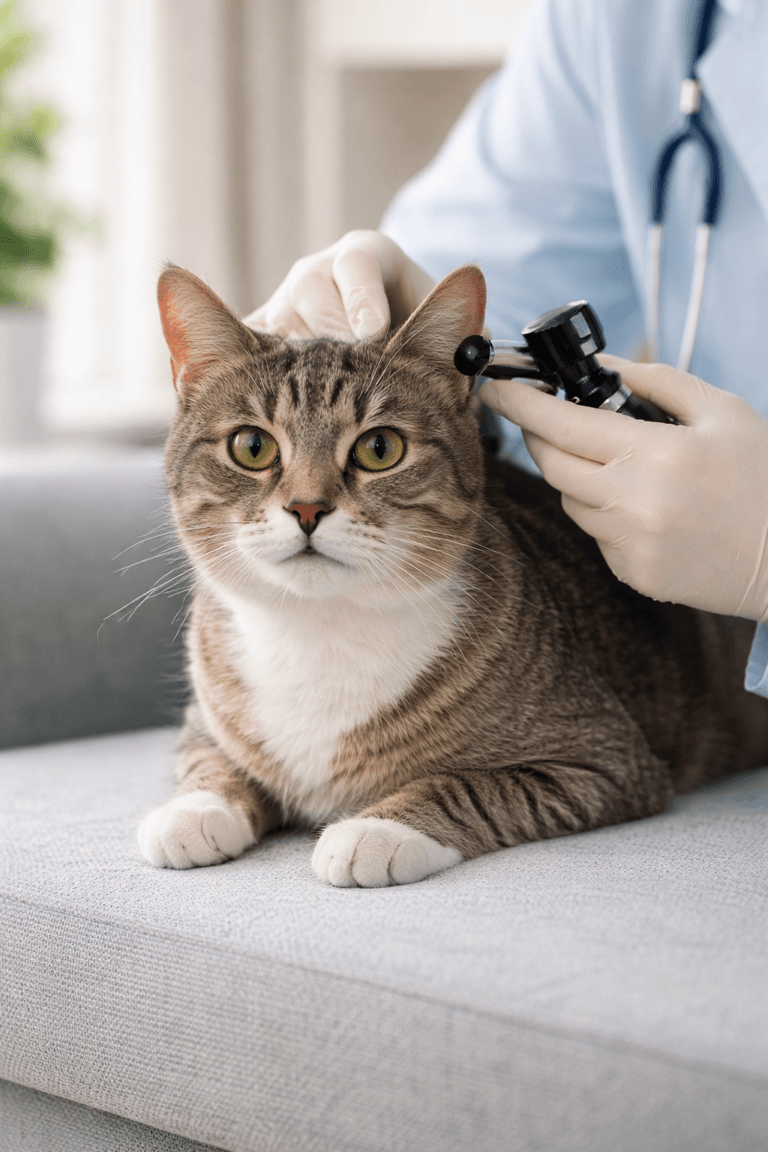
We’ll then use an otoscope to look deep inside the ear canal, assess the ear drum and decide whether it’s safe to clean and medicate the ear.
Common signs of a dog ear infection
Symptoms can appear suddenly or build up slowly over weeks. Some dogs show only one or two subtle signs, while others have a whole cluster of symptoms.
- Frequent head shaking or tilting the head to one side.
- Scratching at the ears, sometimes causing bleeding or hair loss around the ear flaps.
- Redness or swelling of the ear canal or pinna (ear flap).
- A strong, yeasty or “rotten” smell from one or both ears.
- Brown, yellow or black discharge, sometimes thick and waxy, sometimes watery.
- Pain when you touch the ear – your dog may cry, pull away or even snap.
- Scabs or crusts on or around the ears.
- Shaking the whole body as if trying to shake something off after you touch the ear.
- In more advanced cases: loss of balance, walking in circles, eye flickering (nystagmus) or head tilt, which can indicate middle or inner ear involvement.
Any of these signs, especially if they last more than a day or two, are a good reason to book a consultation with your local vet or contact
your own veterinary team at General Veterinary Hospital Lahore.
Types of dog ear infections (and why they matter)
Understanding which part of the ear is affected helps guide treatment and how urgent the situation is.
1. Otitis externa – outer ear canal infection
This is by far the most common type and what most owners mean when they say “ear infection”.
The inflammation is limited to the external ear canal and ear flap.
Bacteria or yeast overgrow in the warm, moist canal, often triggered by allergies or other underlying factors.
2. Otitis media – middle ear infection
Here the infection extends beyond the ear drum into the middle ear.
Dogs may show more pain, head tilt, or facial nerve problems.
This often requires longer treatment and, in some cases, imaging such as X-rays or CT.
3. Otitis interna – inner ear infection
This is more serious and can affect balance and coordination.
Dogs may stagger, fall to one side or have rapid eye movements.
Inner ear infections usually need intensive veterinary care, sometimes in a hospital setting.
Free vet-written pet health guide
If you like clear, practical explanations like this, you can also explore our comprehensive
Pet Health Guide – Expert Dog & Cat Care by a Veterinarian
with more home-care tips, red-flag signs and preventive advice.
What causes ear infections in dogs?
In many of my patients, a dog ear infection is not caused by “dirty ears” alone.
There is almost always a combination of factors that set the stage for bacteria or yeast to overgrow.
1. Allergies (very common)
Environmental allergies (pollens, dust mites, moulds) and food allergies are a major driver of recurring ear infections.
The skin lining the ear canal becomes inflamed and leaky, so normal ear microbes suddenly behave like invaders.
If your dog also has itchy paws, armpits or belly, or has already needed treatment for
allergic skin disease,
allergies are high on the list.
2. Ear conformation and moisture
Breeds with floppy ears or narrow ear canals (such as Cocker Spaniels, Retrievers and Poodles) trap warmth and humidity.
Swimming, frequent bathing, or heavy grooming products can leave moisture in the ears, giving yeast and bacteria a perfect home.
3. Ear mites
Ear mites are more common in puppies or in dogs living with infected cats.
They usually cause intense itchiness and a dark “coffee-ground” debris.
Mites are easily diagnosed and treated by your vet, often using a spot-on parasite product along with ear cleaning.
4. Foreign bodies and trauma
Grass seeds, foxtails and small plant fragments can slip into the ear canal, especially in outdoor dogs.
Dogs may shake the head violently or cry when the ear is touched.
These need prompt veterinary removal – don’t try to dig or tweeze anything out yourself.
5. Hormonal or systemic disease
Dogs with low thyroid hormone, immune problems, or chronic skin disease can develop stubborn ear infections that keep returning.
In these cases, blood tests and long-term management plans are important.
When is a dog ear infection an emergency?
Some ear infections are uncomfortable but stable; others are urgent and can seriously affect your dog’s quality of life.
Contact a vet (or head straight to an emergency clinic) the same day if you notice:
- Severe, constant crying or yelping when the ear is touched.
- Head tilt, loss of balance, falling over or walking in circles.
- Eye flickering (nystagmus) or pupils that don’t look symmetrical.
- Swelling under or around the ear, especially if your dog recently shook the head a lot (possible aural haematoma).
- Blood, pus, or a sudden large amount of thick discharge from the ear.
- Fever, lethargy, or loss of appetite along with ear signs.
For truly life-threatening issues like bloat, poisoning or major trauma, please see our
Emergency First Aid for Dogs & Cats – Complete Vet Guide 2025
and Dog Bloat (GDV) Emergency Survival Guide.
But remember: a dog in severe ear pain also deserves urgent help.
How vets diagnose a dog ear infection
In the exam room, I follow a fairly structured process to make sure we treat the real problem, not just the symptoms.
- History: duration of signs, previous ear problems, recent baths or swimming, diet changes, other health issues.
- Physical exam: full-body check plus careful inspection of both ears and surrounding skin.
- Otoscopy: using a lighted scope to examine the ear canal and ear drum, looking for foreign bodies, tumours, polyps or perforation of the drum.
- Cytology (ear swab under a microscope): this tells us whether bacteria, yeast, or inflammatory cells are present and helps choose the most appropriate medication.
- Cultures or advanced imaging (in complex cases): in chronic or recurrent infections, we may take a sample for culture and sensitivity testing, or use imaging to assess the middle and inner ear.
These steps might sound technical, but they prevent a lot of frustration.
Simply giving “something for the infection” without a proper diagnosis is one of the biggest reasons dogs keep having ear problems.
How dog ear infections are treated at the vet clinic
Treatment plans are tailored to each dog and to the type of infection we find on cytology.
There is no single “best ear drop” that suits every case.
A typical vet-prescribed plan may include:
-
Professional ear cleaning: removing built-up wax, pus and debris using vet-approved solutions.
In some painful cases, this is done under light sedation so the ear can be cleaned thoroughly without stressing the dog. -
Medicated ear drops: combination products that may contain an antibiotic, antifungal and anti-inflammatory ingredient.
Your vet will choose a formula that matches the organisms seen on the ear swab. - Systemic medication: in severe or deep infections, oral anti-inflammatory drugs or antibiotics may be needed.
-
Allergy or skin treatment: for dogs with recurrent ear disease due to allergies, we often combine ear therapy with longer term allergy control, parasite prevention and skin care – see our
Dog Skin Problems & Allergy Treatment Guide 2025. -
Pain management: when ears are very sore, appropriate pain relief may be prescribed.
In some complex cases this can include medications also discussed in our
Gabapentin for Dogs Guide.
Most uncomplicated infections start to feel much better within a few days, but the medication course usually continues for 1–2 weeks (or more) to fully resolve the problem.
Stopping treatment early is another common reason infections return.
Safe home care for a mild dog ear infection
It’s natural to want to help your dog at home, but ears are delicate structures.
The wrong product – or the right product used at the wrong time – can make things worse.
Always contact a veterinarian first if your dog is in obvious pain, if there is blood or pus, or if you suspect the ear drum may be damaged.
1. Gentle ear cleaning (only if your vet agrees)
For many dogs, regular gentle cleaning with a vet-approved ear cleaner forms part of the treatment plan.
Human products like vinegar, alcohol, hydrogen peroxide or baby wipes should not be used inside the ear canal.
- Warm the ear cleaner bottle in your hands so it is close to body temperature.
- Lift the ear flap vertically and carefully fill the ear canal with the cleaner (unless your vet has told you otherwise).
- Massage the base of the ear for 20–30 seconds – you should hear a squelchy sound as debris breaks up.
- Let your dog shake the head, then gently wipe away loosened debris from the outer ear with cotton wool or soft gauze.
- Repeat on the other side if needed.
If your vet has prescribed medicated drops as well as cleaner, the usual routine is to clean first, wait 10–15 minutes, then apply the drops so they can reach the canal properly.
2. What you should NOT do at home
- Do not insert cotton buds / Q-tips deep into the ear canal – they can push debris further in and risk damaging the ear drum.
- Do not use random “home remedies” like oils, vinegar, garlic, alcohol, shampoo or hydrogen peroxide in the ear.
- Do not apply leftover ear drops from previous pets or old prescriptions without veterinary advice.
- Do not skip your follow-up recheck if your vet has scheduled one – it’s often the key to preventing recurrence.
Preventing future ear infections in your dog
Once we’ve cleared a dog ear infection, the next goal is to reduce the risk of it coming back.
Prevention looks a little different for every dog, but here are strategies I commonly recommend in the clinic:
-
Regular ear checks at home: once a week, gently lift the ear flap and look for redness, odour or discharge.
Early changes caught at this stage are much easier to treat. - Planned ear cleaning: for dogs prone to infections, your vet may advise a maintenance schedule using a gentle ear cleaner – for example once or twice a week.
-
Dry ears after swimming or baths: use cotton wool to gently absorb excess moisture from the outer ear.
Avoid letting shampoo or water gush directly into the ear canal. -
Manage allergies and parasites: work with your vet to identify food or environmental triggers, and keep up-to-date with parasite prevention.
For more on long-term parasite control, see our
Complete Deworming & Parasite Control Guide
and Dog Worms Symptoms & Deworming Schedule 2025. -
Watch for related illnesses: ear problems together with coughing, nasal discharge or fever may indicate respiratory disease such as
kennel cough in dogs.
Vomiting or diarrhoea alongside ear signs needs prompt veterinary attention – you can learn more in our
Vomiting in Dogs Guide and
Dog Diarrhea Home Treatment Guide.
Frequently asked questions about dog ear infections
1. Can I treat a dog ear infection at home without seeing a vet?
For mild, very early cases, gentle cleaning with a vet-approved product may offer short-term relief, but you still need a veterinary diagnosis.
It is impossible to tell just by looking whether the ear drum is intact, whether bacteria or yeast are involved, or whether there is a foreign body.
Using the wrong medication can delay healing or cause serious damage.
2. How long does it take a dog ear infection to heal?
Uncomplicated infections that are treated early often improve dramatically within a few days, but complete resolution may take 1–3 weeks.
Chronic or deep infections can require several weeks or even months of carefully monitored treatment.
3. Will a dog ear infection go away on its own?
In my clinical experience, true infections rarely disappear completely without appropriate treatment.
Signs may wax and wane, but low-grade inflammation often remains in the canal, setting the dog up for repeated flare-ups.
4. Is a dog ear infection contagious?
Most bacterial and yeast infections are not directly contagious between healthy adult dogs.
Ear mites, however, are very contagious, so all pets in the household may need treatment if mites are found.
5. Does diet matter for recurring ear infections?
Yes, for some dogs. Food allergies are a well-recognised trigger for chronic ear problems.
Your vet may recommend an elimination diet or a therapeutic allergy diet while monitoring for improvements.
Final thoughts from a practicing veterinarian
A dog ear infection is rarely a sign of “bad cleaning” or poor care.
In most of my patients, it’s a combination of anatomy, allergies, moisture and individual immune response.
With a careful examination, appropriate testing and a structured treatment plan, the vast majority of dogs can enjoy comfortable, infection-free ears again.
If you’re worried about your dog’s ears, don’t wait for things to become unbearable.
Book a visit with your local vet or consult the team at General Veterinary Hospital Lahore so we can help your dog feel better as soon as possible.
Need personalised veterinary advice?
For tailored treatment plans, medication advice and follow-up, please contact your veterinary team at General Veterinary Hospital Lahore
or book an online consultation through our main hospital website.

One Comment