Quick Answer: Keeping chickens indoors is possible for some fancy hens and pet chickens, but it needs strict hygiene, proper housing, ventilation, daily cleaning, safe feed, parasite control, and health monitoring. Bedrooms and living rooms are not ideal permanent places for hens unless a dedicated, washable, well-ventilated indoor chicken setup is created. Indoor chickens can be loving and enjoyable pets, but they are still poultry, so droppings, smell, dust, bacteria, parasites, and zoonotic disease risks must be managed carefully.
Keeping chickens indoors is becoming more popular among people who love fancy hens, ornamental breeds, and friendly domestic chickens as pets. Many owners want to keep a beautiful Silkie, Polish hen, Bantam, Cochin, Frizzle, or local domestic hen close to the family inside the bedroom, living room, balcony, or indoor pet area. Keeping chickens indoors can look simple at first, but it is very different from keeping a cat, dog, rabbit, or parrot. Chickens eat, scratch, dust bathe, shed feathers, produce droppings frequently, and need a proper daily routine. If keeping chickens indoors is not managed correctly, it can create smell, respiratory irritation, infection risk, stress for the bird, poor egg production, dirty flooring, mites, and serious hygiene problems for the family.
I am Dr Zahid Afzal at General Veterinary Hospital Lahore, and this complete guide is written for families who want to keep fancy hens or domestic hens indoors in a safe, responsible, and practical way. In Lahore and many parts of Pakistan, people often keep poultry on rooftops, in small courtyards, in balconies, or near living areas. Some owners even keep special fancy hens inside the house because they are expensive, delicate, friendly, or emotionally attached to the family. The intention is usually love, but love alone is not enough. Indoor chickens need proper care, controlled housing, clean bedding, balanced feed, sunlight or light management, disease prevention, and a clear plan for droppings and smell.
At General Veterinary Hospital Lahore, we sometimes see hens brought in with problems that started from poor indoor management. Some have respiratory signs because of poor ventilation. Some develop dirty feathers and skin irritation because droppings are not cleaned quickly. Some fancy breeds become weak because they are fed mostly bread, rice, roti, or kitchen leftovers instead of balanced poultry feed. Some birds develop leg weakness from slippery floors or poor calcium intake. These cases are preventable when owners understand how hens actually live and what they need every day.
This guide explains everything from A to Z: whether chickens can live indoors, which breeds are easier, how to set up indoor housing, what to feed, how to manage droppings, how to keep smell under control, how to prevent disease, how to handle egg laying, and when to contact a veterinarian.
Keeping chickens indoors: Can Chickens Live Indoors?
Yes, chickens can live indoors temporarily or in a specially managed indoor chicken area, but they should not be kept freely inside bedrooms and living rooms without a proper setup. Chickens are not litter-trained like cats. They pass droppings many times a day, scratch the ground naturally, scatter bedding, produce feather dust, and need access to light, fresh air, and movement. A chicken walking freely on beds, sofas, carpets, kitchen floors, and prayer mats may look cute, but it is not hygienic or safe for long-term management.
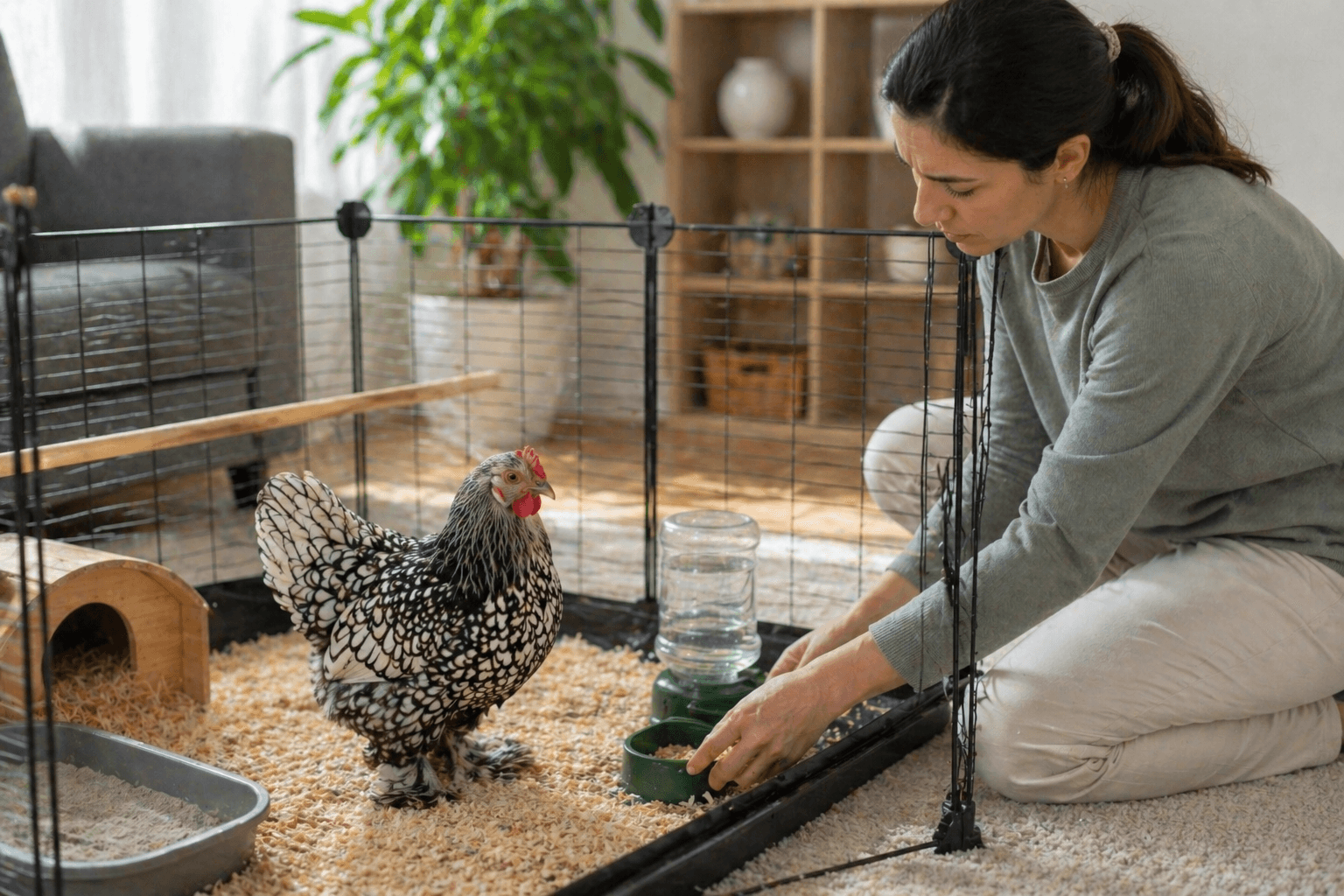
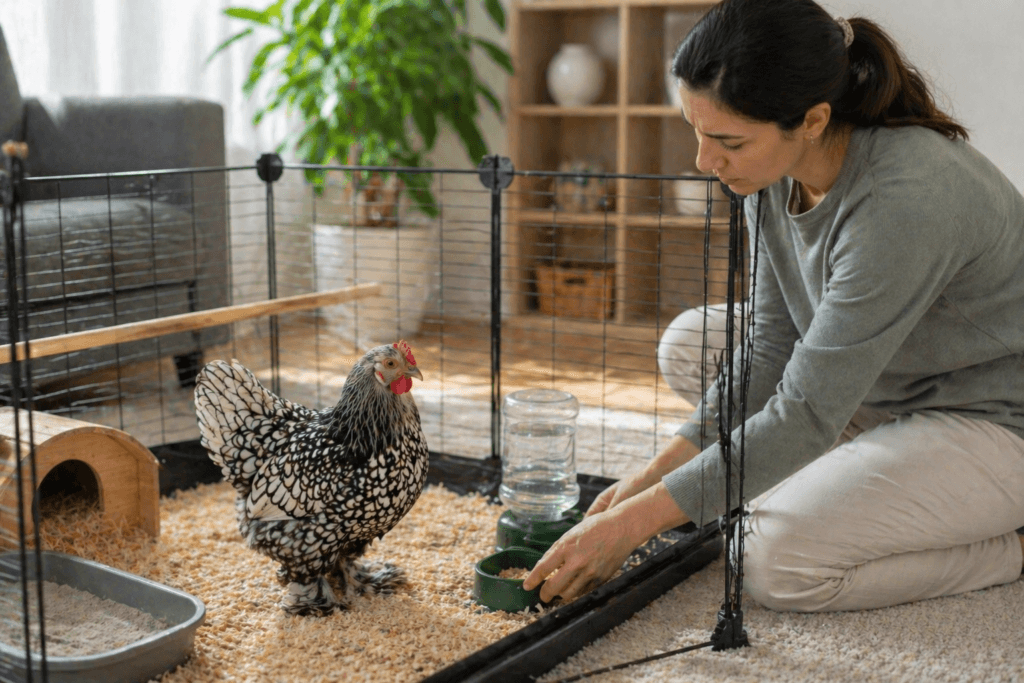
The safest approach is not to let hens roam freely all day inside the house. Instead, create a dedicated indoor chicken enclosure or indoor poultry corner with washable flooring, good ventilation, safe bedding, proper feed and water, and supervised free time outside the enclosure.
Keeping chickens indoors: Is It Safe to Keep Hens in the Bedroom or Living Room?
Keeping hens inside the bedroom or living area is not ideal as a permanent arrangement. Bedrooms are meant for sleeping, and chickens naturally produce droppings, feather dust, dander, and bedding particles. These can irritate human breathing, especially in children, elderly people, asthma patients, and people with weak immunity. Living rooms are slightly better than bedrooms if the area is well ventilated, washable, and separated from food preparation and sleeping areas, but free movement is still not recommended.
If a fancy hen must be kept indoors, the best place is a dedicated corner away from the kitchen, dining area, beds, and prayer spaces. The floor should be washable. The enclosure should have a tray, bedding, and enough space for movement. The bird should not be allowed to sleep on sofas, beds, pillows, or carpets.
Keeping chickens indoors: Fancy Hens vs Domestic Hens: What Is the Difference?
Fancy hens are ornamental breeds kept mostly for beauty, companionship, exhibition, or hobby breeding. Domestic hens are usually kept for eggs, meat, or household poultry purposes. Fancy hens may be more delicate depending on the breed. Some have feathered feet, crests, fluffy feathers, short legs, or heavy plumage that makes them more prone to dirt, mites, respiratory issues, eye obstruction, or heat stress.
Common fancy chicken breeds include:
If you also keep companion birds, our complete bird care guide covers broader principles of housing, diet, hygiene, and health monitoring.
- Silkie: soft feathers, friendly nature, broody behavior, delicate feather care
- Polish: beautiful crest, but vision may be blocked by head feathers
- Cochin Bantam: calm and fluffy, but feathered feet get dirty easily
- Frizzle: curled feathers, attractive but needs protection from weather stress
- Sebright: small ornamental bird, active and alert
- Brahma: large, gentle, feather-footed, needs more space
- Local domestic hens: hardy, active, usually easier to manage outdoors
For indoor keeping, smaller calm breeds are usually easier than large active breeds. However, small does not mean low maintenance. A Silkie or Bantam still needs space, hygiene, dust bathing, sunlight, balanced feed, and parasite prevention.
Keeping chickens indoors: Should You Keep One Hen Alone Indoors?
Chickens are social birds. A single hen may become lonely, stressed, noisy, or overly attached to humans. Ideally, chickens should have at least one compatible chicken companion. However, keeping multiple hens indoors increases droppings, smell, cleaning load, and space requirements. If you keep more than one hen inside, the enclosure must be larger and cleaning must be more strict.
For many families, the best balance is to keep hens in a safe outdoor or semi-outdoor coop and bring them indoors only for supervised interaction. If indoor keeping is necessary due to breed value, weather, illness, or safety concerns, the owner must treat it like a proper poultry management system, not like a decorative pet in a room.
Keeping chickens indoors: Minimum Space for Indoor Chickens
Space is one of the biggest mistakes in indoor chicken care. A small cage may keep the hen contained, but it does not meet her normal needs. Chickens need space to stand, turn, stretch wings, walk, scratch, perch, dust bathe, and nest.
If a chicken is kept in a small indoor cage all day, she may develop stress, obesity, weak legs, poor feather condition, dirty vent feathers, foot problems, and behavioral frustration.
Keeping chickens indoors: The Best Indoor Chicken Housing Setup
A good indoor chicken setup should include:
- A secure enclosure or pen
- Washable base tray
- Absorbent bedding
- Perch or low roost
- Nesting box for laying hens
- Feed bowl that does not tip
- Clean water container
- Dust bath tray
- Ventilation without direct cold drafts
- Safe supervised exercise time
The enclosure should not be placed directly beside the bed, dining table, sofa, or kitchen counter. It should be in a bright, airy, washable area. A tiled room, covered balcony, utility area, or separate indoor pet room is much better than a carpeted bedroom.
Keeping chickens indoors: Indoor Flooring and Bedding
Flooring matters because chickens scratch, spill water, pass droppings, and scatter bedding. Slippery floors can cause leg strain, especially in chicks, heavy breeds, and feather-footed fancy hens. Carpet is not suitable because it absorbs droppings, smell, mites, bacteria, and moisture.
Good flooring options include:
- Washable plastic tray under the enclosure
- Vinyl sheet flooring
- Tile floor with bedding on top
- Rubber mat covered with bedding
- Large washable pet playpen base
Good bedding options include:
- Pine shavings that are safe and dust-controlled
- Chopped straw if kept dry and changed regularly
- Paper-based bedding for small indoor setups
- Sand in selected well-ventilated setups, but only with strict cleaning
Avoid strongly scented bedding, dusty materials, moldy straw, wet newspaper, and cedar shavings. Dusty bedding can irritate the respiratory system of both hens and humans.
Keeping chickens indoors: Ventilation and Smell Control
Ventilation is one of the most important parts of keeping chickens indoors. Poor ventilation causes ammonia buildup from droppings, increases respiratory irritation, and makes the room smell unpleasant. A hen may look fine for a while but slowly develop watery eyes, sneezing, breathing noise, or dullness if the air quality is poor.
At General Veterinary Hospital Lahore, indoor poultry respiratory cases often have one thing in common: closed rooms, wet bedding, and poor air movement. Owners usually clean the visible droppings but forget that moisture and ammonia collect quickly in indoor areas.
Keeping chickens indoors: Simple Smell-Control Rule
If you can smell the chicken area strongly when you enter the room, the bird has already been breathing that air for hours. Clean droppings, change wet bedding, improve ventilation, and check for spilled water immediately.
Daily Cleaning Routine for Indoor Hens
Indoor chickens need cleaning every day. Skipping cleaning for even one or two days can create smell, flies, bacteria, wet bedding, dirty feet, and respiratory irritation.
Use separate cleaning tools for the chicken area. Do not wash poultry feeders or trays in the kitchen sink. After cleaning, wash hands properly.
Chicken Diapers: Useful or Risky?
Chicken diapers are sometimes used by indoor chicken owners. They can reduce droppings on the floor during supervised indoor time, but they are not a complete hygiene solution. They must be changed frequently, fitted correctly, and removed regularly so the skin can breathe.
Problems with chicken diapers include:
- Vent irritation
- Dirty feathers
- Skin redness
- Stress if the bird dislikes wearing it
- Trapped moisture
- False sense of hygiene
Chicken diapers should never be used all day without breaks. A hen should still have a proper enclosure, clean bedding, and normal dust bathing time. If the vent feathers become dirty, wet, or irritated, stop using the diaper and reassess the management.
Dust Bathing Indoors
Dust bathing is a natural chicken behavior. Hens use dust to clean feathers, reduce oil, and help control parasites. If you keep a hen indoors without a dust bath, she may become frustrated, greasy, itchy, or more prone to mites.
An indoor dust bath can be made using a low tray with clean dry sand and safe dust bath material. It should not be extremely dusty because indoor dust can irritate humans and birds. The dust bath should be offered in a controlled area and cleaned regularly.
Do not use garden soil that may contain chemicals, pesticides, mold, or cat feces. Keep the dust bath dry and remove droppings from it.
Lighting, Sunlight and Day-Night Routine
Chickens need a natural day-night rhythm. A hen kept in a dark room all day may become inactive, stressed, and unhealthy. A hen kept under bright artificial light late at night may also become disturbed. Indoor hens should receive natural daylight or a safe artificial light schedule, with darkness at night for proper rest.
Sunlight helps behavior and general health, but direct heat through windows can overheat birds quickly. In Lahore’s summer, indoor sunlight must be managed carefully. Morning light is usually safer than harsh afternoon heat.
Temperature Management in Lahore Homes
Indoor chickens can suffer from both heat and cold stress. Fancy breeds with heavy feathers may overheat. Young chicks and sick hens may become chilled easily. Lahore summers are especially risky for poultry kept indoors in closed rooms.
Heat stress signs include:
- Open-mouth breathing
- Wings held away from the body
- Weakness
- Reduced appetite
- Watery droppings
- Lethargy
Cold stress signs include:
- Fluffed feathers
- Huddling
- Reduced activity
- Cold feet
- Weakness in young birds
Indoor hens should be kept away from direct AC drafts, heater fumes, kitchen smoke, and closed hot rooms. Fresh air is important, but direct cold air should not blow continuously on the bird.
Feeding Indoor Chickens: The Correct Diet
Feeding is one of the most important parts of chicken care. A common mistake is feeding indoor hens mostly roti, rice, bread, biscuits, leftover curry, or grains only. Chickens need balanced feed, not just household leftovers. Poor feeding can cause weak bones, poor egg shells, obesity, liver problems, poor feather quality, and reduced immunity.
The best base diet depends on age and purpose:
- Chicks: chick starter feed
- Growing birds: grower feed
- Laying hens: layer feed with proper calcium
- Breeding or special fancy birds: balanced poultry ration according to condition
A laying hen should usually receive proper layer feed as the main diet. Treats and kitchen foods should be limited and safe.
Safe Treats for Indoor Hens
Safe treats can be offered in small amounts. These may include chopped leafy greens, small pieces of cucumber, pumpkin, cooked egg, melon, and small amounts of grains. Treats should not replace balanced feed.
Unsafe or risky foods include:
- Chocolate
- Very salty foods
- Fried and oily leftovers
- Moldy food
- Rotten fruits or vegetables
- Raw beans
- Alcohol
- Large amounts of onion or strong spicy foods
In Pakistani homes, it is very common to offer leftover roti, rice, or salan. Small amounts may not harm every bird, but spicy, oily, salty, or spoiled leftovers are not suitable for indoor hens. A fancy hen kept indoors should be fed like a managed bird, not like a dustbin for leftovers.
Calcium, Grit and Egg Laying
Laying hens need calcium for strong eggshells. If calcium is low, eggs may become thin-shelled, soft-shelled, or irregular. Long-term calcium problems can affect bones and overall health. Layer feed usually contains calcium, but some hens may need oyster shell or calcium support depending on their diet and laying pattern.
Chickens also need grit if they eat grains, greens, and fibrous foods. Grit helps grind food in the gizzard. Indoor hens that never access soil may not get enough natural grit, so safe poultry grit may be needed.
Water Management
Fresh water must be available all the time. Water containers should be cleaned daily because chickens easily contaminate water with bedding, feed, and droppings. A dirty drinker can become a source of infection.
Use a stable drinker that cannot tip over easily. Wet bedding around the water bowl causes smell, ammonia, foot problems, and bacterial growth. If the bird keeps spilling water, change the container style.
Housing Management for Bedrooms and Living Areas
If an owner insists on keeping a fancy hen inside a bedroom or living room, the setup must be controlled. The hen should not roam freely on beds, sofas, carpets, pillows, or dining areas. A dedicated enclosure is necessary.
Bedroom Setup Rules
- Do not keep the hen beside the bed
- Use a washable enclosure base
- Clean droppings daily
- Keep bedding dry
- Do not allow the hen on pillows or blankets
- Do not keep feed dust near sleeping areas
- Keep the room ventilated
Living Room Setup Rules
- Use a separate corner with washable flooring
- Place a barrier or indoor pen
- Keep feed and water inside the pen
- Do not allow access to electrical wires
- Protect sofas, rugs, and curtains from droppings
- Clean the area before guests or children enter
Indoor Chicken Enrichment
Chickens are intelligent and active. A bored indoor hen may peck objects, become noisy, overeat, damage bedding, or develop stress. Enrichment keeps the bird mentally and physically healthier.
Good enrichment ideas include:
- Safe scratching tray
- Dust bath tray
- Low perch
- Hanging greens
- Small supervised foraging area
- Sunlight exposure in a safe enclosure
- Companionship from another compatible hen
Do not give small plastic objects, rubber pieces, toxic plants, sharp items, or anything the hen can swallow dangerously.
Perches and Nesting Boxes
Chickens naturally like to perch. Indoor hens should have a low, stable perch that is easy to grip. It should not be too high because heavy breeds and feather-footed birds can injure themselves when jumping down on hard floors.
Laying hens also need a nest box. Without a proper nesting area, they may lay eggs in corners, under furniture, on bedding, or in dirty areas. A nest box should be quiet, clean, and lined with dry bedding.
Managing Eggs Indoors
Eggs should be collected regularly and handled hygienically. Dirty eggs should not be placed directly on kitchen counters or dining areas. Wash hands after collecting eggs. If eggs are cracked, very dirty, soft-shelled, or abnormal, check the hen’s diet and health.
Indoor laying problems may include:
- Soft-shelled eggs
- Egg eating
- Egg binding
- Sudden stop in laying
- Dirty vent feathers
- Reproductive infection
Egg binding is especially important. A hen that is sitting low, straining, weak, fluffed up, or not passing an egg may need urgent veterinary care. Although written for budgies, our egg-binding emergency guide explains the general warning pattern bird owners should recognize; species-specific treatment must still come from a veterinarian.
Common Health Problems in Indoor Hens
Parasite Control for Indoor Chickens
Indoor hens can still get mites, lice, worms, and external parasites. Parasites may come from new birds, bedding, outdoor visits, wild birds, or contaminated equipment. Mites and lice can make hens itchy, restless, anemic, weak, and poor in feather quality.
Signs of external parasites include:
- Restlessness at night
- Feather damage
- Itching and preening
- Pale comb
- Reduced laying
- Tiny moving insects near feather bases
Any new hen should be quarantined before entering the indoor setup. Do not place a newly purchased fancy hen directly inside the bedroom or living area. Observe it, check droppings, check feathers, and ideally get a veterinary assessment.
Quarantine for New Fancy Hens
New birds can carry respiratory infections, parasites, diarrhea-causing organisms, or hidden disease. A quarantine period protects your existing birds and family. Keep new hens separate, use separate feeders and drinkers, and wash hands after handling.
During quarantine, watch for:
- Sneezing or nasal discharge
- Watery eyes
- Diarrhea
- Poor appetite
- Weight loss
- External parasites
- Weakness or sitting fluffed up
At General Veterinary Hospital Lahore, many indoor poultry problems start after a new bird is brought home from a market and mixed immediately with other birds. Quarantine is one of the simplest ways to prevent disease spread.
Handling and Human Safety
Fancy hens can become friendly, but handling must be gentle and hygienic. Children should not chase, squeeze, kiss, or sleep with hens. Adults should teach children that poultry are living animals, not toys.
Safe handling rules include:
- Wash hands after touching hens
- Do not kiss hens
- Do not eat while handling poultry
- Keep poultry away from kitchen counters
- Keep hens away from babies and immune-compromised people
- Use separate slippers or shoes for poultry areas if possible
Indoor chicken care must protect both the bird and the family.
Daily A–Z Indoor Hen Care Checklist
- Check bird activity and appetite in the morning
- Give fresh clean water
- Provide balanced feed, not only leftovers
- Remove droppings from bedding
- Check vent feathers for dirt
- Check eyes, nose, breathing, and comb color
- Allow supervised movement or enrichment
- Collect eggs hygienically
- Replace wet bedding immediately
- Wash hands after handling
Weekly Indoor Hen Care Checklist
- Deep clean the enclosure tray
- Wash feeders and drinkers thoroughly
- Change bedding fully
- Inspect skin and feathers for mites or lice
- Check nails and feet
- Check body weight and body condition
- Clean dust bath tray
- Review smell and ventilation
Signs Your Hen Needs a Veterinarian
Contact a veterinarian if your hen shows:
- Not eating
- Sitting fluffed up
- Weakness or falling
- Open-mouth breathing
- Swollen eyes or nasal discharge
- Persistent diarrhea
- Dirty vent with weakness
- Egg binding signs
- Blood in droppings
- Sudden drop in activity
- Weight loss
- Severe mite or lice infestation
Birds often hide illness until they are quite weak. A bird that is sitting fluffed up, weak, or unusually quiet may be showing an important illness pattern, even though the exact cause differs between species. Early veterinary help is better than waiting for the hen to become unable to stand.
Practical Lahore Home Setup Example
For a family in Lahore keeping two small fancy hens indoors, a practical setup would be a dedicated washable corner in a ventilated room or covered balcony, not the bedroom. Use a large indoor pen with a plastic base tray, dry bedding, low perch, nest box, stable feeder, and clean drinker. Give morning light but avoid direct afternoon heat. Clean droppings daily, replace wet bedding immediately, and deep clean weekly. Feed proper layer ration as the base diet, with limited safe greens and treats. Allow supervised exercise in a washable area, then return the hens to the enclosure.
This type of setup is much safer than letting hens roam freely on beds, carpets, sofas, and kitchen floors.
Frequently Asked Questions
Can I keep a fancy hen in my bedroom?
You can keep a hen indoors temporarily or in a dedicated enclosure, but a bedroom is not ideal for permanent poultry keeping. Droppings, dust, smell, and hygiene risks make bedrooms unsuitable unless management is extremely strict.
Can chickens be toilet trained?
Chickens are not reliably toilet trained like cats. Some owners use chicken diapers for short supervised periods, but droppings management still requires a proper enclosure and cleaning routine.
What is the best feed for indoor hens?
The best base diet for laying indoor hens is good-quality layer feed, with clean water, calcium support if needed, and safe treats in small amounts. Roti, rice, and leftovers should not be the main diet.
Do indoor hens need sunlight?
Yes, they need a healthy light cycle and some access to safe daylight. However, direct heat through windows or closed hot rooms can cause heat stress, especially in Lahore summers.
Can fancy hens live alone?
Chickens are social birds and usually do better with compatible companions. A single indoor hen may become lonely or stressed, but multiple hens need more space and stricter cleaning.
Are indoor chickens safe for children?
Children can enjoy hens safely if supervised, but they should not kiss birds, sleep with them, eat while handling them, or touch droppings. Handwashing is essential.
Final Thoughts
Keeping chickens indoors can be enjoyable, especially for owners who love fancy hens and want them close to the family. However, keeping chickens indoors is only safe when hygiene, housing, feeding, ventilation, disease prevention, and daily cleaning are taken seriously. A hen is not just a decorative pet for a bedroom or living room. She is a living poultry bird with natural needs for scratching, dust bathing, perching, balanced nutrition, clean bedding, and fresh air.
As Dr Zahid Afzal at General Veterinary Hospital Lahore, my practical advice is simple: if you want to keep fancy hens indoors, create a dedicated indoor poultry setup rather than allowing free roaming in sleeping and eating areas. Use proper feed, keep the area dry, wash hands after handling, monitor droppings and breathing, and seek veterinary help early when the bird looks dull or weak.
Indoor hens can be healthy and friendly companions, but only when owners respect both sides of the relationship: the bird’s welfare and the family’s hygiene. With the right setup, proper routine, and responsible care, fancy hens and domestic hens can be managed safely and beautifully at home.
Related reading: if you keep other pet birds, see our budgie care guide for another bird species’ housing and diet needs.