
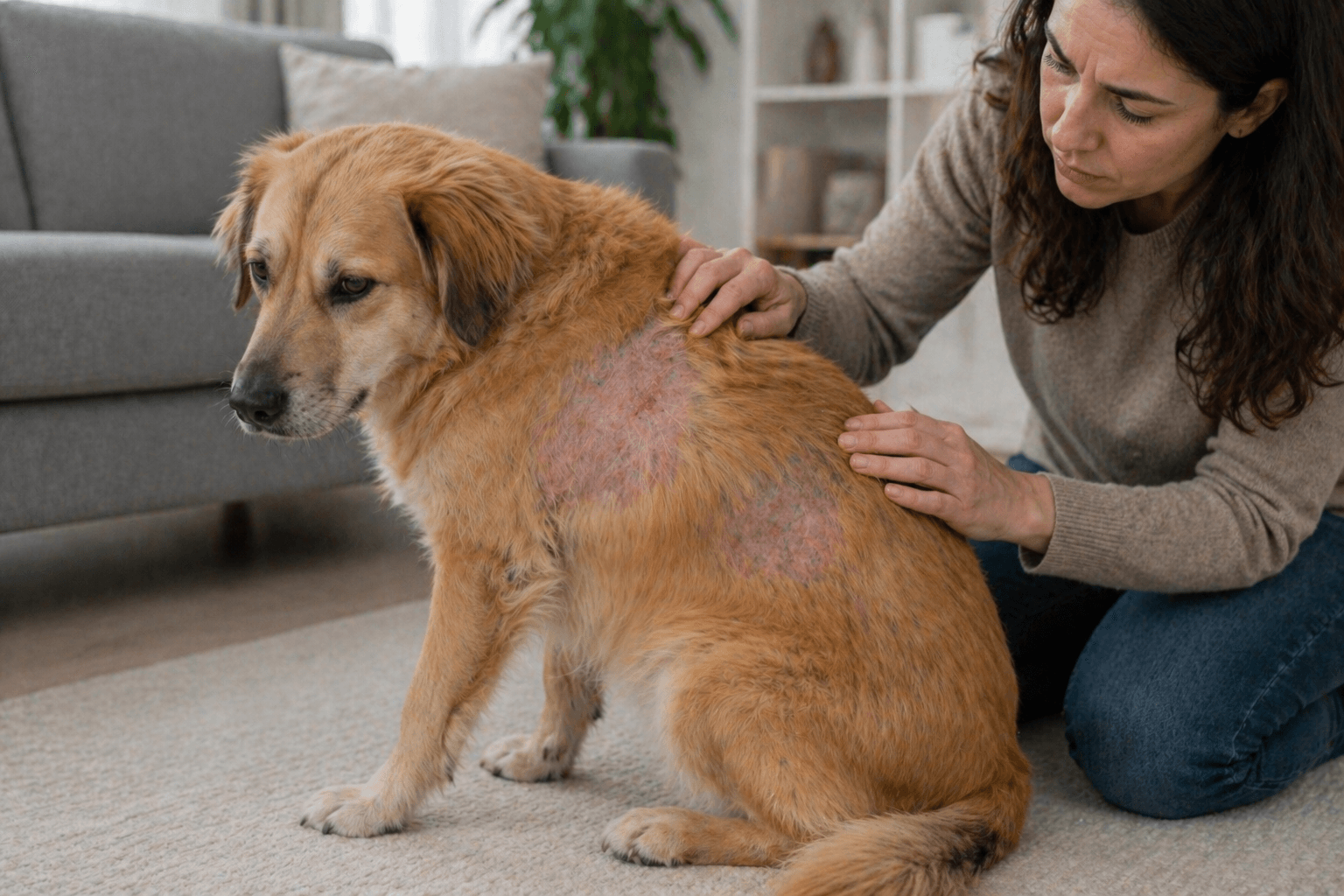
Quick Answer: Dog hair loss can happen because of fleas, allergies, mange, fungal infection, bacterial skin disease, poor nutrition, hormonal imbalance, stress, or repeated licking and scratching. A little seasonal shedding is normal, but bald patches, red skin, bad smell, itching, wounds, or hair loss with weight change or low energy should be checked by a veterinarian.
Dog hair loss is one of those problems owners notice quickly because the coat is part of a dog’s normal beauty and health. Dog hair loss may look like simple shedding at first, but when bald patches, itching, redness, scabs, smell, or skin darkening appear, it usually means there is a deeper reason. In some dogs, dog hair loss is caused by fleas or allergy. In others, it may be linked to mange, ringworm, skin infection, thyroid disease, Cushing’s disease, poor diet, or repeated licking due to pain or stress. The important point is that hair loss is not a diagnosis by itself. It is a sign that the skin, coat, hormones, nutrition, or immune system may need attention.
At General Veterinary Hospital Lahore, we see dogs with hair loss almost every week. Some arrive with a small bald patch on the tail base because of fleas. Others come with red itchy paws, dark skin under the belly, circular patches, or thinning hair along both sides of the body. Many owners have already tried oils, shampoos, home remedies, or random creams before visiting. Sometimes those products give temporary relief, but the hair loss keeps returning because the actual cause was never found.
Hair loss can be simple or complicated. A puppy with mange needs a different plan from an older dog with hormonal disease. A dog with itchy allergic skin needs a different approach from a dog losing hair without itching. That is why this guide explains the common causes, warning signs, home checks, treatment options, and when your dog needs veterinary care.
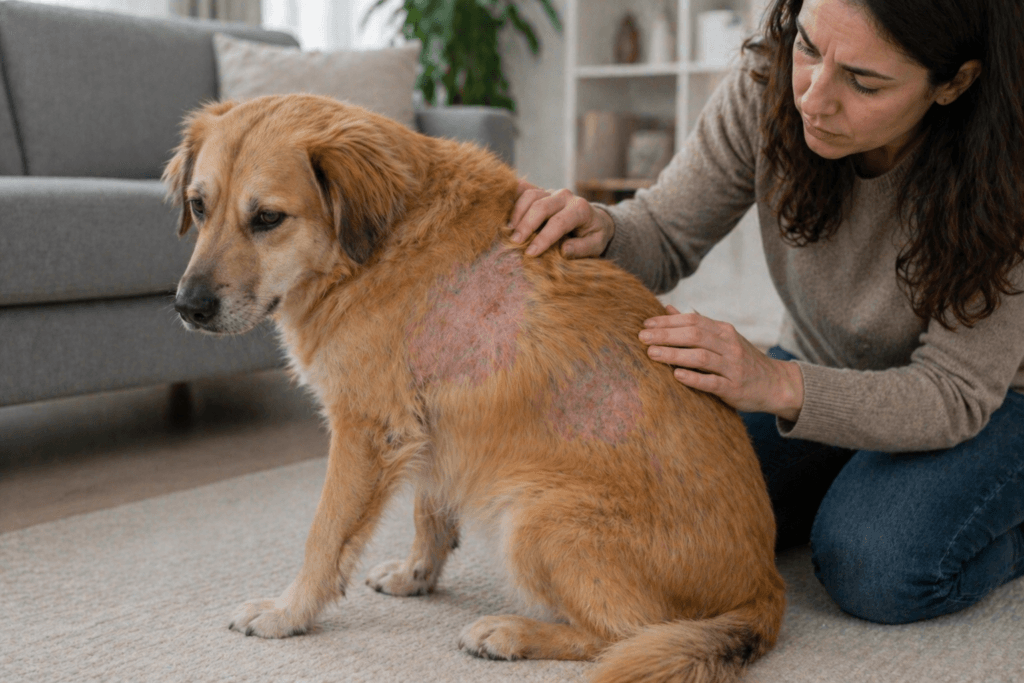
Hair Loss or Normal Shedding?
Dogs normally shed old hair and grow new hair. Seasonal shedding is usually spread over the body and does not leave true bald patches. The skin underneath should look normal, not red, crusty, wounded, greasy, or smelly.
Hair loss becomes more concerning when you see clear bald areas, broken hair, itching, licking, scabs, dandruff, dark skin, or repeated infections. In simple words, shedding is usually loose hair falling out from a healthy coat. Alopecia means abnormal hair loss from a medical or skin-related cause.
Common Causes of Dog Hair Loss
Fleas, allergy, mange, skin infection
Hormonal disease, genetic coat issues, old illness
Ringworm, wounds, licking, pressure points
Wounds, pus, severe itch, spreading baldness
1. Fleas and Flea Allergy
Fleas are one of the most common reasons dogs lose hair, especially around the tail base, back legs, belly, and lower back. Some dogs are allergic to flea saliva, so even a few flea bites can trigger intense itching. The dog scratches, bites, and licks the skin until hair breaks or falls out.
At General Veterinary Hospital Lahore, a very common case is the dog with hair loss near the tail and lower back. The owner may say, “We do not see fleas,” but flea dirt or bite reaction is still present. Fleas move fast, and owners may not always catch them. In sensitive dogs, one or two bites can be enough to start a big skin reaction.
Signs that fleas may be involved include:
- Hair loss near the tail base
- Black flea dirt in the coat
- Biting or chewing the back
- Red bumps or scabs
- Restlessness and scratching
Flea-related hair loss often improves only when all pets in the home and the environment are managed properly. Your dog may need veterinary-approved flea control, skin treatment, and sometimes medicine for itching or infection.
2. Allergies
Allergy is another major cause of dog hair loss. Dogs can react to food ingredients, dust, pollen, grass, molds, fleas, or environmental triggers. Unlike humans, dogs often show allergy through the skin rather than sneezing alone.
Allergic dogs may lick paws, scratch ears, rub the face, chew the belly, or develop repeated skin and ear infections. Over time, constant licking and inflammation cause hair thinning, dark skin, redness, and odor.
At General Veterinary Hospital Lahore, many allergy cases come in after months of repeated itching. The owner may say the dog was treated with shampoo many times, but the itching returned again. This happens because allergy is often a long-term skin condition that needs a proper plan, not only a one-time bath.
Helpful related reading includes dog skin problems and allergy treatment, why dogs lick their paws, and dog ear infection.
3. Mange and Mites
Mange is caused by mites. Some mites live deep in the hair follicles, while others irritate the skin surface and cause severe itching. Mange can cause patchy hair loss, scabs, redness, dandruff, thickened skin, and sometimes secondary infection.
Two important types are commonly discussed in dogs. Demodectic mange may cause patchy hair loss, especially in puppies or dogs with weak immunity. Sarcoptic mange can cause intense itching and may spread quickly. Because mites are not always visible to the naked eye, a dog can look like it has allergy while the real problem is mange.
4. Ringworm and Fungal Infection
Ringworm is a fungal skin infection, not a worm. It may cause circular hairless patches, scaly skin, broken hair, and mild or moderate itching. Some dogs have only small patches, while others develop more widespread coat changes.
Ringworm matters because it can spread to other pets and people. Children, elderly family members, and people with weak immunity may be more vulnerable. If a dog has circular bald patches, especially with scaly skin, proper diagnosis is important before applying random creams.
At General Veterinary Hospital Lahore, some ringworm-like cases arrive after owners tried several home treatments. The patches may become inflamed or changed by the time we see them. Early testing and correct treatment make recovery easier and reduce household spread.
5. Bacterial or Yeast Skin Infection
Skin infection can cause hair loss by damaging the skin and hair follicles. Bacterial infections may create pimples, scabs, crusts, redness, and painful areas. Yeast infections often cause greasy skin, bad smell, itching, and darkening of the skin.
Many infections are secondary. This means something else damaged the skin first, such as allergy, fleas, mange, moisture, or repeated licking. If only the infection is treated but the original trigger remains, the problem often returns.
Signs of skin infection include:
- Bad smell from the coat
- Greasy or sticky skin
- Redness and swelling
- Scabs, pimples, or crusts
- Hair falling out with scratching
- Skin becoming dark and thick over time
6. Poor Nutrition or Unbalanced Diet
The skin and coat need protein, essential fatty acids, vitamins, minerals, and overall balanced nutrition. Dogs on poor-quality food, unbalanced homemade diets, or diets missing key nutrients may develop dull coat, dry skin, dandruff, slow hair regrowth, or shedding problems.
Nutrition-related hair loss usually does not appear overnight. It builds slowly. The coat may lose shine, the skin may become flaky, and the dog may look generally under-conditioned. Puppies, pregnant females, lactating mothers, and dogs recovering from illness need special nutritional care.
If owners are feeding homemade diets, they should make sure the diet is properly balanced. Helpful related reading includes homemade dog food recipes, puppy feeding guide, and best diet for senior dogs.
7. Hormonal Hair Loss
Hormonal problems can cause hair thinning without severe itching. Two common examples are hypothyroidism and Cushing’s disease. These conditions often affect middle-aged or older dogs, but signs can vary.
Hormonal hair loss may appear on both sides of the body, along the trunk, tail, neck, or thighs. The skin may become darker, thinner, or more prone to infections. The coat may become dry, dull, or slow to regrow after clipping.
Other clues can include:
- Weight gain or body shape changes
- Low energy
- Increased thirst or urination
- Pot-bellied appearance
- Thin skin
- Repeated skin infections
At General Veterinary Hospital Lahore, we sometimes see senior dogs whose owners think hair loss is only due to age. Age can affect the coat, but clear baldness, body changes, or repeated infections should be checked properly.
8. Stress, Licking, and Self-Trauma
Some dogs lose hair because they keep licking, chewing, or rubbing one area. The original trigger may be allergy, pain, boredom, anxiety, a wound, or irritation. Over time, the repeated licking breaks hair and damages skin.
Common licking areas include paws, wrists, thighs, belly, and tail base. If the dog keeps focusing on one spot, the area may become red, moist, thick, or infected.
9. Pressure Points and Old Injuries
Large dogs can lose hair over pressure points such as elbows and hocks, especially if they lie on hard floors. These areas may become thick, dark, and calloused. Mild callus formation is common, but cracks, bleeding, swelling, or infection need care.
Old wounds, burns, injections, surgical areas, or scars may also grow hair poorly. If a patch appears exactly where an old injury happened, the history helps explain the pattern.
10. Breed and Genetic Coat Problems
Some breeds are more likely to develop coat-related conditions. Certain dogs may have genetic hair thinning, color-related coat problems, or seasonal flank alopecia. These cases may not be itchy and may be more cosmetic, but they should still be diagnosed properly because other causes can look similar.
Seasonal or cosmetic hair loss should only be considered after ruling out parasites, infection, allergy, and hormonal disease.
When Dog Hair Loss Is More Serious
What You Can Check at Home
Before visiting the clinic, owners can gather helpful clues. This does not replace a veterinary examination, but it can make the consultation more useful.
- Is the hair loss itchy or not itchy?
- Is it one patch or many patches?
- Is the skin red, dark, scaly, greasy, or smelly?
- Is the dog licking paws, ears, belly, or tail base?
- Are there fleas, flea dirt, or small black specks in the coat?
- Has the diet changed recently?
- Is your dog drinking more, gaining weight, or losing energy?
- Are other pets or people in the house developing skin patches?
Take clear photos every few days. This helps track whether the patch is spreading or improving. A short video of scratching or licking can also help the vet understand the pattern.
What Not to Do
- Do not apply random steroid creams without diagnosis
- Do not use human antifungal or antibiotic creams blindly
- Do not bathe daily unless advised
- Do not ignore fleas because you “do not see any”
- Do not shave the whole coat without knowing the cause
- Do not use harsh oils, kerosene, Dettol, or irritating home remedies
How Veterinarians Diagnose Dog Hair Loss
The diagnosis starts with the pattern. A vet will look at whether the hair loss is itchy, symmetrical, patchy, circular, greasy, infected, or linked to body changes. The skin tells a story, but testing often confirms it.
Depending on the case, your veterinarian may recommend:
- Flea combing and parasite check
- Skin scraping for mites
- Skin cytology for bacteria or yeast
- Fungal testing if ringworm is suspected
- Diet trial if food allergy is possible
- Blood tests for hormonal or internal disease
- Biopsy in unusual or non-healing cases
At General Veterinary Hospital Lahore, we often explain to owners that the goal is not only to grow the hair back. The real goal is to stop the cause damaging the skin. Once the cause is controlled, hair regrowth usually follows, but it may take weeks to months depending on the condition.
How Dog Hair Loss Is Treated
Treatment Depends on the Cause
There is no single medicine that treats every type of dog hair loss. Fleas need parasite control, allergy needs itch and trigger management, infection needs targeted treatment, and hormonal disease needs proper testing and long-term care.
Flea-related hair loss
Veterinary-approved flea control, environmental cleaning, and treatment of itching or secondary infection may be needed.
Allergy-related hair loss
Allergy cases may need anti-itch treatment, diet trials, medicated shampoos, ear care, skin infection control, and long-term management.
Mange or mites
Mite treatment must be specific and complete. Other pets may also need assessment depending on the mite type.
Ringworm
Fungal infections may need topical and oral treatment, cleaning of the environment, and care to reduce spread.
Bacterial or yeast infection
Treatment may include medicated shampoos, topical therapy, oral medication, and management of the original trigger.
Hormonal disease
These cases need blood testing and condition-specific medicine. Hair regrowth can be slow but improves when the disease is controlled.
Simple Hair Loss Severity Chart
Can Hair Grow Back?
In many dogs, yes. Hair often grows back once fleas, infection, allergy, mange, or nutrition problems are controlled. But regrowth takes time. Skin may improve first, then hair gradually returns. Some hormonal, genetic, or scar-related cases may take longer or may not fully return to the original coat.
Owners should not judge treatment after only a few days. Itching may reduce quickly, but hair regrowth usually needs several weeks. Long-standing cases with thick, dark, damaged skin may take even longer.
How to Help Prevent Dog Hair Loss
- Use regular parasite control
- Feed a balanced diet
- Brush the coat routinely
- Dry the skin well after bathing
- Do not ignore ear or paw licking
- Treat skin infections early
- Book checks for repeated or spreading bald patches
Good coat health is not only about shampoo. It depends on skin comfort, parasite control, nutrition, hormones, and early treatment when something changes.
Frequently Asked Questions
Why is my dog losing hair in patches?
Patchy hair loss can happen with fleas, mange, ringworm, bacterial infection, allergy, wounds, or repeated licking. A vet exam helps separate these causes.
Why is my dog losing hair but not itching?
Non-itchy hair loss may be linked to hormonal disease, genetic coat conditions, seasonal alopecia, old illness, or some types of mange. It still needs proper checking if it spreads or persists.
Can poor food cause hair loss in dogs?
Yes, unbalanced nutrition can affect skin and coat quality. However, many hair loss cases are due to parasites, allergy, infection, or hormones, so diet is only one part of the investigation.
Is dog hair loss contagious?
Some causes can spread, especially ringworm and certain mites. Many other causes, such as allergy or hormonal disease, are not contagious.
Final Thoughts
Dog hair loss should never be judged only by how the coat looks. A small bald patch may be the beginning of fleas, mange, allergy, ringworm, infection, or licking trauma. Widespread dog hair loss without itching may point toward hormonal or internal causes. The sooner the real reason is found, the easier it is to stop discomfort and help the coat recover.
At General Veterinary Hospital Lahore, we regularly see dogs improve when owners stop trying random creams and start treating the actual cause. Some dogs need flea control. Some need allergy management. Some need skin testing, nutrition correction, or blood work. Hair regrowth is possible in many cases, but the skin must heal first.
If your dog has spreading bald patches, itching, red skin, bad smell, wounds, scabs, weight changes, or repeated skin problems, arrange a veterinary check instead of waiting for the hair to grow back on its own.



This detailed breakdown of dog hair loss causes really helped me understand that while some shedding is normal, symptoms like bald patches, redness, or changes in behavior warrant a vet visit. It’s reassuring to know that conditions like fleas, allergies, or even hormonal imbalances can be behind sudden coat changes. Thanks for the clear guidance on when to worry and when it might just be seasonal shedding.
I really appreciate how this article points out that hair loss is a symptom, not a diagnosis. It’s a good reminder that even minor changes in a dog’s coat could indicate underlying health issues, so paying attention to behavior and skin condition is really important.