
As a veterinary surgeon with over 12 years of clinical experience, one of the most common and urgent questions I receive from worried pet owners is, what can I give my dog for pain? When your furry best friend is limping, whining, or recovering from a sudden injury, it is incredibly natural to want to relieve their suffering immediately.
However, frantically searching the internet for what can I give my dog for pain often leads owners straight to their own human medicine cabinets. This is a well-intentioned mistake that can quickly turn a simple limp into a fatal organ failure emergency. In this comprehensive medical guide, we will explore exactly what you can safely administer, highlighting highly toxic human medications you must avoid, safe veterinary prescription alternatives, natural remedies, and the best home care strategies.
What can I give my dog for pain: 1. How to Tell if Your Dog is Actually in Pain
Before answering the question of what can I give my dog for pain, we must first accurately identify it. Dogs are masters at masking their discomfort. From an evolutionary standpoint, wild canines that showed weakness or pain were targeted by predators or left behind by the pack. Because of this deeply ingrained survival instinct, your dog will often try to act completely normal even when suffering from a torn ligament, severe dental disease, or a fractured bone.
While a yelp or a severe limp is obvious, chronic or internal pain is much more subtle. As an owner, you need to watch for the hidden behavioral and physiological signs of pain:
- Changes in Mobility: Reluctance to jump onto the sofa, struggling to climb stairs, taking longer to stand up after resting, or developing a stiff “bunny hop” gait.
- Vocalization: While many dogs suffer in silence, some may whine, whimper, groan when lying down, or let out a sharp yelp when a specific area is touched.
- Excessive Grooming: If your dog is obsessively licking a specific joint (like the wrist or knee), they are trying to soothe localized pain. This often leads to lick granulomas.
- The “Prayer Position”: If your dog is resting with their front legs stretched out on the ground and their rear end raised in the air, this is a classic clinical sign of severe abdominal pain, often related to gastrointestinal distress or pancreatitis.
- Behavioral Shifts: A normally social dog suddenly hiding under the bed, displaying uncharacteristic aggression when handled, or flattening their ears and panting heavily while at rest.
- Changes in Routine: Sudden loss of appetite, refusing to drink water, or sleeping much more than usual.
2. The Danger Zone: Highly Toxic Human Pain Medications
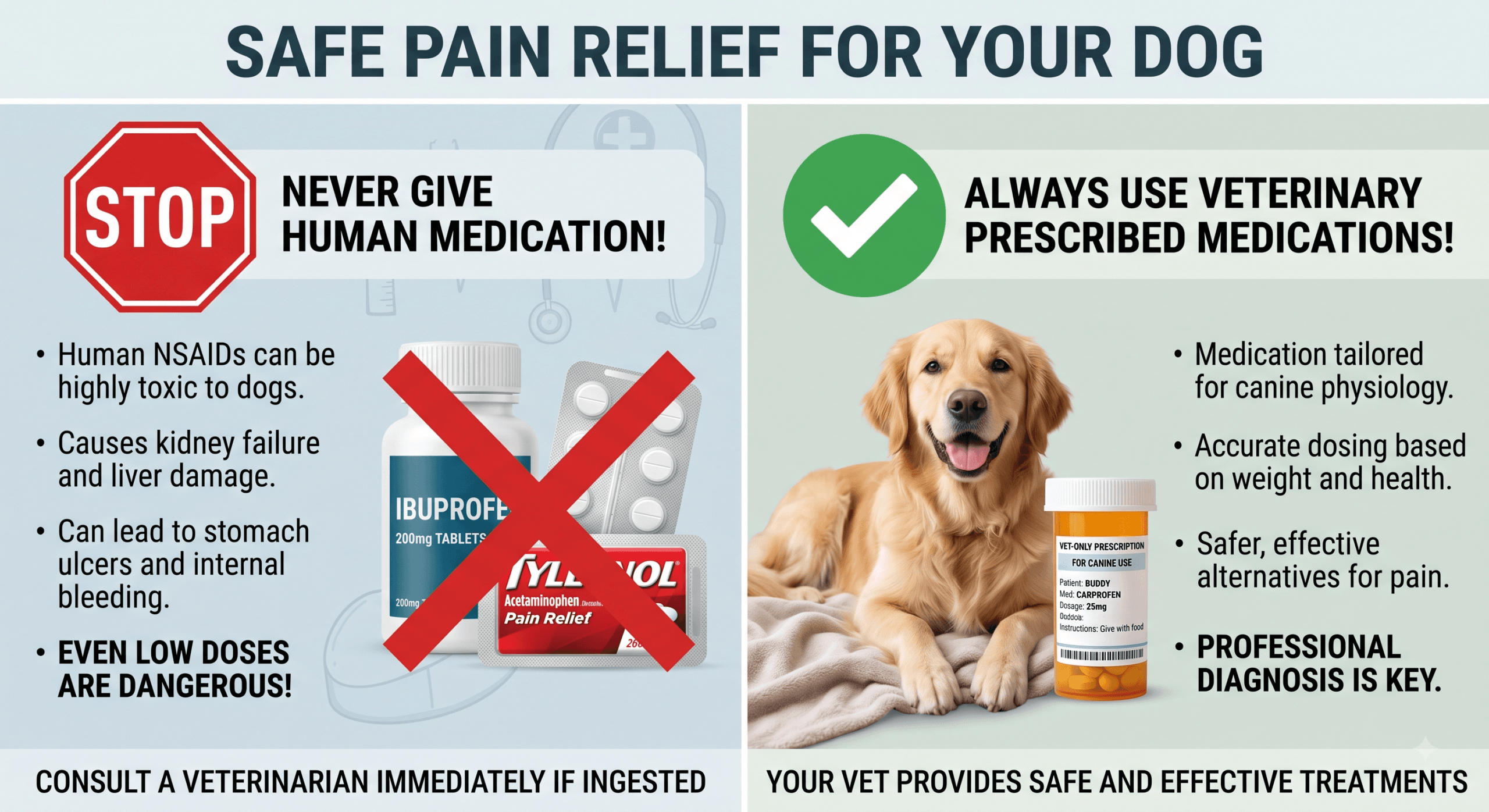
The absolute most critical rule of veterinary pain management is this: Never, under any circumstances, administer human pain medication to a dog without explicit, direct instructions from a licensed veterinarian.
A dog’s liver and kidneys metabolize drugs entirely differently than a human’s. A single pill that cures a human headache can cause massive, irreversible organ failure in a dog. Here is exactly why the contents of your medicine cabinet are so dangerous:
What can I give my dog for pain: ❌ Ibuprofen (Advil, Motrin)
Ibuprofen is a human NSAID (Non-Steroidal Anti-Inflammatory Drug) that is highly toxic to dogs. In humans, it safely blocks pain enzymes. In dogs, it blocks the specific enzymes that protect the stomach lining and regulate blood flow to the kidneys.
The Danger: Even a tiny dose of Ibuprofen causes massive, bleeding stomach ulcers. High doses lead directly to acute, irreversible kidney failure and neurological seizures. It is one of the most common causes of fatal poisoning in veterinary emergency rooms.
❌ Acetaminophen (Tylenol)
Acetaminophen is not an NSAID; it is an analgesic. Dogs severely lack the specific liver enzymes required to safely break this drug down.
The Danger: Tylenol causes rapid, catastrophic liver necrosis (tissue death). Furthermore, it causes a condition called methemoglobinemia, which destroys the red blood cells’ ability to carry oxygen. The dog’s gums will turn a muddy brown or blue color, their face and paws will swell, and they will effectively suffocate internally.
❌ Naproxen (Aleve)
Naproxen is another human NSAID. The danger here lies in its extreme half-life. While it clears a human’s system in a few hours, it recirculates in a dog’s bloodstream for days, making it incredibly easy to overdose.
The Danger: Similar to Ibuprofen, it causes deep gastrointestinal ulceration, vomiting blood, black tarry stools, and rapid renal (kidney) failure.
❌ Aspirin
Decades ago, before modern veterinary medicine existed, vets sometimes recommended baby aspirin. Today, we know the safety margin is incredibly narrow. Aspirin irreversibly inhibits blood clotting. If you give your dog Aspirin and they later need emergency surgery or a safer veterinary NSAID, we cannot safely treat them because the Aspirin will cause them to bleed out.
If you suspect your dog has ingested any human pain medication, do not wait for symptoms to appear. Contact a veterinarian immediately. Similar to the protocols outlined in our Chocolate Poisoning Guide, rapid induction of vomiting (under vet supervision) and IV fluid therapy are required to save the dog’s life.
Stop Guessing with Your Dog’s Pain. Get Professional Help Now.
Is your dog limping, crying, or unable to stand? Do not risk fatal organ failure by guessing with human medications. Connect directly with Dr. Zahid Afzal for an online consultation.
Through a video or photo assessment of your dog’s gait and symptoms, we can accurately identify the source of the pain and prescribe safe, veterinary-approved medications to relieve their suffering immediately.
Start Your Online Vet Consultation3. Safe Veterinary Medications (The Green List)
If you are asking what can I give my dog for pain safely, the answer lies in medications specifically formulated and tested for canine biology. These drugs must be prescribed by a veterinarian, as the dosage is strictly based on your dog’s exact weight, age, liver function, and kidney health.
Canine-Specific NSAIDs
Veterinary NSAIDs are designed to target the COX-2 enzymes (which cause inflammation and pain) while sparing the COX-1 enzymes (which protect the stomach and kidneys). These are the gold standard for treating osteoarthritis, surgical pain, and acute soft tissue injuries.
- Carprofen (Rimadyl, Novox): One of the most widely prescribed and trusted medications for joint pain and post-operative inflammation.
- Meloxicam (Metacam): A highly effective liquid medication, making it very easy to dose accurately for small breed dogs.
- Firocoxib (Previcox) & Deracoxib (Deramaxx): Excellent options for orthopedic pain, particularly in large breeds.
- Grapiprant (Galliprant): A newer class of drug called a PRA (Prostaglandin Receptor Antagonist). It targets a very specific pain receptor, making it incredibly safe for the liver and kidneys, often used for long-term senior arthritis care.
Note: Even safe veterinary NSAIDs require routine blood work every 6 to 12 months to ensure the liver and kidneys are handling the medication properly.
Medications for Nerve Pain and Chronic Conditions
NSAIDs treat inflammation, but what if the pain is neurological, such as a pinched nerve in the spine or severe chronic arthritis? This is where adjunct medications are used.
- Gabapentin: This is a highly effective medication for treating neuropathic (nerve) pain and chronic pain syndromes. It is often combined with NSAIDs to create a multi-modal pain management plan. You can read a deep dive into proper dosing and side effects in our complete Gabapentin for Dogs Guide.
- Amantadine: Originally an antiviral drug, it is used in veterinary medicine to block pain pathways in the brain, essentially “resetting” the nervous system’s response to chronic pain.
- Tramadol & Buprenorphine: Opioid-class medications used for severe, acute pain, usually reserved for post-surgical recovery or severe trauma.
4. Natural & Over-the-Counter Joint Supplements
For owners seeking preventative care or dealing with mild, age-related stiffness, natural supplements can be a fantastic addition to a pain management routine. While these will not stop the acute pain of a broken bone, they are highly effective at slowing down joint degradation over time.
Top Vet-Approved Supplements:
- Glucosamine and Chondroitin: These are the building blocks of healthy cartilage. Supplementing them helps repair damaged joint tissue and increases the viscosity of the synovial fluid (the joint’s natural motor oil). Products like Dasuquin or Cosequin are clinical favorites.
- Omega-3 Fatty Acids (EPA & DHA): Sourced from high-quality fish oil or green-lipped mussels, Omega-3s are powerful natural anti-inflammatories. They reduce the swelling inside the joint capsule.
- Turmeric (Curcumin): The active ingredient in turmeric is a known anti-inflammatory. However, dogs absorb it poorly unless it is specifically formulated for canine digestion.
- CBD Oil: Cannabidiol is gaining immense popularity. While research is still ongoing, many clinical trials show it can significantly reduce osteoarthritic pain. However, it is entirely unregulated. You must ensure you purchase a product with a Certificate of Analysis (COA) proving it contains zero THC (which is toxic to dogs). Always consult your vet before adding CBD, as it can alter how the liver processes other necessary medications.
5. Safe Home Environment Care
Medication is only half the battle. If you are asking what can I give my dog for pain, you must also ask what can I do to their environment to reduce pain? Modifying your home to accommodate an injured or arthritic dog significantly speeds up recovery and improves their quality of life.
- Weight Management: This is the single most effective “medication” for joint pain. Every single extra pound of fat puts four pounds of pressure on a dog’s knees and hips. Keeping your dog lean dramatically reduces daily pain.
- Orthopedic Bedding: Thick, high-density memory foam beds support the spine and prevent pressure points on aching hips. Avoid raised cot beds for dogs with severe arthritis, as stepping up into them can be painful.
- Traction Control: Slipping on hardwood or tile floors causes micro-tears in aging muscles and ligaments, leading to chronic pain. Place non-slip yoga mats, carpet runners, or rugs in high-traffic areas.
- Ramps and Steps: Stop your dog from jumping on and off the sofa or out of the car. The downward impact puts immense strain on the carpus (wrists) and shoulders. Use padded pet stairs or gentle ramps.
For a complete breakdown of managing senior dogs, read our extensive guide on How to Help a Dog With Arthritis at Home.
6. First Aid for Sudden Injuries (Before the Vet)
If your dog suddenly injures themselves at home, your priority is stabilizing them safely until you can reach the clinic.
- Temperature Therapy: For an acute, sudden injury (like a sprain that just happened), apply a cold compress wrapped in a towel for 10-15 minutes to reduce swelling. For chronic, long-term joint stiffness (like morning arthritis), use a warm (not hot) compress to increase blood flow and relax tight muscles.
- Restrict Movement: Strict crate rest is vital. Do not allow an injured dog to walk around the house. Carry them outside for bathroom breaks if possible.
- Do Not Bandage Tightly: Owners often try to splint or bandage a limping leg. Wrapping a leg too tightly cuts off circulation, causing the tissue in the paw to die, which is vastly worse than the original injury. Leave bandaging to the professionals.
7. When to Seek Emergency Veterinary Care
While chronic arthritis can be managed with scheduled appointments, certain types of pain require immediate, emergency intervention. Do not wait until the morning if your dog displays any of the following critical red flags:
Emergency Pain Indicators:
- Non-Weight Bearing: If the dog is holding their leg completely off the ground and refusing to put any weight on it, they likely have a fracture or a fully torn Cranial Cruciate Ligament (CCL).
- Vocalizing When Touched: Screaming, yelping, or snapping when a specific area of the body is gently palpated.
- The Abdominal Tuck: A hunched back, tight, rigid stomach muscles, and reluctance to walk indicate severe abdominal pain (bloat, pancreatitis, or a gastrointestinal blockage).
- Paralysis: Dragging the back legs, crossing the back legs when walking, or knuckling over on the paws indicates spinal cord compression (IVDD) and requires emergency neurosurgery.
- Known Toxin Ingestion: If you realize your dog has accidentally eaten human pain medication, this is a race against the clock.
8. Frequently Asked Questions
Can I give my dog baby aspirin for a limp?
No. While it was used in the past, the risk of gastrointestinal bleeding is too high, and it prevents veterinarians from prescribing much safer, modern canine NSAIDs for several days due to severe drug interactions.
How quickly do veterinary NSAIDs work?
Most canine-specific pain medications (like Carprofen or Meloxicam) begin reducing inflammation and providing pain relief within 1 to 2 hours of oral administration.
Can a dog cry tears when they are in pain?
Dogs do not cry emotional tears like humans do. If your dog’s eyes are watering excessively, it is a sign of an ocular issue (corneal ulcer, allergies, or an eye infection), not a response to bodily pain.
Is it safe to massage a dog in pain?
Gentle massage can be excellent for chronic, tight muscles in senior arthritic dogs. However, you should never massage a dog suffering from an acute injury, swelling, or suspected fracture, as you could worsen the tissue damage.
Conclusion
Seeing your dog in distress is one of the hardest parts of being a pet parent. When you inevitably ask yourself, what can I give my dog for pain, the most loving and responsible action you can take is to step away from the human medicine cabinet and pick up the phone.
Veterinary medicine has advanced incredibly over the last decade. We now have safe, highly effective, targeted medications that can relieve your dog’s suffering without destroying their internal organs. By combining prescription veterinary care with joint supplements, weight management, and a comfortable home environment, you can ensure your dog lives a long, happy, and pain-free life.
This guide is intended for educational purposes and does not replace a physical examination, diagnostic imaging, or prescription therapy by a licensed veterinarian.






2 Comments