
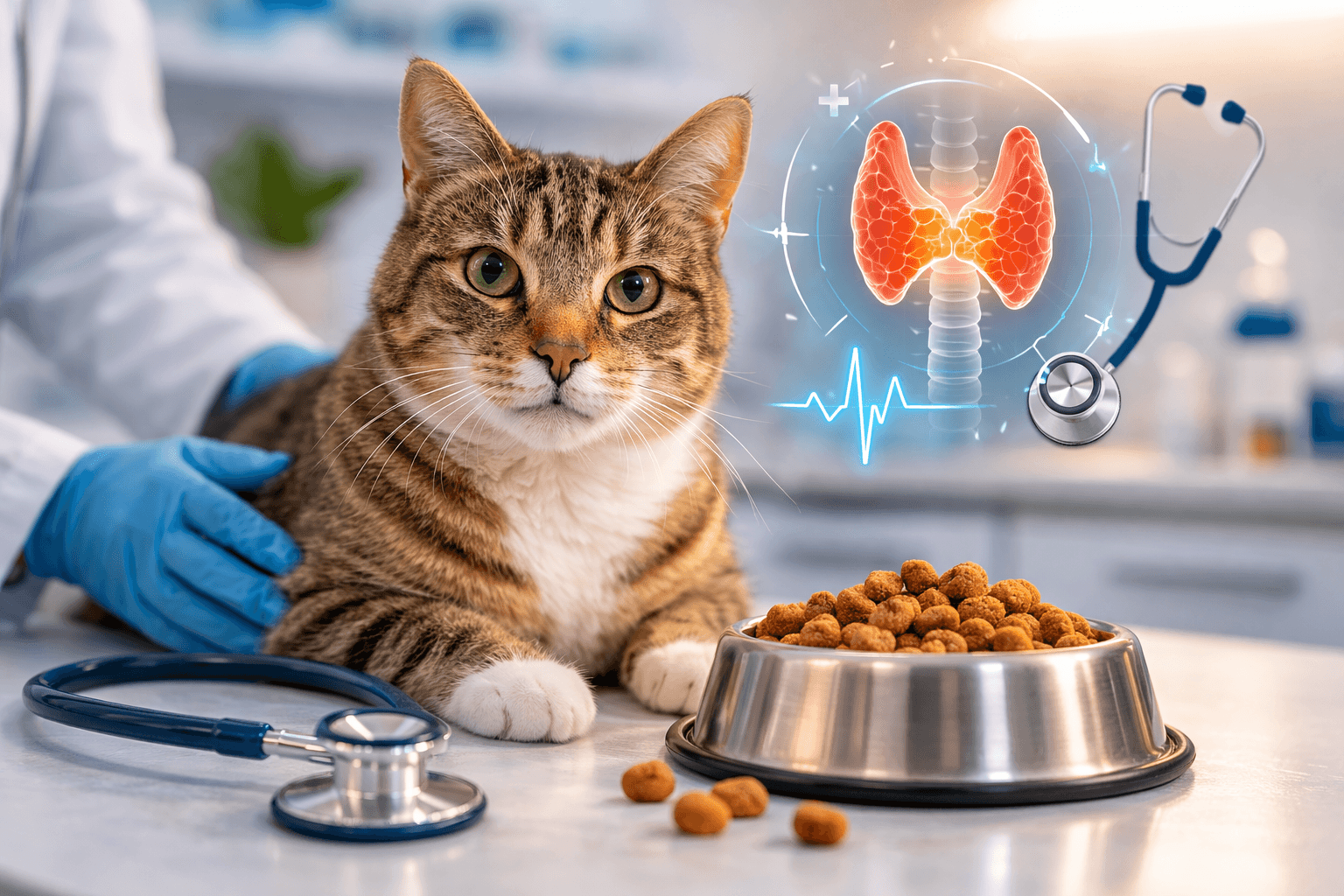
Hyperthyroidism in cats is one of the most common reasons an older cat loses weight while still acting hungry. In practice, hyperthyroidism in cats often looks like a “fast metabolism” problem at home: your cat eats more, begs more, drinks more, and still gets thinner. The reason hyperthyroidism in cats is so important to catch early is that it can strain the heart, raise blood pressure, and worsen hidden kidney disease. If you’ve noticed weight loss with a big appetite, vomiting, diarrhea, restlessness, or a fast heartbeat, this guide will help you understand what hyperthyroidism in cats looks like, how vets diagnose it, and which treatment options make sense for different cats.
- The most common signs of hyperthyroidism (and subtle early clues)
- Why cats lose weight even though they eat more
- What tests confirm hyperthyroidism and what results mean
- Treatment options: medication, diet, surgery, radioactive iodine
- How hyperthyroidism and kidney disease interact
- A real anonymized case from General Veterinary Hospital Lahore
Helpful internal guides to keep open while reading:
- Cat Kidney Disease: Symptoms, Stages & Treatment
- Complete Cat Nutrition Guide 2025
- Why Is My Cat Not Eating? (When to Worry)
Contents
- What is hyperthyroidism in cats?
- Why it happens (what’s going on in the body)
- Signs & symptoms owners notice
- When it becomes urgent (red flags)
- Common look-alikes (and why testing matters)
1) What is hyperthyroidism in cats?
Hyperthyroidism means the thyroid gland is producing too much thyroid hormone (mainly T4). Thyroid hormones act like the body’s “metabolic speed dial.” When hormone levels are too high, your cat’s body runs faster than normal: the heart works harder, the gut moves faster, and the body burns calories quickly. That is why many cats with hyperthyroidism lose weight even though they seem constantly hungry.
In most cats, hyperthyroidism is caused by a non-cancerous enlargement of the thyroid tissue (a benign adenoma or hyperplasia). True thyroid cancer is much less common. The condition tends to affect middle-aged to older cats, and it’s often discovered after owners notice a change in weight, appetite, behavior, or litter box habits.
2) Why it happens (the “fast engine” effect)
When thyroid hormone is high, the whole body acts like it is in a constant state of “high performance”:
- Metabolism increases: your cat burns calories faster and breaks down muscle if intake can’t keep up.
- Heart workload increases: heart rate rises and the heart pumps harder, which can lead to thickened heart muscle in some cats.
- Blood pressure may increase: this can affect eyes, brain, kidneys, and heart.
- Gut motility increases: some cats vomit more, have softer stool, or diarrhea.
- Water needs can increase: some cats drink more and urinate more.
3) Signs & symptoms owners notice
Hyperthyroidism doesn’t always look the same in every cat. Some cats become dramatic and “wired.” Others simply lose weight and seem off. Here are the most common patterns:
| Sign | What you may see at home | Why it happens |
|---|---|---|
| Weight loss | Thinner back/hips, less muscle, “bony” feel | Calorie burn increases; muscle breaks down |
| Big appetite | Begging, food obsession, stealing food | Body feels “underfed” despite eating |
| Vomiting | Occasional or frequent vomiting, hairballs worsen | Faster gut motility + nausea |
| Diarrhea / soft stool | Looser stool, more frequent litter box visits | Gut moves faster |
| Restlessness | Pacing, vocalizing, “can’t settle,” night yowling | Overactive metabolism and nervous system |
| Drinking/peeing more | Bigger litter clumps, emptier water bowl | Metabolic changes + possible kidney overlap |
Hyperthyroidism in cats: A less-known sign: “hyperthyroid apathy”
Not all cats become hyperactive. A subset become tired, withdrawn, or less social. Owners sometimes think the cat is “depressed” or “just aging.” If your older cat is losing weight and seems quieter, hyperthyroidism still needs to be ruled out.
4) When it becomes urgent (red flags)
- Sudden collapse, severe weakness, or breathing trouble
- Very rapid breathing at rest or open-mouth breathing
- Repeated vomiting, dehydration, or not keeping water down
- Sudden blindness or bumping into things (possible high blood pressure complication)
- Not eating for 24 hours (especially in an older cat)
If appetite drops or your cat stops eating, use this guide to judge urgency: Why Is My Cat Not Eating?
5) Common look-alikes (and why testing matters)
Hyperthyroidism can resemble several conditions, especially in older cats:
- Kidney disease: weight loss, increased thirst/urination, reduced appetite later. (Internal guide: Cat Kidney Disease.)
- Diabetes: weight loss with appetite and increased thirst/urination.
- Chronic gut disease: vomiting/diarrhea with weight loss.
- Dental pain or other chronic pain: appetite changes and weight loss.
Because signs overlap, the safest path is a proper exam and bloodwork rather than guessing based on one symptom.
6) Diagnosis: how vets confirm hyperthyroidism in cats
Diagnosis usually starts with a physical exam and bloodwork. Many hyperthyroid cats have a fast heart rate, weight loss, and sometimes a thyroid enlargement that a vet can feel in the neck (not always). The key lab test is the thyroid hormone level, most commonly Total T4.
| Test | What it tells us | Why it matters |
|---|---|---|
| Total T4 | Current thyroid hormone level | Often confirms diagnosis quickly |
| Free T4 | More sensitive thyroid measure | Helpful if Total T4 is borderline |
| CBC/Chemistry | Organ function, hydration, liver/kidney values | Finds complications and baseline for treatment safety |
| Urinalysis | Kidney concentration and urinary issues | Screens for kidney disease and dehydration patterns |
| Blood pressure | Hypertension check | High blood pressure can damage eyes/brain/kidneys |
What if the Total T4 is “normal” but signs strongly fit?
Some cats in early disease have thyroid levels that fluctuate. A cat may show classic signs, but Total T4 sits in the high-normal range. In those situations, vets may repeat the test, add Free T4, or run additional thyroid testing. This is also when kidney disease or other conditions must be carefully assessed.
If your cat also drinks/pees more or is older, kidney evaluation is essential: Cat Kidney Disease.
7) Treatment options (how to choose what fits your cat)
There isn’t one “best” treatment for every cat. The right choice depends on: age, kidney function, heart health, temperament, medication tolerance, and what services are available in your area. The main options are:
| Option | What it does | Best for | Main challenges |
|---|---|---|---|
| Anti-thyroid medication (e.g., methimazole) | Reduces thyroid hormone production | Most cats as a first step; helps “test-drive” kidney response | Needs monitoring; side effects in some cats |
| Prescription thyroid diet (iodine-restricted) | Controls hormone by limiting iodine intake | Cats that eat one diet consistently and won’t take meds | Must be exclusive diet; hard in multi-cat homes |
| Radioactive iodine (I-131) | Targets abnormal thyroid tissue, often curative | Many stable cats; owners wanting a long-term fix | Availability, cost, temporary isolation requirements |
| Surgery (thyroidectomy) | Removes affected thyroid tissue | Selected cases when expertise is available | Anesthesia risk in older cats; complication risk |
8) Medication option (methimazole): what owners should know
Medication is a very common first-line approach because it can stabilize hormone levels and allows your vet to monitor how kidneys respond when the “metabolic speed” slows down. Many cats do very well on medication, but monitoring is non-negotiable.
Common early side effects (when they happen)
- Mild vomiting or reduced appetite (often early)
- Lethargy for a short period as the body adjusts
- Itching or facial scratching in a small number of cats
9) The diet approach (iodine-restricted thyroid diets)
Some cats can be managed with an iodine-restricted prescription diet. The key requirement is strict consistency: the diet must be the only food source (no treats, no hunting, no table scraps). This can be difficult in multi-cat homes or with cats that steal food. If you want a structured feeding routine (portions, schedules, practical tips), use: Complete Cat Nutrition Guide 2025.
10) Hyperthyroidism and kidney disease: the balancing act
This is one of the most important concepts for owners to understand. Some cats have early kidney disease that is “hidden” while thyroid hormones are high. When hyperthyroidism is treated and blood flow patterns change, kidney values can appear worse. This does not mean treatment was a mistake—this is why vets choose careful monitoring and gradual stabilization. Learn kidney disease signs and stages here: Cat Kidney Disease.
11) Home monitoring (simple routine that makes treatment safer)
Hyperthyroid cats usually improve when hormones come down: appetite becomes more normal, vomiting may reduce, and weight stabilizes. The best outcomes happen when owners keep a steady routine and watch trends (not just one-day changes).
| What to track | How often | Why it matters |
|---|---|---|
| Body weight | Weekly | Shows whether treatment is helping or if another issue exists |
| Appetite | Daily | Sudden appetite drop can signal side effect or complication |
| Vomiting/diarrhea | Daily | Improvement suggests stability; worsening needs vet review |
| Water intake / litter output | Weekly trend | Helps assess kidney overlap and dehydration risk |
If your cat stops eating or appetite drops sharply, treat it seriously: Why Is My Cat Not Eating?
12) Practical feeding strategy (support weight gain safely)
Many hyperthyroid cats are underweight and need a smart nutrition plan, especially during the first months of treatment. The goal is not “unlimited food forever,” but a structured plan that rebuilds healthy weight while keeping digestion stable. For a full feeding framework, see: Complete Cat Nutrition Guide 2025.
- Use consistent meal times if your cat tolerates routine well.
- Choose highly palatable, digestible foods if vomiting has been an issue.
- Measure portions for trend tracking (even if you adjust later).
- Re-check weight weekly and adjust with your vet if weight is not improving.
13) Real case from General Veterinary Hospital Lahore (anonymized)
An older indoor cat was brought to our clinic because the family noticed a very classic pattern: the cat was eating more than usual, begging loudly for food, and still losing weight. They also noticed restlessness at night and occasional vomiting. On exam, the cat had clear weight loss and a fast heart rate. The family assumed it was “just age,” but the rate of change was too fast for normal aging.
We ran a thyroid panel along with routine bloodwork and urinalysis. Total T4 was elevated, confirming hyperthyroidism. Because kidney disease can overlap, we reviewed kidney markers and urine concentration carefully before choosing a plan. We started a controlled medication approach with close follow-up testing. Within the first few weeks, the family reported the cat’s appetite became less frantic, vomiting reduced, and the cat began to regain some body condition. Over the next visits, we continued to adjust treatment based on hormone levels and kidney monitoring. The key lesson from this case is that early testing prevented months of decline, and consistent follow-up made the plan safe.
14) FAQs about hyperthyroidism in cats
My cat eats a lot but is losing weight—does that mean hyperthyroidism?
It strongly raises suspicion, especially in older cats. But other issues can mimic it (kidney disease, diabetes, gut disease). Testing is the safest way to know.
Can hyperthyroidism cause vomiting?
Yes. Many cats vomit more often due to increased gut motility and nausea. Vomiting should improve as thyroid levels stabilize, but persistent vomiting needs reassessment.
Why does my vet keep checking kidneys?
Because kidney disease can be hidden while thyroid hormones are high. Treating hyperthyroidism can reveal underlying kidney changes, so monitoring keeps treatment safe. Learn kidney signs here: Cat Kidney Disease.
Is medication lifelong?
Medication is ongoing unless another definitive option is chosen (radioactive iodine or surgery). Some cats do well on medication long-term with proper monitoring.
What if my cat won’t take tablets?
Many cats can be managed with alternative medication forms depending on your vet’s options, or with diet-based management in selected cases. Discuss what’s realistic for your cat’s temperament and household routine.
When should I worry about an emergency?
If your cat collapses, breathes with difficulty, vomits repeatedly, seems severely weak, suddenly goes blind, or stops eating, seek urgent veterinary help. Appetite refusal is covered here: Why Is My Cat Not Eating?
15) Final note
Helpful internal guides:






2 Comments