Ringworm in cats and dogs is not a worm at all. It is a contagious fungal skin infection — properly called dermatophytosis — caused by microscopic fungi that feed on keratin in hair, skin and claws. It shows up as patchy hair loss, scaling and crusting, often (but not always) in a circular pattern. It spreads to other pets and to people, it survives in the house for months, and it will not reliably clear on its own. With the right combination of medicated washes, oral antifungal medication and thorough home cleaning, the great majority of pets are fully cured in six to twelve weeks.
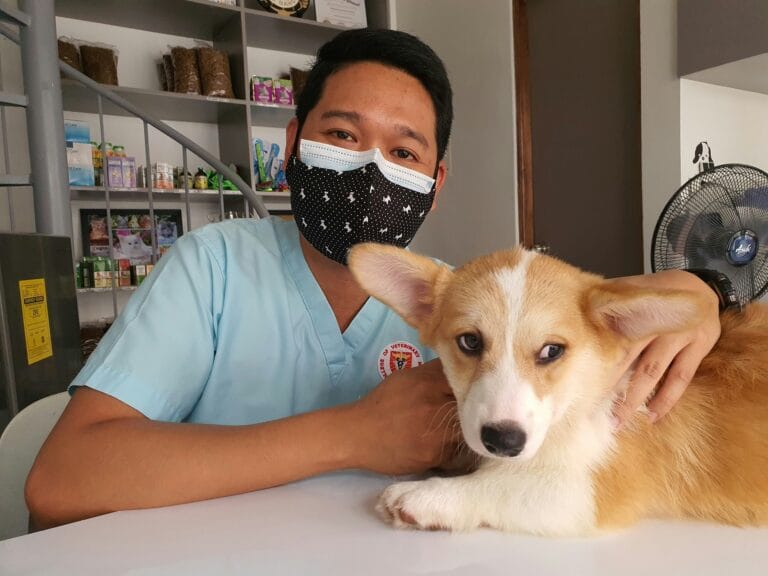
In my consulting room at General Veterinary Hospital, Lahore, ringworm is one of the few skin conditions where the whole family goes quiet when I say the word. A father will already be scratching his forearm. Someone mentions that the child has a red ring on her neck. And the kitten who started it all is sitting in the carrier looking perfectly cheerful, with one small bald patch above the eye.
That scene is the reason I wanted to write this guide properly. Ringworm in cats and dogs is very treatable, but it is also the skin disease that owners most often get wrong — treating one bald spot with a dab of cream, stopping the moment the fur starts to grow back, and then wondering why it comes roaring back six weeks later, this time on two pets and a child. Below is exactly what I explain to owners in the clinic: how to recognise it, how it is diagnosed, what genuinely works, what actively harms, and how long it really takes.
What you need to know first
- It is a fungus, not a parasite. Deworming tablets do nothing for it.
- It is zoonotic. Humans in the household — especially children and anyone with a weakened immune system — can catch it.
- Spores survive in the environment for up to 18 months. Treating the pet without cleaning the house is why so many cases relapse.
- A normal Wood’s lamp result does not rule it out. Roughly half of the strains involved simply do not glow.
- “Looks better” is not “cured.” Cure is confirmed by repeat laboratory testing, not by appearance.
Ringworm in cats and dogs: What ringworm actually is
A keratin-eating fungus with a badly chosen name.
Ringworm in cats and dogs is caused by a group of fungi called dermatophytes. They have no interest in blood or deep tissue — they digest keratin, the structural protein that makes up hair shafts, the outer layer of skin and the claws. As the fungus consumes the hair from the inside, the shaft becomes brittle and snaps off close to the skin. That is why the classic sign is not a wound but a bald patch.
Three species cause almost all ringworm cases in pets, and knowing which one is involved genuinely changes the conversation about where the infection came from:
Microsporum canis
Responsible for the large majority of ringworm in cats and a very high share of cases in dogs. It is adapted to living on animals, which means the source is usually another cat or dog — often a stray, a shelter animal or a longhaired cat carrying it without a single visible lesion.
Trichophyton mentagrophytes
Carried by rats and mice. I see it in terriers, hunting dogs and farm cats — animals that dig into rodent burrows or catch prey. Lesions are frequently on the face and forelimbs, and tend to be more inflamed and itchy.
Nannizzia gypsea
Lives in soil rather than on animals. Typical patient: an enthusiastic digger with an angry, crusted patch across the bridge of the nose. Less contagious between pets, but the same treatment principles apply.
Ringworm in cats and dogs: Which pets are most at risk of ringworm
Any animal can pick up ringworm, but the infection needs an opportunity — usually a young or stressed immune system, damaged skin, or high-density living. In practice, the pets I diagnose with ringworm most often are:
- Kittens and puppies under a year old, whose immune defences are still developing. If you have just brought one home, our kitten guide for first-time owners covers the first-month health checks that catch this early.
- Longhaired cats, particularly Persians, who can carry and shed the fungus with no visible lesions at all.
- Yorkshire Terriers, which are over-represented in stubborn, slow-to-clear canine cases.
- Shelter, rescue, cattery and multi-pet households, where one carrier seeds an entire group.
- Pets on steroids or chemotherapy, or with FIV, FeLV or poorly controlled diabetes.
- Pets with a flea burden or existing skin disease — scratching breaks the skin barrier and lets the fungus in. This is one more reason to stay on top of flea control in cats.
What does ringworm look like on a dog or cat?
The textbook ring is the exception, not the rule.
This is the question I am asked more than any other, and the honest answer is that ringworm in dogs and cats is a shape-shifter. The neat red ring with a clear centre that people picture is a human presentation. On a furred animal, what you usually see first is simply hair that has gone missing where hair should be.
Subtle, patchy, easy to miss
- Small round or oval bald patches, most often on the face, ear tips, bridge of the nose and front paws
- Fine, dusty grey or white scale — like dandruff sitting in the coat
- Stubbly, broken hairs at the edge of a patch
- Crusty, scabby bumps scattered over the back (miliary dermatitis)
- Brittle, chalky, misshapen claws in longer-standing cases
- Itching is often mild or absent — which is why owners delay
- Some longhaired cats show nothing at all and still infect the household
More inflamed, more obvious
- Expanding circular patches of hair loss, often with a raised, scaly, active outer edge and a calmer centre
- Redness, crusting and greasy scale
- Common sites: muzzle, around the eyes, ear margins, forelegs and paws
- Occasionally a kerion — a firm, raised, weeping nodule that looks alarmingly like a tumour or an abscess
- Cracked, brittle claws with pus at the nail bed
- Variable itch: some dogs ignore it entirely, others chew the area raw
Why you should not diagnose this by eye
Bald, scaly patches look very similar whether the cause is ringworm, demodectic mange, a bacterial skin infection, flea allergy, or an autoimmune disease — and the treatments are completely different. Giving antifungal medication to a dog who actually has mange wastes weeks and lets the real problem worsen. Our broader guides on dog skin problems and allergies and why dogs lose hair walk through the other possibilities. A lookalike on the chin in cats is covered in our article on cat acne and chin blackheads.
How ringworm spreads between pets and people
Ringworm travels between animals as arthrospores — tough, microscopic packets that break off infected hairs. Every time an infected pet scratches, shakes or grooms, it sheds a cloud of them. Transmission happens two ways:
Direct contact — nose-to-nose greeting, grooming, wrestling, sleeping curled together, or a child carrying a stray kitten home inside a jacket.
Indirect contact, which is the route people underestimate. Spores settle on bedding, carpet, sofa fabric, grooming brushes, clippers, collars, carriers, cat trees, curtains and clothing, and they stay viable there for up to 18 months. A perfectly healthy new pet can be infected by a room where the previous patient lived a year earlier.
After exposure to ringworm, the incubation period runs roughly one to three weeks, occasionally up to four. That gap is why the source is so often missed — by the time the patch appears, the boarding kennel or the visiting kitten is long forgotten.
A “clear” Wood’s lamp does not mean your pet is clear
The Wood’s lamp is an ultraviolet lamp that makes some infected hairs fluoresce a distinctive apple-green along the hair shaft. It is a fast, useful screening tool — and it is routinely over-trusted.
Only around half of Microsporum canis strains fluoresce at all, and Trichophyton and Nannizzia species essentially never do. A negative lamp rules out nothing. In the other direction, ointments, soap residue, scale and carpet lint all glow a bluish or whitish colour and are constantly mistaken for a positive result.
True positives glow along the hair shaft itself, not on flakes of skin. Treat the lamp as a way of choosing which hairs to sample — never as a diagnosis, and never as proof of cure.
The tests that actually confirm ringworm
| Test | How long | What it is genuinely good for |
|---|---|---|
| Wood’s lamp | Seconds | Screening a group and selecting hairs to pluck. Cannot confirm or exclude. |
| Trichogram (microscopy of plucked hairs) | 10–20 min | Same-day evidence when spores are seen coating a hair shaft. A negative result is common and does not exclude infection. |
| Fungal culture (DTM) | 7–21 days | The long-standing reference test. Identifies the exact species and — crucially — is the standard used to confirm cure. |
| PCR | 2–5 days | Fast and highly sensitive for diagnosis. Detects fungal DNA from dead organisms too, so it is unreliable on its own as a test of cure. |
| Toothbrush (MacKenzie) sampling | With culture | Brushing the whole coat with a sterile brush. The best way to find symptom-free carriers in multi-cat homes. |
| Skin biopsy | 3–7 days | Reserved for kerions, nodular disease and cases that are not responding as expected. |
Ringworm treatment: the three layers that must happen together
Skip any one of them and you are treating the same case again in two months.
Current veterinary consensus is clear on this point: for a confirmed case of ringworm, topical and systemic therapy together outperform either alone, and neither works without environmental control. These are not alternatives to choose between. Think of them as three simultaneous layers.
Kill the fungus on the coat, and inside the hair
Topical therapy reduces the spores your pet is shedding into your home. It must be applied to the whole body, not just the visible patch — the fungus is already on skin that still looks normal. Twice weekly is standard.
- Lime sulphur dip — the most effective option available, safe in kittens, and safe if licked. It smells strongly of rotten eggs and can temporarily stain white coats yellow. Worth it.
- Enilconazole rinse — highly effective where licensed for animal use.
- Miconazole + chlorhexidine shampoo — widely available and a reasonable alternative; leave in contact for a full ten minutes.
Systemic (oral) therapy reaches the fungus growing inside the hair follicle, which no wash can reach. Your vet will normally choose itraconazole or terbinafine. Griseofulvin is an older option that causes birth defects and can suppress bone marrow, particularly in FIV-positive cats. Ketoconazole is generally avoided in cats because of liver toxicity and appetite loss.
Clipping is not automatic. In longhaired cats it genuinely helps the dips reach skin; done roughly, it causes micro-trauma that spreads the infection further. Let your vet decide, and use scissors or clippers that will be disinfected or discarded afterwards.
Remove the spore reservoir
This layer is the one owners quietly skip, and it is the single biggest cause of relapse. The good news is that mechanical removal matters more than any disinfectant. Spores are physically carried away by cleaning, not just chemically killed.
- Confine the patient to one easily cleaned room — tiled or wooden floor, minimal soft furnishing — for the duration of treatment.
- Vacuum daily and dispose of the bag or empty the canister outside the house immediately.
- Damp-wipe hard surfaces daily. Dry dusting just launches spores into the air.
- Wash all textiles — bedding, blankets, soft toys, your own clothes — in a washing machine with detergent. Two full cycles at any temperature is highly effective; a single cycle often is not.
- Disinfect hard, non-porous surfaces after cleaning, using accelerated hydrogen peroxide, enilconazole, or household bleach diluted around 1:10. Never apply bleach to your pet.
- Discard or thoroughly disinfect brushes, combs, collars and clipper blades.
Screen everyone who shares the space
Every other cat and dog in the household should be examined for ringworm and, ideally, brush-cultured — even the ones who look perfectly fine. Silent carriers are extremely common, and treating one pet while an untreated carrier sleeps on the same sofa is a guaranteed loop.
Many vets will place all in-contact animals on twice-weekly topical treatment while cultures are pending. Rabbits, guinea pigs and rodents in the home should be checked too — they can carry and transmit the same fungi.
See a vet promptly — do not wait this one out
- The patch is spreading, weeping, bleeding or clearly painful
- A firm raised nodule (kerion) has appeared, or claws are cracking and discharging
- Your pet is off food, lethargic, feverish or losing weight alongside the skin changes
- A person in the household has developed a red, itchy, expanding ring
- The patient is a kitten, puppy, pregnant animal, or on steroids or chemotherapy
- There has been no improvement after three to four weeks of correct treatment
For general red-flag signs across all conditions, keep our emergency first aid guide for dogs and cats bookmarked.
Ringworm home remedies: what is safe and what is dangerous
I understand the impulse. Searches for ringworm home treatment run into the millions, the patch is small, the internet is full of confident advice, and a vet visit takes time. But some of the worst chemical burns and poisonings I have treated at GV Hospital started as do-it-yourself ringworm treatment at home. Here is the honest split.
There is one more myth worth killing: deworming tablets do nothing for ringworm in cats and dogs. The name causes this confusion constantly. Deworming is still essential for other reasons — see our complete deworming and parasite control guide — but it has no effect whatsoever on a fungal infection.
Can humans catch ringworm from cats and dogs?
Yes. Ringworm is one of the genuinely zoonotic pet diseases, and this deserves a straight answer rather than reassurance. Dermatophytes cross species readily, and Microsporum canis from a pet cat is one of the more common causes of ringworm in children worldwide.
In people, the infection is called tinea corporis on the body, tinea capitis on the scalp, and tinea pedis — athlete’s foot — on the feet. On human skin it does usually form the classic picture: a red, itchy, slightly raised ring that expands outward with a clearer centre. It typically appears on the forearms, neck, face or scalp — wherever a pet is habitually held.
Most at risk in the household are children under twelve, adults over sixty-five, anyone on immunosuppressive medication, people living with diabetes or HIV, and anyone who has had chemotherapy.
While your pet is treated for ringworm
- Wear disposable gloves for dips, medication and cleaning
- Wash hands and forearms thoroughly after every contact
- Keep the pet off beds, sofas and laps until your vet says otherwise
- Wash your own clothing separately, on two cycles
- Keep children’s face-to-face contact to a minimum for now
See a doctor, not a vet
Human ringworm usually clears with an over-the-counter or prescription topical antifungal used for two to four weeks. Scalp involvement almost always needs oral medication. Do not use your pet’s medication on a person, or a person’s on a pet. If several family members are affected, tell your doctor there is a confirmed animal source — it changes how they treat it.
Human health questions around pets come up often in the clinic; a related one we have answered separately is whether cats can cause infertility.
How long does ringworm treatment take?
Realistic expectations prevent the mistake that causes relapse.
The most damaging thing an owner can do is stop ringworm treatment when the coat looks good. Hair regrows well before the fungus is gone, and treatment stopped at that point simply resets the clock. Here is what a typical, well-managed course looks like.
- Week 0 — DiagnosisSamples taken, treatment started, patient confined to one cleanable room, in-contact pets screened, deep clean begins.
- Weeks 1–2 — Shedding dropsTwice-weekly dips substantially reduce the spores leaving your pet. Lesions may still look slightly worse before they look better; this is normal as brittle hairs fall away.
- Weeks 2–4 — Visible turnRedness and scaling settle. Fine new hair begins to appear at the centre of patches. Itching, if it was present, eases. Do not stop here.
- Weeks 4–8 — Testing for cureCoat often looks normal. Your vet repeats fungal cultures. Treatment continues in full until results are back.
- Weeks 6–12 — Confirmed cureTreatment ends only after clinical resolution plus two — ideally three — consecutive negative cultures taken about a week apart.
Simple ringworm in dogs that are otherwise healthy adults may finish nearer six weeks. Longhaired cats, multi-pet households, claw involvement and immunosuppressed patients routinely run to twelve weeks or beyond. Neither timeline means anything has gone wrong.
How to prevent ringworm coming back
- Quarantine every new pet for two to three weeks and have it examined before it meets the others.
- Check strays carefully before bringing them into a home with children — ideally at a clinic, wearing gloves.
- Keep the coat and skin healthy. Good nutrition and consistent flea control keep the skin barrier intact, and intact skin resists infection.
- Control rodents around the house and yard.
- Never share grooming tools between households or between a healthy and a treated pet.
- Do not rely on a vaccine. Ringworm vaccines exist in some countries but are not considered effective for prevention and are not recommended as a substitute for the measures above.
Not sure whether that bald patch is ringworm?
Send clear photographs and a short history for a same-day opinion from a licensed veterinarian.
Book an online vet consultationFrequently asked questions
Will ringworm in cats and dogs go away on its own?
In a healthy adult animal, a small infection can occasionally self-resolve over several months as the immune system catches up. That is a poor plan. Throughout those months your pet is shedding spores across your home and onto every person and animal in it, and the environmental contamination that builds up is far harder to clear than the original infection. Treat it.
How long is my pet contagious with ringworm?
Contagiousness drops sharply within one to two weeks of starting proper topical therapy, which is exactly what the dips are for. Your pet is not considered non-contagious, though, until clinical signs have resolved and repeat fungal cultures come back negative. Keep sensible precautions in place until your vet confirms it.
Can I catch ringworm from my dog or cat?
Yes. It is a genuine zoonosis and one of the more common ways children acquire it. Wear gloves for treatment and cleaning, wash your hands after handling your pet, keep the animal off beds and laps during treatment, and see a doctor if a red expanding ring appears on your skin.
What does ringworm look like on a dog in the early stages?
Usually a small patch of thinning or missing hair, most often on the muzzle, around an eye, on an ear margin or on a foreleg, with fine grey scale and short broken hairs at the edge. It may be faintly pink and is often not itchy at first. The obvious red expanding ring, if it appears at all, comes later.
Can I treat ringworm in cats at home without seeing a vet?
You can and should do a great deal at home — the whole-body dips and the environmental cleaning are entirely your work, and they matter enormously. What you cannot do at home is confirm the diagnosis, safely dose an oral antifungal for your cat’s weight and organ function, or verify cure. Several conditions look identical to ringworm and need completely different treatment, so start with a diagnosis, then run the home programme with your vet’s plan.
Does my pet need to be shaved for ringworm?
Not routinely. Clipping helps in longhaired cats and in heavily affected areas by letting the dips reach skin, but rough clipping causes microscopic skin trauma that can spread the infection and worsen lesions. Let your vet make the call, and make sure any blades used are disinfected or discarded.
How do I know my pet is actually cured of ringworm?
By laboratory testing, not by appearance. The standard is clinical resolution plus two — many dermatologists prefer three — consecutive negative fungal cultures taken roughly a week apart. Because PCR detects DNA from dead fungus as well as live, it is not reliable on its own for confirming cure.
My other cat looks completely healthy. Does she still need treating?
She needs examining and testing at minimum. Symptom-free carriers are common, especially in longhaired cats, and an untreated carrier in the same house is the classic reason a case seems to relapse endlessly. Many vets treat all in-contact animals topically while cultures are pending.
Can ringworm come back after successful treatment?
Yes, usually through re-exposure rather than true relapse — an untreated housemate, a contaminated environment that was never fully cleaned, or a fresh contact with a stray. Recurrence is also more likely in pets with an underlying condition that suppresses immunity, which is worth investigating if it happens more than once.
Is ringworm painful for my cat or dog?
Uncomplicated ringworm in cats and dogs is usually more irritating than painful, and many pets barely notice it. It becomes genuinely painful when a secondary bacterial infection develops, when a kerion forms, or when claws are involved. Pain, discharge or a pet who flinches when the area is touched all warrant a prompt veterinary visit.
Read next from the GV Hospital skin and coat series
References and further reading
- Moriello KA, Coyner K, Paterson S, Mignon B. Diagnosis and treatment of dermatophytosis in dogs and cats: Clinical Consensus Guidelines of the World Association for Veterinary Dermatology. Veterinary Dermatology, 2017.
- Merck Veterinary Manual — Dermatophytosis in Dogs and Cats
- Centers for Disease Control and Prevention — About Ringworm
- Frymus T, et al. Dermatophytosis in cats: ABCD guidelines on prevention and management. Journal of Feline Medicine and Surgery.
Medical disclaimer: This article is written for education and does not replace an in-person veterinary examination. Ringworm in cats and dogs closely resembles several other skin diseases that require entirely different treatment, and antifungal medication should only be given on the advice of a licensed veterinarian who has examined your pet. If your pet is unwell, seek veterinary care without delay.