
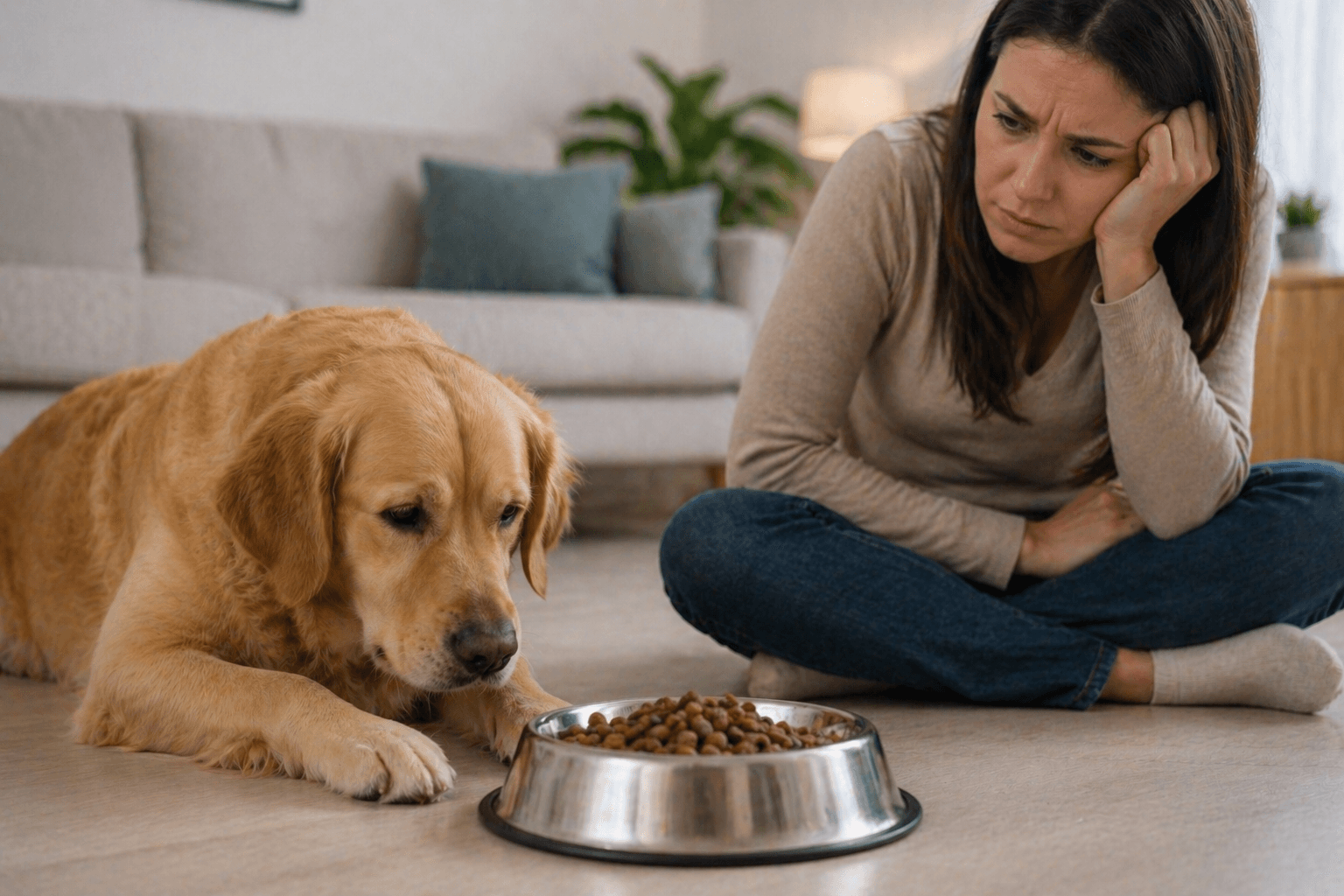
Quick Answer: If your dog is not eating, it may be due to stress, food change, dental pain, fever, stomach upset, vomiting, diarrhea, heat stress, pain, poisoning, infection, pyometra, bloat, kidney disease, liver disease, or another medical problem. Skipping one meal may not always be serious, but refusing food for 24 hours, or refusing food with vomiting, weakness, diarrhea, bloating, pain, or collapse, needs veterinary attention.
Dog not eating is one of the most common reasons owners become worried, because most dogs love food and treats. A dog not eating may be dealing with something mild, such as stress, weather change, or dislike of a new food. But a dog not eating can also be showing the first sign of pain, fever, digestive disease, dental disease, poisoning, bloat, pyometra, kidney disease, liver disease, or another serious condition. The important point is not only that your dog skipped food, but what else is happening at the same time.
At General Veterinary Hospital Lahore, we see this problem almost daily. Some dogs come in after refusing breakfast because they were fed oily leftovers the night before. Some stop eating because of dental pain or mouth ulcers. Some female dogs refuse food because of a dangerous uterine infection. Some deep-chested dogs lose appetite with restlessness and abdominal swelling, which can become an emergency. This is why appetite loss should never be judged casually, especially when it is sudden or paired with other symptoms.
Owners often say, “Doctor, he is not eating food but still eating treats,” or “She is drinking water but not eating.” These small details are very helpful. A dog that refuses everything is different from a dog that only refuses regular food. A puppy that has not eaten for half a day is more concerning than a healthy adult dog skipping one meal. A dog not eating with vomiting or diarrhea is more urgent than a dog who missed one meal but is playful and normal.
This guide explains the common causes of appetite loss in dogs, how to judge seriousness, what you can safely try at home, and when your dog needs veterinary care without delay.
Is It Serious If a Dog Skips One Meal?
Sometimes, no. A healthy adult dog may skip one meal because of heat, mild stomach upset, stress, travel, vaccination, tiredness, or simply being less hungry. If your dog is bright, drinking normally, passing stool and urine normally, and starts eating again soon, it may not be serious.
But appetite loss becomes more concerning when it continues, worsens, or comes with other symptoms. Dogs usually do not stop eating without a reason. Food refusal is often a body signal that something feels wrong.
Common Reasons Why Dogs Stop Eating
Heat, stress, food change, travel, picky eating
Dental pain, injury, arthritis, abdominal pain
Vomiting, diarrhea, pancreatitis, gastritis, parasites
Bloat, poisoning, pyometra, heatstroke, collapse
1. Food Change or Food Dislike
Some dogs refuse food after a sudden diet change. The new food may smell different, feel different, or upset the stomach. Dogs that are used to table food may also reject balanced dog food because they are waiting for tastier human food.
At General Veterinary Hospital Lahore, we often see dogs whose eating habits become disturbed because the family frequently changes food, mixes spicy leftovers, or gives too many treats. The dog then refuses regular food but accepts chicken, biscuits, or human snacks. This does not always mean the dog is seriously sick, but it can create long-term feeding problems.
2. Stress, Fear, Travel or New Environment
Stress can reduce appetite. New homes, boarding, guests, loud noises, travel, grooming, clinic visits, fireworks, or separation anxiety can make a dog skip meals. Some dogs stop eating for a short time when their routine changes.
Stress-related appetite loss is more likely when the dog is otherwise active, drinking, and not vomiting. But stress should not be blamed if the dog is dull, painful, weak, feverish, or showing digestive signs.
3. Dental Pain and Mouth Problems
A dog may feel hungry but avoid eating because chewing hurts. Dental disease, broken teeth, gum infection, mouth ulcers, oral wounds, jaw pain, or something stuck in the mouth can all reduce appetite.
Signs may include:
- Dropping food from the mouth
- Chewing on one side
- Bad breath
- Drooling
- Pawing at the mouth
- Refusing hard food but eating soft food
Some owners think the dog is being picky, but the dog may actually be avoiding pain. At General Veterinary Hospital Lahore, older dogs with severe tartar or loose teeth often come in after gradually refusing dry food.
4. Vomiting, Diarrhea and Stomach Upset
Digestive upset is one of the most common causes of appetite loss. Dogs may stop eating when they feel nauseous, have stomach cramps, swallowed unsuitable food, developed gastritis, or started vomiting or passing loose stool.
In Lahore homes, we often see this after dogs eat oily leftovers, bones, spoiled food, wedding food, spicy meat, or sudden new treats. The appetite loss may appear before vomiting or diarrhea becomes obvious.
If digestive signs are present, helpful related guides include vomiting in dogs and dog diarrhea treatment home remedy.
5. Pain Anywhere in the Body
Pain is one of the most commonly missed causes of appetite loss. Dogs may refuse food because of abdominal pain, back pain, neck pain, injury, arthritis, urinary pain, ear pain, or post-surgical discomfort. Not every painful dog cries. Many simply become quiet, restless, panting, trembling, or uninterested in food.
At General Veterinary Hospital Lahore, we have seen dogs brought in for “not eating” where the real problem was severe ear infection, arthritis flare-up, abdominal pain, or a painful wound hidden under the coat. The food bowl was not the problem. Pain was.
Related topics such as why is my dog shaking, why is my dog panting so much, and dog ear infection connect naturally with this section.
6. Fever or Infection
Dogs with fever often eat less or stop eating completely. Infection can occur in the skin, ears, uterus, urinary tract, lungs, mouth, abdomen, or other body systems. Fever may also cause weakness, shivering, panting, dullness, and increased thirst.
A dog not eating with fever signs should not be treated only with appetite boosters. The infection or inflammation causing the fever must be found.
7. Pyometra in Female Dogs
In unspayed female dogs, appetite loss can be a warning sign of pyometra, a serious uterine infection. This is especially important if the dog recently had a heat cycle. Pyometra may also cause increased thirst, vomiting, weakness, fever, abdominal discomfort, or vaginal discharge. In some cases, there may be no obvious discharge.
At General Veterinary Hospital Lahore, many pyometra cases begin with simple signs: the dog becomes dull, refuses food, drinks more water, or vomits. Owners sometimes wait because they do not realize a reproductive emergency is developing.
Your existing article on pyometra in dogs is strongly related here.
8. Heatstroke or Heat Stress
During hot weather, dogs may eat less because heat reduces appetite. But if appetite loss is paired with heavy panting, drooling, weakness, red gums, vomiting, or collapse, heatstroke becomes a serious concern.
In Lahore summers, heat-related appetite loss is common, especially in flat-faced breeds, overweight dogs, thick-coated dogs, senior dogs, and dogs kept in poorly ventilated spaces. Dogs should not be walked during peak heat or left in hot vehicles or rooftops.
Your guide on heatstroke in dogs is a very important internal link for this section.
9. Bloat or GDV
Bloat and GDV are life-threatening emergencies, especially in deep-chested dogs. A dog with GDV may refuse food, become restless, drool, retch without bringing anything up, pant, show a swollen belly, or collapse.
Never wait at home if a dog has a bloated abdomen, unsuccessful retching, and sudden distress. Appetite loss in this situation is not a minor stomach problem.
Related reading: dog bloat and GDV emergency guide.
10. Poisoning or Toxin Exposure
Dogs may stop eating after eating chocolate, human medicine, rat poison, insecticide, spoiled food, toxic plants, chemicals, or unknown objects. Appetite loss may appear with vomiting, drooling, shaking, diarrhea, weakness, seizures, or collapse.
At General Veterinary Hospital Lahore, toxin-related cases often start with vague signs. The dog is dull and not eating, then vomiting or trembling begins. If you suspect exposure to chocolate, chemicals, or medicine, do not wait for more signs.
Your article on chocolate poisoning in dogs fits naturally here.
11. Kidney, Liver or Hormonal Disease
Dogs with kidney disease, liver disease, diabetes, Cushing’s disease, or other internal illness may lose appetite gradually. Owners may also notice weight loss, vomiting, increased thirst, frequent urination, weakness, bad breath, yellowing, or behavior changes.
A senior dog not eating should always be taken seriously, especially if appetite loss is not a one-time event. Older dogs may look normal until disease has already progressed.
Related hydration changes may connect with why is my dog drinking so much water.
When Is Dog Not Eating an Emergency?
What You Can Check at Home
If your dog is stable, alert, and not showing emergency signs, you can check a few things before visiting the clinic.
- Did the dog eat anything unusual recently?
- Is there vomiting or diarrhea?
- Is the dog drinking more or less water?
- Are gums pink, pale, yellow, or dry?
- Is the belly swollen or painful?
- Is the dog interested in treats but not regular food?
- Is there bad breath, drooling, or chewing difficulty?
- Is the dog panting, shaking, or hiding?
- For female dogs, was there a recent heat cycle?
Safe Home Care for a Dog Not Eating
If your dog skipped one meal but is active, drinking, and not vomiting, you can try simple supportive steps.
- Offer fresh food instead of stale food
- Warm the food slightly to improve smell
- Offer a small bland meal if mild stomach upset is suspected
- Remove uneaten food after 20–30 minutes
- Keep water available
- Keep the environment calm
- Avoid giving too many treats
Do not force-feed a dog that is vomiting, painful, bloated, extremely weak, or struggling to breathe. In those cases, home feeding attempts can delay urgent care.
What Not to Do
- Do not give human painkillers
- Do not force-feed a sick or vomiting dog
- Do not keep changing foods every few hours
- Do not give spicy, oily, or salty leftovers
- Do not ignore appetite loss in puppies
- Do not wait if there is bloating, collapse, poisoning, or repeated retching
Dog Not Eating but Drinking Water
If your dog is not eating but drinking water, the problem may still be serious. Dogs with nausea, fever, infection, kidney disease, pyometra, or stomach upset may drink but refuse food. Increased thirst with appetite loss is especially important in female dogs and senior dogs.
Watch whether water intake is normal, increased, or reduced. A dog that is drinking excessively and refusing food needs assessment, especially if there is vomiting, weakness, or recent heat cycle in a female.
Dog Not Eating but Eating Treats
This can happen with picky eating, but it can also happen in early illness or dental pain. Treats are often smellier, softer, or more exciting than regular food. A dog may accept treats even when regular food feels boring or hard to chew.
If your dog eats treats but refuses meals repeatedly, do not simply keep offering more treats. This can worsen the habit and hide early disease. Check teeth, stool, energy, and behavior.
Puppy Not Eating
Puppies are more fragile than adult dogs. A puppy not eating can become weak quickly, especially toy breeds and young pups. Causes may include parasites, parvo, fever, vaccination reaction, stress, teething, diet change, or low blood sugar.
If a puppy refuses food, becomes dull, vomits, has diarrhea, or seems weak, do not wait. Your article on parvo in puppies is highly relevant for puppies with vomiting, diarrhea, and appetite loss.
Senior Dog Not Eating
A senior dog refusing food deserves careful attention. Possible causes include dental disease, kidney disease, liver disease, cancer, heart disease, arthritis pain, digestive illness, medication effects, or reduced smell and taste. Older dogs may hide disease until the signs become advanced.
At General Veterinary Hospital Lahore, senior dogs are sometimes brought in after “just not eating” for two or three days. Testing may reveal dental pain, kidney changes, fever, or internal disease. Early checkups are much safer than waiting.
Simple Appetite Risk Chart
Frequently Asked Questions
How long can a dog go without eating?
A healthy adult dog may skip a meal, but refusing food for 24 hours deserves attention. Puppies, senior dogs, diabetic dogs, and sick dogs should be checked sooner.
Why is my dog not eating but drinking water?
This may happen with nausea, fever, infection, pain, kidney problems, pyometra, or digestive illness. If it continues or other signs appear, a vet visit is needed.
Why will my dog eat treats but not food?
This may be picky eating, but it can also mean dental pain, early illness, nausea, or food dislike. Repeated refusal of regular meals should be checked.
Should I force-feed my dog?
No, not without veterinary advice. Force-feeding can worsen nausea, stress the dog, and delay diagnosis in serious illness.
What should I feed a dog with mild appetite loss?
If there are no emergency signs, a small bland meal may be offered. But if your dog is vomiting, weak, painful, bloated, or not eating for a full day, veterinary care is safer.
Final Thoughts
Dog not eating can be a simple temporary issue, but it can also be the first sign of a serious medical problem. A dog not eating after stress, heat, or food change may improve quickly, but a dog not eating with vomiting, diarrhea, pain, weakness, bloating, fever, increased thirst, or collapse needs proper veterinary attention. Appetite is one of the easiest health signals for owners to notice, so it should not be ignored.
At General Veterinary Hospital Lahore, we often see that early action makes treatment easier. Some dogs only need diet correction and supportive care. Others need treatment for infection, pain, dental disease, digestive illness, pyometra, bloat, or poisoning. The sooner the real reason is found, the better the chance of a safe recovery.
If your dog refuses food for 24 hours, refuses water too, looks weak, vomits, has diarrhea, shows a bloated belly, or seems painful, arrange a veterinary check without delay.




It’s so true that a dog refusing food can be due to something simple, like stress, or something much more serious. I’ve had a dog stop eating once because of a mouth ulcer, and it was really worrying! It’s definitely important to pay attention to other symptoms.
This article really highlights how important it is to pay attention to what’s happening alongside a dog’s loss of appetite. The breakdown of potential causes, from something as simple as a food change to more serious issues like bloat or pyometra, helps pet owners better assess when it’s time to seek vet care. It’s a timely reminder that while an occasional missed meal might not be a big deal, certain symptoms like vomiting, weakness, or bloating should never be ignored.