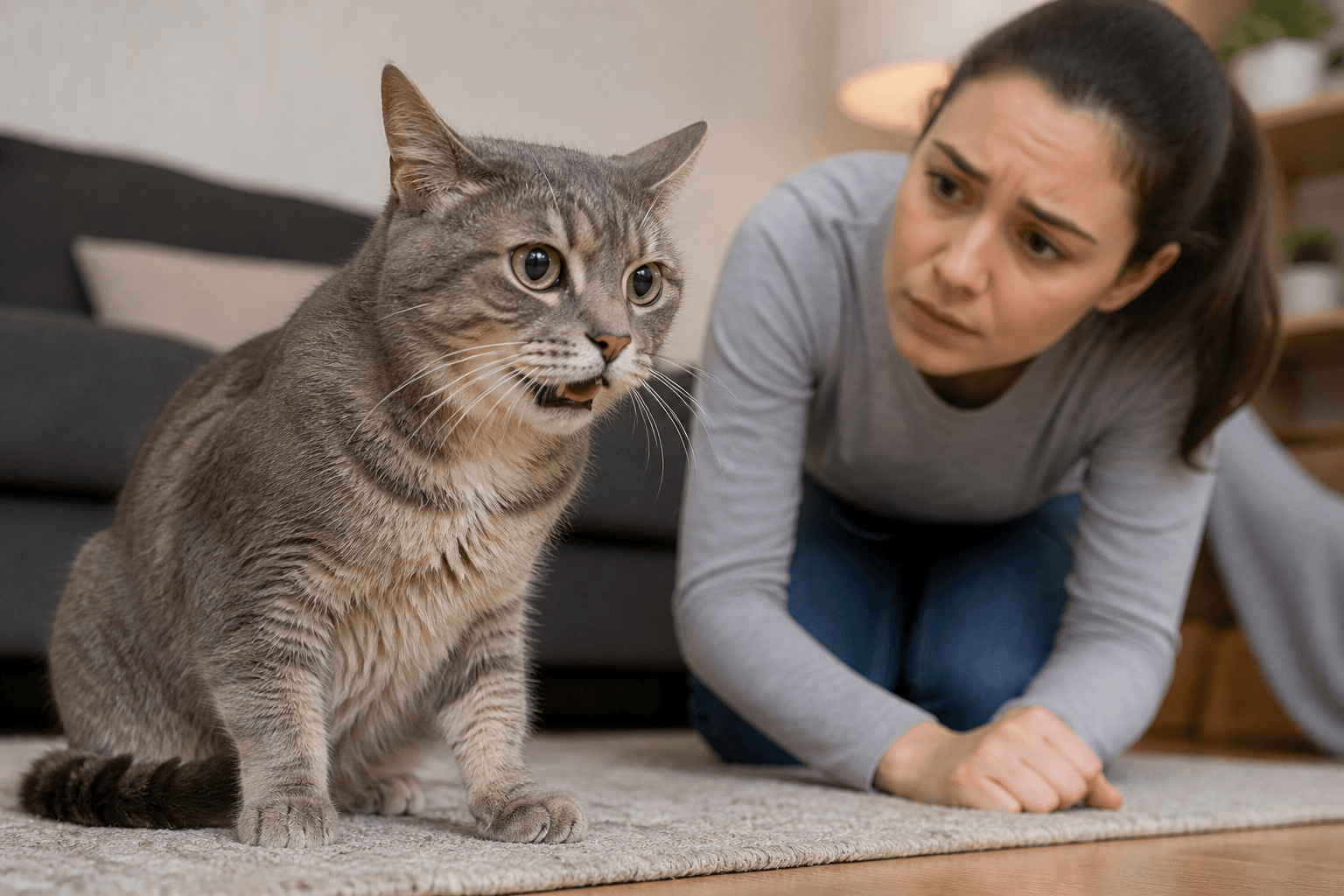
Quick Answer: Fast breathing in cats can be serious, especially if it happens while resting. A cat breathing fast may be stressed, hot, painful, feverish, or suffering from asthma, heart disease, pneumonia, poisoning, fluid around the lungs, or respiratory distress. If your cat is open-mouth breathing, using the belly to breathe, hiding, weak, blue/pale around the gums, or breathing fast at rest, seek veterinary care immediately.
Cat breathing fast is one of the most important emergency signs a cat owner should recognize. A cat breathing fast after active play or short stress may settle quickly, but a cat breathing fast while resting, sleeping, hiding, or sitting still can be a warning sign of a serious health problem. Cats are very good at hiding illness, so changes in breathing should never be ignored. Fast breathing may be linked to pain, fever, heat stress, asthma, heart disease, pneumonia, poisoning, trauma, anemia, fluid around the lungs, or shock.
At General Veterinary Hospital Lahore, we often see cats brought in after owners notice “sirf saans tez chal rahi hai” or “cat bas chup baithi hai aur breathing fast hai.” Sometimes the cat is stressed after travel or heat exposure. But in many cases, fast breathing is the first visible clue of a serious internal problem. Cats do not usually breathe with their mouth open like dogs. When a cat is breathing fast, breathing hard, or sitting with an open mouth, it should be treated as a potential emergency.
This guide explains how to recognize abnormal breathing, how to count your cat’s breathing rate, which signs are urgent, common causes of fast breathing in cats, what you should and should not do at home, and when your cat needs immediate veterinary care.
What Is Normal Breathing in Cats?
A relaxed healthy cat usually breathes quietly through the nose. The chest should move gently. There should be no loud effort, open-mouth breathing, belly pushing, neck stretching, or panic. A sleeping or fully resting cat generally has a slower, smoother breathing rhythm than a stressed or active cat.
Fast breathing becomes concerning when it happens during rest, sleep, or quiet sitting. It is even more concerning when the cat is also hiding, refusing food, coughing, wheezing, drooling, weak, or breathing with the mouth open.
How to Count Your Cat’s Breathing Rate
Count breathing only when your cat is resting or sleeping, not after running, playing, fighting, travel, or stress. Watch the chest rise and fall. One rise and one fall equals one breath.
Count breaths for 30 seconds, then multiply by 2. If your cat is relaxed and still breathing unusually fast, or the breathing looks difficult, do not delay veterinary advice.
The number is useful, but effort matters even more. A cat breathing 40 times per minute with calm, easy breathing may be different from a cat breathing 40 times per minute with belly effort, open mouth, and panic. Always look at both rate and effort.
Emergency Signs: When Fast Breathing Is Dangerous
Seek urgent veterinary care if your cat has any of these signs:
- Open-mouth breathing
- Panting like a dog
- Neck stretched forward while breathing
- Belly pushing with each breath
- Blue, grey, white, or very pale gums
- Collapse or severe weakness
- Hiding with fast breathing
- Fast breathing while resting or sleeping
- Coughing, wheezing, or choking sounds
- Not eating with breathing changes
- Possible poisoning or trauma
Common Causes of Cat Breathing Fast
Asthma, pneumonia, infection, airway irritation
Heart disease, fluid in lungs or chest
Pain, fever, heat, anemia, shock
Poisoning, trauma, severe asthma, oxygen crisis
1. Stress, Fear or Travel
Some cats breathe fast during car rides, clinic visits, loud noises, fireworks, grooming, or sudden fear. Stress breathing usually improves when the cat is calm, cool, and safe. However, stress should not be assumed if the breathing is very heavy, continues after rest, or happens with weakness, open-mouth breathing, or gum color changes.
At General Veterinary Hospital Lahore, nervous cats may breathe faster when they first arrive. But we always check the full picture: gum color, chest effort, temperature, heart sounds, lung sounds, and history. A stressed cat and a cat in respiratory distress can look similar to an owner at first glance.
2. Heat Stress
Cats tolerate heat differently from dogs, but they can still overheat. Lahore’s summer weather can be risky, especially for Persian cats, overweight cats, senior cats, kittens, and cats kept in closed warm rooms or carriers. Heat stress may cause fast breathing, open-mouth breathing, weakness, drooling, and collapse.
If heat is suspected, move your cat to a cooler, quiet area and seek veterinary advice quickly. Do not shock the cat with ice-cold water. Cooling should be gentle and controlled.
3. Pain
Pain can make cats breathe fast. A cat may breathe rapidly after injury, abdominal pain, urinary blockage, pancreatitis, constipation, surgery, bite wounds, or internal illness. Cats often hide pain instead of crying. They may sit hunched, hide under furniture, refuse food, or become unusually quiet.
A cat that is breathing fast and also hiding, not eating, or sitting in a tense position should be checked. The guide on subtle signs of pain in cats explains how easily feline pain can be missed at home.
4. Fever or Infection
Fever can increase breathing rate. Cats with infections may become dull, stop eating, hide, breathe faster, or feel warm. Respiratory infections may also cause sneezing, nasal discharge, eye discharge, coughing, or noisy breathing.
Viral disease, bacterial infection, pneumonia, bite wounds, abscesses, and internal inflammation can all affect breathing. When fever and breathing changes occur together, a veterinary check is important.
If your cat also has mouth ulcers, sneezing, poor appetite, or respiratory signs, feline calicivirus symptoms may help you understand one possible infectious cause.
5. Feline Asthma
Feline asthma is a common cause of coughing, wheezing, and fast breathing in cats. Some cats have mild repeated coughing episodes, while others develop sudden breathing distress. Asthma can be triggered by smoke, dust, perfumes, sprays, incense, mold, pollen, or litter dust.
Signs may include:
- Coughing or hacking
- Wheezing
- Fast breathing
- Open-mouth breathing during severe attacks
- Crouched posture with neck extended
- Reduced activity
Many owners confuse asthma coughing with hairball attempts. If your cat repeatedly crouches and hacks but no hairball comes out, breathing disease may be involved. The guide on cat coughing and wheezing explains this difference in more detail.
6. Heart Disease
Heart disease is a serious cause of fast breathing in cats. Some cats with heart disease show no obvious signs until breathing changes appear. Fluid may build up in or around the lungs, making the cat breathe faster or harder.
Warning signs may include:
- Fast breathing while resting
- Open-mouth breathing
- Weakness
- Reduced appetite
- Sudden collapse
- Cold back legs or sudden leg pain in severe clot cases
Heart-related breathing problems can become life-threatening quickly. A cat with suspected heart trouble needs careful handling, oxygen support when required, and veterinary diagnosis.
7. Pneumonia or Lung Infection
Pneumonia can make cats breathe fast because the lungs cannot exchange oxygen normally. Affected cats may have fever, weakness, coughing, nasal discharge, poor appetite, or noisy breathing. Kittens, senior cats, and cats with previous viral infections may be more vulnerable.
A cat with pneumonia may look tired and sit quietly instead of showing dramatic signs. Fast breathing with dullness and appetite loss should always be taken seriously.
8. Fluid Around the Lungs
Fluid around the lungs, also called pleural effusion, prevents the lungs from expanding properly. This can happen with heart disease, infection, cancer, trauma, or other serious conditions. Cats with fluid around the lungs may breathe rapidly, sit upright, stretch the neck, avoid lying down, or breathe with the mouth open.
This is an emergency. These cats often need oxygen, careful examination, imaging, and treatment based on the cause.
9. Poisoning or Toxic Exposure
Poisoning can cause fast breathing, drooling, vomiting, weakness, tremors, seizures, or collapse. Cats are especially sensitive to many household chemicals, insecticides, human medicines, essential oils, lilies, and some dog flea products.
If your cat started breathing fast after exposure to a chemical, medicine, plant, spray, or insecticide, seek help quickly. The article on cat poisoning emergency signs covers urgent poisoning symptoms and first-aid precautions.
10. Anemia or Shock
Anemia means the body does not have enough red blood cells to carry oxygen properly. Shock means circulation is failing. Both can cause fast breathing. Cats may also have pale gums, weakness, collapse, cold paws, or severe dullness.
Possible causes include trauma, internal bleeding, parasites, severe infection, toxin exposure, or chronic disease. Pale gums with fast breathing should always be treated as urgent.
11. Kidney Disease or Advanced Illness
Kidney disease itself may not always directly cause fast breathing, but cats with advanced illness can become weak, nauseous, anemic, dehydrated, or acidotic, which may affect breathing. If your cat has weight loss, poor appetite, vomiting, increased thirst, and fast breathing, medical evaluation is important.
Chronic conditions like cat kidney disease, cat not eating, and cat losing weight may overlap with breathing concerns when the cat is systemically unwell.
How Serious Is Fast Breathing?
What You Can Do at Home Before Going to the Vet
If your cat is breathing fast but still stable, the safest home step is to reduce stress and arrange veterinary advice. Keep the cat calm, quiet, and cool. Avoid forcing food, water, medicine, or handling.
- Move your cat to a quiet room
- Keep the room cool and well ventilated
- Do not chase or force-handle the cat
- Do not force the mouth open
- Do not give human medicine
- Record a short video of the breathing pattern
- Prepare a carrier calmly
- Call or visit a veterinarian quickly if signs continue
At General Veterinary Hospital Lahore, videos from owners are very helpful. They show whether the cat is breathing fast, coughing, wheezing, belly breathing, or open-mouth breathing at home before the cat becomes more stressed during travel.
What Not to Do
- Do not wait overnight if your cat is open-mouth breathing
- Do not give steam therapy without veterinary advice
- Do not use human inhalers unless prescribed for that cat
- Do not give antibiotics randomly
- Do not force-feed a cat that is struggling to breathe
- Do not assume it is only stress if breathing remains fast at rest
How Veterinarians Diagnose Fast Breathing in Cats
Diagnosis depends on the cat’s stability. If the cat is in severe distress, oxygen and stabilization may come before detailed testing. Once safe, the veterinarian may check breathing effort, gum color, temperature, heart sounds, lung sounds, hydration, pain, and history.
Tests may include:
- Chest X-rays
- Ultrasound if fluid is suspected
- Blood tests
- Oxygen level assessment if available
- Heart evaluation
- Infectious disease testing when indicated
- Toxin history and emergency blood work
Some cats need oxygen before imaging because handling can worsen distress. This is why breathing emergencies should be managed carefully and calmly.
How Fast Breathing Is Treated
Treatment depends on the cause. There is no single home remedy that safely treats all breathing problems.
Asthma or airway inflammation
Treatment may include oxygen, bronchodilators, anti-inflammatory medication, and long-term trigger control.
Heart disease or fluid buildup
These cats may need oxygen, medication, imaging, and urgent treatment to reduce fluid or support the heart.
Pneumonia or infection
Treatment may include antibiotics chosen carefully, oxygen support, fluids when appropriate, and monitoring.
Heat stress
Controlled cooling, oxygen, fluids, and supportive care may be needed depending on severity.
Poisoning
Treatment depends on the toxin and may include emergency stabilization, decontamination, medication, and monitoring.
Pain or shock
The underlying cause must be found and treated. Pain relief and circulation support may be needed.
Simple Breathing Emergency Chart
Frequently Asked Questions
Why is my cat breathing fast while resting?
Fast breathing while resting is more concerning than fast breathing after play. It may be linked to pain, fever, asthma, heart disease, pneumonia, fluid around the lungs, or another serious problem.
Is open-mouth breathing normal in cats?
No. Open-mouth breathing in cats is not normal except for very brief moments after extreme stress. If it continues or appears with weakness, hiding, or distress, it is an emergency.
Can stress make a cat breathe fast?
Yes, stress can increase breathing rate. However, breathing should settle when the cat becomes calm. Persistent fast breathing at rest should not be blamed on stress alone.
Why is my cat breathing fast and not eating?
This combination is concerning. Pain, fever, respiratory disease, heart disease, poisoning, or severe illness may be involved. A veterinary check should not be delayed.
Can cat asthma cause fast breathing?
Yes. Feline asthma can cause coughing, wheezing, rapid breathing, and in severe attacks, open-mouth breathing or respiratory distress.
Final Thoughts
Cat breathing fast is a symptom that deserves serious attention. Sometimes a cat breathing fast is only reacting to stress, heat, or activity, but when fast breathing happens at rest, during sleep, or with hiding, coughing, weakness, poor appetite, blue gums, pale gums, or open-mouth breathing, it can become an emergency. A cat breathing fast may be struggling with asthma, heart disease, pneumonia, pain, fever, poisoning, fluid around the lungs, shock, or another serious condition.
At General Veterinary Hospital Lahore, we always advise cat owners to take breathing changes seriously because cats often hide illness until they are already in trouble. If you are unsure, count the breathing rate, record a short video, keep the cat calm, and seek veterinary guidance. Early action can save time, reduce suffering, and in true respiratory emergencies, save your cat’s life.
If your cat is breathing fast while resting, breathing with the mouth open, using the belly to breathe, hiding, weak, or showing abnormal gum color, arrange veterinary care immediately.