
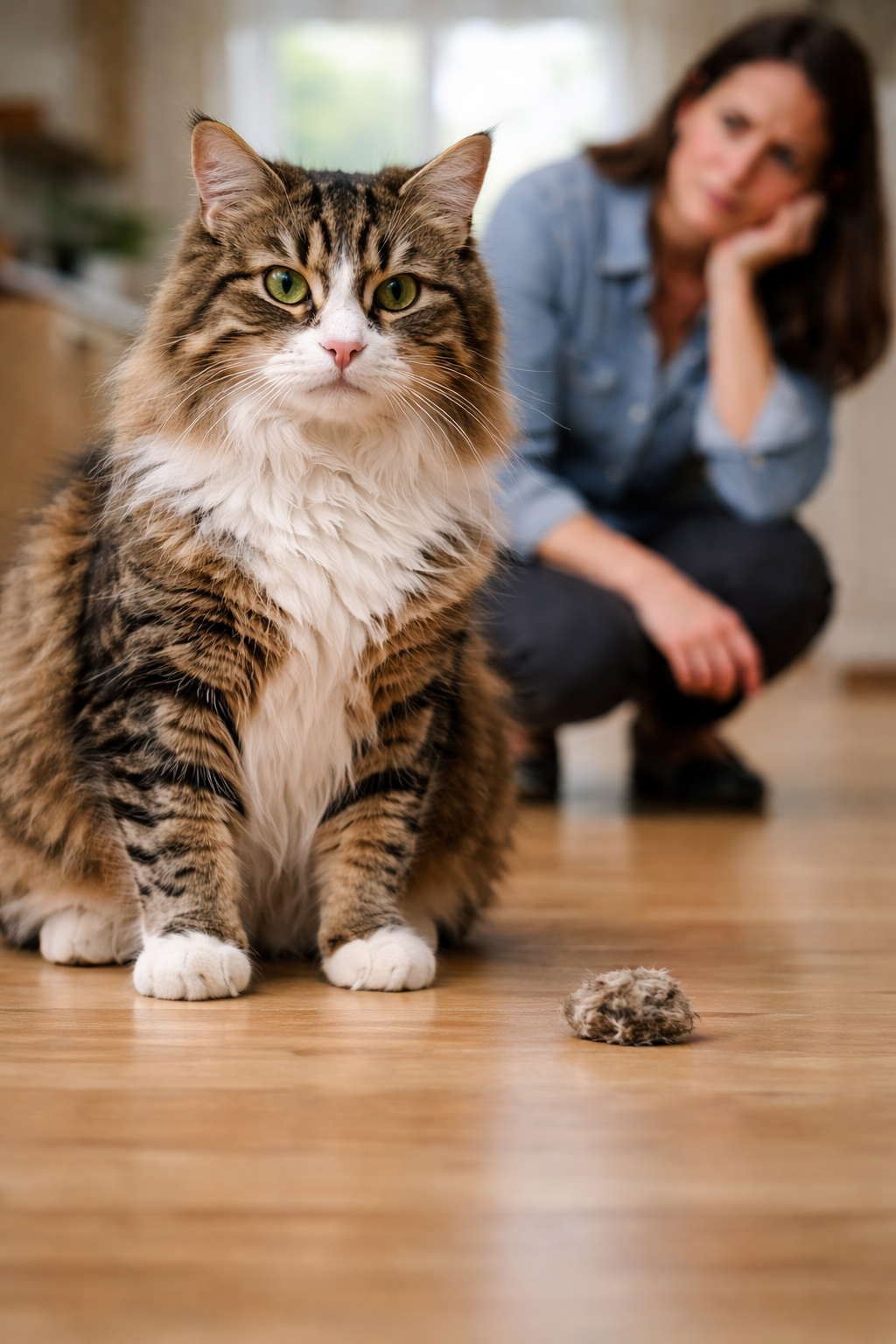
Cat hairballs are one of the most familiar complaints in cat practice, yet they are also one of the most misunderstood. Many owners assume cat hairballs are always normal, always harmless, and just part of living with a cat. The truth is more balanced. Cat hairballs can be expected sometimes, especially in cats that groom heavily, but frequent hairballs, repeated retching, poor appetite, constipation, or vomiting without producing a hairball can be a sign that something else is wrong. That is why cat hairballs should be understood properly instead of dismissed too quickly.
At General Veterinary Hospital Lahore, we see both ends of the spectrum. Some cats bring up an occasional small hairball and stay perfectly bright, active, and comfortable. Other cats come in after repeated gagging, appetite loss, or several days of vomiting that the owner thought was “just hair.” In some of those cats, the real problem turns out to be skin irritation, fleas, poor gut movement, gastritis, constipation, or even an illness that has nothing to do with cat hairballs at all.
Hairballs form because cats swallow hair while grooming. Most swallowed hair passes harmlessly through the digestive tract and leaves in the stool. Trouble starts when the hair stays in the stomach, gathers together, and is eventually vomited out as a wet tube or lump. Some cats have occasional episodes. Others retch often, bring up only foam, or strain without producing anything. These cases deserve more attention.
This guide explains what cat hairballs really are, when they are still within a normal range, what causes frequent hairballs, what owners can safely do at home, and when a veterinary visit should not be delayed.

What exactly is a cat hairball?
A hairball is a clump of swallowed hair that collects in the stomach and is later vomited out. Because it has passed through the esophagus, it often looks longer and more tube-shaped than many owners expect. It is usually wet, dark, and mixed with saliva or small amounts of food or fluid.
Cats are very clean animals and spend a large part of the day grooming. Their tongues are covered with tiny backward-facing barbs that pull loose hair out of the coat. Some of that hair is swallowed. In most cats, the digestive tract handles it without any problem. Only part of it comes back up as a hairball.
Are hairballs normal in cats?
Occasional hairballs can be normal, especially in long-haired cats, heavy shedders, older cats, overweight cats that groom in awkward ways, and cats that groom more during seasonal coat changes. But “occasional” is the important word here.
| Hairball Pattern | What It May Mean |
|---|---|
| Rare, small hairball with otherwise normal behavior | Can be within normal limits |
| Frequent retching or repeated hairballs | Needs closer evaluation |
| Vomiting often but no hairball produced | May not be a hairball problem at all |
| Hairball signs with poor appetite, lethargy, or constipation | Needs veterinary attention |
Many owners tell us, “My cat has hairballs all the time, so I thought it was normal.” In practice, a cat that is repeatedly retching, vomiting, or losing appetite should not be brushed off as a routine hairball cat. Frequent episodes usually mean it is time to ask why.
Why do some cats get more hairballs than others?
Several factors can increase the chance of hairballs:
- Long hair or dense coat
- Heavy shedding season
- Excessive grooming
- Fleas, itchiness, or skin disease
- Stress-related overgrooming
- Poor gastrointestinal movement
- Dietary issues or low fiber intake in some cats
- Older age
At General Veterinary Hospital Lahore, long-haired cats and itchy cats are especially common hairball cases. A Persian or long-coated mixed-breed cat that is grooming excessively because of fleas or skin irritation can start bringing up hair much more often than a comfortable, healthy cat with normal coat care.
The most common causes of frequent hairballs
Cat hairballs: 1. Excessive grooming
The more hair a cat swallows, the more likely hairballs become. Excess grooming may happen because of habit, stress, heat, boredom, itchiness, pain, or skin discomfort. Some cats groom so much that owners think they are simply “clean cats,” when in fact the grooming is abnormal.
Common clues include:
- Hair thinning on the belly or legs
- Frequent licking when the cat should be resting
- Patches of broken hair
- More hair left on bedding or furniture
2. Fleas and itchy skin
Fleas are a major trigger for overgrooming. Even a small flea burden can make a sensitive cat lick and bite the coat much more than usual. That extra grooming means more swallowed hair and more hairballs.
If your cat is also scratching, licking the back, or overgrooming the tail base, related reading such as fleas in cats can fit naturally with this topic.
3. Food sensitivity or stomach irritation
Some cats with frequent vomiting get labeled as hairball cats when the real issue is stomach irritation, food sensitivity, gastritis, or another digestive problem. Hair may appear in the vomit simply because the cat swallowed hair earlier, not because hairballs are the true cause.
This matters a lot in practice. At General Veterinary Hospital Lahore, we sometimes see cats treated at home for “hairballs” for weeks, only to find that the bigger problem is repeated vomiting from gastrointestinal upset. In such cases, the hair is more of a passenger than the real problem.
4. Constipation or poor gut movement
If hair is not moving through the digestive tract properly, it has more chance to collect in the stomach or intestines. Some cats with constipation, reduced gut motility, dehydration, or low activity may struggle more with hair passing normally.
Owners may notice:
- Straining in the litter tray
- Dry or hard stool
- Reduced appetite
- Vomiting along with difficulty passing stool
In some cats, frequent hairballs and constipation appear together. Your existing article on constipation in cats links very naturally with this topic.
5. Underlying illness
Not every cat with suspected hairballs actually has a simple grooming issue. Chronic kidney disease, pancreatitis, inflammatory gut problems, and other illnesses can cause vomiting or poor appetite. Some of these cats also swallow hair, so owners assume the vomiting is hairball-related when it is actually a medical condition.
This is especially important in older cats. A senior cat that is vomiting frequently, eating poorly, losing weight, or becoming quieter should never be assumed to have only a harmless hairball problem. Your existing articles on cat kidney disease, pancreatitis in cats, and why is my cat not eating are all relevant internal links when the signs overlap.
What does a real hairball episode look like?
Many cats with true hairballs show a short period of coughing, gagging, or retching, then bring up a wet clump of hair. Afterward, they often seem normal again. They may groom, walk away, or even eat later if the rest of their health is fine.
However, a hairball episode can easily be confused with:
- Asthma-related coughing
- Repeated vomiting from stomach disease
- Nausea with foamy vomit
- Throat irritation
- A foreign body problem
This confusion matters because owners sometimes describe coughing as a hairball attempt. A cat that crouches, stretches the neck, and coughs repeatedly without producing a hairball may actually have a respiratory issue instead. That is why your article on cat coughing and wheezing is an excellent related read for owners trying to tell the difference.
When cat hairballs are not normal
You should stop calling it a simple hairball issue when any of the following are happening:
- Hairballs are frequent
- Your cat retches often without producing one
- There is poor appetite
- There is weight loss
- The cat seems tired, quiet, or dehydrated
- There is constipation or little stool production
- The cat vomits food, foam, or fluid often
- There is obvious overgrooming or itchy skin
At General Veterinary Hospital Lahore, one memorable case involved a long-haired cat whose owner reported “hairballs every week.” On closer questioning, the cat was also eating less and straining in the litter box. The main problem turned out to be constipation with dehydration, and the hairballs were only part of the story.
Home care for mild hairball problems
If your cat is otherwise bright, eating normally, and only has occasional hairballs, simple home care may help reduce future episodes.
Regular brushing
This is one of the most effective ways to reduce swallowed hair. Daily brushing during shedding season can make a big difference, especially in long-haired cats.
Flea control and skin care
If your cat is itchy, hairball management will fail unless the itch cause is addressed. Good parasite control is essential.
Encouraging hydration
Good water intake supports overall digestive health. Some cats do better with water fountains, multiple bowls, or wet food alongside dry food.
Hairball diets or supportive nutrition
Some cats benefit from diets designed to support hair passage through the gut. These may help in selected cats, especially when combined with grooming and hydration.
Hairball lubricants or pastes
These may help in some cases, but they are not a cure for every vomiting cat. If hairballs are frequent, do not keep using them blindly without finding the real reason.
| Home Step | How It Helps |
|---|---|
| Regular brushing | Reduces swallowed hair |
| Flea control | Lowers overgrooming from itchiness |
| Better hydration | Supports normal digestive movement |
| Hairball support diet | May help hair pass more easily |
What not to do
- Do not assume every retching cat has hairballs
- Do not keep changing products without checking the cause
- Do not ignore appetite loss
- Do not wait too long if your cat is vomiting repeatedly
- Do not give random human remedies
When to worry about cat hairballs
You should book a veterinary visit promptly if:
- Hairballs happen often
- Your cat retches repeatedly with no hairball produced
- Your cat is not eating normally
- Vomiting happens more than just occasionally
- There is constipation or reduced stool output
- Your cat is losing weight
- The cat seems lethargic or uncomfortable
How veterinarians diagnose frequent hairball problems
When a cat comes in for repeated hairballs, the first job is to confirm whether it is truly a hairball problem or whether another issue is being mistaken for one. The examination often starts with questions about grooming, fleas, stool quality, appetite, vomiting pattern, coughing, and weight changes.
The work-up may include:
- Physical examination and coat assessment
- Checking for fleas, skin disease, or overgrooming
- Oral exam if nausea or drooling is involved
- Abdominal palpation for constipation or discomfort
- Blood tests in older or unwell cats
- Imaging if obstruction or another internal problem is suspected
At General Veterinary Hospital Lahore, this distinction is very important. A cat brought in for “hairballs” may actually have coughing, constipation, chronic vomiting, or overgrooming due to skin irritation. Once the true cause is found, treatment becomes much more effective.
How frequent hairballs are treated
Treatment depends on the real cause behind the problem.
Excess grooming
Management may involve better coat care, stress reduction, parasite control, or treatment of skin disease.
Fleas or itchiness
The cat needs proper flea control and, where necessary, treatment for skin inflammation.
Constipation
Hydration support, stool management, and correcting the underlying bowel problem are key.
Digestive disease or vomiting illness
The treatment may involve diet changes, medication, fluid support, and investigation of the stomach or intestines.
Underlying medical disease
If kidney disease, pancreatitis, or another illness is involved, that condition must be treated directly.
Simple hairball severity chart
Frequently asked questions
How often is too often for hairballs?
If your cat is bringing up hairballs regularly or retching often, it is worth getting checked. Frequent episodes should not just be accepted as normal.
Can a cat cough and make it look like a hairball?
Yes. Many owners confuse coughing with hairball retching. If your cat repeatedly crouches, extends the neck, and makes hacking sounds without producing a hairball, coughing may be the real problem.
Do long-haired cats always get hairballs?
No. Long-haired cats are more at risk, but good grooming, coat care, hydration, and overall health can reduce the problem.
Can hairballs stop a cat from eating?
They can contribute to nausea or discomfort, but a cat that is not eating should never be assumed to have only a harmless hairball. Other medical issues must be considered.
Final thoughts
Cat hairballs are common, but that does not mean all cat hairballs are normal or harmless. An occasional episode in an otherwise healthy cat may not be a major concern, but frequent cat hairballs, repeated retching, poor appetite, constipation, vomiting, or weight loss deserve proper attention. In many cats, the real issue is not just hair. It is overgrooming, fleas, coughing mistaken for hairballs, digestive disease, or another medical problem that needs treatment.
At General Veterinary Hospital Lahore, we regularly see cats improve once owners stop guessing and start looking at the full picture. Sometimes the solution is better grooming and flea control. Sometimes it is treating constipation, vomiting, or a deeper illness. If your cat’s hairball problem is becoming frequent or is paired with any worrying sign, a veterinary check is the safest next step.



One Comment