
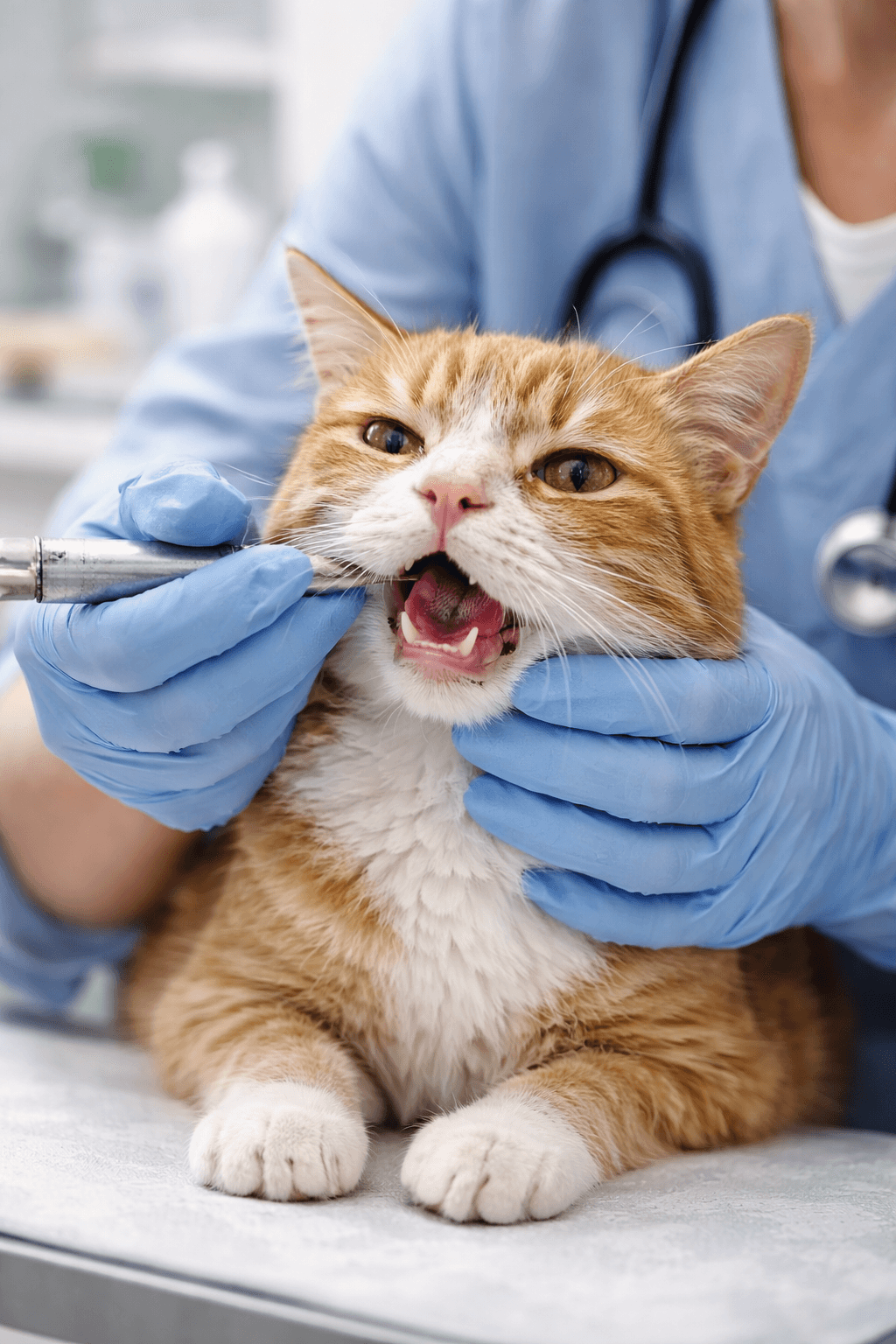
Feline Calicivirus Symptoms: Early Warning Signs, Progression & Vet Treatment Guide
Feline calicivirus symptoms are one of the most common reasons cats arrive at veterinary clinics with “flu-like” illness. Many guardians think their cat just has a simple cold, but calicivirus can cause painful mouth ulcers, breathing difficulty, fever, joint pain and, in rare cases, life-threatening systemic disease. Recognizing feline calicivirus symptoms early gives you the best chance to protect your cat and prevent spread to other cats in the home.
This vet-approved guide explains what feline calicivirus is, how it spreads, the full range of feline calicivirus symptoms from mild to severe, and the treatment and prevention options your veterinarian may recommend. It is designed for cat owners who want clear, practical advice – not just textbook definitions.

What is feline calicivirus?
Feline calicivirus (FCV) is a highly contagious RNA virus that primarily affects a cat’s upper respiratory tract and mouth. It is one of the main causes of feline upper respiratory infections, alongside feline herpesvirus. The virus is shed in saliva, nasal discharge and eye secretions, and it can survive for days on bowls, bedding, clothing and cages if they are not disinfected properly.
Any cat can be infected, but the risk of feline calicivirus symptoms is highest in:
- Kittens and young cats, especially if unvaccinated.
- Shelter, cattery and rescue cats exposed to many strangers.
- Multi-cat households with shared litter boxes, food and water bowls.
- Unvaccinated or poorly vaccinated cats, or cats with other illnesses weakening their immune system.
FCV is very common worldwide. Some infected cats become carriers: they appear healthy but continue to shed the virus and can trigger new outbreaks whenever a new kitten or stressed cat joins the home.
How calicivirus spreads between cats
The virus is mainly spread by direct contact: nose-to-nose greetings, grooming, sharing food and water bowls or toys, and airborne droplets from sneezes. Indirect spread through cleaning cloths, litter scoops and human hands is also important. Because calicivirus is quite stable in the environment, proper cleaning and disinfection are crucial whenever you have a cat showing feline calicivirus symptoms.
If you adopt a new cat or kitten from a shelter, always ask about respiratory signs in the group, quarantine the newcomer in a separate room for at least two weeks, and schedule a check-up with your veterinarian. For Pakistani cat owners, you can review vaccination planning and virus prevention in detail in your Cat Vaccination Schedule 2025 guide.
Early feline calicivirus symptoms (the subtle signs)
In the very beginning, feline calicivirus symptoms are easy to confuse with stress or a mild cold. Watch closely for these early changes:
- Sneezing – a few sneezes per hour, often with wet spray.
- Clear or slightly cloudy nasal discharge – a damp nose, dried crusts on the nostrils.
- Watery eyes – mild conjunctivitis, blinking, pawing at the face.
- Fever – your cat feels warmer than usual, seeks cool surfaces, or appears off-colour.
- Lethargy – more sleeping, less interest in play or food.
At this stage many cats still eat, but their appetite is not as strong as normal. You might notice your cat going to the bowl, sniffing food and then walking away. That can be the first clue that oral pain is starting.
Oral ulcers – the hallmark feline calicivirus symptom
One of the most characteristic feline calicivirus symptoms is the appearance of painful ulcers (sores) in the mouth. These typically develop a few days after the first sneezing and eye signs. Common locations include:
- The centre and edges of the tongue.
- The inner surfaces of the lips.
- The gums and hard palate (roof of the mouth).
These ulcers can look like small, round craters with a pale or yellowish base and reddened edges. Even though they may look small, they are extremely painful. Cats with oral ulcers show very typical behaviour:
- Reluctance to eat or drink; sniffing food and then turning away.
- Drooling, sometimes with blood-tinged saliva.
- Pawing at the mouth or rubbing the face on furniture.
- Sudden sensitivity when you touch the cheeks or chin.
In kittens, these mouth ulcers can lead rapidly to dehydration and weight loss. They are one of the strongest indicators that feline calicivirus symptoms are present rather than simple feline herpesvirus infection, which tends to cause more eye ulcers and less mouth pain.
Respiratory feline calicivirus symptoms
Alongside mouth ulcers, many cats develop a classic upper respiratory infection. The respiratory component of feline calicivirus symptoms can include:
- Thick, coloured nasal discharge (yellow or green).
- Snuffly, noisy breathing from blocked nasal passages.
- Coughing or gagging, especially after sneezing.
- Open-mouth breathing in severe cases.
When the nose is blocked, cats cannot smell their food properly and may stop eating even if the mouth is not yet very sore. This is why vets emphasise early appetite support in any cat with upper respiratory disease.
Eye involvement and facial discomfort
Feline calicivirus can cause conjunctivitis – reddened, swollen tissues around the eyes and a watery or mucous discharge. Although feline herpesvirus is more famous for eye ulcers, calicivirus can still make the eyes sore. Cats may squint, avoid bright light, or hide their face in bedding.
Real case from General Veterinary Hospital Lahore
At General Veterinary Hospital Lahore, we saw a one-year-old indoor cat presented for “not eating and drooling.” The owner had assumed it was a “throat infection” and had tried changing foods. On physical examination we found classic feline calicivirus symptoms: ulcers on the tongue, thick nasal discharge, fever and mild dehydration.
The cat was hospitalised, placed on IV fluids, pain relief, nasal nebulisation and antibiotics for secondary bacterial infection. Within three days, the ulcers began to heal and appetite returned. The owner later commented that before this illness they had never realised a “simple cat flu” could make eating so painful.
Advanced and systemic feline calicivirus symptoms
Most cats experience mild to moderate disease, but some strains of calicivirus are far more aggressive. These can cause severe pneumonia and even full-body inflammation. Watch for these more serious feline calicivirus symptoms:
- High fever that does not respond well to basic medication.
- Rapid breathing, abdominal effort, or open-mouth respiration.
- Crusted skin lesions around the face, ears and paws.
- Swelling of the face or legs.
- Jaundice (yellow gums or eyes) indicating liver involvement.
- Sudden collapse or severe weakness.
This rare but serious form, sometimes called virulent systemic calicivirus (VS-FCV), requires immediate intensive care. Outbreaks have been reported in shelters and catteries, which is why strict hygiene and isolation protocols are recommended by international bodies such as WSAVA.
Lameness and joint pain
Another less obvious group of feline calicivirus symptoms involves the joints. Certain strains trigger immune-mediated inflammation in the joints, leading to:
- Limping, often shifting from one leg to another (“shifting leg lameness”).
- Reluctance to jump or climb.
- Stiffness when first rising after sleep.
- Mild fever and general malaise.
This “limping syndrome” is more common in kittens and usually resolves with supportive care, but it can be very uncomfortable while it lasts.
How veterinarians diagnose feline calicivirus
In many cases, the combination of feline calicivirus symptoms—especially oral ulcers plus upper respiratory signs—is enough for an experienced veterinarian to make a clinical diagnosis. However, additional tests may be used when:
- Disease is unusually severe or long-lasting.
- Many cats are affected in a shelter or cattery.
- Other diseases such as feline herpesvirus, panleukopenia or bacterial pneumonia are suspected at the same time.
Diagnostic options include:
- Physical examination of the mouth, eyes, nose and chest.
- Blood tests to check hydration, organ function and rule out other illnesses.
- PCR tests on swabs from the mouth, eyes or nose to detect calicivirus genetic material.
- X-rays (radiographs) of the chest if pneumonia is suspected.
Because many cats are carriers, a positive PCR test alone does not always prove that calicivirus is the only cause of your cat’s illness. Vets interpret results in the context of clinical signs.
Treatment of feline calicivirus symptoms
There is currently no antiviral drug that directly kills calicivirus in everyday practice. Instead, treatment focuses on relieving feline calicivirus symptoms, supporting the immune system, and preventing secondary bacterial infections. A typical treatment plan may include:
- Pain relief – especially important for oral ulcers. Veterinarians use cat-safe analgesics; never give human painkillers at home.
- Anti-inflammatory medication to reduce fever and discomfort when appropriate.
- Antibiotics to control secondary bacterial infections in the mouth, lungs or sinuses.
- Fluid therapy (intravenous or subcutaneous) for dehydrated cats.
- Nutritional support – syringe feeding, appetite stimulants, or feeding tubes in severe cases.
- Nebulisation and steam therapy to loosen nasal secretions.
- Eye medications if conjunctivitis is significant.
In our experience at General Veterinary Hospital Lahore, early and aggressive supportive care dramatically improves recovery rates, especially in kittens and senior cats who are more vulnerable when feline calicivirus symptoms appear.
Home care for a cat with feline calicivirus
Your veterinarian may allow home care for mild to moderate cases once serious complications are ruled out. At home, you can help your cat recover from feline calicivirus symptoms by:
- Providing a warm, stress-free environment. Keep the cat in a quiet room away from small children and other pets. Avoid sudden temperature changes and draughts.
- Offering soft, strong-smelling food. Gently warmed wet food, chicken broth (without onions, garlic or salt), or veterinary recovery diets are usually easier to eat with mouth ulcers and blocked noses.
- Encouraging hydration. Use multiple water bowls, a cat fountain, or add water to food. Your vet may teach you how to safely give small amounts of oral rehydration solution if recommended.
- Keeping the face clean. Wipe away eye and nose discharge with warm, damp cotton pads so your cat can breathe and see more comfortably.
- Following all medication instructions exactly. Do not stop antibiotics or pain medication early just because your cat looks better; this can lead to relapse.
- Isolating the sick cat from others. Separate litter trays, bowls and bedding until your vet says it is safe to mix again.
If you are ever unsure whether your cat is coping at home, or if feline calicivirus symptoms suddenly worsen, it is safest to speak with a veterinarian immediately. If you cannot visit in person, you can use your clinic’s Online Vet Consultation page to get rapid advice.
Do supplements or home remedies help?
Immune-support supplements, lysine, and herbal products are widely advertised online, but their benefits for feline calicivirus symptoms are variable. Some may help support general health, but none replace pain relief, hydration and proper veterinary care. Always check with your vet before adding any supplement, as certain products can interact with medications or cause stomach upset.
Never attempt to use human cold medications, essential oils, or nebulised disinfectants in a cat with respiratory disease. Many are toxic and can make breathing worse.
Prevention: how to reduce the risk of feline calicivirus
Because there is no simple cure, preventing infection and limiting spread are key parts of managing feline calicivirus symptoms in the long term.
1. Vaccination
Calicivirus is included in the core feline vaccine combination, usually given to kittens in a series and then boosted regularly. Vaccination does not completely prevent infection, but it greatly reduces the severity of feline calicivirus symptoms and lowers viral shedding.
Your veterinarian can design a tailored vaccination schedule depending on your cat’s lifestyle. You can review how calicivirus fits into overall preventive care in your detailed Cat Vaccination Schedule 2025 article.
2. Hygiene in multi-cat homes
- Provide separate food and water bowls for each cat whenever possible.
- Clean bowls and litter trays daily with hot water and a pet-safe disinfectant.
- Wash hands between handling sick and healthy cats.
- Quarantine new arrivals in a separate room for at least 10–14 days.
3. Nutrition and general health
A robust immune system helps cats fight off viral infections more effectively. Feeding a complete, balanced diet and maintaining a healthy body weight are essential. If owners are unsure how to balance commercial wet food, dry food and home-prepared items, they can refer to your comprehensive Complete Cat Nutrition Guide 2025.
Frequently asked questions about feline calicivirus symptoms
Can adult indoor-only cats still get calicivirus?
Yes. Although indoor cats are at lower risk, they can still be exposed through new cats, boarding facilities, breeding, grooming visits or even contaminated clothing. Vaccination and good hygiene remain important, and any new feline calicivirus symptoms in an indoor cat should still be taken seriously.
Is feline calicivirus the same as cat flu?
“Cat flu” is a general term used to describe upper respiratory infections in cats. Feline calicivirus is one of the major viruses involved. Many cats with cat flu have mixed infections with both calicivirus and herpesvirus, which is why signs can vary from mouth ulcers to severe eye disease.
How long is a cat infectious after calicivirus?
Cats with active feline calicivirus symptoms can shed the virus for weeks. Some become chronic carriers and may intermittently shed calicivirus for months or longer, often without looking sick. Your vet may recommend isolating recovered cats from high-risk individuals such as very young kittens or immunocompromised cats for an extended period.
Can feline calicivirus symptoms recur?
Yes. Some carrier cats experience flare-ups of feline calicivirus symptoms during times of stress, such as moving house, introducing a new pet, boarding or concurrent illness. Flare-ups are usually milder than the first episode, but they can still cause discomfort and spread to other cats.
Can humans catch feline calicivirus?
No. Feline calicivirus is species-specific and does not infect people. Good hygiene is still important, not for your own health but to avoid carrying virus particles on your hands or clothing to other cats.
When to see a vet – quick checklist
Contact your veterinarian or an online vet immediately if you observe any of the following feline calicivirus symptoms:
- Refusal to eat for more than 24 hours.
- Visible mouth ulcers, heavy drooling or bad breath.
- Laboured breathing, rapid or open-mouth breathing.
- High fever, profound lethargy or collapse.
- Facial swelling, skin sores or yellow discoloration of gums.
Support your cat’s long-term health
Cats that recover from calicivirus can live completely normal lives with good nutrition, regular check-ups and up-to-date vaccination. Guardians who understand feline calicivirus symptoms are able to react quickly, reducing the risk of severe pain, pneumonia or systemic disease.
For cat owners who want a structured, vet-written resource at home, you can also highlight your detailed eBook series.
📘 Cat & Dog Health Guidebook – Written by Vets
Our downloadable health guidebooks from General Veterinary Hospital Lahore explain common problems like feline calicivirus symptoms, vomiting, diarrhea, kidney disease, vaccination planning and emergencies in simple language so you know what to do before you reach the clinic.
By combining vaccination, good hygiene and quick response to early feline calicivirus symptoms, you can keep your cat comfortable and protect every feline in your household.







10 Comments