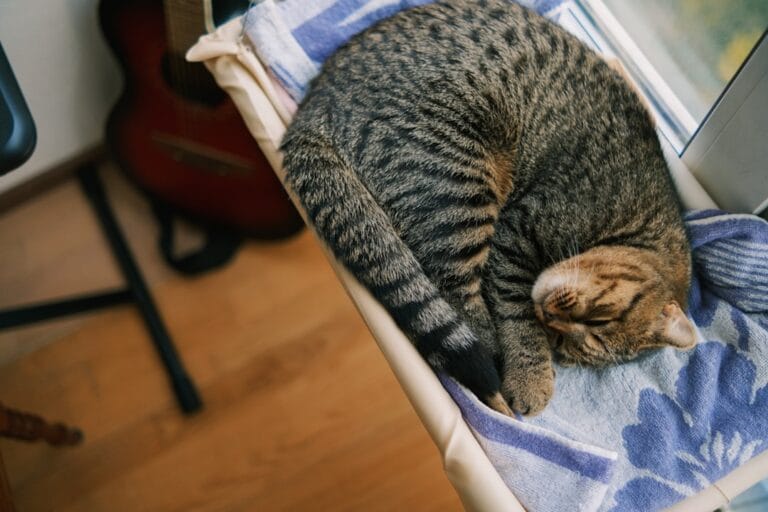
A string might look like a harmless toy, but inside a cat’s digestive tract, it turns into a life-threatening veterinary emergency known as a linear foreign body. Here is your urgent action plan.
By Dr. Zahid Afzal, DVM | Clinical Veterinarian with 11+ Years Experience
If you have just seen your cat swallow a piece of string, yarn, or sewing thread, your heart is likely racing. It is incredibly common for pet owners to feel a mix of panic and confusion. You might be wondering, “Will it just pass in their poop?” or “Should I try to pull it out if I see it?”
In my 11+ years of clinical practice, including my current work as a Senior Veterinary Surgeon at General Veterinary Hospital Lahore, I have treated countless feline emergencies. I can tell you unequivocally that a cat swallowing a string is one of the most critical situations we see in veterinary medicine. Pet owners across the US, UK, Australia, and worldwide rush to emergency clinics daily for this exact issue.
While standard emergency first aid for cats is helpful for many situations, a swallowed string requires a very specific, immediate veterinary response.
Cat swallowed string: 🚨 The Golden Rule: NEVER Pull the String
If you see a string hanging from your cat’s mouth or protruding from their rectum, do not pull it under any circumstances. Pulling the string acts like pulling the drawstring on a pair of sweatpants. It will violently bunch up the intestines and can slice through the delicate intestinal walls like a cheese wire, leading to fatal internal bleeding and sepsis. Leave the string alone and transport your cat to a vet immediately.

Cat swallowed string: Why is Swallowed String So Dangerous for Cats?
To understand why this is a massive emergency, we have to look at feline anatomy. Cats have backward-facing barbs (papillae) on their tongues. These are designed to strip meat from bones and groom their fur. However, when a cat starts playing with a string and it gets caught on these barbs, they cannot spit it out. Their only option is to keep swallowing.
In veterinary terms, a swallowed string is called a linear foreign body. Here is exactly what happens once it enters the body:
- The Anchor Point: Often, one end of the string gets looped under the base of the cat’s tongue or stuck at the exit of the stomach (the pylorus).
- The Bunching Effect (Plication): While one end is anchored, the rest of the intestines keep trying to push the free end of the string forward through normal digestive muscle contractions (peristalsis). Because the string is stuck at the top, the intestines end up crawling up the string, bunching together like an accordion.
- The Laceration: As the intestines bunch tightly, the string is pulled taut. With every contraction, the tight string saws into the tissue. Within hours, it can cut through the intestinal wall, spilling toxic digestive contents and bacteria into the sterile abdominal cavity (causing peritonitis).
The Most Common “Strings” Cats Swallow
When we talk about a cat swallowing string, it applies to any long, thin, continuous material. Keep an eye out for these household hazards:
🧵 Sewing Thread & Needles
Thread is dangerous, but an attached sewing needle is catastrophic, as it immediately punctures the esophagus or stomach.
🧶 Yarn & Ribbon
Thick knitting yarn and curling ribbon from gift wrapping are major culprits, especially during the holiday season.
🦷 Dental Floss
Highly attractive to cats due to the minty smell, dental floss is incredibly strong and acts as the perfect internal cheese-wire.
🥩 Meat String
The butcher’s twine used to tie roasts or poultry is coated in meat juices, making it irresistible for a cat to eat.
Cat swallowed string: Warning Signs: Symptoms of a Linear Foreign Body
Sometimes, pet owners catch their cat in the act of swallowing the string. But more often than not, the string goes missing, and the cat begins to show vague signs of illness hours or even days later. Because felines are notorious for masking their discomfort—a topic we discuss extensively in our guide on how cats hide pain—you must be highly observant.
If you suspect a missing thread or yarn has been ingested, watch for these progressive symptoms:
- 🤢 Acute Vomiting: This is usually the first and most aggressive sign. The cat cannot keep food or water down because the digestive tract is blocked. For a comprehensive look at gastrointestinal distress, review our vet guide on cat vomiting.
- 🥣 Severe Anorexia: The cat will completely refuse all food, even their favorite high-value treats. Read more about why cats stop eating when they are critically ill.
- 🛑 Lethargy and Hiding: A cat in severe abdominal pain will withdraw. They will stay under beds, in closets, and refuse to interact.
- 🚽 Changes in the Litter Box: They may strain in the litter box without producing stool. Alternatively, partial blockages can sometimes cause feline diarrhea before fully obstructing.
- 👅 Pawing at the Mouth: If the string is looped under the tongue, the cat may excessively drool, lip-smack, or paw frantically at their face.
The Clinical Timeline: What to Expect
Time is your absolute worst enemy when dealing with a swallowed string. Here is a general timeline of how the internal damage progresses without medical intervention.
| Time Elapsed | Internal Progression | Visible Symptoms |
|---|---|---|
| 0 – 2 Hours | String enters the stomach. May loop under the tongue or attempt to pass into the intestines. | Often no symptoms. Cat may gag or paw at mouth if it is caught on the tongue. |
| 2 – 12 Hours | Intestines begin to pull the string. Plication (bunching) starts. Digestive tract is effectively blocked. | Sudden vomiting, refusal to eat, hiding, hunched posture due to abdominal pain. |
| 12 – 24+ Hours | Tension causes the string to lacerate the intestinal wall. Intestinal contents leak into the abdomen. | Extreme lethargy, fever, septic shock, collapse. This stage is frequently fatal. |
Cat swallowed string: Veterinary Diagnosis: What Happens at the Clinic?
When you arrive at the clinic, your veterinarian will immediately triage your cat. I always begin by carefully lifting the cat’s tongue to check for an anchored string. If the cat is too painful or aggressive, mild sedation is required.
To confirm the diagnosis, the vet will rely on diagnostic imaging:
- Abdominal Palpation: An experienced vet can often feel the bunched-up, corrugated texture of the intestines through the abdominal wall.
- Radiographs (X-Rays): While string itself does not usually show up on an X-ray (it is not radiopaque like metal), the classic “bunched intestines” or abnormal gas patterns provide a definitive clue. In some cases, a barium contrast dye is used to highlight the blockage.
- Ultrasound: An abdominal ultrasound is highly effective at visualizing the string slicing into the tissue and identifying if fluid has already leaked into the abdomen.
Cat swallowed string: Treatment: Surgery is Almost Always Required
Pet owners often hope that the vet can induce vomiting or give the cat a laxative to push the string through. Unfortunately, with a linear foreign body, inducing vomiting is strictly prohibited. Forcing a cat to vomit a string that is already anchored in the intestines can instantly shred their internal organs.
The standard treatment is an exploratory laparotomy (abdominal surgery). Depending on the severity, the surgical intervention may involve:
The Surgical Process
1. Multiple Incisions (Enterotomy): The surgeon may need to make multiple cuts along the intestines to carefully extract the string in small pieces, preventing further sawing damage.
2. Resection and Anastomosis: If the string has already cut off blood supply to a section of the bowel, or severely lacerated it, the necrotic (dead) tissue must be completely removed. The healthy ends of the intestines are then stitched back together.
3. Abdominal Flush: If the intestines have ruptured, the abdomen must be aggressively flushed with sterile saline to remove toxic bacteria and prevent fatal peritonitis.
A Note on Costs: Because this is emergency soft-tissue surgery requiring anesthesia, hospitalization, IV fluids, and pain management, costs can be significant. In the US, UK, and Australia, linear foreign body surgeries typically range from $2,000 to over $5,000, depending on the complexity and whether intestinal resection is required. Pet insurance highly mitigates this, which is why prevention is always the best financial and medical strategy.
Cat swallowed string: Post-Operative Recovery and Home Care
Recovery from major intestinal surgery is delicate. Your cat will likely stay hospitalized for 1 to 3 days post-surgery on IV fluids and powerful painkillers. Once they come home, you will need to enforce strict cage rest.
They must wear an E-collar (cone) to prevent them from licking their surgical incision. You will also transition them to a highly digestible, bland veterinary diet to allow the intestinal stitches to heal without stretching or tearing. Keep an eye out for any vomiting, lethargy, or discharge from the incision site, which warrants an immediate call back to the clinic.
Prevention: Cat-Proofing Your Home
Cats who chew on non-food items may suffer from a condition called pica (learn more in our pet behavior guide). To prevent this nightmare scenario from happening again:
- Keep all sewing kits, yarn, and knitting supplies locked in hard plastic bins.
- Use lidded bathroom trash cans so your cat cannot dig out used dental floss.
- Avoid using tinsel or long ribbons during holiday decorating.
- Cut the strings off of meat roasts and dispose of them in secure outdoor garbage bins immediately.
Frequently Asked Questions
Can a cat pass a string naturally?
While a very short piece of thread (under 1 inch) might occasionally pass, it is never worth the risk to wait and see. Long strings almost never pass naturally because they anchor themselves in the stomach or tongue while the intestines bunch up around them.
What happens if I gently pull the string hanging out of my cat?
You can cause instant, fatal internal damage. The string will act like a saw blade against the bunched-up intestines, cutting through the tissue and spilling bacteria into the abdomen. Always let a veterinarian handle it.
Is a cat swallowing string always an emergency?
Yes. A linear foreign body is classified as a critical veterinary emergency. The faster you get to a vet, the higher the chance the string can be removed from the stomach before it enters and damages the delicate intestines.
About the Author: Dr. Zahid Afzal, DVM
Dr. Zahid Afzal is a Senior Veterinary Surgeon at General Veterinary Hospital Lahore with over 11 years of clinical experience in emergency care, small animal medicine, and veterinary surgery. He is dedicated to providing evidence-based, practical pet health education for owners worldwide.
Disclaimer: This article is for informational purposes only and does not constitute veterinary medical advice. If your cat has swallowed a string or is displaying signs of distress, contact your local emergency veterinarian immediately.