
Cat Respiratory Health Guide
A cat sneezing a lot may simply be reacting to dust, perfume, litter particles, or a mild irritant, but a cat sneezing a lot can also be showing early signs of an upper respiratory infection, feline herpesvirus, calicivirus, dental disease, nasal inflammation, foreign material in the nose, or a more serious illness. If your cat sneezing a lot also has watery eyes, nasal discharge, poor appetite, fever, mouth ulcers, noisy breathing, blood from the nose, or lethargy, it should not be ignored.
Sneezing is a protective reflex. It helps clear the nose when dust, mucus, allergens, or infectious material irritates the nasal passages. Occasional sneezing can be normal in cats, especially after sniffing dusty corners, using a dusty litter box, or smelling a strong household scent.
The concern begins when sneezing becomes frequent, repetitive, sudden, severe, or linked with other symptoms. A cat that sneezes once or twice and then acts normal is very different from a cat that keeps sneezing, has a runny nose, refuses food, squints, drools, coughs, or hides.
At General Veterinary Hospital, Dr Zahid Afzal DVM often explains cat sneezing to owners in a simple way: do not judge sneezing by sound alone. Look at the full pattern — appetite, eyes, nose, breathing, mouth, energy level, vaccination history, and exposure to other cats.
This guide will help cat owners understand the most common causes of frequent sneezing, when home care may be enough, and when veterinary care or online consultation is needed.
Quick Answer: When Should You Worry?
A cat sneezing a lot should be checked by a vet if sneezing continues for more than a few days, becomes severe, or appears with:
- Yellow, green, thick, bloody, or foul-smelling nasal discharge
- Watery, red, swollen, or painful eyes
- Poor appetite or not eating
- Fever, weakness, hiding, or lethargy
- Mouth ulcers, drooling, or bad breath
- Noisy breathing or open-mouth breathing
- Sneezing blood
- Symptoms in a kitten, senior cat, or immunocompromised cat
Not Sure If Your Cat’s Sneezing Is Serious?
If your cat is sneezing repeatedly, has nasal discharge, watery eyes, appetite loss, or breathing changes, you can request online veterinary guidance from General Veterinary Hospital. Share your cat’s age, symptoms, photos, videos, appetite, discharge color, and vaccination history.
Start Online Vet ConsultationIs Sneezing Normal in Cats?
Occasional sneezing can be normal. Cats explore the world with their nose, and their nasal passages may react to dust, litter particles, cleaning sprays, candles, smoke, pollen, mold, perfume, or dry air. A cat may sneeze once, shake the head, and then behave normally.
Normal sneezing is usually brief, mild, and not linked with illness. The cat still eats, drinks, plays, breathes normally, and has clear eyes and nose.
Abnormal sneezing is different. It may happen many times a day, come in repeated bursts, last several days, disturb sleep, or appear with discharge, eye signs, drooling, appetite loss, or tiredness. A cat sneezing a lot with other symptoms is more likely to have a medical cause.
1. Upper Respiratory Infection or “Cat Flu”
One of the most common reasons for frequent sneezing in cats is an upper respiratory infection. Many owners call this “cat flu,” although it is not exactly the same as human flu. These infections often affect the nose, throat, eyes, and mouth.
Common signs may include sneezing, nasal discharge, watery eyes, red eyes, squinting, fever, drooling, mouth ulcers, reduced appetite, and lethargy. Some cats sound congested and may breathe noisily because their nose is blocked.
Feline herpesvirus and feline calicivirus are two major viral causes of upper respiratory disease in cats. Your existing article on feline calicivirus symptoms is a very useful internal link here because calicivirus can cause sneezing, nasal signs, eye discharge, mouth ulcers, drooling, fever, and appetite loss.
Cats with respiratory infections may stop eating because they cannot smell food properly, their mouth hurts, or they feel feverish. If your cat is sneezing and not eating, also read your guide on why cats stop eating.
2. Feline Herpesvirus
Feline herpesvirus is a very common cause of sneezing and eye problems in cats. After infection, many cats can carry the virus long-term. Stress, illness, moving homes, boarding, new pets, or immune weakness may trigger flare-ups.
Signs often include sneezing, clear or colored nasal discharge, watery eyes, squinting, conjunctivitis, and reduced appetite. Some cats develop recurrent symptoms throughout life, especially during stressful periods.
Herpesvirus-related signs can look mild at first, but eye involvement should be taken seriously. Squinting, eye pain, cloudy cornea, or eye ulcers require veterinary attention. For supportive internal linking, use your cat eyes guide.
3. Feline Calicivirus
Feline calicivirus is another important cause of sneezing in cats. It can affect the nose, eyes, mouth, and sometimes joints. Compared with simple irritation, calicivirus is more likely to cause systemic signs such as fever, mouth ulcers, drooling, painful eating, and lethargy.
A cat with calicivirus may sneeze, have runny eyes, develop ulcers on the tongue or gums, drool, limp, refuse food, or seem painful when eating. Kittens, elderly cats, shelter cats, recently adopted cats, and unvaccinated cats are at higher risk of more noticeable illness.
If your cat has sneezing plus mouth ulcers, drooling, or appetite loss, do not treat it as “just a cold.” Veterinary support may be needed for pain control, hydration, nutrition, eye care, and secondary infections.
4. Allergies or Environmental Irritants
Not every cat that sneezes has an infection. Some cats sneeze because of environmental irritants. Common triggers include dusty cat litter, air fresheners, smoke, perfumes, scented candles, cleaning sprays, pollen, mold, construction dust, carpet powders, or dry indoor air.
Irritant-related sneezing often starts after a change in the home. For example, a new litter brand, new room spray, deep cleaning product, renovation dust, or seasonal pollen may trigger sneezing. The cat may still eat normally and have good energy.
Simple changes may help: use low-dust unscented litter, avoid spraying scents near the cat, improve ventilation, clean bedding, and avoid smoke exposure. However, if discharge becomes thick, colored, bloody, or one-sided, do not assume allergy only.
5. Dental Disease or Tooth Root Infection
Dental disease can sometimes cause sneezing in cats, especially when infection around upper teeth affects nearby nasal structures. This is more common in cats with bad breath, drooling, pawing at the mouth, facial swelling, difficulty chewing, or reduced appetite.
Owners often miss dental pain because cats hide discomfort well. A cat may still eat but chew on one side, drop food, prefer soft food, or avoid dry kibble. If sneezing appears with bad breath, drooling, mouth pain, or weight loss, a dental exam is important.
Your existing article on cat bad breath causes and treatment can support this section because bad breath may point toward dental disease, oral infection, kidney disease, or other illness.
6. Something Stuck in the Nose
A cat may suddenly sneeze a lot if something irritates or gets trapped inside the nose. Grass pieces, seeds, plant material, dust clumps, litter particles, or small foreign material can cause repeated sneezing. This may be more likely if sneezing starts suddenly after the cat sniffs plants, grass, dusty areas, or litter.
Foreign material often causes intense sneezing, pawing at the nose, nasal discharge, gagging, or one-sided discharge. If the discharge is from only one nostril, becomes bloody, or does not improve, veterinary examination is needed.
Do not put cotton buds, tweezers, oils, or home remedies into your cat’s nose. The nasal passages are delicate, and a frightened cat can be injured easily.
Need Help Reading Your Cat’s Symptoms?
Sneezing with watery eyes, nasal discharge, mouth ulcers, poor appetite, or breathing noise can have different causes. If you are unsure whether your cat needs urgent care, send symptom details, photos, and videos for online veterinary guidance.
Ask a Vet Online7. Nasal Polyps, Chronic Rhinitis, or Nasal Growths
If a cat keeps sneezing for weeks, has noisy breathing, chronic nasal discharge, or one-sided symptoms, your vet may consider deeper nasal problems. These can include chronic rhinitis, inflammatory polyps, fungal disease, trauma, or nasal tumors.
These causes are less common than viral infections or irritants, but they matter when sneezing does not improve. A cat with chronic sneezing may need a detailed exam, oral/dental check, blood work, imaging, nasal sampling, or referral depending on severity.
One-sided nasal discharge, facial swelling, nosebleeds, weight loss, or worsening signs should always be taken seriously.
8. Cat Sneezing and Watery Eyes
When sneezing appears with watery eyes, red eyes, squinting, or eye discharge, upper respiratory infection becomes more likely. Herpesvirus is especially associated with eye signs in many cats.
Clear watery eyes may occur early, while yellow or green discharge can suggest secondary infection or more severe inflammation. Squinting is not normal and often means eye pain. Eye problems can worsen quickly in cats, so do not delay if the eye looks painful, cloudy, swollen, or partly closed.
9. Cat Sneezing and Not Eating
A cat that is sneezing and not eating needs closer attention. Cats rely heavily on smell to choose food. A blocked nose can reduce appetite, while fever, mouth ulcers, nausea, or pain can make the problem worse.
Not eating is especially dangerous in overweight cats, kittens, senior cats, and cats with existing disease. If your cat refuses food for a full day, eats much less than normal, or also seems weak, dehydrated, or hidden away, contact a veterinarian.
10. Cat Sneezing Blood
Blood from the nose is not normal. A small streak after repeated sneezing may happen from irritated nasal tissue, but nosebleeds can also occur with trauma, foreign material, severe infection, clotting problems, toxin exposure, high blood pressure, fungal disease, or nasal masses.
If your cat sneezes blood repeatedly, has one-sided bloody discharge, seems weak, has pale gums, or may have been exposed to toxins, seek veterinary help. Your cat poisoning emergency guide can be used as an internal emergency link here.
Cat Sneezing Symptom Guide
| What You Notice | Possible Meaning | Best Next Step |
|---|---|---|
| Occasional sneeze, normal appetite | Dust, litter, mild irritant | Monitor and reduce irritants |
| Sneezing with watery eyes | Upper respiratory infection, herpesvirus, irritant | Vet advice if persistent or painful |
| Sneezing with mouth ulcers or drooling | Calicivirus, oral pain, dental disease | Veterinary exam recommended |
| Sneezing and not eating | Congestion, fever, oral pain, systemic illness | Contact vet promptly |
| One-sided discharge or sneezing blood | Foreign material, trauma, infection, mass, clotting issue | Vet examination needed |
| Open-mouth breathing or severe breathing effort | Respiratory emergency | Emergency care now |
What You Can Do at Home for Mild Sneezing
If your cat is only sneezing mildly, eating normally, breathing comfortably, and has no eye pain or thick discharge, you can start with careful supportive care and observation.
Reduce Irritants
Switch to low-dust, unscented litter. Avoid air fresheners, smoke, scented candles, strong cleaning sprays, perfumes, and dusty rooms. Wash bedding and improve ventilation.
Use Gentle Humidity
Warm humid air may help loosen mild nasal congestion. You can let your cat sit safely in a steamy bathroom for a short period while you supervise. Do not force the cat, and do not use essential oils or medicated vapors.
Keep the Nose and Eyes Clean
Use a soft damp cloth to gently wipe discharge from the nose or eyes. Avoid harsh chemicals, human eye drops, or medicated products unless your vet prescribes them.
Encourage Eating
If your cat has mild congestion but still wants food, offer warm wet food to improve smell. You can slightly warm the food to make it more appealing. If your cat refuses food, call your vet.
Monitor Closely
Write down how often your cat sneezes, discharge color, appetite, energy level, breathing sound, and eye appearance. A short video can help your veterinarian understand the severity.
What Not to Do
- Do not give human cold medicine.
- Do not use human nasal sprays.
- Do not put oils, drops, or herbs into your cat’s nose.
- Do not use essential oils around cats.
- Do not delay care if your cat is not eating.
- Do not ignore eye pain, squinting, or cloudy eyes.
- Do not expose other cats if infection is suspected.
When Your Cat Needs a Vet
Contact a veterinarian if sneezing lasts more than a few days, becomes frequent, or appears with colored discharge, eye signs, mouth ulcers, drooling, poor appetite, fever, weight loss, or lethargy.
Seek urgent care if your cat has open-mouth breathing, severe breathing effort, blue or pale gums, collapse, repeated nosebleeds, severe weakness, or complete refusal to eat.
What Your Vet May Check
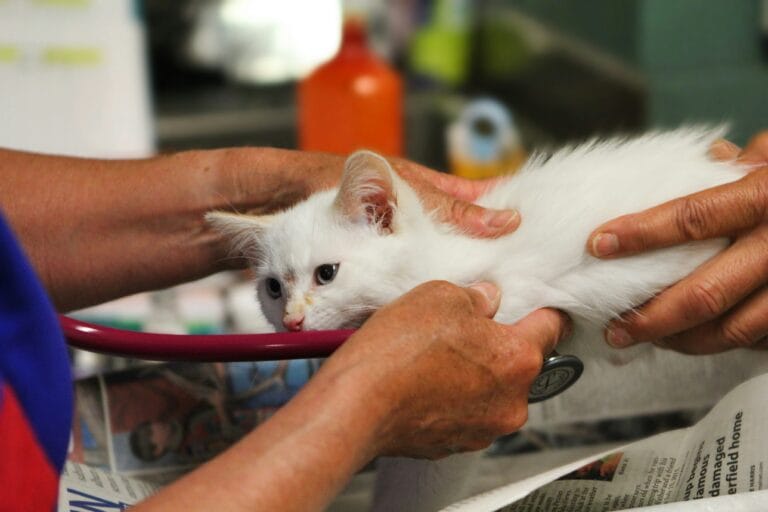
A veterinary exam may include checking temperature, hydration, eyes, mouth, teeth, nose, lungs, lymph nodes, and overall body condition. Depending on the case, your vet may recommend testing for respiratory infections, dental assessment, blood work, imaging, nasal swabs, or treatment for secondary bacterial infection.
Eye Exam
Important if your cat has watery eyes, redness, squinting, corneal cloudiness, or discharge.
Mouth & Dental Check
Helps detect mouth ulcers, dental disease, tooth root infection, oral pain, or bad breath causes.
Respiratory Assessment
Checks breathing effort, congestion, lung sounds, fever, and risk of lower respiratory disease.
Further Testing
May be needed for chronic sneezing, one-sided discharge, bleeding, weight loss, or severe illness.
Want a Vet to Review Your Cat’s Sneezing Signs?
If your cat is sneezing a lot and you are not sure whether it is allergy, virus, dental pain, or an emergency, you can request online veterinary consultation. Send clear photos of the eyes and nose, a short sneezing video, appetite details, discharge color, and how long the signs have been present.
Get Online Vet ConsultationHow to Reduce Sneezing Risk in Cats
You cannot prevent every sneeze, but you can reduce risk by improving your cat’s environment and preventive care.
- Keep vaccinations updated according to your veterinarian’s advice.
- Use low-dust unscented litter.
- Avoid smoke, perfumes, air fresheners, and essential oils around cats.
- Separate sick cats from healthy cats when infection is suspected.
- Wash food bowls, bedding, carriers, and litter areas regularly.
- Reduce stress during moves, boarding, travel, and new pet introductions.
- Schedule regular dental and wellness checks.
- Act early if your cat develops eye signs, appetite loss, or breathing changes.
For broader preventive care, your cat vaccination schedule and cat nutrition guide can support internal linking and user education.
FAQs About Cat Sneezing a Lot
Why is my cat sneezing a lot?
Your cat may be sneezing because of dust, litter, allergies, irritants, upper respiratory infection, feline herpesvirus, calicivirus, dental disease, foreign material in the nose, or chronic nasal inflammation.
Is cat sneezing an emergency?
Occasional sneezing is usually not an emergency. It becomes urgent if your cat has open-mouth breathing, severe breathing effort, blue or pale gums, collapse, heavy bleeding, severe weakness, or refuses food.
Why is my cat sneezing and has watery eyes?
Sneezing with watery eyes often suggests upper respiratory infection, feline herpesvirus, calicivirus, irritants, or eye inflammation. Squinting or eye pain needs veterinary attention.
Can allergies make cats sneeze?
Yes. Dusty litter, pollen, smoke, perfumes, cleaning sprays, mold, and air fresheners can irritate the nose and trigger sneezing. However, thick discharge, poor appetite, or fever suggests more than simple allergy.
Why is my kitten sneezing a lot?
Kittens are more vulnerable to respiratory infections, dehydration, and appetite loss. A sneezing kitten with eye discharge, poor feeding, weakness, or nasal congestion should be checked by a vet.
Can dental disease cause sneezing in cats?
Yes, especially if upper tooth root infection or oral disease affects nearby nasal areas. Sneezing with bad breath, drooling, facial swelling, or chewing difficulty needs a mouth and dental exam.
Should I give my cat human cold medicine?
No. Human cold medicines, decongestants, and pain relievers can be dangerous for cats. Use only treatments recommended by your veterinarian.
How long should I wait if my cat keeps sneezing?
If your cat is bright, eating, and sneezing mildly, you can monitor briefly while reducing irritants. If sneezing continues for several days, worsens, or appears with discharge, eye signs, appetite loss, fever, or lethargy, contact a vet.
Final Takeaway
A cat sneezing a lot may have a mild irritant reaction, but frequent sneezing can also point to upper respiratory infection, feline herpesvirus, calicivirus, dental disease, allergies, nasal foreign material, or chronic nasal disease. The most important signs to watch are appetite, eye condition, nasal discharge color, breathing effort, energy level, and whether the symptoms are worsening.
If your cat is eating, breathing normally, and only sneezing mildly, reducing dust and irritants may help. But if sneezing is persistent, severe, one-sided, bloody, or linked with eye pain, fever, lethargy, mouth ulcers, or poor appetite, veterinary care is the safest next step.
Medical disclaimer: This article is for educational purposes only and does not replace veterinary examination, diagnosis, or treatment. If your cat is struggling to breathe, not eating, weak, bleeding from the nose, or showing severe eye pain, contact a veterinarian urgently.



One Comment