

Picking up after your dog is a daily chore, but it is also the most crucial daily health diagnostic you can perform. As a veterinarian, one of the most frequent questions I receive in the clinic is, “what does my dog’s poop mean?” To answer this thoroughly, I have created the ultimate dog poop color chart.
A reliable dog poop color chart is essential for every pet owner because your dog’s stool provides a direct, highly visible window into their internal gastrointestinal health. Changes in color, consistency, or coating can signal everything from a mild dietary indiscretion to a life-threatening veterinary emergency.
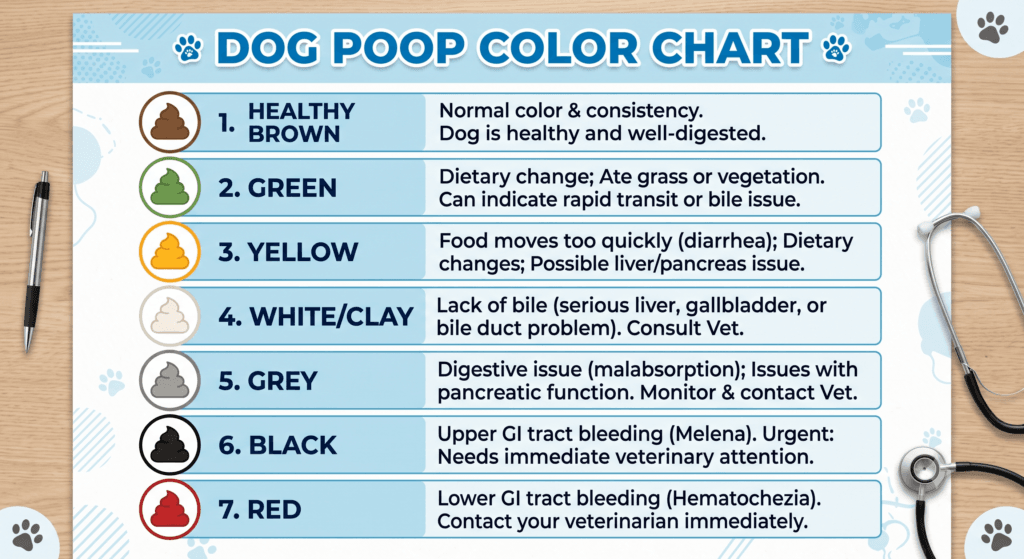
Dog poop color chart: The “Perfect” Dog Poop: The 4 C’s
Before we dive into abnormalities, we must define what a perfectly healthy dog stool looks like. Veterinary gastroenterology evaluates feces based on four primary metrics, commonly known as the 4 C’s: Color, Consistency, Coating, and Contents.
- Color: The ideal color is a rich, chocolate brown. This color is achieved naturally during the digestive process when the liver produces bile, which breaks down in the intestines to form a pigment called stercobilin.
- Consistency: The stool should be firm enough to hold its shape but slightly squishy to the touch, much like Play-Doh. It should resemble a segmented log and be easy to pick up without falling apart or leaving wet residue behind.
- Coating: A healthy stool has no visible coating. There should be no jelly-like film, no sticky mucus, and absolutely no blood on the outside of the feces.
- Contents: The inside of the stool should look uniform. While you might occasionally see a piece of undigested carrot or a blade of grass, you should not see worms, massive amounts of fur, plastic, cloth, or bone fragments.
When you know what your dog’s baseline healthy stool looks like (which is heavily influenced by their regular diet), it becomes immediately obvious when something goes wrong. High-quality diets generally produce smaller, firmer, and less odorous stools compared to cheap kibbles loaded with corn and wheat fillers. You can read more about setting up a proper dietary foundation in our Complete Puppy Feeding Guide.
The Ultimate Dog Poop Color Chart Breakdown
Color is often the most alarming change a pet owner will notice. Different colors point to distinct physiological processes happening within the stomach, intestines, liver, or pancreas. Keep this vet-written dog poop color chart handy to determine exactly what your dog’s stool means.
Dog poop color chart: Chocolate Brown
Diagnosis: Normal & Healthy.
This is the gold standard. As long as the stool holds its shape and the dog is behaving normally, your dog’s digestive system is functioning perfectly. The brown color indicates a healthy liver, a healthy gallbladder, and a normal transit time through the gastrointestinal tract.
Green Dog Poop
Diagnosis: Grass consumption, Rapid Transit, or Toxins.
A mild green tint mixed with visible grass is harmless; dogs often eat grass to self-soothe mild stomach upset. However, if the stool is bright green and liquid, it indicates hypermotility (rapid transit time). This means food moved so quickly through the intestines that the green bile from the gallbladder did not have time to break down into brown stercobilin.
Danger Alert: Bright, neon green poop can occasionally indicate the ingestion of rat poison (rodenticide). If you suspect toxin exposure, contact a vet immediately.
Yellow or Orange Dog Poop
Diagnosis: Biliary issues, Liver problems, or Food Intolerance.
Yellow or mustard-colored poop is a classic sign of an upset stomach related to a sudden diet change or food intolerance. However, chronic yellow or orange stool can be a clinical indicator of liver disease or biliary stasis (a blockage of the bile ducts). Without bile entering the intestines, the stool cannot turn brown.
If your dog’s poop is yellow for more than 48 hours, especially if accompanied by vomiting or lethargy, veterinary bloodwork (checking ALT, AST, and Bilirubin levels) is required.
White or Chalky Dog Poop
Diagnosis: High Calcium Diet or Bone Impaction.
Stools that dry quickly and turn white, chalky, and crumbly are almost always caused by diets excessively high in calcium and minerals. This is exceedingly common in dogs fed raw diets with too much bone content. While it may seem harmless, excessive bone fragments can cause severe, painful constipation (obstipation) and even puncture the bowel.
If you see white spots resembling grains of rice moving on the surface of normal stool, these are not dietary—they are tapeworm segments. Proper deworming is required.
Grey or Greasy Dog Poop (Ashy)
Diagnosis: Exocrine Pancreatic Insufficiency (EPI) or Fat Malabsorption.
If the stool looks grey, greasy, pale, and unusually voluminous (producing massive piles of poop), it indicates a failure in digestion. This is the hallmark sign of EPI, a condition where the pancreas fails to produce the necessary digestive enzymes (lipase, amylase, protease). The dog essentially starves while eating because they cannot absorb nutrients, particularly fats.
This requires a specific veterinary blood test (cTLI) and lifelong enzyme replacement powder mixed into the food.
Black and Tarry (Melena)
Diagnosis: Upper GI Bleeding. ⚠️ EMERGENCY
Black, sticky, tar-like stool (called melena) is incredibly dangerous. It means there is digested blood in the stool. Because the bleeding occurred high up in the digestive tract (the stomach or small intestine), the blood has been digested and turned black.
Common causes include bleeding stomach ulcers, severe hookworm infestations, accidental ingestion of human NSAID painkillers (like Ibuprofen), or gastrointestinal tumors. Do not wait. This requires immediate veterinary intervention to prevent fatal blood loss.
Red Streaks or Bloody Liquid (Hematochezia)
Diagnosis: Lower GI Bleeding. ⚠️ EMERGENCY
Bright red blood in the stool (hematochezia) indicates fresh bleeding from the lower intestines, colon, or rectum. If it is just a single red streak on an otherwise normal, firm stool, it may simply be an irritated anal gland or a mild case of colitis (colon inflammation from stress).
However, if the stool is completely liquid and looks like raspberry jam, accompanied by a foul metallic odor, it is a highly critical symptom of Hemorrhagic Gastroenteritis (HGE) or the deadly Parvovirus. Parvovirus is highly contagious and fatal without aggressive IV fluid therapy. Ensure your dog is protected via the Dog Vaccination Schedule 2025.
Understanding Consistency: The Stool Scale
In veterinary medicine, we use the Waltham Feces Scoring System to objectively rate stool consistency from 1 to 5.
- Score 1 (Hard Bullets): Small, hard, dry pellets. This indicates dehydration, lack of dietary fiber, or a painful musculoskeletal issue preventing the dog from posturing long enough to defecate properly.
- Score 2 (The Ideal Log): Firm but not hard, segmented, leaves no residue on the ground.
- Score 3 (Soft but Formed): Looks like a log but is too soft to pick up without losing its shape. Usually caused by a slight dietary indiscretion or mild stress.
- Score 4 (Pudding / Cow Patty): Completely lost its log shape, sits in a wet pile. This is clinical diarrhea and points to intestinal inflammation, sudden diet changes, or a bacterial overgrowth.
- Score 5 (Liquid Water): Completely fluid, often shooting out forcefully. This is severe diarrhea. If a dog reaches a Score 5, they are losing water rapidly and are at a high risk for clinical dehydration.
What Does a Mucus Coating Mean?
Many pet owners panic when they see a shiny, jelly-like casing wrapping around their dog’s stool. This is mucus. The large intestine (colon) naturally produces mucus to lubricate the intestinal walls and help feces slide out smoothly.
A tiny amount of clear mucus occasionally is not a cause for alarm. However, if the stool is completely encased in thick mucus, or if the mucus is mixed with blood, it means the colon is severely inflamed—a condition called Colitis.
Common Causes of Colitis (Mucus in Stool):
- Stress: Boarding at a kennel, moving houses, or loud thunderstorms.
- Dietary Indiscretion: Eating table scraps, rich fatty meats, or rubbish out of the bin.
- Intestinal Parasites: Giardia and Whipworms are notorious for causing heavy mucus production.
- Inflammatory Bowel Disease (IBD): Chronic inflammation requiring a specialized diet and medication.
Visible Contents: Worms and Foreign Objects
When picking up the stool, you should always inspect it for abnormal contents. Dogs are scavengers by nature, and what goes in must eventually come out.
Intestinal Worms
If your dog is not on a strict, monthly veterinary deworming schedule, they are highly susceptible to parasitic infections. You may witness:
- Roundworms: Look exactly like live, wiggling pieces of white spaghetti. Often seen in puppies.
- Tapeworms: Look like small, flat grains of white rice sticking to the outside of the stool. Tapeworms are transmitted when a dog swallows an infected flea, meaning a tapeworm diagnosis requires both deworming and flea treatment. Learn more in our Parasite Control Guide.
Foreign Materials (The Danger Zone)
Seeing blades of grass is incredibly common and usually harmless. However, if you see strings, yarn, fabric, plastic pieces, or sharp bone shards, you must monitor your dog closely. Linear foreign bodies (like strings) can get anchored in the stomach while the rest of the string travels into the intestines, acting like a saw that slices through the bowel walls. This is a fatal surgical emergency. If you see string hanging from your dog’s rectum, never pull it. Let it pass naturally, or take them to the vet immediately.
Panicking Over Your Dog’s Poop? Let a Vet Look at It.
Do you see blood, heavy mucus, or a strange color? Do not rely on Google guesses when your pet’s health is on the line. Take a clear, well-lit photo of the stool and book a direct consultation with Dr. Zahid Afzal.
We can review the image, assess the symptoms, and tell you immediately if you can treat it at home or if you need to rush to the emergency room.
Send Photo & Start Online ConsultSafe Home Treatment for Mild Diarrhea
If your dog’s poop is slightly soft, mushy, or discolored (yellow/orange), but they are acting entirely normal, playful, and drinking water, it is usually safe to attempt home treatment for 24 to 48 hours.
The 3-Step Home Remedy Protocol:
- The 12 to 24-Hour Fast: Give the inflamed gastrointestinal tract a complete break. Remove all food and treats for 12 to 24 hours (for healthy adult dogs only). Do not fast puppies, senior dogs, or diabetic dogs without veterinary approval. Never restrict water.
- The Bland Diet: Once the fast is over, do not feed regular kibble. Prepare a bland diet consisting of boiled, skinless, unseasoned chicken breast and plain, boiled white rice (a 50/50 ratio). Feed this in small, frequent meals (3-4 times a day). The lack of fat gives the pancreas and liver a break, while the white rice binds the stool.
- Probiotics and Fiber: Add a tablespoon of plain, canned pumpkin puree (NOT pumpkin pie filling) to the bland diet. The soluble fiber absorbs excess water in the colon. Additionally, adding a veterinary-specific probiotic (like FortiFlora or Pro-Kolin) will replenish the healthy gut bacteria flushed out by the diarrhea.
After 2 to 3 days of perfectly formed brown stool on the bland diet, you must transition back to their regular kibble incredibly slowly, mixing the two foods over a period of 5 to 7 days.
When Is It a Veterinary Emergency?
Home treatment is only for dogs that are bright, alert, and responsive. You must abandon home care and seek immediate, in-clinic veterinary attention if you observe any of the following red flags:
- Vomiting + Diarrhea: If a dog is losing fluids from both ends, they will become dangerously dehydrated within hours.
- Lethargy and Weakness: If the dog will not get out of bed, is hiding, or will not lift their head.
- Black Tarry Stool or Heavy Blood: As outlined in the color chart, these indicate internal bleeding.
- Pale or White Gums: Lift the dog’s lip. The gums should be bubblegum pink. If they are white, grey, or sticky, the dog is going into shock or severe anemia.
- Refusing Water: A dog that will not drink is a critical emergency.
For more details on handling critical situations at home while en route to the clinic, bookmark our Emergency First Aid Guide.
How to Collect a Stool Sample for the Vet
If you end up needing a veterinary appointment, your vet will absolutely ask you to bring a fecal sample. A “fecal floatation” test allows the clinic to look for microscopic parasite eggs and giardia cysts that are invisible to the naked eye.
- Fresh is Best: The sample should ideally be less than 4 hours old.
- Keep it Cool: If your appointment is later in the day, place the sample in a double-bagged Ziploc and store it in the refrigerator (not the freezer). Heat causes parasite eggs to hatch, rendering the test inaccurate.
- Size Matters: You do not need to bring the entire pile. A sample the size of a sugar cube or a grape is more than enough for the laboratory to run a complete diagnostic test.
Frequently Asked Questions
1. Why does my dog’s poop start firm and end soft?
This is incredibly common. The firm portion is stool that has been sitting in the colon for hours, where water was properly absorbed. The softer second half is newer stool that was rushed through the digestive tract before the colon could extract the water, often triggered by the physical exercise of walking.
2. Can changing dog food cause yellow or green diarrhea?
Yes. Changing a dog’s diet suddenly disrupts the delicate microbiome in their gut. The sudden shift in proteins and fats can cause rapid transit (green stool) or mild liver/pancreas overwork (yellow stool). Always transition foods over a minimum of 7 to 10 days.
3. Is jelly-like mucus in dog poop dangerous?
Mucus itself is a natural lubricant. However, large amounts of mucus indicate colitis (colon inflammation). If it happens once due to stress, it is usually fine. If it persists for days or is accompanied by blood, you need a vet visit to check for parasites like Giardia.
4. What does parvovirus poop look and smell like?
Parvovirus stool is typically completely liquid, contains large volumes of bright red blood or dark digested blood, and has a very distinct, overwhelmingly foul, metallic, and sweet rotting odor. It is a fatal emergency requiring immediate isolation and IV treatment.
Conclusion
As unpleasant as it may be, making a habit of inspecting your dog’s feces is one of the most responsible things a pet owner can do. By understanding the 4 C’s and utilizing this dog poop color chart, you can catch liver issues, dietary intolerances, parasite infestations, and internal bleeding before they become life-threatening.
Remember, a healthy gut is the foundation of a healthy immune system. Feed a high-quality diet, maintain strict parasite control, and never hesitate to reach out to a veterinary professional if your dog’s stool deviates from the perfect chocolate brown log.
This guide is intended for educational purposes and does not replace a physical examination or diagnostic testing by a licensed veterinarian.



2 Comments