A munchkin cat has a short-legged body type associated with inherited disproportionate dwarfism, a feature that raises important welfare concerns. An existing cat deserves attentive care, comfortable access to normal activities, and an individual veterinary assessment. Admiring an animal’s personality does not require supporting breeding for shortened limbs. Focus on what the cat can do comfortably, what may be difficult, and how the home can provide choice without demanding painful or awkward movement.
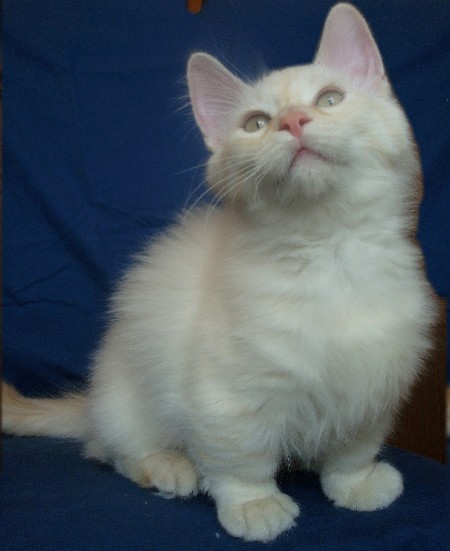
Munchkin cat: put welfare before appearance
The shortened limbs are not simply a small version of an otherwise identical body. Bone development and body proportions can affect movement and the ways a cat accesses resources or performs normal behaviour. The degree of difficulty varies between individuals, so neither an impressive video nor an alarming photograph can provide a complete assessment. A cat that appears playful still needs comfortable opportunities to climb, scratch, groom, toilet, and rest. Visible enthusiasm should not be used to dismiss concerns about the physical trait.
Welfare organisations have raised concerns about breeding cats for dwarfism and the potential for pain and restricted mobility. Those concerns support choosing health and normal function over a fashionable look. They do not justify neglecting, frightening, or treating an existing munchkin cat as less deserving of a good home. If adoption or rehoming is relevant, discuss the individual’s needs honestly with the rescue and veterinary team. The goal is responsible care without increasing demand for deliberately exaggerated anatomy or treating an animal’s limitations as entertainment.
Separate breed descriptions from an individual assessment
Registries and sellers may describe temperament, coat, or recognition differently. Registration does not establish that a particular anatomical trait is harmless, and a breed description cannot tell you whether your cat is in pain. Ask the veterinarian about the individual’s posture, gait, joints, body condition, and practical function. Bring previous records and information about any problems with access or grooming. An assessment is more useful when it includes ordinary home behaviour rather than only what the animal does on a clinic table.
Avoid assuming every munchkin cat will have the same medical problems or predicting a lifespan from a single visible feature. Research and clinical knowledge have limits, and care should reflect those limits honestly. At the same time, uncertainty is not a reason to ignore a pattern of discomfort. Record what the cat finds difficult and which changes help. A practical account such as hesitates before entering the tray or no longer reaches the back coat gives the veterinarian more usable information than a general claim that the breed is either completely healthy or inevitably disabled.
Watch everyday movement rather than staging a test
Notice how the cat rises after rest, turns in a narrow space, uses stairs, reaches a favourite surface, and steps into the litter tray. Compare with their own established pattern instead of forcing a comparison with another cat. Do not repeatedly encourage a high jump to prove that the animal can do it. A successful attempt may still involve discomfort or an unsafe landing. Keep observation natural and avoid making the cat perform an awkward movement for a video or a visitor.
Our subtle feline pain guide explains why altered habits can matter even without crying or an obvious limp. A munchkin cat may adapt by choosing a lower route or staying near one resource, which can hide the extent of difficulty from an owner who only notices activity. New stiffness, reluctance, irritability during touch, or a changed resting position deserves veterinary discussion. Sudden inability to walk, severe pain, or an acute neurological-looking change requires prompt advice rather than waiting to see whether a home adjustment solves it.
Offer low routes that preserve choice and useful space
Provide stable intermediate steps, gentle ramps where suitable, and resting places the cat can reach without a demanding leap. Check that each surface has appropriate grip and enough room to turn. An improvised stack of light boxes may shift at exactly the moment the cat needs support. Observe whether the cat actually uses the route comfortably, and adjust it rather than repeatedly carrying them onto a high destination that still has no safe way down. Access includes leaving as well as arriving.
A munchkin cat can still benefit from exploring different areas and having some vertical choice when routes are suitable. The answer is not automatically to remove every raised resource and confine life to a small floor corner. Build manageable options according to the individual’s abilities, with the veterinary team helping when discomfort or balance is involved. Avoid placing food on a high surface to force use of a new ramp. Make the route optional and easy to investigate, and keep essential resources accessible throughout any environmental change.
Make toilet access easy and monitor posture
Choose a generously sized litter tray with an entrance the cat can cross comfortably and enough internal room to turn and adopt a normal posture. The side height that contains scattered litter should not become a barrier at the entry. Use a substrate the animal accepts, keep it clean, and position trays where access is straightforward. If the cat has to negotiate stairs or pass another animal to reach the only toilet, body shape may be only one part of the problem.
A munchkin cat that soils outside the box needs assessment rather than blame. Pain, urinary disease, constipation, conflict, and equipment can overlap. Our outside-the-box urination guide explains the broader picture. Repeated straining with little or no urine can be an emergency and should not wait for a different tray. Our cat constipation guide offers context for difficult defecation, but the veterinarian needs to distinguish the cause from a description of repeated unsuccessful toilet visits.
Keep body condition comfortable without restricting nutrition
Excess body weight adds to the practical demands of moving and grooming. Work with your veterinarian on an appropriate food amount, complete diet, and body-condition review rather than using a generic online target. The cat’s frame and muscle also matter, so appearance alone can be misleading. Measure food consistently, include treats, and make changes according to an individual plan. Rapid weight loss or severe restriction is not an appropriate way to make movement easier, especially when the cat is already eating poorly.
Our cat nutrition guide explains balanced feeding and portions. A munchkin cat does not need an unbalanced homemade diet or a supplement chosen solely because of the body type. Ask what evidence supports any proposed product and whether it fits existing treatment. If the cat loses weight unexpectedly, becomes more thirsty, or stops eating normally, arrange assessment. Do not interpret every change as a welcome improvement in body condition or assume that reduced intake is simply a sensible response to lower activity.
Support grooming without overlooking a loss of reach
Check whether the cat can keep the coat and skin clean, especially around the back, hindquarters, and areas where hair can mat. Long hair may require additional practical help, but a short coat also needs observation. Introduce gentle grooming gradually and choose a position the cat can maintain comfortably. Pulling through a mat or forcing the animal to twist into place can add pain. Ask a competent groomer or veterinary team for help when a tangle is close to the skin or hygiene has become difficult.
A munchkin cat that previously groomed normally but now leaves a dirty or tangled area may have a new health problem. Do not make the response only a more frequent haircut. Describe the change to the veterinarian and note whether reaching, turning, or touch also seems different. Check claws and scratching opportunities, using accessible stable surfaces that let the cat choose comfortable positions. Any assistance should support normal care while preserving dignity and choice, rather than treating the animal as a decorative pet whose coat is maintained mainly for photographs.
Choose play with achievable movement and contact
Use suitable physical toys and manageable movements that let the cat watch, stalk, bat, and catch without repeated high jumps or sudden twisting. Keep the floor clear and provide good traction. A short gentle interaction can be worthwhile even when it produces little running. Follow the cat’s interest and stop when movement becomes awkward, fatigue appears, or they choose to leave. Do not deliberately place targets beyond reach to demonstrate determination or produce a humorous clip of failed attempts.
The individual munchkin cat may enjoy food searches, low-level exploration, or quiet interactive play, but the activity still needs to fit diet, health, and ability. Avoid assuming every short-legged cat needs constant entertainment to compensate for the body type. Rest, social choice, and predictable care are also important. If the cat no longer engages with familiar activities, assess discomfort and health before introducing a more intense toy. Accessible enrichment should expand options comfortably, not become an exercise prescription imposed without understanding why the animal has reduced activity.
Handle the body gently and ask about pain care
Support the cat securely when lifting is necessary, keeping the body balanced rather than pulling from the forelimbs or allowing the back half to hang. Ask the veterinary team to demonstrate a suitable method for the individual. Avoid repeatedly picking the cat up simply to show their proportions. Provide a comfortable carrier with easy access and introduce it gradually so veterinary visits are manageable. A cat that dislikes touch may be frightened, painful, or both; tighter restraint does not establish which explanation is correct.
If pain is suspected, seek a veterinary plan rather than using human medicines or products prescribed for another animal. The right treatment depends on the examination and any further investigations. Do not assume medication is unnecessary because the cat still eats or occasionally plays. Equally, do not start a lifelong pain product solely because the breed label is present. A munchkin cat needs an individual assessment with practical follow-up, including whether movement, grooming, sleep, and access improve. Tell the clinic if administering a prescribed treatment is difficult so the plan can be adapted safely.
Prepare for veterinary care with useful home records
Keep a concise history of movement, toileting, grooming, appetite, body weight, and any new behaviour. A brief naturally occurring video may help show a difficulty that is not visible during the appointment, provided recording does not prolong discomfort. Bring previous medical information and ask what changes should prompt an earlier review. The veterinarian may recommend an examination, pain assessment, or additional tests based on the findings; body shape alone cannot tell an owner which tests are necessary or what they will show.
Our cat limping guide gives context for a sign with several possible causes. A new limp in a munchkin cat should not be dismissed as the way short-legged cats move. Likewise, treat breathing difficulty, collapse, severe distress, or inability to pass urine as urgent concerns according to the veterinary team’s advice. Routine monitoring helps identify change, but it should not delay immediate attention when the animal’s condition is clearly different or deteriorating quickly.
Make responsible decisions about rehoming and breeding
If you are considering an existing cat in rescue, ask about observed mobility, treatment, handling needs, and the resources needed at home. Be honest about finances, access, and who can provide care if the animal’s needs increase. A suitable adoption supports that individual without encouraging new breeding for shortened limbs. Avoid paying extra for more extreme proportions or accepting a seller’s claim that the shortest legs prove superior quality. Health and comfortable function should guide the decision, not rarity or an appearance trend.
Discuss neutering and appropriate preventive care with the veterinarian. If you already have an unneutered cat, avoid breeding while questions about inherited anatomy and welfare remain unresolved. A friendly personality does not remove those concerns. Enjoy the animal as an individual and choose photographs and descriptions that do not turn impairment or awkward movement into a selling point. Responsible care can be affectionate and realistic at the same time: protect the existing cat, meet their needs, and avoid presenting a potentially limiting trait as something future animals should be deliberately made to have.
Recheck a resource after an apparently small change
A new tray with higher sides may seem like a minor housekeeping improvement, yet it can change access for a short-legged cat. If the animal hesitates, do not repeatedly place them inside to demonstrate that the tray is usable. Restore an easy familiar option and observe whether ordinary use returns, while discussing any new discomfort or elimination change with the veterinarian. For a munchkin cat, practical access should be judged during normal movement rather than by whether a person can lift the body over an edge. Make one adjustment at a time and keep essential resources available throughout. That approach produces clearer information without asking the animal to endure an unnecessary test.
Frequently asked questions about short-legged cats
Can every cat with this body type live comfortably? Individual function varies, and an article cannot assess a particular animal. Regular observation and veterinary review help identify pain or access problems without assuming either perfect health or inevitable severe disability.
Does registry recognition settle the welfare question? No. A registration decision and a veterinary welfare assessment answer different questions. Consider the trait’s effects on normal behaviour and the individual cat’s comfort rather than treating a certificate as a guarantee.
Should I prevent every attempt to climb? Provide stable accessible routes and seek guidance about the cat’s abilities. Preserving choice safely is different from forcing difficult jumps or removing all opportunities to use space.
What is the most helpful first home change? Check the routes to food, water, resting places, and toilets. An easy low entrance, stable grip, and resources close to the cat’s normal areas can make everyday care more manageable while any medical concern is assessed.