
By Dr. Zahid Afzal, licensed small-animal veterinarian (cats & dogs), General Veterinary Hospital, Lahore – 11+ years of clinical experience, 1,000+ major surgeries, thousands of routine spays and neuters, and over 25,000 patients treated.
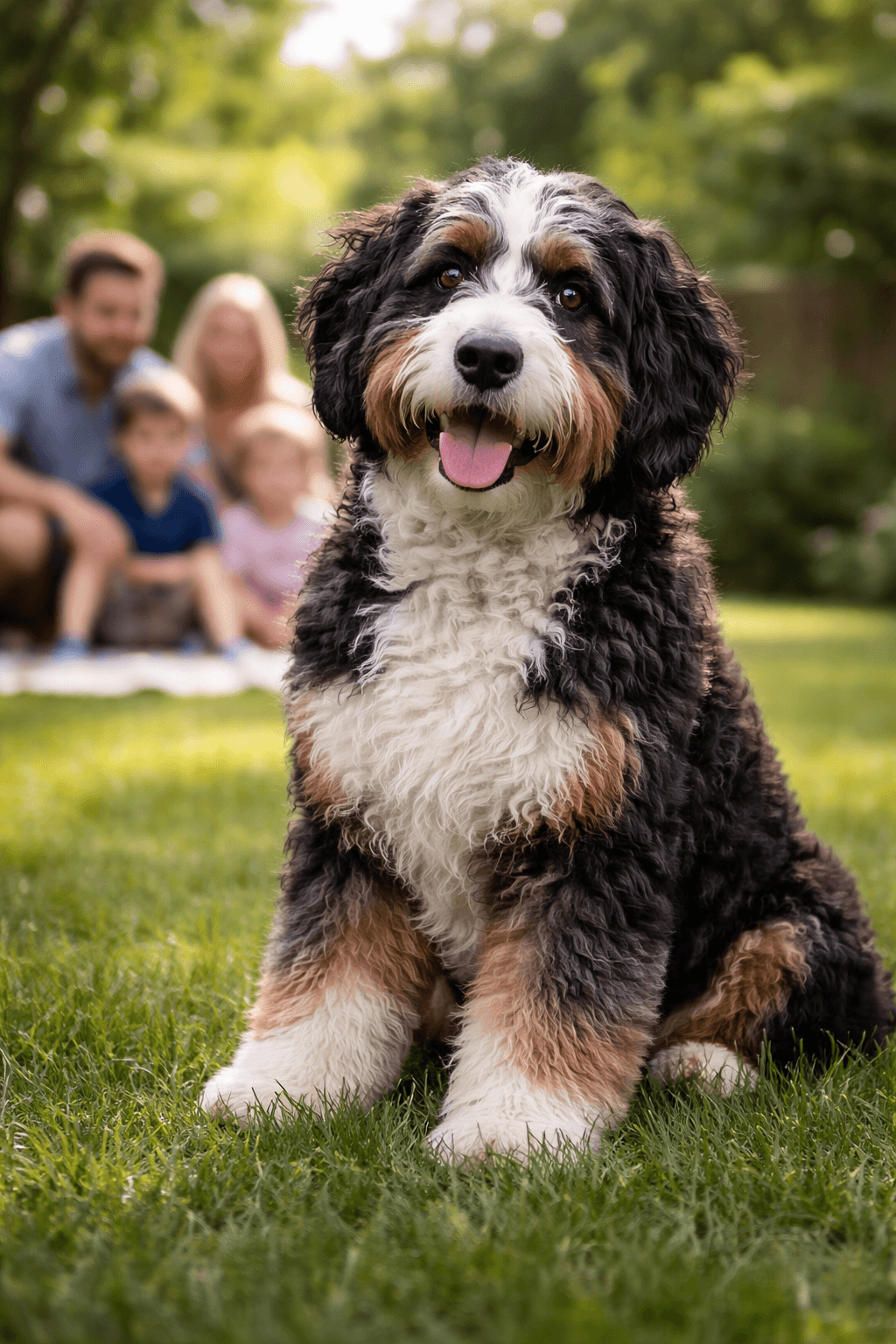
The Bernedoodle (often searched as “bernedoodle dog” or “Bernie doodle”) is a designer cross between the calm, loyal Bernese Mountain Dog and the intelligent, often low-shedding Poodle. When families in my clinic at General Veterinary Hospital, Lahore ask for a “teddy bear dog” that is clever, affectionate and good with children, the Bernedoodle almost always appears in the conversation.
However, the reality is more complex than cute photos on social media. Bernedoodles can be wonderful family companions, but they also come with specific health risks, grooming needs and training challenges. As a veterinarian who has examined many doodle-type dogs, my goal in this article is to give you a complete, honest, vet-approved guide so you can decide whether a Bernedoodle is the right dog for your home – and how to keep one healthy for many years.
What Is a Bernedoodle?
A Bernedoodle is a mixed-breed dog created by crossing a Bernese Mountain Dog with a Poodle. Depending on the Poodle parent (Standard, Miniature or Toy), you will see terms such as standard Bernedoodle, mini Bernedoodle or even “micro Bernedoodle”.
Because Bernedoodles are not a registered pure breed, there is no universal standard for appearance or temperament. Each puppy is a genetic lottery. Some inherit more Bernese traits – large size, heavy bone and a calm but stubborn personality. Others are closer to the Poodle side – lighter frame, higher energy, very intelligent and a bit sensitive.
In my own cases at General Veterinary Hospital, Lahore, I have seen:
- Bernedoodles who are gentle, patient “nanny dogs” for children,
- and others who are anxious, hyper-attached to one person, and prone to chewing and barking if left alone.
This variation is normal. When choosing a Bernedoodle puppy, you must look at the individual parents, the breeder’s ethics, and the early socialisation, not just the cute name.
Types of Bernedoodles (Standard vs Mini vs Micro)
Most families search for “what is a mini Bernedoodle” or “how big do Bernedoodles get” before they bring a puppy home. Size matters – especially if you live in an apartment, have children, or struggle to handle a very large dog.
| Type | Approx. Adult Weight | Approx. Height (at shoulder) | Typical Energy Level | Comments from a Vet |
|---|---|---|---|---|
| Standard Bernedoodle | 30–45 kg (66–99 lb) | 56–70 cm | Medium to high | Large, powerful dogs; need space, joint care and proper training. |
| Mini Bernedoodle | 11–24 kg (25–53 lb) | 35–50 cm | Medium to high | Very popular “family size”; still needs plenty of exercise and grooming. |
| Micro / Toy Bernedoodle | Under 11 kg (25 lb) | Below 35 cm | Medium | May have more fragile bones; avoid rough handling by children. |
Remember that these are rough guidelines. In practice I have seen “mini Bernedoodles” that look almost standard-sized, especially in first-generation (F1) crosses.
Bernedoodle Temperament and Personality
Most owners want to know, “Are Bernedoodles good family dogs?” Based on my clinical experience and the behaviour I see in consultations, a well-bred and well-trained Bernedoodle usually has:
- Affectionate nature: Many Bernedoodles are “velcro dogs”, happiest when touching their people.
- Good with children (with supervision): They can be patient and playful, but their size and enthusiasm can knock toddlers over.
- High intelligence: They learn commands quickly – but also quickly learn how to open drawers or steal food if bored.
- Moderate to high energy: Daily walks and mental games are essential, particularly for mini and standard Bernedoodles.
- Possible sensitivity and anxiety: They often dislike being left alone for long hours and may develop separation anxiety if their needs are ignored.
In Lahore, I commonly see doodle-type dogs presented for issues like destructive chewing, attention-seeking barking and pulling on the leash. Almost always, the root cause is insufficient exercise, mental stimulation and structured training, not “bad temperament”.
If you are interested in other “doodle” type breeds, you can also read your detailed guide on another small designer dog, the Cavapoo dog breed, which faces similar training and grooming challenges.
Bernedoodle Lifespan – How Long Do Bernedoodles Live?
Owners often search “Bernedoodle lifespan” or “how long do Bernedoodles live”. In general:
- Standard Bernedoodles: around 10–12 years on average.
- Mini Bernedoodles: around 12–15 years.
These are averages only. A well-bred dog with excellent nutrition, regular exercise and preventive veterinary care can live longer. On the other hand, a dog from poor-quality breeding lines with untreated joint problems or obesity may have a shorter life.
Are Bernedoodles Hypoallergenic?
This is one of the most common Google questions: “Are Bernedoodles hypoallergenic?” The honest scientific answer is: No dog is truly 100% hypoallergenic.
Many Bernedoodles shed less hair than a pure Bernese, especially if they inherit more of the Poodle-type coat. This can reduce the amount of dander (dead skin) in the house, which is helpful for some allergy sufferers. However, individual reaction varies greatly.
- Some people with mild dog allergies do well with a curly-coated mini Bernedoodle.
- Others react even to low-shedding dogs because they are sensitive to the saliva and urine proteins, not just hair.
If a family in Lahore has severe asthma or strong allergies, I always recommend spending time with adult Bernedoodles from the same breeder before committing to a puppy. Never rely only on the word “hypoallergenic” in advertisements.
Bernedoodle Coat Types and Shedding
Bernedoodles come in three main coat types, which influence grooming effort and shedding:
- Curly coat (more Poodle-like): Lowest shedding, but highest grooming needs. Mats and tangles form quickly without daily brushing.
- Wavy coat (typical Bernedoodle look): Moderate shedding, moderate grooming. Requires regular brushing and professional grooming every 6–8 weeks.
- Straight coat (more Bernese-like): Heavier shedding, especially during seasonal coat blows. Slightly easier to maintain but less allergy-friendly.
Regardless of coat type, every Bernedoodle needs a grooming plan, which we’ll discuss in detail below.
Before we dive into health problems and daily care, here is an important free resource for you:
📘 Download Free Dog & Cat Health E-Books by General Veterinary Hospital, Lahore
This e-book collection will help you understand routine care, first aid and when to call your vet for any dog or cat, including Bernedoodles.
Common Bernedoodle Health Problems (Vet’s Perspective)
Because Bernedoodles combine the genetics of Bernese Mountain Dogs and Poodles, they can inherit health problems from either side. A responsible breeder will perform health testing on the parents, but unfortunately many puppy farms do not.
Here are the main Bernedoodle health problems I discuss with owners:
1. Joint Diseases (Hip and Elbow Dysplasia, Patellar Luxation)
Large standard Bernedoodles are particularly at risk of hip dysplasia and elbow dysplasia. This means the joint does not form perfectly, leading to early arthritis.
- Signs include stiffness after rest, bunny-hopping gait, reluctance to jump, and difficulty climbing stairs.
- Mini Bernedoodles may also suffer from patellar luxation – the kneecap popping in and out of place.
At General Veterinary Hospital, Lahore, we often diagnose these issues with X-rays, especially in young dogs that limp after vigorous play. Good weight control, joint supplements and, in some cases, surgery can greatly improve comfort.
2. Bloat (Gastric Dilatation–Volvulus)
Deep-chested standard Bernedoodles may be at risk of GDV or bloat, a life-threatening condition where the stomach fills with gas and twists. Symptoms include a swollen abdomen, repeated unproductive retching, restlessness and collapse.
If you notice these signs, it is an emergency – seek veterinary help immediately. You can read more general guidance in your detailed article about dog bloat and GDV emergency symptoms.
3. Skin Allergies and Ear Infections
Like many doodle breeds, Bernedoodles are prone to atopic dermatitis (environmental allergies) and food allergies. Their floppy ears and hair-filled ear canals also create a perfect warm, moist environment for chronic ear infections.
- Common symptoms: itching, chewing paws, red skin, recurrent hot spots, smelly ears, shaking the head.
- Early veterinary treatment is important to prevent chronic thickening of the skin and ear canals.
4. Eye Problems
Inherited eye diseases such as progressive retinal atrophy (PRA) and cataracts can occur. Ethical breeders test their breeding dogs for these conditions. Early diagnosis is important because some conditions can be managed or slowed, while others lead to blindness.
5. Cancer Risk
Bernese Mountain Dogs have a relatively high risk of certain cancers, especially histiocytic sarcoma. It is not yet clear exactly how this risk transfers to Bernedoodles, but in my clinical judgement, owners should be vigilant about:
- Unexplained weight loss
- Persistent lumps or swellings
- Chronic lethargy or reduced appetite
Early veterinary checks and diagnostic tests can make a large difference in treatment options.
6. Behavioural Problems (Separation Anxiety, Reactivity)
Because Bernedoodles are extremely people-oriented, they are prone to separation anxiety if suddenly left alone for long hours. Some also develop reactivity towards other dogs if not socialised properly as puppies.
In General Veterinary Hospital, Lahore, I see many doodle-type dogs for behaviour consultations, and the pattern is clear: early socialisation classes, positive training and consistent routines dramatically reduce these issues.
Essential Preventive Care for Bernedoodles
A Bernedoodle that enjoys a long, healthy life is usually one whose owner follows a simple but strict preventive-care routine. Here is what I recommend for my patients in Lahore (timing may vary slightly by country, but the principles are the same):
1. Vaccination Schedule
Follow your local vaccination protocol for core diseases such as parvovirus, distemper, hepatitis and rabies. You can review a detailed schedule and FAQ in your dog vaccination schedule 2025 guide.
2. Deworming and Parasite Control
Because Bernedoodles often love outdoor adventures, regular protection against internal worms, ticks, fleas and, where relevant, heartworm is essential. For a complete explanation of deworming options, intervals and products, see the dog worms symptoms and deworming schedule 2025 vet guide.
3. Weight Monitoring
Obesity dramatically increases the risk of joint disease, diabetes and reduced lifespan. Aim to keep your Bernedoodle at a body condition score of 4–5/9 – ribs feel like the back of your hand, with a visible waist from above.
You can use the online Pet Health Calculator to check if your dog’s weight is within a healthy range for their age and size.
Best Diet for a Bernedoodle
There is no single “Bernedoodle diet”, but there are clear nutritional principles that apply.
Puppies
Standard Bernedoodle puppies should be fed a large-breed puppy diet to reduce the risk of joint problems. Mini and micro Bernedoodles can usually eat a regular high-quality puppy diet, but the exact choice depends on their expected adult size.
Adults and Seniors
Adult Bernedoodles do best on a balanced commercial diet from a reputable brand that meets AAFCO or FEDIAF standards. For older dogs with slower metabolism or joint issues, you can apply the same principles you use for senior dogs generally – see your article on the best diet for senior dogs for more detailed guidance.
Home-cooked diets are possible but should only be formulated under the guidance of a veterinarian or veterinary nutritionist. I have treated several dogs whose owners attempted homemade diets from the internet and ended up with calcium deficiencies or severe digestive upset.
Exercise and Mental Stimulation Needs
How much exercise does a Bernedoodle need? In my clinical experience:
- Adults: At least 60–90 minutes of mixed physical activity daily (walks, play, off-leash running in secure areas), plus 15–20 minutes of mental work such as puzzle toys, scent games or training sessions.
- Puppies: Shorter but more frequent play sessions, avoiding forced running or jumping to protect growing joints.
Without enough physical and mental stimulation, Bernedoodles often become:
- Chewers of furniture and shoes,
- Excessive barkers,
- Diggers,
- Or escape artists.
Providing regular training and enrichment is just as important as feeding the right food.
Bernedoodle Grooming Routine (Step by Step)
Owners frequently underestimate the grooming commitment. Groomers in Lahore and abroad will confirm: doodle coats are beautiful but unforgiving if neglected.
Daily / Every Other Day
- Brushing: Use a slicker brush and a comb to reach right down to the skin. Focus on armpits, behind ears, under the collar and around the tail.
- Quick check: Look for mats, skin redness, fleas, ticks or signs of irritation.
Weekly
- Ear care: Gently clean the outer ear with a vet-approved ear cleaner. Do not insert cotton buds deep into the ear canal.
- Nail trim: If you hear nails clicking on the floor, they are too long.
Every 6–8 Weeks
- Professional grooming: Many Bernedoodles need a full groom including bath, blow-dry, de-matting and clipping every 6–8 weeks.
- Face and sanitary trims: Keeping the hair short around the eyes, mouth and private areas reduces infections and discomfort.
Some owners request a “Bernedoodle puppy cut”, which is an all-over short to medium clip that keeps the dog cool and easier to manage while still looking cute.
Training Your Bernedoodle Puppy
Because Bernedoodles are smart and sensitive, they respond best to positive reinforcement training – rewarding desired behaviours with food, praise or play rather than harsh punishment.
Key Training Priorities
- House training: Take puppies outside frequently, reward immediately after toileting in the correct place.
- Bite inhibition: Puppy teeth are sharp. Redirect biting onto toys and end play if the puppy becomes too rough.
- Socialisation: Expose the puppy gradually to different people, children, dogs, sounds and surfaces between 8–16 weeks of age.
- Basic obedience: Sit, lie down, stay, come when called, walk politely on leash.
You already have an excellent article on littermate syndrome in dogs; the same principles apply when families want to adopt two Bernedoodle puppies at the same time. It is usually better to raise one puppy to maturity before adding another.
For behaviour problems such as resource guarding, reactivity or severe separation anxiety, early consultation with a vet or certified trainer is strongly recommended rather than waiting until the dog is an adult.
Is a Bernedoodle Right for You? Vet’s Checklist
Before you fall in love with a photo on social media, sit down with this simple checklist I use with my own clients in Lahore:
- Can you budget for regular grooming, quality food and veterinary care over 10–15 years?
- Is your family comfortable with a dog that may be medium to large in size and very attached to you?
- Does someone in the household have time for daily walks, training and play?
- If allergy is a concern, have you spent time with adult Bernedoodles to test your reaction?
- Are you committed to finding a reputable breeder or rescue, rather than buying from a random online advertisement?
If you can honestly answer “yes” to these points, a Bernedoodle can become a loyal, entertaining and loving companion.
Choosing a Bernedoodle Breeder or Rescue
With the popularity of Bernedoodles and other doodle breeds, many backyard breeders have appeared, offering “rare colours” at high prices but with poor health and welfare standards. As a veterinarian, I sadly see the consequences – puppies with severe joint disease, chronic diarrhoea, parasites and fear-related behaviour disorders.
Signs of a Responsible Bernedoodle Breeder
- Welcomes you to visit their home or facility and meet the mother dog.
- Provides documentation of hip, elbow, eye and genetic testing for both parents.
- Raises puppies in a home environment with early socialisation, not in crowded cages.
- Has a clear, written health guarantee and is willing to take a dog back if you cannot keep it.
- Asks you many questions about your lifestyle – they care where their puppies go.
Red Flags
- Multiple litters always available, many different breeds or crosses on the same site.
- No health testing; vague answers when asked about hip scores or eye exams.
- Refusal to let you visit the property or meet the mother dog.
- Puppies that appear dirty, fearful or unwell.
In Pakistan and other countries, good breeders may be fewer in number, so sometimes families must travel or join a waiting list. Patience at this stage can save you years of medical and behaviour problems later.
Bernedoodle FAQs (Quick Answers from a Vet)
How big do Bernedoodles get?
Standard Bernedoodles usually reach 30–45 kg and 56–70 cm at the shoulder. Mini Bernedoodles are often 11–24 kg and 35–50 cm, while micro Bernedoodles stay under 11 kg. Genetics can surprise you, so ask to see adult relatives before committing to a puppy.
How long do Bernedoodles live?
Average lifespan is around 10–12 years for standard Bernedoodles and 12–15 years for minis, depending on genetics, weight, diet and quality of veterinary care.
Are Bernedoodles good with children?
Yes, many Bernedoodles are excellent family dogs, but – like any breed – they must be trained, socialised and supervised. Large, bouncy dogs can accidentally knock down small children, so teach both dog and child how to interact politely.
Do Bernedoodles shed?
Some Bernedoodles shed very little; others shed moderately. Curly, Poodle-like coats tend to shed less, while straight, Bernese-type coats shed more. All coat types require regular brushing and grooming.
How often should a Bernedoodle be groomed?
Daily or every-other-day brushing at home, plus professional grooming every 6–8 weeks, is ideal for most Bernedoodles. If you prefer a low-maintenance look, ask your groomer for a practical “puppy cut”.
What are warning signs that my Bernedoodle needs a vet?
Contact your veterinarian promptly if you notice:
- Sudden swelling of the abdomen with retching (possible bloat/GDV),
- Persistent vomiting or diarrhoea lasting more than 24 hours,
- Difficulty breathing, blue or very pale gums,
- Sudden lameness or inability to stand,
- Seizures, collapse or severe lethargy,
- Ongoing itching, hair loss, ear discharge or repeated skin infections.
If you are unsure whether a symptom is serious, you can use your online veterinary symptoms checker for dogs and cats as a first step – but it should never replace a consultation with a veterinarian.
Real-Life Example from General Veterinary Hospital, Lahore
To illustrate how proper care changes outcomes, let me share a typical case from my practice (details adjusted for privacy).
A 9-month-old mini Bernedoodle was brought to General Veterinary Hospital, Lahore because he was limping after play and chewing at his paws constantly. On examination, we found:
- Mild hip dysplasia on X-rays, likely genetic,
- Allergic dermatitis on the paws, probably triggered by environmental allergens,
- And a diet that was too high in calories for his activity level.
With a combination of weight control, joint supplements, allergy management, regular grooming and a tailored exercise plan, his comfort improved dramatically. Two years later he still visits us for annual check-ups, full of energy and joy, but without the severe arthritis we might have seen if his owners had ignored those early signs.
This is what I want for every Bernedoodle: not just survival, but many years of comfortable, happy life with their families.
Final Thoughts: Building a Healthy Life with Your Bernedoodle
The Bernedoodle is a charming, intelligent and affectionate companion, but also a serious responsibility. Before you bring one home, look beyond the cute photos and ask realistic questions about grooming costs, exercise time and veterinary care.
As a veterinarian at General Veterinary Hospital, Lahore, I have seen both sides: Bernedoodles who thrive as adored family members, and others who suffer from preventable joint disease, obesity and behaviour problems. With the information in this guide – and the support of your local vet – you can be firmly in the first group.
Keep this article bookmarked and refer back to it as your puppy grows. And remember, you are never alone in caring for your dog; reaching out early for help is a sign of a responsible, loving owner.
💻 Book Online Vet Consultation with General Veterinary Hospital, Lahore
If you are worried about any symptom or behaviour in your Bernedoodle, an online consultation can help you decide whether home care is enough or an in-clinic visit is urgently needed.






I love how you mention the potential grooming challenges! As a Bernedoodle owner, I can confirm that they need regular attention, but it’s totally worth it for their sweet, affectionate nature. One thing I would add is the need for consistent training to help with their separation anxiety.