
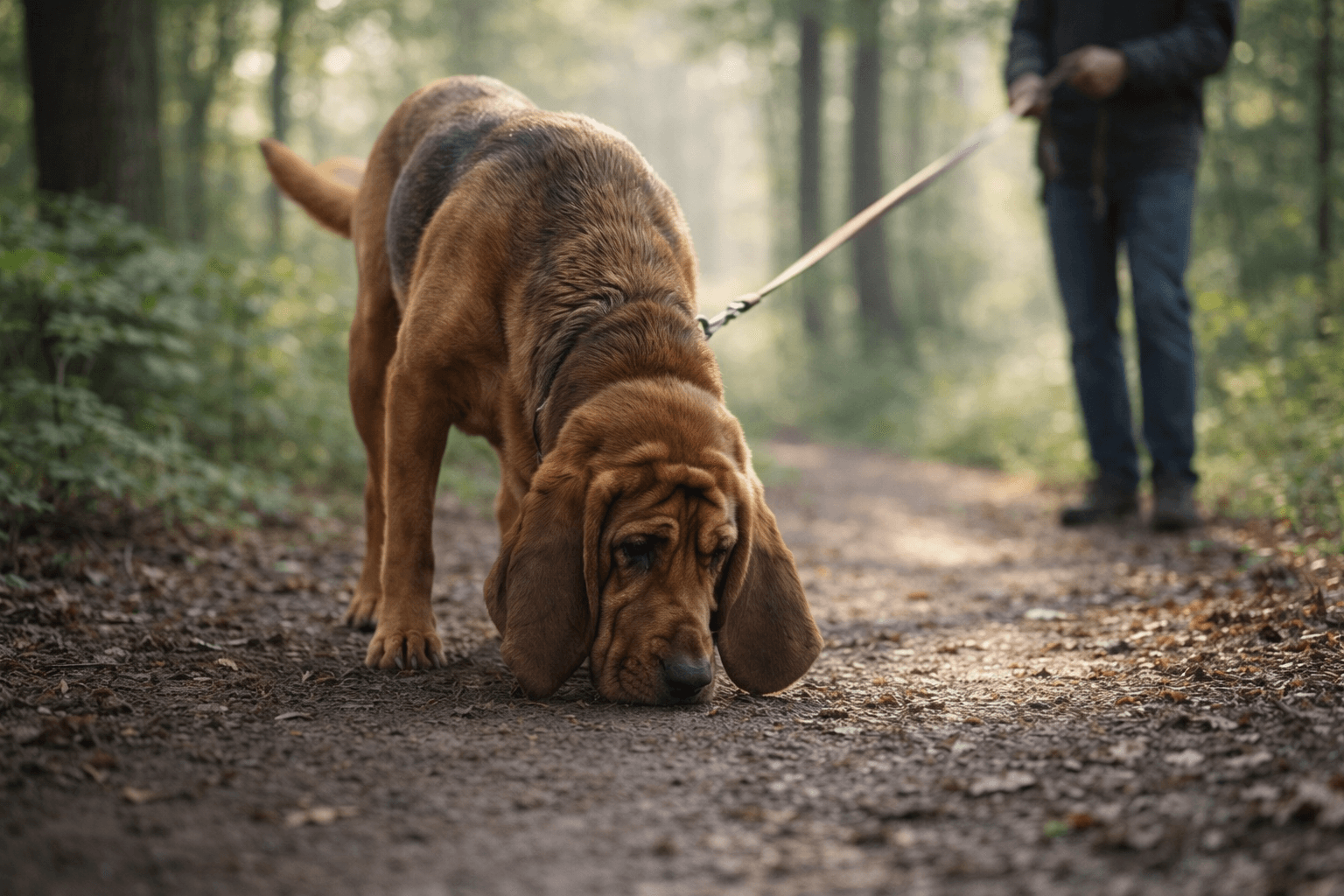
Few dogs are as unforgettable as the Bloodhound. With their long, droopy ears, wrinkled face and legendary sense of smell, Bloodhounds are working dogs first and cuddly companions second. When they are understood, trained kindly and cared for properly, Bloodhounds can be gentle, loyal family dogs – but they are not the right choice for every household.
In this vet-written guide, you’ll learn what it’s really like to live with a Bloodhound, including their temperament, exercise needs, health problems, feeding, grooming and training. We’ll also cover red-flag symptoms that mean your Bloodhound needs a vet exam as soon as possible.
Throughout this article you’ll find internal links to other detailed guides on dog bloat (GDV) emergencies, dog vaccination schedules, worming, nutrition and more – all written to help you keep your Bloodhound healthy for life.
Bloodhound Overview: History and Purpose
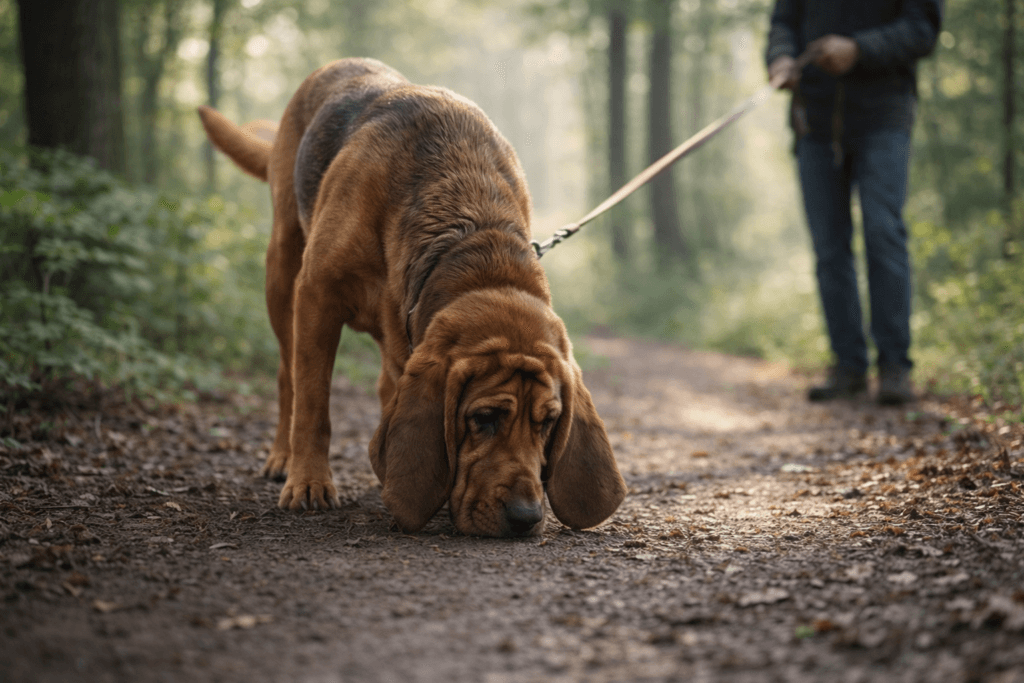
The Bloodhound is one of the oldest scent-hound breeds. Originally developed in medieval Europe, these dogs were bred by monks and nobles to follow the faintest of trails over huge distances. Modern Bloodhounds still carry that heritage: they are tracking specialists used in search-and-rescue, missing-person work and law enforcement around the world.
A Bloodhound’s nose is estimated to have hundreds of millions of scent receptors. Their drooping ears and loose wrinkled skin help trap and funnel scent toward the nose. Because of this extreme specialization, a Bloodhound is happiest when they have a “job” that involves following scent – even if that job is just well-planned sniff walks and scent games at home.
However, their tracking obsession also means Bloodhounds can be:
- Strong pullers on leash
- Easily distracted outdoors
- Quick to follow a smell and wander far away if not contained
Understanding this working background is the key to living peacefully with the breed.
Physical Characteristics of the Bloodhound
Bloodhounds are large, heavy-boned dogs. Adult males commonly weigh 40–54 kg (90–120 lb) and females 36–45 kg (80–100 lb). They are powerful yet surprisingly sensitive and gentle in personality.
Key physical features include:
- Head and face: Very long ears, deep-set eyes and loose skin that forms wrinkles and folds.
- Body: Deep chest, strong neck and a long, muscular tail often carried high when tracking.
- Coat: Short, dense coat that sheds moderately year-round. Common colours are black and tan, liver and tan, or red.
- Drool: Bloodhounds are champion droolers. Owners must be prepared for slobber on walls, clothing and furniture.
Because of their heavy build, deep chest and skin folds, Bloodhounds are prone to certain health issues which we’ll discuss later, including ear infections, eye problems, skin infections and life-threatening bloat / GDV.
Bloodhound Temperament: Is This the Right Dog for You?
Despite their serious working reputation, most Bloodhounds are affectionate clowns at home. They often love people, including children, and many enjoy leaning their full body weight into the humans they trust.
Typical temperament traits include:
- Gentle and sensitive: Bloodhounds do not respond well to harsh handling or punishment-based training. They can shut down emotionally if shouted at.
- Independent thinker: Once a Bloodhound picks up a scent, their own decision-making overrides your commands. This is not stubbornness in a human sense – it is a working trait.
- Vocal: Many Bloodhounds “bay” (a deep, musical howl) when excited, lonely or following a scent. This can cause noise complaints in close neighbourhoods.
- Social: Many get along well with other dogs when properly introduced, although adolescents can be boisterous.
Bloodhounds usually do best in homes where:
- Owners enjoy outdoor activities and walking
- The garden is securely fenced with a high, strong barrier
- Someone is home for much of the day – they dislike being left alone too long
- Family members are patient and willing to embrace a bit of drool, smell and mud
If you prefer a perfectly clean home, tight obedience and off-leash reliability, a Bloodhound may not be the ideal match.
Choosing a Bloodhound Puppy or Rescue
Whether you adopt a Bloodhound from a rescue organisation or purchase a puppy from a breeder, early planning with your veterinarian is essential.
Health and breeder checks
Ask breeders or rescue groups about:
- Hip and elbow dysplasia screening in parents
- Eye examinations for issues such as entropion, ectropion or cherry eye
- Heart health checks (dilated cardiomyopathy can occur in some lines)
- Temperament testing and socialisation the puppies have already received
Schedule a vet exam for your new Bloodhound within the first week at home. Your vet will set up a personalised vaccination schedule, deworming plan and parasite control, and will also discuss diet, crate training and early behaviour problems.
Bloodhound puppy socialisation
Because Bloodhounds can grow into very large, strong adults, early socialisation and training are critical. Between 8–16 weeks of age, gently expose your puppy to:
- Calm, friendly people of different ages and appearances
- Other healthy, vaccinated dogs and puppies
- Household sounds (vacuum, TV, doorbell) and car travel
- Gentle handling of ears, feet, mouth and tail
Use positive reinforcement – food treats, toys and praise – to teach basic cues like “sit”, “stay”, “leave it” and “come”. Punishment or yelling will only confuse and frighten a Bloodhound puppy and may worsen behaviour problems later.
Daily Life With a Bloodhound: Exercise and Mental Enrichment
Bloodhounds are not sprinting athletes like Border Collies or Huskies, but they do need more activity than many new owners expect. A bored Bloodhound will use their nose to invent “jobs”: escaping the yard, digging, howling or following interesting scents down the street.
Physical exercise
Most adult Bloodhounds need at least 60–90 minutes of moderate exercise per day, split into two or three walks. Until growth plates close (often around 18–24 months), avoid repetitive high-impact activities such as forced jogging or jumping from high furniture to reduce the risk of joint damage.
Safer exercise options include:
- Leash walks with plenty of sniffing breaks
- Hiking on soft ground
- Swimming, if your dog enjoys water
- Play sessions in a securely fenced yard
Mental enrichment and scent work
Because the Bloodhound’s nose is their superpower, daily scent games are just as important as walks. Try hiding treats around the garden for your dog to track, or scatter kibble in the grass instead of feeding from a bowl. You can also explore beginner-level tracking or man-trailing classes with a qualified trainer.
For more ideas on using play and training to prevent behaviour problems, see our vet-approved pet behaviour and training guide.
Feeding a Bloodhound: Vet-Approved Nutrition Basics
Large, deep-chested breeds like the Bloodhound are at higher risk of obesity and bloat. Diet must be chosen carefully, especially during growth.
General tips:
- Choose a complete, balanced large-breed puppy diet until growth has finished.
- For adults, use a high-quality large-breed adult formula or carefully balanced home-prepared diet (always under veterinary or board-certified nutritionist guidance; see our vet-approved homemade dog food guide).
- Divide daily food into two or three meals instead of one large meal.
- Use measured portions and body-condition scoring to keep your Bloodhound lean; you should be able to feel the ribs easily under a thin fat cover.
- Avoid very vigorous exercise for one hour before and after meals to help reduce the risk of bloat.
Treats should make up no more than 10% of daily calories. Instead of high-fat snacks, consider using part of your dog’s regular kibble as training rewards. If you are unsure about the best food for your Bloodhound’s age or health problems, ask your veterinarian for a personalised nutrition plan.
Common Health Problems in Bloodhounds
No breed is free of disease, but Bloodhounds have some particular health risks. Regular veterinary check-ups and early treatment can greatly improve quality of life.
Bloat / Gastric Dilatation–Volvulus (GDV)
Because of their deep, narrow chest, Bloodhounds are at high risk for bloat, a life-threatening emergency where the stomach fills with gas and may twist. Symptoms include a swollen, tight abdomen, unproductive retching, restlessness and collapse. This is always an emergency – rush your dog to the nearest vet and review our detailed bloat first-aid guide.
Some owners elect a preventative surgery called gastropexy (stomach tacking) at the same time as neutering – talk to your vet about whether this is suitable for your Bloodhound.
Ear infections
The long, floppy ears of a Bloodhound trap heat and moisture, creating the perfect environment for yeast and bacteria. Check ears at least weekly for redness, smell or discharge. Gently clean with a vet-recommended ear cleaner and cotton wool (never cotton buds). If ears stay red or your dog scratches or shakes their head, book a vet appointment – untreated infections are painful and can damage hearing.
Skin infections and fold dermatitis
Skin folds around the face, neck and lips can stay damp with drool. This encourages bacterial overgrowth and infection, causing redness, odour and discomfort. Wipe folds daily with a soft cloth and dry thoroughly. Your vet may suggest medicated wipes or creams during flare-ups.
Joint disease
Hip and elbow dysplasia, arthritis and cruciate ligament injuries are more common in large breeds. Keep your Bloodhound lean, avoid repetitive high-impact exercise in young dogs and discuss joint supplements or pain control with your vet if you notice stiffness, limping or reluctance to exercise. Our emergency first-aid guide explains when sudden lameness needs urgent care.
Eye issues
Because of loose eyelids, Bloodhounds may suffer from entropion (inward-rolling eyelids), ectropion (outward-rolling eyelids) or “cherry eye”. Signs include redness, discharge, squinting or rubbing at the eyes. Prompt veterinary assessment is essential; some conditions require surgery to prevent pain and protect vision.
Grooming and Home Care
Bloodhounds have short coats but are not low-maintenance. A weekly grooming routine keeps skin, ears and nails healthy and helps you spot problems early.
- Brushing: Use a rubber curry brush or bristle brush once or twice a week to remove loose hair and distribute natural oils.
- Bathing: Bathe every 4–8 weeks or when dirty using a gentle dog shampoo. Rinse thoroughly to avoid residue in skin folds.
- Ear care: Clean as described above; never insert cotton buds into the ear canal.
- Nail trimming: Trim nails every 3–4 weeks or as needed. If you hear nails clicking on the floor, they are too long.
- Dental care: Daily tooth-brushing with pet-safe toothpaste dramatically reduces tartar and gum disease. Dental chews and diets can help but do not replace brushing.
Make grooming sessions calm and positive – offer treats and keep sessions short for puppies. This will make future vet visits and home care much easier.
Training a Bloodhound: Challenges and Solutions
Training a Bloodhound can be one of the most rewarding – and occasionally frustrating – experiences in the dog world. Their intelligence and independence mean they often understand cues perfectly but simply choose to follow their nose instead.
House rules and basic manners
From the first day, decide on your household rules and apply them consistently. If you don’t want a 45-kg dog on the sofa, don’t allow the tiny puppy on it either. Reinforce the behaviours you like – sitting politely, walking nicely on lead, settling on a mat – with tasty rewards.
Because Bloodhounds are highly food-motivated, positive reinforcement training works beautifully. Short, fun sessions (3–5 minutes) repeated throughout the day work better than long, boring drills.
Recall and off-leash safety
Many Bloodhounds will never be fully reliable off-leash in unfenced areas. Their scent drive is simply too strong. Instead of fighting this, focus on safety:
- Use long training leads in open areas.
- Practise recall games in safe, fenced spaces.
- Teach an emergency cue such as “this way!” paired with high-value treats.
- Ensure microchipping and ID tags are always up to date.
If you’re struggling with training or behaviour issues such as separation anxiety, resource guarding or reactivity, don’t wait for things to worsen. Work with a qualified, reward-based trainer or veterinary behaviourist and review our behaviour problems and training guide.
Living With a Bloodhound: Family, Children and Other Pets
Many Bloodhounds are incredibly gentle with children and can form deep bonds with their families. However, their large size and wagging tail can accidentally knock over toddlers, so supervision is essential around young kids.
Teach children to respect the dog’s space: no climbing on the dog, disturbing while eating or sleeping, or pulling ears and tail. In return, teach your Bloodhound to move away when overwhelmed and to settle on a mat during busy family times.
With proper introductions, most Bloodhounds can live peacefully with other dogs and even cats, although individual prey drive varies. Use slow, controlled meetings and separate pets at feeding time to avoid conflicts.
When to See a Vet: Red-Flag Symptoms in Bloodhounds
Contact your veterinarian urgently if you notice:
- Swollen, tight abdomen, unproductive retching, sudden restlessness (possible bloat)
- Difficulty breathing, blue or very pale gums
- Sudden collapse, seizures or inability to stand
- Persistent vomiting or diarrhoea, especially with blood
- Severe ear pain, head tilt or loss of balance
- Eye redness, squinting or sudden blindness
For less urgent but still important issues – such as gradual weight gain, stiffness, mild skin problems or behavioural changes – book a routine appointment. Early diagnosis nearly always gives your Bloodhound a better outcome and lower long-term costs.
FAQs About Bloodhounds
Are Bloodhounds good family dogs?
Yes, many Bloodhounds are affectionate, patient family dogs when raised with kind handling, early socialisation and clear house rules. However, their size, drool and strong scent drive mean they are best suited to families prepared for an active, slightly messy companion.
Do Bloodhounds really smell bad?
Bloodhounds can develop a “houndy” odour because of their skin folds, ears and drool. Regular grooming, ear cleaning and skin-fold care greatly reduce smell. Persistent strong odour can indicate skin or ear infection and should be checked by a vet.
How much do Bloodhounds drool?
Most Bloodhounds drool a lot, especially after drinking water, eating or getting excited. Keep cloths or towels handy, wipe the mouth folds regularly and be prepared for drool strings on walls and clothing. If drooling suddenly increases, especially with other symptoms, seek veterinary advice.
How much exercise does a Bloodhound need?
An adult Bloodhound typically needs 60–90 minutes of moderate exercise daily plus plenty of sniffing and mental enrichment. Puppies and seniors need shorter, gentler sessions. Always adjust exercise to your dog’s health and your vet’s advice.
Can Bloodhounds live in an apartment?
It is possible but challenging. Bloodhounds are large, vocal dogs with a strong odour and high exercise needs. Apartment life can work only if the building is dog-friendly, neighbours tolerate occasional baying and the dog receives multiple long walks and scent games every day.
What is the average lifespan of a Bloodhound?
Most Bloodhounds live around 8–11 years, although some reach their early teens with excellent care, lean body weight and good genetics. Regular veterinary check-ups and preventative care are essential for maximising healthy years.
Are Bloodhounds easy to train?
They are intelligent but independent. Bloodhounds learn quickly when training is fun, reward-based and focused on short sessions. However, they can be easily distracted by smells, so patience and management (fences, long lines) are still required.
Final Thoughts: Is a Bloodhound Right for You?
A Bloodhound is a wonderful companion for the right family – one that appreciates their gentle nature, sense of humour and extraordinary nose, while accepting their drool, stubbornness and special health needs. If you enjoy long walks, don’t mind muddy pawprints and want a dog with a big heart and even bigger ears, the Bloodhound might be your perfect match.
Before committing, visit local rescues, talk to reputable breeders and speak with your veterinarian. They can help you decide whether a Bloodhound fits your lifestyle and budget and can guide you through health checks and preventative care.
Medical Disclaimer
This article is for general educational purposes only and does not replace an in-person veterinary examination. Every Bloodhound is an individual. If you have any concerns about your dog’s health, behaviour or diet, please contact your veterinarian or an emergency clinic immediately.




I really appreciate how you highlighted that BloodBlog Comment Creation Guidehounds are working dogs first—so many people fall in love with the look without realizing how demanding their exercise and scent-driven instincts can be. One thing I’ve noticed with scent hounds is that mental enrichment, like structured sniffing games, can make a huge difference in keeping them calm at home. It might be helpful for new owners to think of ‘nose work’ as part of their daily routine, not an optional extra.
I’ve always heard Bloodhounds can be a bit challenging to train due to their independent nature. It’s good to see that with proper care, they can be great family companions. Does anyone have tips on managing their high energy levels?