Catnip can be a useful way to add interest to a cat’s play session, but the dramatic rolling and rubbing sometimes seen in videos are only one possible response. Some cats sniff and walk away. Others become more active, rub their cheeks against the toy, or settle nearby. The important question is whether your own cat enjoys the experience safely, not whether the reaction looks entertaining.
This catnip for cats guide explains the plant, common effects, practical ways to offer it, and situations in which you should stop. It also helps you separate an ordinary short play response from a cat that needs medical attention. Catnip is optional enrichment. It is not a necessary food, a cure for anxiety, or a substitute for investigating a sudden change in behaviour.
Catnip for cats: what is it?
Catnip is the herb Nepeta cataria, a member of the mint family. Its familiar effect comes mainly from scent compounds, including nepetalactone. A cat may respond after sniffing the leaves or a toy containing the dried herb. Eating a mouthful is not needed to make a scented toy interesting.
The term catmint can appear on garden labels, but names used by sellers are not a reliable safety check. Read the botanical name and the full product ingredients. A garden plant may also carry pesticide residues, fertiliser, mould, or soil contamination. A product marketed for cats is easier to assess when its manufacturer identifies what it contains and how it should be stored.
Plain dried catnip, a fresh plant, and a catnip-scented toy are different from a concentrated essential oil. Do not assume that because a leaf is familiar, a bottle of concentrated oil is safe to apply to a cat’s skin or coat. Keep oils, household fragrances, and unidentified herbal mixtures out of the play area.
What does catnip do to cats?
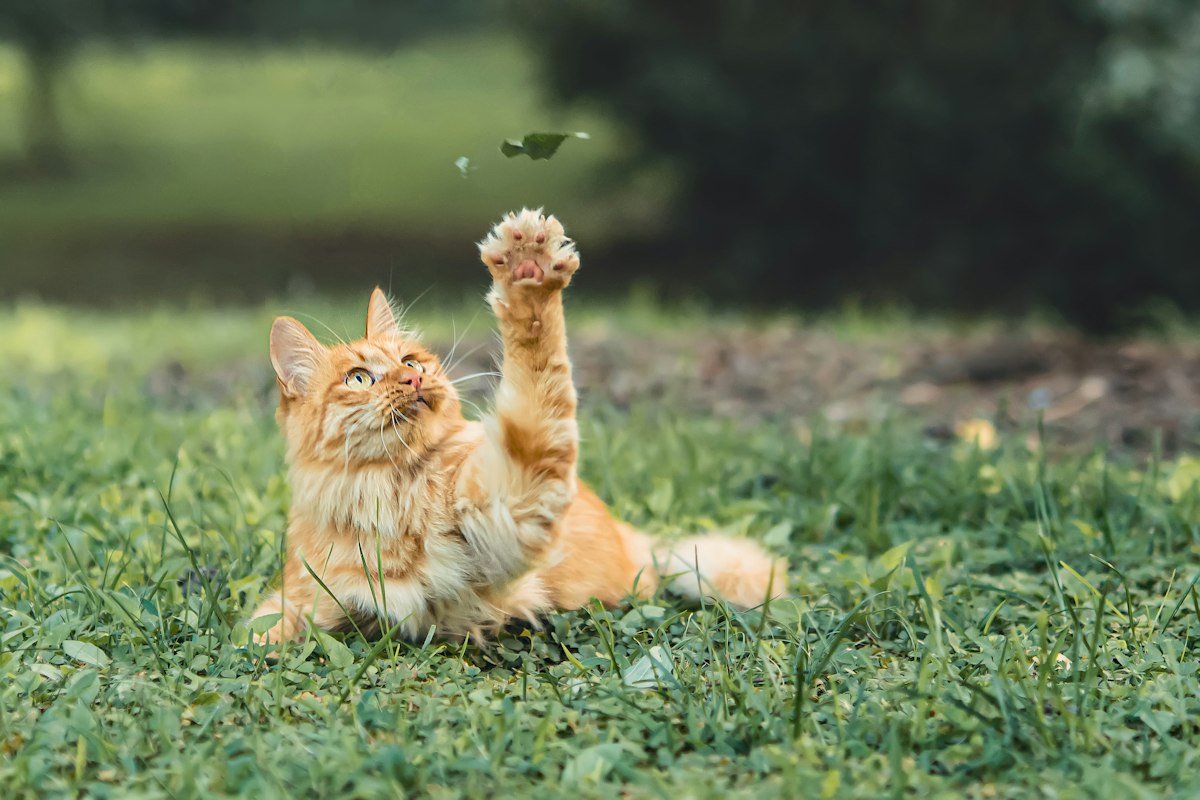
Common responses include sniffing, cheek rubbing, rolling, licking the toy, and brief energetic play. Other cats show a quieter response. The effect is generally temporary, and interest may fade even while the toy remains nearby. Repeatedly adding more herb to force the reaction back is unnecessary.
Cats Protection explains that sensitivity differs between cats and that young kittens may not yet respond. That variation matters more than trying to obtain a particular performance. A cat that does not roll around is not defective, bored by definition, or proof that the product is poor. Preference is individual.
Watch body language rather than assuming every active movement means pleasure. Relaxed movement, voluntary approach, and the ability to walk away are reassuring. A tense posture, repeated attempts to escape, growling at another cat, or swatting at nearby hands mean the session should end. Put the toy away calmly rather than restraining the cat for a closer look.
Does catnip get cats high?
People often use the word high to describe the scent response, but it is an informal comparison rather than a reason to treat catnip like a human recreational drug. Do not experiment with combining substances, increasing concentration, or finding products that promise a stronger reaction. The goal is a pleasant activity that the cat can control.
Avoid claims that catnip guarantees relaxation. A product can make one cat playful while making another more excitable. If you need help with persistent fear, aggression, or distress, describe the behaviour to your veterinarian. A video of the situation, taken from a safe distance, is often more useful than buying another scented toy.
For everyday enrichment, judge success by whether the cat investigates voluntarily and then returns comfortably to normal activities. There is no need for a dramatic response, a fixed session length, or a daily ritual that the cat cannot decline. Quiet engagement is a perfectly worthwhile outcome.
Is catnip safe for cats to eat?
Small incidental tastes can happen during play, but offering a large bowl as food is a poor approach. The ASPCA notes that catnip can cause vomiting and diarrhoea. This is why quantity, individual tolerance, and observation matter even for a familiar plant.
Use scent to support play rather than encouraging consumption. If your cat repeatedly eats loose material, choose a securely enclosed toy or another activity. Inspect seams before and after the session. Swallowed fabric, string, stuffing, or a plastic refill cap may be more concerning than the herb itself.
If vomiting follows a session, remove the product and keep its packaging. Do not immediately assume the plant explains everything. Record whether part of the toy is missing and whether the cat also had access to medication, household chemicals, or another plant. Repeated vomiting, weakness, pain, or refusal of food warrants veterinary advice.
Our guide to cats refusing food explains why appetite changes deserve attention. Do not use catnip to postpone an examination or try to stimulate a sick cat into behaving normally.
Can kittens have catnip?
A kitten may show little interest, and there is no developmental need to introduce catnip. Prioritise safe exploration, predictable rest, suitable toys, and gentle social contact. Choose objects that cannot be swallowed and put string toys away when nobody is supervising.
For a first supervised trial with an older kitten, use an intact toy suitable for the kitten’s size rather than loose handfuls. Offer it in a calm room and allow the kitten to approach. If the toy is ignored, take that information at face value. Increase variety through movement, texture, and play style instead of stronger scent.
The first-time kitten care guide covers the broader routine that matters far more than any single enrichment product. Catnip does not replace balanced kitten nutrition, vaccination planning, litter training, or opportunities to sleep undisturbed.
Introducing catnip for cats: a first-session plan
Choose a time when the household is quiet and your cat is awake but not already highly excited. Clear the floor of small objects. Place one intact toy in an open space where the cat can approach or leave without passing another animal. Keep a child or visitor from leaning over the cat.
Observe without repeatedly touching the cat. Some cats become very focused on a new object and do not welcome hands nearby. Let the cat finish investigating before you collect the toy. If you need to end play, encourage movement away with another ordinary activity rather than grabbing the object from under the cat’s body.
Afterward, check the toy and note the response. A short record can be as simple as: interested, rubbed toy, no chewing damage, settled normally. If the response was unpleasant, there is no obligation to repeat the experiment. Enrichment should suit the animal in front of you.
Catnip for cats: fresh, dried and toy-based options
Fresh catnip gives you a plant to manage, including its soil, container, and growing conditions. Keep the plant identifiable and prevent access to fertilisers or garden treatments. A cat chewing the pot or swallowing soil is not enjoying the same controlled experience as sniffing a clean leaf.
Dried herb is convenient but can scatter into bedding and carpets. Store it in a labelled closed container, away from moisture and food preparation. Discard material that smells musty or appears contaminated. Do not rely on an old unlabelled bag simply because it once contained something intended for cats.
A refillable toy can reduce loose material, provided the refill opening closes securely. Check fastening pieces, elastic loops, feathers, and seams. A toy that becomes the favourite may also become the first one to tear. Replace damaged objects rather than continually repairing them with exposed tape or threads.
Sprays require a separate ingredient check. Use only products intended for cats according to their instructions, and avoid spraying a cat directly. A scented surface should be allowed to dry as directed before play. If a label is unclear, choose a simpler product instead.
Using catnip with scratching posts
A little scent may encourage investigation of a scratching post, but placement and stability still matter. A post hidden in an unused room or one that rocks under the cat’s weight may remain unattractive. Put suitable scratching surfaces near areas where the cat already rests or stretches.
Offer more than one orientation when possible. Some cats prefer an upright surface; others favour a horizontal scratcher. Keep existing acceptable scratchers while introducing a new one. Removing the familiar option immediately can turn a small household change into an avoidable frustration.
Do not punish a cat for choosing furniture while you test the new setup. Protect the furniture, improve access to acceptable surfaces, and reward voluntary use with something the cat likes. Catnip is an optional invitation, not a training command or a guarantee.
Multi-cat homes need separate resources
Do not place a single exciting toy between cats that already compete for space. Give each cat a chance to explore privately. A confident cat may occupy the object while a quieter housemate watches from a doorway, which can look like shared play without actually being comfortable for both.
If tension appears, remove the attraction when safe and restore distance. Do not hold the cats next to each other to encourage sharing. Separate resting spots, litter boxes, food stations, and escape routes remain the foundation of a workable household.
Track which cat enjoys which activity. One may like a scented kicker toy while another prefers chasing a wand. Offering different choices is often easier than trying to make all cats respond to the same product. Consistent access to preferred resources matters more than making the household look symmetrical.
What if your cat does not respond?
Start with the possibility that your cat simply has another preference. Try ordinary play that resembles stalking and catching rather than shaking a toy directly in the cat’s face. Let a wand move away, pause behind a corner, and become catchable. Put string-based toys away after the session.
Food puzzles, paper boxes without handles or staples, resting perches, and safe viewing spots can provide other kinds of interest. Introduce one change at a time so you can tell what the cat actually uses. A busy collection of untouched products is not necessarily better than a small number of favourites.
If a previously playful cat stops engaging with everything, consider health and comfort instead of simply increasing stimulation. Notice appetite, litter-box habits, movement, grooming, and willingness to jump. You can request an online veterinary consultation for guidance, while urgent physical symptoms need an in-person examination.
When to stop and seek advice
End a session if the cat becomes distressed or the toy breaks. Contact a veterinarian for repeated vomiting, diarrhoea, marked lethargy, persistent agitation, or signs of pain. If string or fabric may have been swallowed, tell the clinic what is missing and when it happened.
Never pull a visible string from a cat’s mouth or bottom. Keep the remaining toy and take a photograph of its missing area if possible. A product name, ingredient list, and approximate time of exposure help the veterinarian assess the situation more efficiently.
For a cat with a chronic illness or an unusual prior reaction, discuss new products with the clinician managing the condition. A calm, ordinary play option may be preferable. The safest enrichment plan is one you can supervise and stop easily.
Frequently asked questions
Can I offer catnip every day?
There is no need to use it daily. Rotate activities according to your cat’s interest and stop if it causes unwanted behaviour or digestive upset. Repeated use should never be a way to force a stronger response.
Can catnip replace drinking water or food?
No. It is not a dietary essential. Keep fresh water available and feed an appropriate complete diet. The cat nutrition guide explains the feeding foundation.
Is a sleepy cat after play automatically normal?
Look at the whole situation. Comfortable rest after ordinary activity differs from weakness, poor responsiveness, or a cat that cannot return to its normal routine. When unsure, stop the product and contact a veterinarian.
Should I buy a stronger product if nothing happens?
No. A non-response is a reason to try another form of enrichment, not a reason to increase concentration. Your cat’s preference is more useful than a marketing promise.
Make enrichment fit your cat
A successful catnip session can be modest: a voluntary sniff, a little play, and an easy return to normal activities. Keep products simple, toys intact, and expectations flexible. The best long-term plan combines choice, comfortable resources, and attention to changes in health rather than relying on a single herb.
References
Catnip responses and individual variation — Cats Protection