
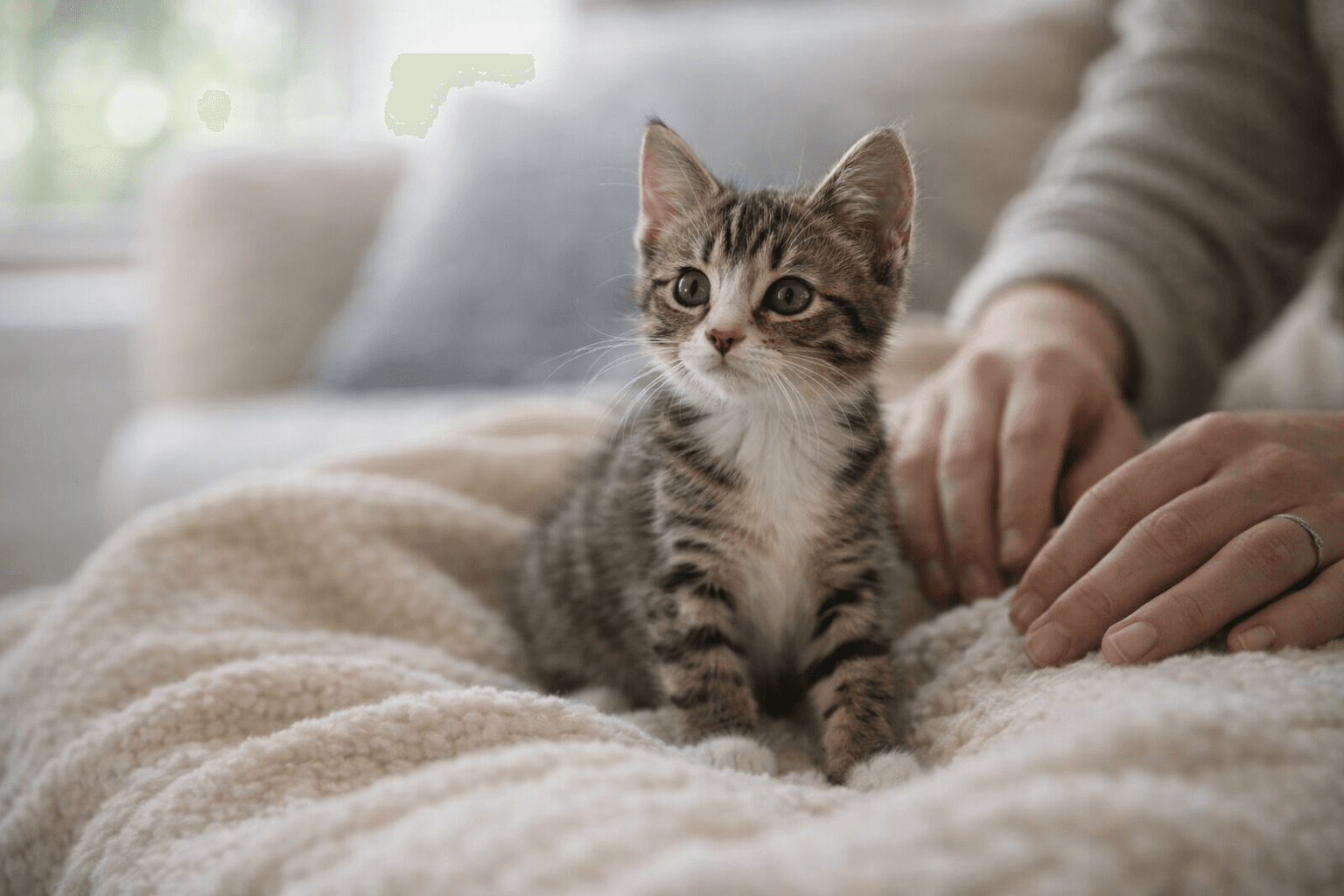
Bringing home your first kitten is exciting – and a little scary. Tiny paws, big eyes, and a fragile immune system mean kittens need special care in their first year. As a veterinarian, I see many problems in young cats that could have been prevented with the right guidance in the beginning.
This complete kitten guide for first-time owners explains, in simple language, how to set up your home, what to feed, which vaccines and deworming your kitten needs, how to train good habits, and when to worry about illness. Use it as a step-by-step roadmap from the first day until your kitten becomes a confident young adult cat.
Kitten guide for first time owners: 1. Before You Bring Your Kitten Home
If you are still planning to adopt, a bit of preparation will make life easier for both of you.
Kitten guide for first time owners: 1.1 How old should a kitten be?
- Ideal age: 8–12 weeks. By this time kittens should be weaned, litter trained, and have started their first vaccines.
- Too young (<7 weeks): higher risk of illness, poor socialisation, and behaviour problems later.
- Very shy or feral kittens: can still make lovely pets, but will need more time, patience, and gentle handling.
1.2 Essential vet checks before adoption
- Ask whether the kitten has had a vet examination and request any medical records.
- Check if they have been vaccinated, dewormed, and treated for fleas and when the next doses are due.
- Look for basic health: bright eyes, clean nose, no coughing or sneezing, clean bottom, good appetite, and playful behaviour.
1.3 Shopping list: basic kitten supplies
- Sturdy cat carrier for safe travel – never carry kittens loose in the car.
- Litter box + unscented clumping litter. Start with the same type used in the previous home if possible.
- Two bowls (ceramic or stainless steel) – one for water, one for food.
- Kitten food (wet and/or dry) appropriate for age.
- Scratching post or board – tall and stable enough for a full stretch.
- Soft bed or blanket in a quiet corner.
- Safe toys: wand toys, balls, and puzzle feeders. Avoid string and hair ties which can be swallowed.
- Brush/comb suitable for your kitten’s coat length.
- Kitten-safe cleaning products for accidents – avoid strong bleach and phenol-based disinfectants.
Kitten guide for first time owners: 2. Preparing Your Home: Safe, Calm and Kitten-Proof
Kittens are curious and surprisingly fast. A few changes will prevent common emergencies.
2.1 Kitten-proofing checklist
- Hide or cover electrical cords and phone chargers.
- Keep toxic plants (lilies, dieffenbachia, philodendron, etc.) out of the house or well out of reach.
- Store medications, pesticides, and cleaning chemicals in closed cupboards.
- Use bin lids and keep plastic bags out of reach.
- Close windows without secure screens and be careful with balconies (risk of falls).
- Check washing machines, dryers, and cupboards before closing – kittens love to hide.
2.2 Set up a “kitten safe room”
For the first few days, confine your kitten to one quiet room with:
- Litter box in one corner.
- Food and water bowls a few feet away from the litter.
- Bed/hiding spot and scratching post.
- A few toys and a small cardboard box for hiding.
This prevents overwhelm and makes litter training and bonding much easier. Once the kitten is confident in this room, slowly open up the rest of the house.
Kitten guide for first time owners: 3. First Day and First Week with Your Kitten
3.1 The car ride home
- Transport your kitten in a secure carrier lined with a towel that smells like the previous home if possible.
- Drive calmly, avoid loud music, and keep the carrier covered partially with a light cloth.
3.2 Step-by-step for the first day
- Place the carrier in the prepared safe room and open the door. Let the kitten come out at their own pace.
- Show the kitten the litter box by gently placing them in it once or twice.
- Offer a small meal of familiar food and fresh water.
- Keep the environment quiet. Allow sniffing and exploring without forcing cuddles.
- Introduce family members one by one, calmly, and remind children to be gentle and sit on the floor.
3.3 Building trust in the first week
- Sit on the floor each day and let your kitten approach you.
- Use gentle talking, slow blinking, and a few tasty treats.
- Pick up the kitten only for short periods and always support the chest and back legs.
- Offer interactive play (wand toys) 2–3 times daily to burn energy and build confidence.
4. Kitten Feeding Guide for First-Time Owners
Nutrition is one of the most important parts of this kitten guide for first-time owners. Growing kittens need more protein, calories, vitamins, and minerals than adult cats.
4.1 Choosing the right food
- Look for a commercial diet labelled “complete and balanced for growth” or “all life stages.”
- Choose brand-name foods that follow recognised standards (for example, AAFCO or FEDIAF guidelines).
- Both wet and dry food can be used; many vets prefer a mix to support hydration and dental health.
4.2 How often should kittens eat?
- 6–12 weeks: 4 small meals per day.
- 3–6 months: 3 meals per day.
- 6–12 months: 2–3 meals per day, adjusting amounts to maintain a slim, athletic body.
Always provide fresh, clean water. Avoid cow’s milk – many cats are lactose-intolerant and it can cause diarrhoea.
4.3 Human foods – what to avoid
Common dangerous foods include:
- Onions, garlic, chives, and leeks.
- Chocolate, coffee, tea, and energy drinks.
- Alcohol, raw bread dough, and xylitol-containing products.
- Cooked bones that can splinter.
If your kitten eats something suspicious, contact your vet or a pet poison helpline immediately.
5. Litter Training and Home Hygiene
5.1 Basic litter training steps
- Place the kitten in the litter box after waking, after meals, and after play sessions.
- Use a large, low-front box so the kitten can easily climb in and out.
- Keep the litter depth shallow (2–3 cm) until your kitten is confident using it.
- Praise gently when the kitten uses the box; do not punish accidents.
5.2 When accidents happen
- Clean with an enzymatic cleaner to remove odour so the kitten is not attracted back to that spot.
- If the kitten is repeatedly urinating or passing stools outside the box, contact your vet – it may be a medical problem, especially if there is blood, straining, or vocalising.
5.3 Litter box rules for the future
- Number of boxes: one per cat plus one extra.
- Place boxes in quiet, easily accessible locations – not next to noisy washing machines.
- Scoop at least once daily, change litter regularly, and wash boxes with mild soap and water.
6. Vet Care Schedule for Kittens
Early veterinary care gives your kitten the best chance at a long, healthy life.
6.1 Vaccine schedule (example)
Exact schedules vary by country and risk, but many kittens need:
- 6–8 weeks: first core vaccine (e.g., panleukopenia, calicivirus, herpesvirus).
- 9–12 weeks: booster vaccines; optional non-core vaccines depending on lifestyle.
- 12–16 weeks: final boosters and often the first rabies vaccine where required.
- Annual or 3-yearly boosters thereafter, based on your vet’s advice.
For a deeper dive into vaccine planning and what each injection protects against, you may also like to read our cat vaccine guides on this site once your kitten is older.
6.2 Deworming and parasite control
- Kittens are commonly born with roundworms and can pick up fleas, ticks, and mites easily.
- Most need deworming every 2 weeks until 12 weeks of age, then monthly until 6 months, then every 1–3 months depending on lifestyle.
- Your vet will recommend a flea/tick preventative that is safe for young kittens – never use dog products or over-the-counter chemicals without advice.
6.3 Spaying and neutering
- Queens (female cats) can become pregnant from as early as 4–5 months in some breeds.
- Most vets recommend spaying/neutering around 5–6 months, before the first heat cycle.
- Benefits include reduced roaming, spraying, fighting, and a lower risk of certain cancers.
7. Socialisation and Behaviour: Raising a Confident Cat
7.1 The socialisation window
From roughly 2–12 weeks of age, kittens are especially open to new experiences. Positive exposure during this time lays the foundation for a calm, friendly adult cat.
- Gently introduce different people (men, women, children) in a controlled way.
- Expose your kitten to normal household sounds – TV, vacuum cleaner at a distance, doorbell.
- Handle paws, ears, and mouth for a few seconds daily to make future vet visits easier.
7.2 Play, enrichment and scratching
- Use wand toys, feather toys, and balls to mimic hunting behaviour.
- Provide scratching posts in several rooms; reward your kitten whenever they use them.
- Discourage scratching furniture by covering it temporarily, using double-sided tape, and redirecting to the scratcher.
7.3 Kittens and other pets
- Keep first meetings short and supervised. Use baby gates or carriers for safety.
- Let resident pets sniff bedding or a cloth carrying the kitten’s scent before physical introductions.
- Go slowly. Hissing or growling is normal at first – the goal is calm coexistence, not instant friendship.
8. Common Kitten Health Problems: What to Watch For
Because kittens have immature immune systems, they can become seriously unwell very quickly. Contact your vet promptly if you notice:
- Reduced appetite for more than one meal, or refusal to eat at all.
- Repeated vomiting or diarrhoea, especially with blood or black, tarry stools.
- Heavy breathing, persistent coughing, or open-mouth breathing.
- Thick eye or nose discharge, sneezing fits, or glued-shut eyes.
- Lethargy: hiding all day, not playing, or unable to stand properly.
- Straining in the litter tray with little or no urine – a true emergency, especially in males.
- Sudden change in behaviour such as aggression, crying, or confusion.
If you already have adult cats at home, remember that some conditions such as FIP, FeLV, and FIV are serious viral diseases. Quarantine new kittens, keep up-to-date vaccines, and ask your vet which tests are appropriate in your region.
9. Everyday Preventive Care for a Healthy Adult Cat
Once your kitten is settled and the first few months are behind you, focus on long-term habits that protect their health for years.
- Balanced diet: continue with high-quality cat food and maintain a healthy weight.
- Regular vet checks: at least once a year for physical examination, vaccinations and dental check-ups.
- Dental care: ask your vet which treats, diets, or brushing routines suit your cat.
- Indoor safety: consider keeping your cat mainly indoors or in a secure “catio” to reduce accidents and infectious disease.
- Parasite prevention: keep flea, tick and worm prevention up to date.
10. Support for First-Time Kitten Owners
Caring for a kitten can feel overwhelming, especially if you are balancing work, family, and other pets. That’s why we created our evidence-based pet health resources.
📘 Buy Vet-Written Dog & Cat Health E-Books
These vet-written guides complement this kitten guide for first-time owners with printable checklists, vaccination planners, and emergency red-flag charts for the whole family.
11. Summary: Your Kitten’s First Year in One Glance
- Prepare before adoption: kitten-proof your home, set up a safe room, buy the essentials.
- First week: keep things calm, build trust, establish the litter box and feeding routine.
- Nutrition: feed a complete kitten diet, small frequent meals, and avoid dangerous human foods.
- Health: follow your vet’s vaccination, deworming, and parasite plan; spay/neuter at the recommended age.
- Behaviour: lots of play, gentle handling, and controlled introductions to people and other pets.
- Know the red flags: poor appetite, vomiting, diarrhoea, breathing problems, and urinary trouble need urgent vet care.
With patience, routine and good veterinary advice, your tiny kitten will soon grow into a confident, healthy cat – and a much-loved member of your family.
- Complete Cat Nutrition Guide 2025 (for when your kitten is older and ready to transition diets).
- Cat Vaccination Schedule 2025: Costs, Side Effects & Vet Tips (to plan future boosters).
- Why Is My Cat Not Eating? Vet-Approved Causes & Home Care (important if your kitten or young cat goes off food).
- Home Treatment for Cat Vomiting – Vet Online Guide
- FIP in Cats: Complete Vet Guide to Feline Infectious Peritonitis (serious viral disease all cat owners should know about).
- Cat Eyes: Complete Vet Guide to Healthy Feline Vision
- Hypoallergenic Cats: The Real Truth, Best Breeds & How to Live With Cat Allergies
- Dog & Cat Health E-Books
- Online Vet Consultation (for readers needing personalised advice).
- Symptoms Checker Online (for quick triage when unsure if it’s an emergency).
- International Cat Care – Thinking of Getting a Kitten?
- International Cat Care – Feeding Your Cat
- ABCD – European Advisory Board on Cat Diseases
FAQs: Kitten Guide for First-Time Owners
1. What do first-time kitten owners need to buy?
You’ll need a secure carrier, litter box and litter, kitten-specific food, food and water bowls, a scratching post, a bed, a brush or comb, and a few safe toys. Having these ready before your kitten arrives makes the first days much smoother.
2. How long does it take for a kitten to settle into a new home?
Confident kittens may explore within hours, while shy kittens can take several days or even weeks. Providing a quiet safe room, predictable routines, and gentle handling helps them relax more quickly.
3. When should my kitten see the vet?
Ideally within the first week after adoption. Your vet will perform a full physical examination, check for parasites, start or continue vaccinations, and discuss nutrition, neutering and behavioural advice tailored to your kitten.
4. What vaccines do kittens typically need?
Most kittens receive a series of core vaccines against panleukopenia, calicivirus and herpesvirus, plus rabies where required by law. Depending on lifestyle and local disease risk, your vet may also recommend additional vaccines.
5. Is it better to keep my kitten indoors or outdoors?
Many vets recommend keeping cats primarily indoors or in secure outdoor enclosures. Indoor cats are less likely to be hit by cars, attacked by other animals, or exposed to infectious diseases – but they do need extra play, climbing spaces, and enrichment to stay happy.
6. When should I spay or neuter my kitten?
Most kittens are neutered around 5–6 months of age, before they reach sexual maturity. Your vet will advise the best timing based on your kitten’s health, breed, and local guidelines.




I love that you stress the importance of waiting for kittens to be 8-12 weeks before adopting. It’s so tempting to get them younger, but they really do need that time with their mom for proper socialization and immune strength.