
If you’re searching for hypoallergenic cats, you’re probably in one of these situations: someone in your home sneezes around cats, you love cats but your eyes itch and water, or you’re planning to adopt and don’t want allergy symptoms to take over your daily life. The good news is that many allergy sufferers can still live happily with a cat. The not-so-fun truth is that there is no such thing as a 100% hypoallergenic cat. However, there are cat breeds and lifestyle strategies that may significantly reduce allergy triggers in your home.
This vet-style guide explains what people really mean by “hypoallergenic,” why cat allergies happen, which breeds are commonly considered “more allergy-friendly,” how to test your tolerance safely, and how to set up your home so you can enjoy your cat with fewer symptoms. If you’re also building a solid knowledge base for cat health, you may like our other cat resources such as the complete cat eyes guide and our practical article on why cats stop eating (and when to worry).
Are Hypoallergenic Cats Real?
When people say hypoallergenic cats, they usually mean cats that tend to trigger fewer allergy symptoms. This can happen if the cat produces less of the main allergen, sheds less, or has coat/skin characteristics that reduce how allergens spread through the home. But it does not mean “no allergens.”
So if you’ve been promised a “non-allergenic cat,” take that claim with caution. Instead, think in terms of: lower-allergen potential + better home management.
What Causes Cat Allergies?
Most cat allergies are triggered by a protein called Fel d 1. It’s produced mainly in a cat’s saliva and skin glands. Cats groom themselves, saliva dries on fur/skin, and then allergen particles spread through the environment (furniture, bedding, clothes, air). Dander (tiny flakes of skin) and dried saliva are major “delivery systems.”
Important detail: a cat’s fur length doesn’t determine allergies. Some long-haired cats can still be easier for certain people, while some short-haired cats can be very triggering. That’s why the idea of hypoallergenic cats is always individual—your immune system is the final judge.
Why One Person Reacts to One Cat But Not Another
- Individual Fel d 1 levels vary: Not all cats produce the same amount.
- Grooming habits differ: More grooming can spread more allergen onto fur.
- Home environment matters: Carpets, fabric sofas, and poor ventilation can trap allergens.
- Your sensitivity level varies: Mild allergy vs. asthma-level sensitivity changes everything.
If you are already managing allergic symptoms at home and also want additional supportive tools, explore our Symptoms Checker Online and Pet Health Calculator. (These are educational tools and never replace a real exam.)
Best Hypoallergenic Cat Breeds (Lower-Allergen Potential)
Below are cat breeds frequently mentioned when people search for hypoallergenic cats. This does not mean they are allergy-proof, but they may be a better starting point for some households.
1) Siberian
It surprises many people that the fluffy Siberian is often discussed in hypoallergenic conversations. Some Siberians may produce lower Fel d 1 levels than other cats, though results vary. Because they have thick coats, grooming and home cleaning still matter a lot.
2) Balinese (Sometimes Called “Long-Haired Siamese”)
Balinese cats are often suggested for allergy sufferers because they may produce lower levels of allergen proteins in some cases. They are affectionate, social, and can bond deeply with their families.
3) Russian Blue
Russian Blues are known for dense coats and a calm temperament. Some owners report fewer allergy symptoms, but again, individual variation is real. Their coat can trap dander, which is good if you groom and clean regularly.
4) Bengal
Bengals have short coats and may shed less. They’re active, intelligent, and need enrichment. If you’re considering Bengals as hypoallergenic cats, remember: less shedding does not automatically mean low allergens, but it can help reduce spread.
5) Devon Rex
Devon Rex cats have short, curly coats and may shed less than many breeds. They often require gentle skin/ear care and regular cleaning because their coat type can be associated with oily skin in some individuals.
6) Cornish Rex
Similar to the Devon Rex, Cornish Rex cats have a very short, wavy coat (mostly undercoat). Less hair can mean less allergen spread—if skin oils and dander are managed with appropriate grooming and home hygiene.
7) Sphynx
Sphynx cats have very little fur, which sounds ideal for allergies. But they still produce allergen proteins in skin oils and saliva. They often need regular bathing and skin care. Some allergy sufferers do better with Sphynx, others do not.
8) Oriental Shorthair / Javanese
These breeds are sometimes included in lists of hypoallergenic cats because of coat characteristics and reports of reduced reactions in some homes. Temperament is typically social and vocal, similar to Siamese-type personalities.
A Simple “Allergy-Friendly Cat” Comparison Table
Use this as a practical, realistic overview—not a guarantee.
| Breed | Coat Type | Why Some People Tolerate Them Better | Extra Notes |
|---|---|---|---|
| Siberian | Long, thick | Some may produce lower Fel d 1 | Grooming + vacuuming still essential |
| Balinese | Long/silky | Reported lower allergen levels in some | Very social; needs interaction |
| Russian Blue | Dense short coat | Coat may trap dander; some report fewer symptoms | Routine grooming helps |
| Bengal | Short coat | May shed less; less spread | High energy, needs enrichment |
| Devon/Cornish Rex | Curly/wavy short coat | Potentially less shedding | Skin/ear care may be needed |
| Sphynx | Hairless/minimal | Less fur to carry allergens | Needs regular bathing/skin care |
How to Choose Hypoallergenic Cats the Smart Way (Without Regret)
If you’re serious about finding hypoallergenic cats for your home, here’s the safest approach:
Step 1: Test Your Reaction to the Individual Cat
- Spend at least 30–60 minutes with the cat in a home environment (not only a shelter lobby).
- Try two separate visits on different days if possible.
- Avoid rubbing your face/eyes during the test (hard, but important).
Step 2: Think About the Home Setup Before Adoption
If your home has heavy carpets, fabric sofas, and minimal ventilation, allergens will build faster. Simple changes can make a huge difference (we’ll cover this in the next section).
Step 3: Be Honest About Your Severity
If you have asthma triggered by cat exposure, your plan needs to be extra careful. It may be wise to discuss your allergy management with a healthcare professional, and always consider a safer option if symptoms become severe.
For cat owners building a complete cat care library, you can also browse our cat section here: Cat health guides. If you need direct help, our online service page is here: Online Vet Consultation.
How to Reduce Cat Allergens at Home (This Matters More Than Breed)
Even the “best” hypoallergenic cats won’t help much if allergens are allowed to build up in the home. The goal is to reduce the allergen load in the environment so your immune system isn’t constantly overwhelmed.
1) Create One “Allergy-Safe” Room
Make at least one room—ideally the bedroom—a cat-free zone. This gives your body a break and improves sleep quality. Keep that door closed and use a HEPA air purifier if possible.
2) Upgrade Your Cleaning Strategy
- Vacuum with HEPA filtration 2–4 times/week (daily if symptoms are strong).
- Wash bedding (yours + cat’s) weekly in hot water if fabric allows.
- Use a microfiber cloth for surfaces—dry dusting can spread allergens.
- Consider swapping heavy fabric items (thick curtains, extra rugs) with easy-clean options.
3) Improve Air Quality
- Use a HEPA air purifier in high-traffic rooms.
- Ventilate daily if weather allows.
- Replace HVAC filters regularly (if applicable).
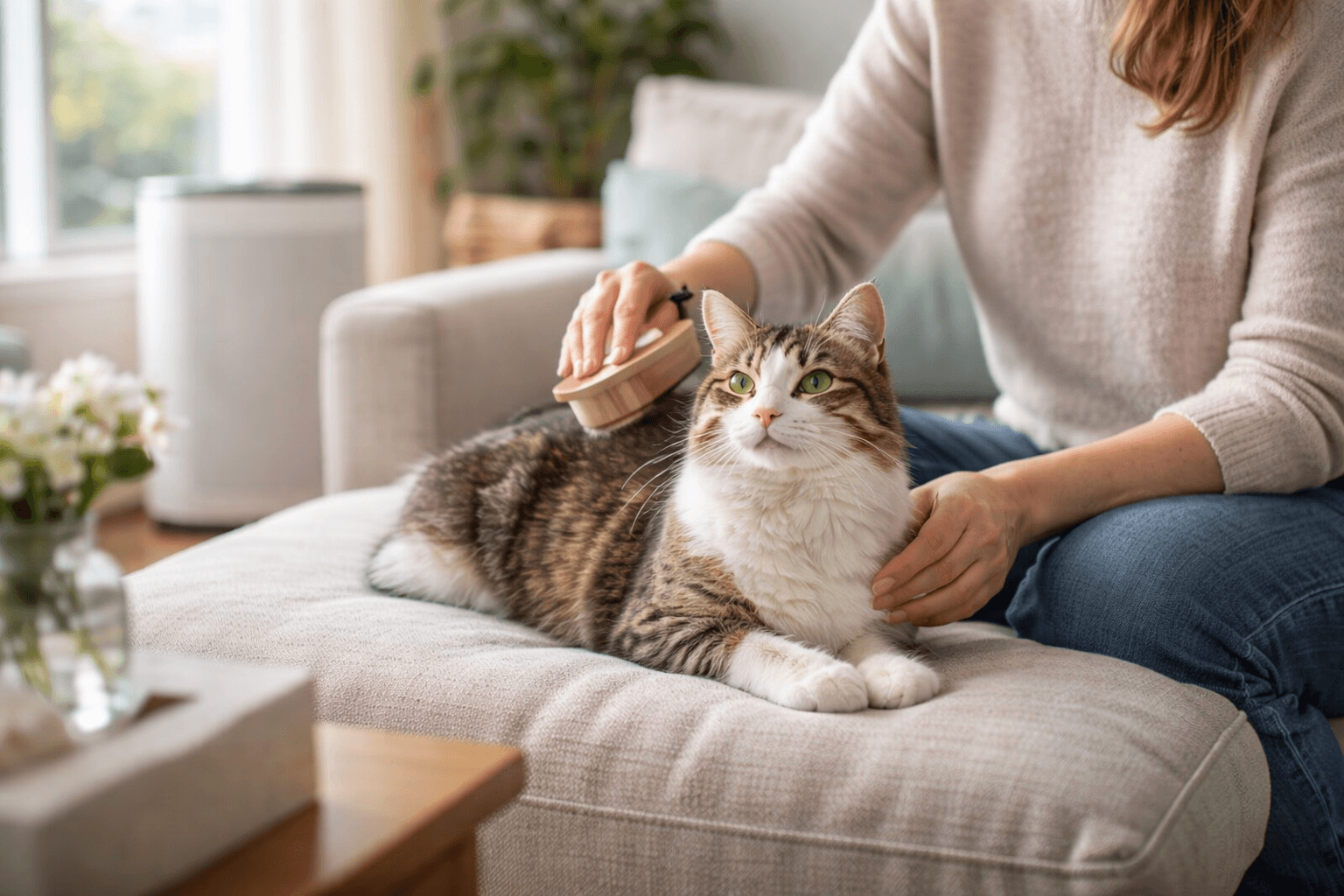
4) Grooming That Helps (Without Overdoing It)
Grooming can reduce shedding and dander. But aggressive grooming can stir up allergens. Here’s a gentle strategy:
- Brush 2–4 times/week (more during seasonal shedding).
- If possible, have a non-allergic person do the brushing.
- Wipe the coat with a pet-safe grooming wipe after brushing.
5) Bathing: When It Helps and When It Doesn’t
Some cats tolerate bathing poorly, and stress is not worth it. But for specific situations (especially hairless cats like Sphynx), a vet-approved routine can reduce skin oils and allergen spread. Always use cat-safe products and keep sessions calm, brief, and warm.
Do Male or Female Cats Trigger Fewer Allergies?
You’ll see claims that female cats are “more hypoallergenic,” and some studies suggest male cats can produce more Fel d 1—especially intact males. Practically, the difference is not reliable enough to be your only decision factor. If allergies are serious, the individual cat + home management still matters most.
Common Myths About Hypoallergenic Cats
Myth 1: “Hairless cats are allergy-free.”
Hairless cats still produce allergens in skin oils and saliva. Some people do better with them, others don’t.
Myth 2: “Short hair means no allergies.”
Coat length doesn’t equal allergen level. A short-haired cat can still be highly triggering if it produces more Fel d 1 or spreads allergens easily through grooming and activity.
Myth 3: “You will always ‘get used to it.’”
Some people adapt over time, but others worsen—especially those with asthma. Don’t assume symptoms will fade. Track your health realistically.
Warning Signs: When Cat Allergies Become a Medical Risk
If any of the following occur, take it seriously:
- Wheezing, chest tightness, shortness of breath
- Nighttime coughing
- Asthma attacks triggered by cat exposure
- Facial swelling or severe hives
In these cases, prioritize safety. Environmental changes may not be enough and you should seek medical guidance.
What About Cat Skin, Coat, and Eye Health?
Allergy-friendly living also means the cat’s coat and skin should be healthy—less dandruff, less excessive grooming, and fewer skin issues. If your cat has itchy skin, parasites, or dermatitis, dander may increase and the home allergen load may worsen.
If you’re also working on your general pet health content library, these internal resources may help visitors stay longer and explore more:
- Cat eyes guide: vision, common eye problems, and when to see a vet
- Cat vaccination schedule (2025): indoor vs outdoor, costs, side effects
- Cat poisoning emergency guide: symptoms, first aid, vet treatment
- Complete cat nutrition guide (2025): portions, feeding tips
- Emergency category hub and emergency first aid for dogs & cats
You can also link your main hospital site for appointments or services: GV Hospital (main site).
Frequently Asked Questions (FAQ) About Hypoallergenic Cats
Are there truly hypoallergenic cats?
No cat is completely allergen-free. “Hypoallergenic cats” usually means cats that may trigger fewer symptoms in some people due to lower allergen production or reduced shedding/spread.
Which cat breed is best for allergies?
Many allergy sufferers start with breeds often listed as more allergy-friendly such as Siberian, Balinese, Russian Blue, Bengal, Devon Rex, Cornish Rex, or Sphynx. But tolerance varies by person and by individual cat.
Do kittens cause fewer allergies than adult cats?
Some people react less to kittens at first, but allergy triggers can change as the cat grows. Always test your reaction to the specific cat over more than one visit when possible.
Does neutering reduce allergens?
Some evidence suggests intact males may produce more Fel d 1. Neutering can be part of an overall plan, but it’s not a guaranteed solution for allergies.
Can air purifiers really help cat allergies?
Yes—HEPA filtration can reduce airborne allergens, especially when combined with vacuuming, washing fabrics, and maintaining a cat-free bedroom.
Is it safe to use “anti-allergy” sprays or wipes?
Some pet-safe products may help reduce dander spread, but avoid harsh chemicals. If your cat has skin sensitivity or you’re unsure, consult a veterinarian for safe options.
External References
These reputable sources can help readers understand cat allergies and allergen proteins:
- Asthma and Allergy Foundation of America (AAFA): Pet allergies
- Cornell University (general health education resources)
- NCBI / PubMed (research database for Fel d 1 and allergy science)
Conclusion
Searching for hypoallergenic cats is understandable—and for many households, it’s possible to live with a cat comfortably by combining smart breed selection, individual cat testing, and serious home allergen management. Remember: the best “hypoallergenic” plan is the cat you tolerate well plus the home system you maintain consistently.
If you’d like support choosing a cat, managing chronic allergy triggers, or ensuring your cat’s skin and coat health are optimized, visit Online Vet Consultation or connect through Contact Us.
Disclaimer
This article is for educational purposes only and does not replace professional medical or veterinary advice. If you have severe allergies, asthma symptoms, or breathing difficulty, seek medical guidance promptly. For urgent pet concerns, consult a veterinarian immediately.




This article is so helpful for anyone with allergies, but I wonder if there are any specific tips for keeping allergy symptoms low after getting a cat, beyond just choosing a breed. Does anyone have personal experiences they can share?