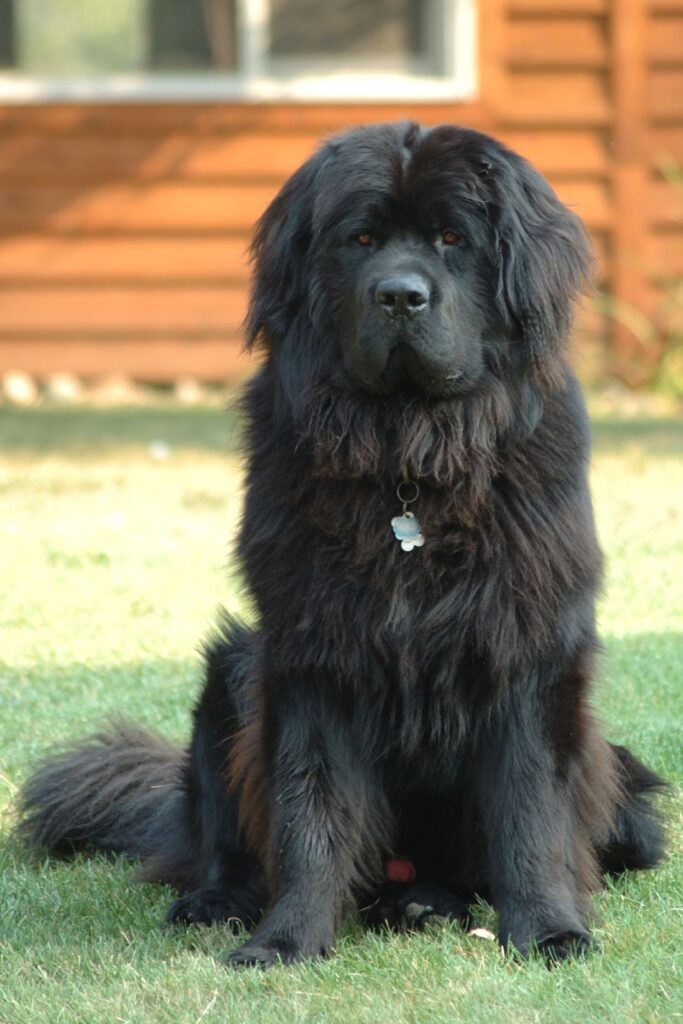
A newfoundland dog is a giant working dog whose size, dense coat, strength, and association with water create substantial everyday care commitments. A gentle reputation does not remove the need for training, supervision, suitable space, and careful health planning. Before focusing on a fluffy puppy or a dramatic swimming photograph, consider the adult animal’s needs through an ordinary week. Comfortable movement, manageable grooming, reliable transport, and the ability to obtain veterinary help matter throughout the dog’s life.
Newfoundland dog: picture the adult in your actual home
This is a large substantial dog, not simply a normal-sized companion with extra coat. Check the space available for resting, turning in passages, passing through doors, and riding in a vehicle. A dog should not need to squeeze around furniture every time they approach water or leave a bed. A secure outdoor area is useful, but it does not replace company, appropriate exploration, and comfortable indoor rest. Plan for the dog to be part of the household without blocking every practical route through it.
Consider what happens during illness or reduced mobility. Can the adult be transported safely, helped through an entrance, and managed by the people available? A Newfoundland dog may be too heavy for an unplanned lift into a vehicle or onto a slippery examination surface. Think about ramps, suitable access, and professional support before those needs become urgent. If your housing or transport only works while the animal is a puppy, reconsider the match rather than assuming the practical difficulty will solve itself when the dog grows.
Treat a gentle reputation as a starting expectation
Breed descriptions often emphasise a patient, sociable nature, but individual behaviour depends on genetics, experiences, health, and learning. Large size makes even friendly jumping, leaning, or grabbing consequential. Teach comfortable greetings and ordinary boundaries before strength increases. Children need active adult supervision and a clear explanation that a resting or eating dog should have space. The label gentle giant should not be used to justify leaving a child and dog to manage an interaction alone.
A Newfoundland dog can be worried, overstimulated, or uncomfortable like any other animal. Notice body language rather than expecting the breed reputation to prevent conflict. Our pet behaviour guide explains why fear and frustration deserve a suitable response. Reward useful behaviour, manage difficult situations, and get qualified help early if handling is becoming unsafe. A calm adult should be the result of supportive care and learning, not a dog that appears quiet because people have used force to suppress warning signs.
Support growth with an appropriate feeding plan
Growing giant-breed puppies need a complete diet and a sensible growth plan, with veterinary guidance about portions, body condition, and any individual concerns. Avoid encouraging rapid weight gain because a larger puppy looks impressive. Extra supplements are not automatically beneficial when a complete food already supplies the intended nutrients. Ask before adding calcium, joint products, or homemade mixtures. A veterinary team can help distinguish appropriate growth from excess body weight and choose a review schedule as the dog develops.
Our puppy-feeding guide provides broader portion and life-stage information. The adult Newfoundland dog also needs measured intake that matches body condition and actual activity. Thick hair can make shape difficult to judge, so a hands-on assessment may be useful. Include treats in the total plan and communicate amounts to every caregiver. A dog eager to eat does not prove that the portion is inadequate, while a new poor appetite or unexpected weight change should be assessed rather than explained away as a normal giant-breed trait.
Protect comfortable movement and reliable footing
Offer suitable activity that matches age, health, development, and the individual’s condition. A growing puppy should not be required to keep up with a strenuous adult routine merely because they are large. Repeated high-impact movement, abrupt turns, or poor footing can make an otherwise ordinary game difficult. Ask your veterinarian about appropriate limitations when relevant. A calm exploration on a manageable route can be useful without turning every outing into a measure of stamina or a test of working ability.
Provide grip on household routes, especially near beds, doors, water bowls, and vehicle access. A heavy dog slipping during every rise needs the surface improved and any discomfort assessed. Our hip-dysplasia guide gives context for one possible mobility concern, but a limp can have several causes. Do not assume the Newfoundland dog is simply lazy when rising becomes slower or exercise willingness changes. Record the pattern and seek advice so medical care and practical home adjustments can be planned together.
Learn to check the dense coat down to the skin
The coat requires regular attention to remove loose hair and prevent tangles, with particular care in friction areas. Ask an experienced groomer to demonstrate tools and technique for the individual’s coat. The outer surface can look smooth while the layer beneath becomes packed or matted. Part the hair gently and check the skin without pulling. A routine that reaches only the visible outline may be quick but fail to keep the dog comfortable. Allow enough time and budget for ongoing help when needed.
Introduce grooming in manageable cooperative stages, with stable positioning and breaks. A Newfoundland dog should not have to stand uncomfortably for a long session because all care was postponed until the coat became difficult. Dry appropriately after washing or swimming and avoid trapping persistent dampness in dense areas. Report redness, odour, itching, or a sudden dislike of handling to the veterinarian. Our dog skin guide explains why those signs may need assessment rather than a stronger shampoo or more determined brushing.
Plan for drool, water and everyday cleaning
Keep water freely available in an appropriate stable container and protect the surrounding floor from becoming slippery. A large dog’s drinking and wet coat can create more moisture than a household expects. Place washable towels or suitable non-slip protection where practical without blocking access. Clean the bowl routinely and dry splash areas. Do not limit drinking merely to keep the room tidy or stop drool appearing before visitors arrive. Hygiene should support normal care rather than restrict it.
Wipe the mouth and damp facial hair gently when needed, without repeated abrasive rubbing or pulling at sensitive skin. A Newfoundland dog may leave saliva on furniture and clothing; include that reality in the decision before choosing the breed. However, a new marked increase in drooling, difficulty swallowing, mouth pain, or an unusual smell is not automatically ordinary breed behaviour. Seek veterinary advice about changes. Practical tolerance for routine mess is useful, while overlooking a new clinical sign because the dog normally drools can delay appropriate care.
Keep water activities supervised and optional
An association with water work does not make every dog a confident swimmer or remove drowning risks. Introduce suitable water access gradually in a safe setting, with appropriate supervision and equipment. Never throw the dog in or assume a puppy will rescue themselves from an awkward exit. Assess currents, water quality, temperature, depth, and the ability to leave the water comfortably. A shore that is easy to enter can be much harder to climb back onto when the coat is wet and the dog is tired.
A Newfoundland dog should not be encouraged to attempt a rescue or haul a person without specialist training, fitness assessment, and proper safety planning. Recreational swimming is not equivalent to professional water work. Keep the dog clear of ice-covered water, strong currents, and unknown hazards. Allow rest, fresh drinking water, and suitable drying afterwards. If the dog dislikes water, choose another activity rather than forcing them to satisfy a breed stereotype. The animal’s comfort and safe movement are more important than recreating an impressive image of a working dog.
Adjust the routine for heat and weather
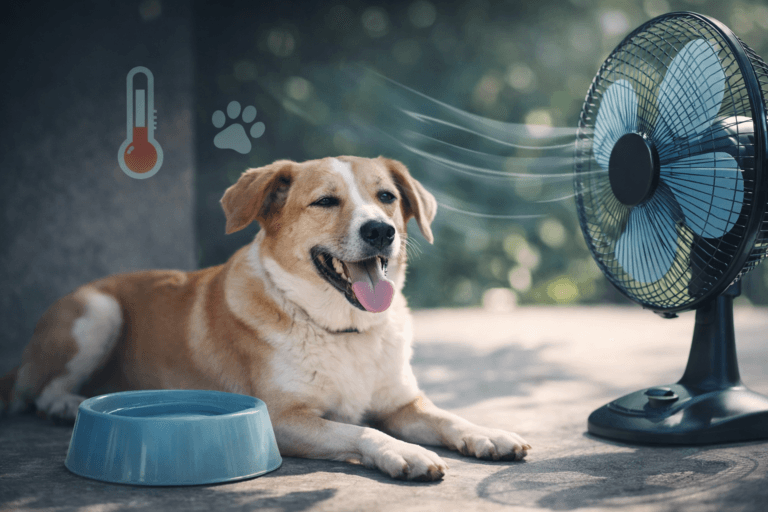
A dense coat and large body require thoughtful management in warm conditions. Provide a comfortable environment, water, shade where appropriate, and outings timed and adjusted to actual conditions. Avoid strenuous activity during heat and do not assume swimming makes a hot day harmless. Watch the dog rather than using enthusiasm as proof that they are coping. Heat exposure can become serious, and a large dog may be difficult to move quickly once they are distressed.
Our heatstroke guide explains warning signs and urgent action. A Newfoundland dog also needs sensible care in cold wet weather, including checks for packed snow or persistent dampness. Coat appearance is not an all-weather guarantee. Avoid leaving the animal in a vehicle or isolated outdoor space on the assumption that the breed prefers it. Plan for power failures, travel delays, and changes in the household routine so climate-related comfort is not dependent on one perfect set of daily conditions.
Review breed-relevant health screening records
The Newfoundland Club of America identifies hips, elbows, heart assessment, and cystinuria testing among important breeding-stock checks. Ask for the actual documents identifying the parents rather than a statement that everything was health checked. Different tests answer different questions, and a genetic result does not replace a physical examination or imaging where indicated. Discuss the results with a veterinarian if interpretation is unclear. Health schemes can help make information available, but records need to be read, not merely counted.
A database listing or CHIC designation should not be described as a promise that every result is normal or that the dog can never develop disease. A Newfoundland dog from rescue may have incomplete ancestry information and still deserves an appropriate individual care plan. Known family history and screening can guide discussions without determining the animal’s entire future. Ask what ongoing review is sensible and what signs should prompt earlier attention. Responsible sourcing includes honesty about limitations, practical lifelong support, and health and temperament priorities rather than selecting the largest possible adult.
Recognise urgent signs without trying home diagnosis
Learn the signs of potentially serious abdominal distress, including repeated unproductive retching, a swollen abdomen, marked restlessness, or collapse, and contact a veterinarian urgently when they occur. Our dog bloat emergency guide provides preparation. Do not wait for every listed sign or attempt to resolve the problem with food, exercise, or household remedies. Keep transport and out-of-hours contact information available, since managing an unwell giant dog requires more planning than carrying a small animal to the car.
Difficulty breathing, collapse, marked weakness, or repeated attempts to urinate with little or no output also needs prompt veterinary advice. A Newfoundland dog may have several possible causes for such signs, and breed knowledge cannot establish the diagnosis at home. Report the sequence clearly and follow the clinic’s instructions. When a problem is less acute, record appetite, movement, drinking, urination, and activity so changes can be assessed. Routine observation is valuable, but it should never become a reason to postpone help during obvious distress.
Make handling and transport practical before illness
Practise calm entry into a suitable vehicle, gentle body handling, examination-like touches, and comfortable use of any needed ramp. Keep the surface stable and the task easy enough for the dog to learn without force. Waiting until an injury occurs to introduce a steep slippery ramp can make a difficult day worse. Ask the veterinary team about arrangements for weighing, examinations, or assistance when the animal cannot move normally. A plan for a Newfoundland dog should account for both size and dignity during care.
Budget realistically for food, grooming, veterinary services, appropriate equipment, and care during travel or illness. A large bed, secure vehicle space, or a professional willing to handle the coat may need planning well ahead. Identify someone who can provide appropriate help if the main caregiver is unavailable. A good fit is not established by having a garden alone. It depends on time, skills, finances, physical practicality, and a household willing to support the animal as they grow older and their needs change.
Rehearse a comfortable vehicle routine before it is urgent
Imagine an adult that hesitates at the vehicle entrance but appears otherwise comfortable. Check the height, grip, available space and stability of any ramp before repeatedly asking for a jump. A Newfoundland dog may need gradual practice with a different route into the vehicle, and a new reluctance also deserves consideration of pain or illness. Keep early sessions brief and achievable, with qualified help when the task is physically difficult. The transport plan should still work after a minor injury or during ageing, not only while the dog is strong and enthusiastic. Discuss appropriate assistance with the veterinary team rather than expecting one person to improvise lifting a heavy frightened animal.
Frequently asked questions about giant-breed living
Is every individual safe with children automatically? No. A reputation for gentleness does not remove the need for supervision, training, space, and recognition of discomfort. Large friendly movement can still knock someone over.
Must the dog swim to be happy? No. Suitable water activity can be enjoyable for some individuals, but it must be safe and voluntary. Provide other appropriate opportunities for exploration, play, learning, and social contact.
Can coat care wait until the dog looks tangled? Dense hair can conceal problems near the skin. Establish a practical routine early and get a demonstration from a competent professional so checking and grooming are effective rather than only cosmetic.
What should be planned before bringing one home? Adult space, transport, climate management, handling support, grooming, food, health records, and emergency access all deserve attention. The most important preparation is a realistic ordinary-week plan that still works when the dog is no longer a puppy or needs extra help.