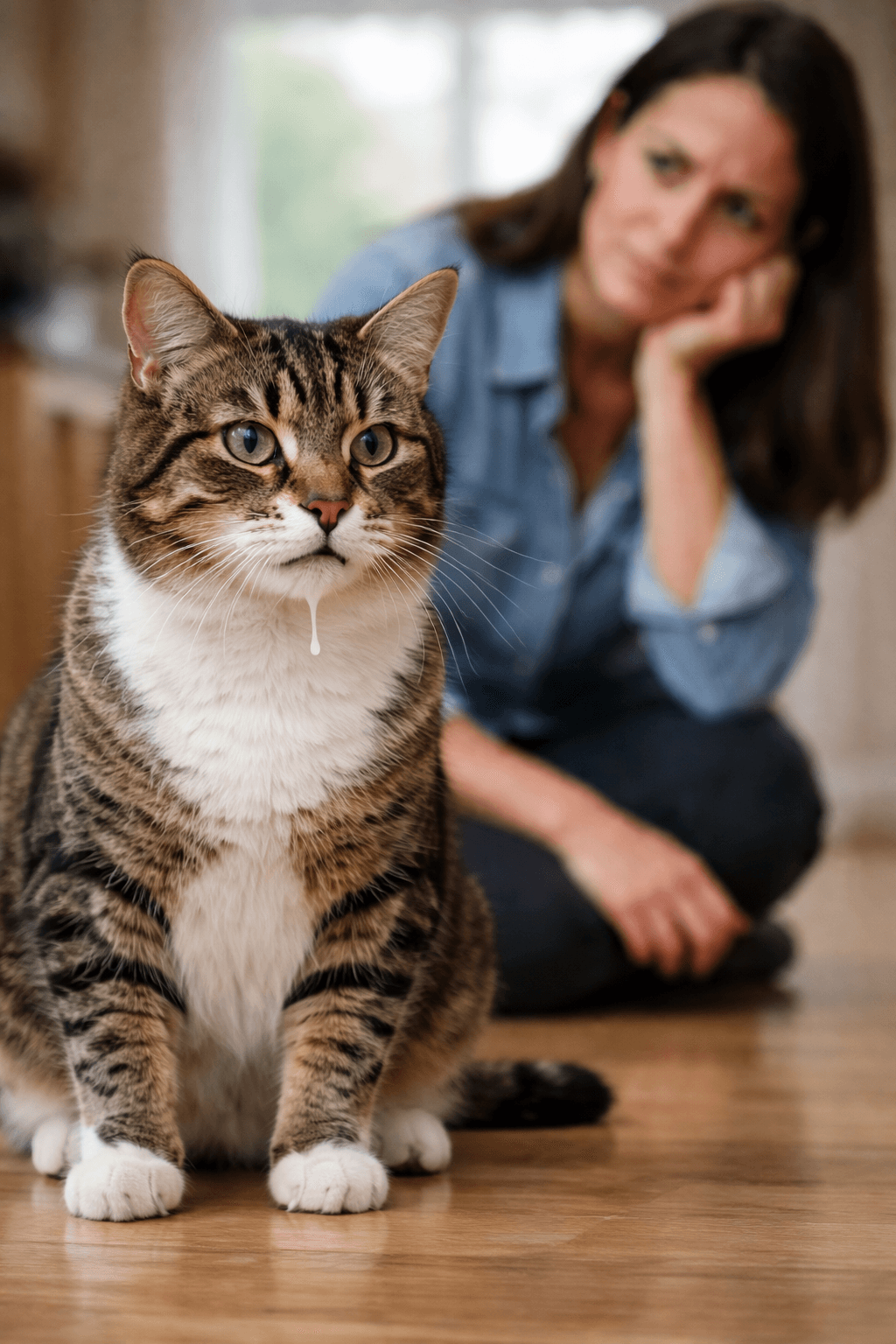
Cat drooling is something many owners notice suddenly and find alarming. Cat drooling can range from a few drops of saliva on the chin to constant wetness around the mouth, chest, and front legs. In some cats, cat drooling is mild and temporary, but in others it can be the first sign of pain, nausea, poisoning, dental disease, mouth ulcers, or a serious internal problem. The important thing is to know when cat drooling is harmless, when home observation may be enough, and when it needs urgent veterinary care.
At General Veterinary Hospital Lahore, we see this complaint regularly. Sometimes the cause is simple, like severe tartar buildup or a small ulcer under the tongue. Other times, the drooling starts after a cat licks a bitter medicine, chews a plant, develops kidney disease, or has a painful viral mouth infection. In real life, cat drooling is not one disease. It is a symptom, and the real cause has to be found.
Many owners first notice saliva marks on the bedding, a wet chin, or a sudden bad smell from the mouth. Some cats also paw at the face, stop eating dry food, hide, or sit quietly with the mouth slightly open. These details matter because they help point toward the real problem.
This guide explains the most common reasons for drooling in cats, what signs to check at home, what treatment may be needed, and when your cat should be seen quickly by a veterinarian.
Is drooling normal in cats?
Unlike some dogs, cats do not normally drool a lot. A small amount of saliva may appear in a very relaxed cat, during loud purring, while smelling favorite food, or briefly during travel stress. But visible, repeated, or excessive drooling is not normal and should never be ignored if it keeps happening.
| Drooling Pattern | What It May Mean |
|---|---|
| A few drops while purring or kneading | Can be harmless in some relaxed cats |
| Sudden heavy drooling | Pain, nausea, toxin exposure, mouth problem, emergency |
| Drooling with bad breath | Dental disease, mouth infection, ulcers |
| Drooling with not eating | Painful mouth, nausea, serious illness |
The most common causes of cat drooling
The most common reasons include:
- Dental disease and gum inflammation
- Mouth ulcers or tongue injuries
- Nausea and stomach upset
- Toxin exposure or bitter substances
- Foreign body stuck in the mouth
- Kidney disease
- Viral infections such as calicivirus
- Heat stress or extreme pain
- Oral tumors, especially in older cats
1. Dental disease and mouth pain
This is one of the biggest causes of cat drooling. Cats with tartar buildup, gingivitis, tooth root infection, broken teeth, or severe mouth inflammation often drool because the mouth hurts. Saliva may spill out because swallowing is uncomfortable. Some cats chew on one side, drop food, or run to the food bowl but back away after sniffing it.
At General Veterinary Hospital Lahore, many drooling cats turn out to have advanced dental disease that owners did not recognize. A common pattern is an adult cat who slowly becomes choosy with food, starts preferring gravy or soft meals, then one day begins drooling heavily. On examination, the gums are red, painful, and sometimes bleeding.
Signs that point toward a dental or oral pain problem include:
- Bad breath
- Difficulty chewing
- Dropping food from the mouth
- Pawing at the mouth
- Blood-tinged saliva
- Refusing dry food
If your cat also seems painful or is eating less, related reading like why is my cat not eating can support owners trying to understand the wider picture.
2. Mouth ulcers and viral infections
Cats can develop painful ulcers on the tongue, gums, lips, or roof of the mouth. These ulcers may happen with viral disease, especially feline calicivirus, severe gingivitis, kidney disease, or chemical irritation. Ulcers make swallowing painful, so saliva builds up and drips from the mouth.
Kittens and unvaccinated cats are especially at risk of infectious causes. Some infected cats also show sneezing, eye discharge, fever, poor appetite, and lethargy. In practice, we sometimes see young cats at General Veterinary Hospital Lahore who arrive for “drooling only,” but on oral examination they have multiple painful ulcers and dehydration.
3. Nausea and stomach upset
Drooling does not always start in the mouth. Cats with nausea often salivate more. This can happen before vomiting, during motion sickness, after eating something irritating, or with internal disease affecting the stomach, intestines, liver, or pancreas.
Owners may notice:
- Lip smacking
- Repeated swallowing
- Hunched posture
- Not eating or sniffing food and walking away
- Vomiting or retching
Nausea-related drooling matters because it may be linked to more serious conditions such as pancreatitis in cats, cat kidney disease, or even early hepatic lipidosis in a cat that has stopped eating.
4. Poisoning or contact with a bitter substance
This is one of the most urgent causes of cat drooling. Cats may drool heavily after licking a toxic plant, household cleaner, insecticide residue, human cream, strong medicine, or other irritating chemical. Sometimes the substance is not extremely toxic but tastes so bitter that the cat foams and drools dramatically. In other cases, it is a true poisoning emergency.
At General Veterinary Hospital Lahore, we have seen cats drool heavily after accidental exposure to cleaning liquids left on floors, topical products not meant for cats, and even after chewing decorative plants. Owners often say, “He was fine, then suddenly saliva started pouring out.” In these cases, speed matters.
If poisoning is suspected, do not force milk, oil, or random home remedies. Bring the product name or photo if possible. Severe cases may also show tremors, vomiting, breathing difficulty, collapse, or seizures.
A related safety article for internal support is cat poisoning emergency guide.
5. Something stuck in the mouth
A string, bone splinter, grass blade, thorn, thread, fish hook, or small object stuck in the mouth can lead to sudden drooling. The cat may paw at the mouth, shake the head, gag, or resist eating. Some cats hide because opening and closing the jaw hurts.
Never pull a visible string from the mouth unless a veterinarian has advised it. In cats, string can be anchored under the tongue and pulling it may cause serious internal injury.
6. Kidney disease
Chronic kidney disease is common in older cats and can lead to drooling in two ways. First, kidney disease often causes nausea. Second, it can contribute to painful mouth ulcers in some cases. A cat with kidney disease may also drink more, urinate more, lose weight, look dull, and eat poorly.
At General Veterinary Hospital Lahore, older cats are sometimes brought in for drooling and bad breath, and owners assume it is just a dental problem. Blood tests then show kidney disease is also involved. That is why older cats with drooling deserve a broader evaluation, not only a mouth check.
7. Heat stress, fever, or severe pain
Cats do not usually pant or drool unless something is wrong. In hot weather, after confinement in a poorly ventilated space, or with severe fever or pain, some cats may begin drooling. This is more concerning if the cat is open-mouth breathing, restless, weak, or very hot to the touch.
Although dogs are much more prone to heatstroke, cats can still suffer in hot environments. In Lahore’s hotter months, this risk becomes more relevant, especially in flat-faced cats, older cats, and cats kept in poorly cooled rooms or carriers.
8. Oral tumors
In older cats, persistent drooling may sometimes be caused by an oral mass or tumor. These cats may have weight loss, a bad smell from the mouth, blood in the saliva, facial swelling, difficulty chewing, or a visible growth. This cause is less common than dental disease, but it is important not to miss.
How to judge the seriousness of your cat’s drooling
| Signs | Risk Level | What to Do |
|---|---|---|
| A few drops only during purring, otherwise normal | Low | Observe |
| Drooling with bad breath or difficulty eating | Moderate | Book a vet visit soon |
| Drooling with vomiting, weakness, not eating | High | Same-day examination |
| Sudden heavy drooling after toxin exposure or breathing trouble | Emergency | Urgent veterinary care immediately |
What you can check at home
You can do a gentle home assessment if your cat is calm, but avoid forcing the mouth open.
- Check whether the chin is just slightly wet or soaked
- Smell the mouth from a short distance for bad odor
- See whether your cat is eating normally
- Look for blood, food dropping, or pawing at the mouth
- Think about any recent medicines, cleaners, plants, or chemicals
- Check whether vomiting, diarrhea, or lethargy is also present
If your cat is alert and not distressed, you may wipe the chin gently with a soft damp cloth. Offer fresh water and a soft, easy-to-eat meal. Do not force-feed. If eating is painful, forcing food may worsen stress and discomfort.
What not to do at home
- Do not force the mouth open in a painful cat
- Do not pull visible string from the mouth
- Do not give human painkillers
- Do not apply random mouth gels or antiseptics
- Do not wait days if your cat is not eating
This is especially important because cats that stop eating can deteriorate quickly. A cat with persistent drooling and poor appetite may move toward dehydration and more serious complications.
When cat drooling needs urgent veterinary care
Seek prompt or urgent care if your cat has any of the following:
- Sudden heavy drooling
- Possible toxin or chemical exposure
- Not eating or drinking
- Vomiting, weakness, or collapse
- Open-mouth breathing or breathing difficulty
- Blood from the mouth
- Severe bad breath with pain
- Visible swelling of the face or jaw
At General Veterinary Hospital Lahore, one memorable case involved an older cat who had been drooling for several days and was only licking gravy from food. The family thought it was just a “mouth taste problem.” The exam showed severe dental pain plus dehydration. After treatment, the owner said the cat seemed like a different animal within a short time. Cases like this remind owners that drooling is often a pain signal, not a small habit.
How veterinarians diagnose the cause
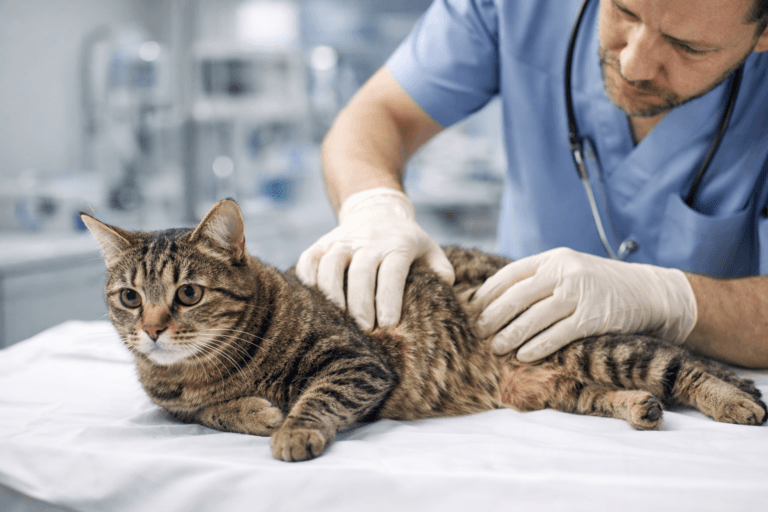
Veterinary diagnosis usually begins with history and examination. The vet may ask when the drooling started, whether the cat is eating, what foods or medicines were given recently, and whether any chemicals or plants may have been involved.
The work-up may include:
- Oral examination of teeth, gums, tongue, and cheeks
- Checking for ulcers, wounds, or foreign bodies
- Temperature and hydration assessment
- Blood tests if kidney disease, infection, or internal illness is suspected
- Further imaging or biopsy if a mass is found
In some cats, the problem is obvious right away, such as severe gingivitis or an oral ulcer. In others, the mouth looks only mildly abnormal and the real issue turns out to be nausea, kidney disease, or toxin exposure.
How cat drooling is treated
Treatment depends completely on the cause.
Dental disease
The cat may need dental cleaning, treatment for infection, extraction of painful teeth, and pain relief.
Mouth ulcers or viral disease
Treatment may include supportive care, pain control, hydration, nutritional support, and management of the underlying infection or inflammation.
Nausea
Anti-nausea treatment, fluids, diet support, and investigation of the underlying illness may be needed.
Toxin exposure
This may require emergency stabilization, decontamination, medication, IV fluids, and monitoring depending on the toxin.
Kidney disease
Management often includes fluids, diet support, nausea control, and longer-term monitoring.
Foreign body or oral injury
The object may need careful removal and the damaged tissues may need treatment.
Oral tumor
Further testing and a specific treatment plan are required.
Simple visual symptom chart
How to reduce the risk of drooling problems
- Schedule regular mouth and dental checks
- Keep cleaning agents, medicines, and toxic plants out of reach
- Use parasite and vaccination plans properly
- Do not delay care when your cat eats less
- Pay attention to bad breath and food dropping
- Support senior cats with regular health screening
Vaccination and general preventive care also matter because some viral illnesses affecting the mouth can be reduced with proper preventive medicine. Your related article on cat vaccination schedule fits naturally into this topic.
Frequently asked questions
Can stress cause cat drooling?
Yes, some cats drool briefly during severe travel stress or fear, but it should stop. Repeated or heavy drooling still needs a cause checked.
Why is my cat drooling but still eating?
Mild dental disease, early nausea, or a temporary bitter taste can allow a cat to keep eating at first. Do not assume it is harmless if the drooling continues.
Is cat drooling always serious?
No, but it is never something to ignore if it is new, repeated, or associated with poor appetite, bad breath, weakness, or pain.
Can teething make kittens drool?
Some kittens may drool a little during teething, but heavy drooling, mouth pain, ulcers, or poor appetite are not normal and should be checked.
Final thoughts
Cat drooling can be caused by something as simple as a bitter taste, but it can also be the first visible sign of dental pain, mouth ulcers, nausea, poisoning, kidney disease, or a more serious oral problem. The most important step is not to dismiss it as a small habit, especially if your cat is eating less, smells bad from the mouth, hides more than usual, or seems unwell.
At General Veterinary Hospital Lahore, many cats with drooling improve quickly once the real cause is identified. Sometimes it is a painful tooth. Sometimes it is an ulcer, a toxic exposure, or a deeper medical issue. The sooner the cause is found, the easier it is to relieve pain and protect your cat’s overall health.
If your cat has sudden heavy drooling, not eating, blood from the mouth, vomiting, weakness, or possible toxin exposure, seek veterinary care without delay.