Lick Granuloma in Dogs: Causes, Treatment & Breaking the Cycle
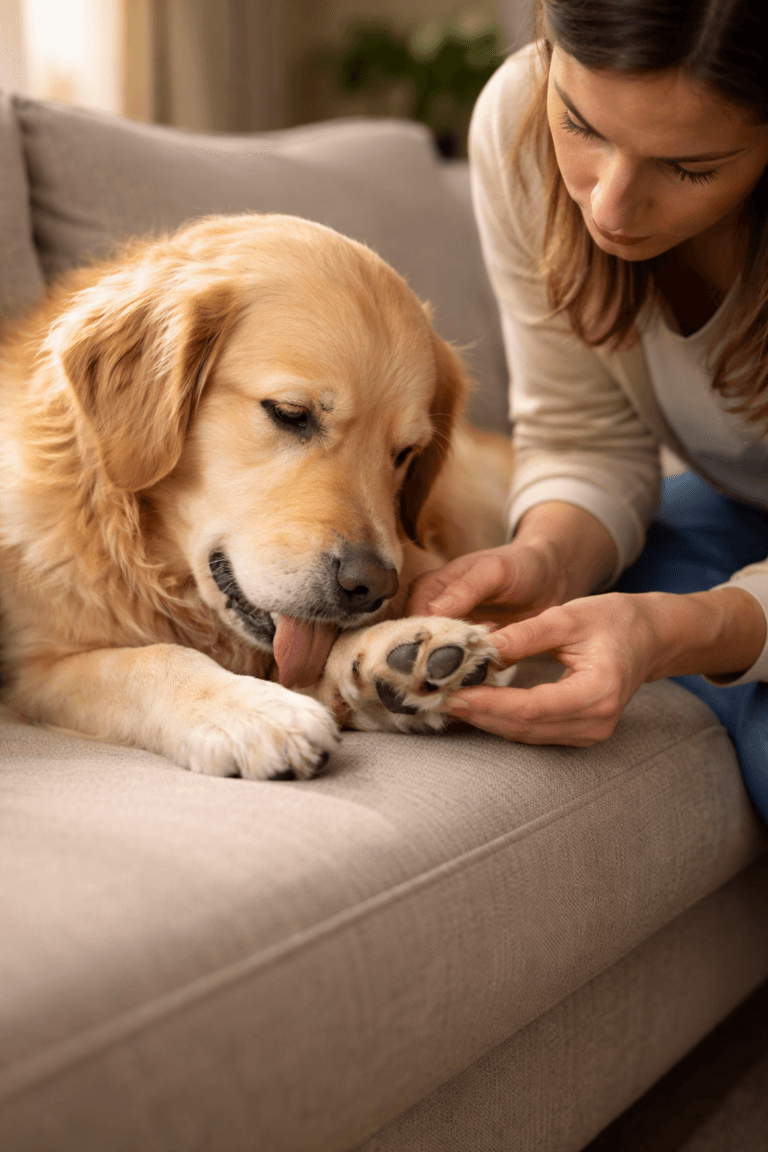
A thickened, hairless patch on a dog’s lower leg that just won’t heal is usually a lick granuloma, a wound that a dog is actually creating and maintaining through their own repetitive licking. This guide explains the surprisingly self-reinforcing cycle behind this condition, why treating the visible sore alone rarely works, and what actually breaks the pattern for good.
Lick granuloma in dogs: the Self-Reinforcing Cycle Behind Lick Granulomas
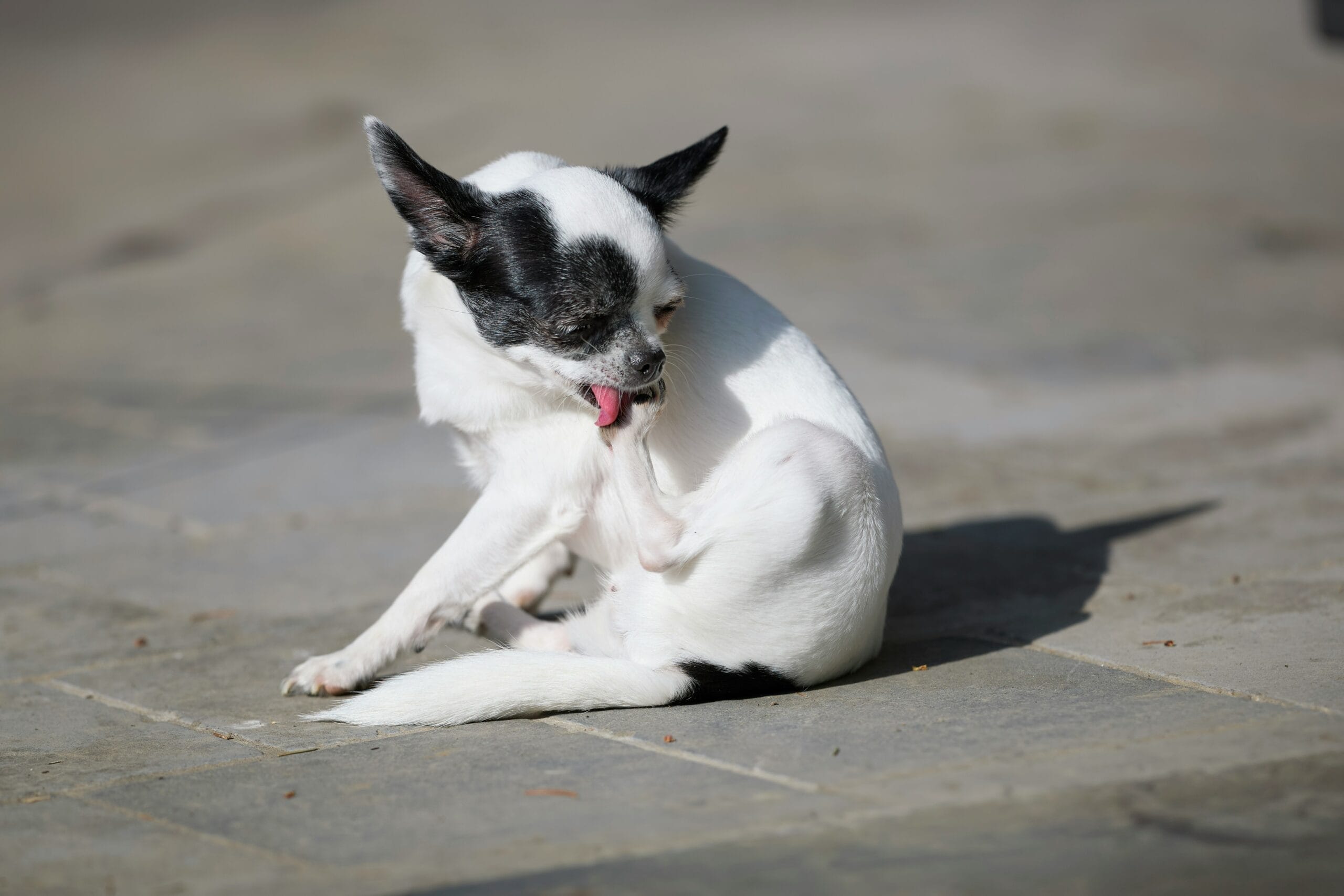
Understanding why this condition is so persistent starts with understanding the cycle driving it. Something initially triggers licking, an itch, a minor injury, joint discomfort, or even simple boredom or anxiety. The act of licking itself releases endorphins, the body’s natural feel-good chemicals, providing genuine, if temporary, relief and comfort. This creates a powerful incentive to keep licking, even after the original trigger has resolved, since the licking behavior itself has become a source of comfort independent of its original cause. Meanwhile, the constant licking mechanically irritates and damages the skin, creating new discomfort that prompts yet more licking, and the site can develop secondary bacterial infection that adds another layer of irritation to the cycle. This is why a lick granuloma often persists long after whatever originally started it, and why simply telling a dog to stop, or blocking access with a cone alone, frequently doesn’t resolve the underlying drive to lick.
Lick granuloma in dogs: identifying the Original Trigger
Underlying pain. Joint pain from arthritis, hip or elbow dysplasia, or an old injury commonly drives localized licking at a specific joint as the dog attempts to self-soothe.
Allergic or itchy skin. Environmental or food allergies causing itchiness can direct a dog’s attention to a specific accessible spot.
Anxiety, boredom, or compulsive behavior. Dogs left alone for long periods, or experiencing separation anxiety or general understimulation, are notably prone to developing this condition as a stress outlet.
Skin infection or parasites. Bacterial or fungal infection, or mites, can cause the initial itch that starts the cycle.
Nerve-related discomfort. Less commonly, nerve irritation or neuropathy in the affected limb can be an underlying driver.
| Suspected trigger | Supporting clues |
|---|---|
| Joint pain | Licking concentrated directly over a joint, other signs of stiffness or lameness |
| Allergy/itchy skin | Itching in other areas too, seasonal pattern, other allergy signs |
| Anxiety/boredom | Licking worse when alone, correlates with routine changes or understimulation |
| Infection | Odor, discharge, or the area worsening despite behavioral interventions |
Why Treating Only the Visible Lesion Rarely Works
It’s tempting to focus entirely on the sore itself, topical treatments, bandaging, or an E-collar to physically prevent access, but these approaches alone frequently fail to produce lasting resolution precisely because they don’t address why the dog started and continues licking in the first place. An E-collar can be a genuinely useful short-term tool to allow healing while the underlying cause is identified and addressed, but used as a standalone long-term solution, it often simply delays recurrence once removed rather than resolving the drive to lick. Lasting success requires identifying and treating the actual trigger, whether that’s joint pain, allergy, anxiety, or infection, alongside any direct care for the lesion itself.
Comprehensive Treatment Approach
What Enrichment Actually Helps Reduce Boredom-Driven Licking
For dogs where boredom or understimulation appears to be a genuine contributing factor, specific, deliberate enrichment tends to work better than a vague increase in general attention. Puzzle feeders and food-dispensing toys turn mealtime into a mentally engaging activity rather than a passive one. Rotating a small selection of toys, rather than leaving everything out permanently, keeps novelty in the environment that dogs otherwise adapt to and stop noticing. Scheduled, predictable daily walks and play sessions provide both physical outlet and structure a dog can anticipate and rely on. For dogs specifically prone to licking when left alone, a food puzzle or long-lasting chew provided right before departure can redirect that early alone-time period, often the highest-risk window for the behavior, toward a more constructive outlet.
Working With Your Veterinarian on a Long-Term Plan
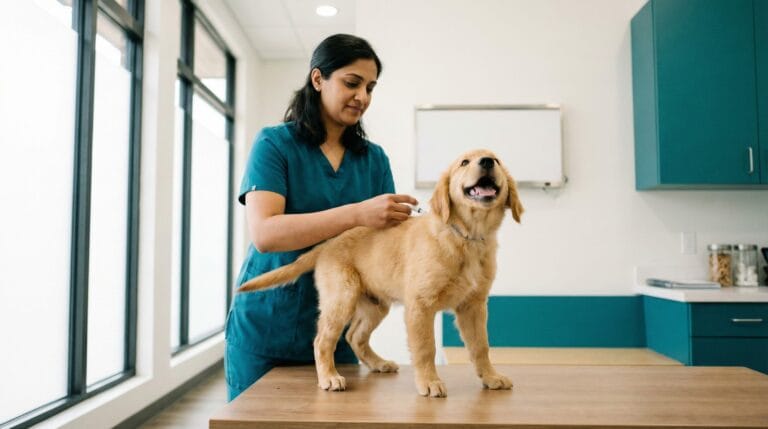
Because lick granulomas often involve overlapping physical and behavioral factors, a collaborative, ongoing relationship with your veterinarian tends to produce better results than a single visit and a single prescribed treatment. Follow-up appointments to reassess healing, adjust medication if a behavioral component is being treated pharmacologically, and revisit the diagnostic picture if initial treatment isn’t producing expected improvement are all a normal, expected part of managing this condition well. Some particularly complex or treatment-resistant cases benefit from referral to a veterinary dermatologist or veterinary behaviorist, specialists with deeper experience in exactly this kind of overlapping physical-behavioral presentation, rather than continuing to cycle through general approaches without clear improvement.
A Closing Thought
Lick granulomas are a genuinely good example of how a physical symptom can have a behavioral or emotional component, and treating either piece alone often falls short. Owners who approach this condition with curiosity about the “why” behind the licking, rather than frustration at the behavior itself, tend to have the most success finding and addressing what their dog actually needs.
A Note on Location Patterns
Lick granulomas most commonly appear on the front of the wrist (carpus) or the top of the paw, likely because these areas are easily accessible for a dog to reach and lick repeatedly, unlike areas of the body that are harder to target directly. A lesion appearing in an unusual or less accessible location sometimes warrants extra consideration of an underlying cause specific to that area, since the typical accessibility-driven pattern doesn’t fully explain it.
Frequently Asked Questions
Can lick granulomas heal on their own?
Rarely without addressing the underlying cause, since the self-reinforcing licking cycle tends to persist and prevent natural healing unless the original trigger and the behavior pattern are both addressed.
Is a lick granuloma the same as a hot spot?
No, a hot spot develops and worsens rapidly, often within hours, while a lick granuloma develops gradually over weeks to months of repetitive licking at the same spot.
Will my dog need to wear a cone forever?
Not typically; a cone is usually a temporary tool used while the underlying trigger is identified and treated, not a permanent solution.
Can lick granulomas come back after treatment?
Yes, particularly if the underlying trigger wasn’t fully addressed or a new source of discomfort or stress develops, which is why ongoing attention to your dog’s overall physical and behavioral wellbeing matters even after the lesion heals.
By Dr. Zahid Afzal, DVM — General Veterinary Hospital, Lahore. This article is for general education and does not replace a full physical examination or personalized treatment plan from your own veterinarian.