Vet-reviewed emergency guide
Pet emergencies happen suddenly. Choking, poisoning, seizures, heatstroke, bleeding, trauma, breathing difficulty, collapse, and shock can become life-threatening within minutes. Many owners panic because they do not know what to do during the first critical moments.
This pet emergency first aid guide explains what dog and cat owners can do before reaching a veterinary hospital. Emergency first aid does not replace veterinary treatment, but correct early action can help stabilize your pet and may improve the chance of survival.
Emergency rule: If your pet is unconscious, struggling to breathe, choking, bleeding heavily, collapsing, seizing for more than 5 minutes, showing heatstroke signs, or suspected of poisoning, contact an emergency veterinarian immediately while preparing transport.
Last updated: June 2026 — reviewed for choking, poisoning, seizures, heatstroke, bleeding, trauma, shock, first-aid kits, and emergency veterinary warning signs.
Pet emergency first aid: Quick Action: What to Do First in a Pet Emergency
- Stay calm and check safety. Do not put yourself at risk, especially with a painful or panicked pet.
- Check breathing. Watch chest movement and listen for breathing sounds.
- Check gum color. Pale, blue, grey, or very red gums can be serious.
- Control severe bleeding. Apply firm pressure with clean gauze or cloth.
- Call a veterinarian. Tell them symptoms, time of onset, possible toxin, injury, and your estimated arrival time.
- Transport safely. Keep the pet calm, warm if shocked, cool if overheated, and avoid unnecessary movement.
Pet emergency first aid: What Counts as a Pet Emergency?
Many owners are unsure which symptoms can wait and which need urgent care. Dogs and cats can hide pain and illness, so sudden changes should be taken seriously. Any problem affecting airway, breathing, circulation, consciousness, severe pain, or toxin exposure should be treated as an emergency.
| Emergency Sign | Why It Matters | What to Do |
|---|---|---|
| Difficulty breathing | Airway or lung problem can become fatal quickly. | Keep calm, avoid stress, seek urgent vet care. |
| Heavy bleeding | Blood loss can lead to shock. | Apply firm pressure and go to a vet. |
| Seizure over 5 minutes | Long seizures can overheat the body and damage the brain. | Do not restrain; time it and call a vet urgently. |
| Poisoning exposure | Some toxins act fast and need specific treatment. | Do not induce vomiting unless told by a vet. |
| Heatstroke signs | Organ failure can develop rapidly. | Start cooling and contact a vet immediately. |
For preventive care that can reduce some emergency risks, read our Complete Deworming and Parasite Control Guide and Dog Vaccination Schedule.
Pet emergency first aid: Need Urgent Pet Guidance?
If your dog or cat is choking, poisoned, seizing, overheating, bleeding, collapsing, or breathing abnormally, contact a local emergency veterinarian first. For non-immediate guidance and case discussion, you can also use our online vet consultation.
Pet emergency first aid: Choking First Aid for Dogs and Cats
Choking happens when an object blocks the airway. A choking pet may gag, paw at the mouth, panic, drool, cough, struggle to breathe, develop blue gums, or collapse. Choking is an emergency because oxygen supply can drop quickly.

Pet emergency first aid: What to Do
- Stay calm and keep the pet as still as possible.
- Open the mouth carefully only if safe. A painful or panicked pet may bite.
- Remove only a clearly visible and reachable object.
- Do not perform a blind finger sweep because it may push the object deeper.
- If the pet cannot breathe or collapses, call an emergency vet immediately and follow their instructions for airway rescue or CPR.
- Even if the object comes out, veterinary examination is still recommended because throat injury, aspiration, or swelling can occur.
Pet emergency first aid: Important Choking Warning
Do not repeatedly push fingers into the throat, do not pour water into the mouth, and do not delay emergency care if breathing is affected. A choking pet needs fast, careful action and veterinary help.
Severe Bleeding and Deep Wounds
Bleeding may be caused by road accidents, dog fights, glass cuts, bite wounds, sharp objects, surgery-site opening, or trauma. Heavy bleeding can lead to shock, especially in small dogs, cats, puppies, and kittens.
First Aid for External Bleeding
- Apply firm pressure directly over the wound with clean gauze, towel, or cloth.
- Hold pressure continuously for several minutes without repeatedly checking.
- If blood soaks through, add more layers on top instead of removing the first layer.
- Keep the pet calm and limit movement.
- Do not apply powders, home remedies, or human wound creams without veterinary advice.
- Go to a veterinary clinic urgently if bleeding is heavy, deep, from the chest/abdomen, or does not stop quickly.
Signs of Internal Bleeding
- Pale or white gums
- Rapid breathing
- Weakness or collapse
- Swollen or painful abdomen
- Cold paws or ears
- Fast heart rate or weak pulse
Internal bleeding is not visible from outside and can be fatal without immediate veterinary treatment.
Poisoning Emergencies in Dogs and Cats
Poisoning is one of the most common pet emergencies. Dogs and cats may ingest human medicines, pesticides, cleaning chemicals, toxic plants, chocolate, xylitol, grapes/raisins, rodenticides, insecticides, lilies, antifreeze, or unsafe human foods.

Common Signs of Poisoning
- Vomiting or diarrhea
- Drooling or foaming
- Tremors or seizures
- Weakness or collapse
- Abnormal heart rate
- Breathing difficulty
- Bleeding or bruising after rodenticide exposure
- Sudden behavior change
What to Do Immediately
- Remove the pet from the toxin source.
- Keep packaging, labels, plant samples, medicine bottles, or food wrappers.
- Call your veterinarian or a pet poison helpline immediately.
- Do not induce vomiting unless specifically instructed.
- Do not give milk, oil, salt, or home remedies.
- Transport to a veterinary clinic if advised or if symptoms are present.
For toxin-specific guidance, read our Chocolate Poisoning in Dogs Guide and Cat Poisoning Emergency Guide.
Heatstroke in Dogs and Cats
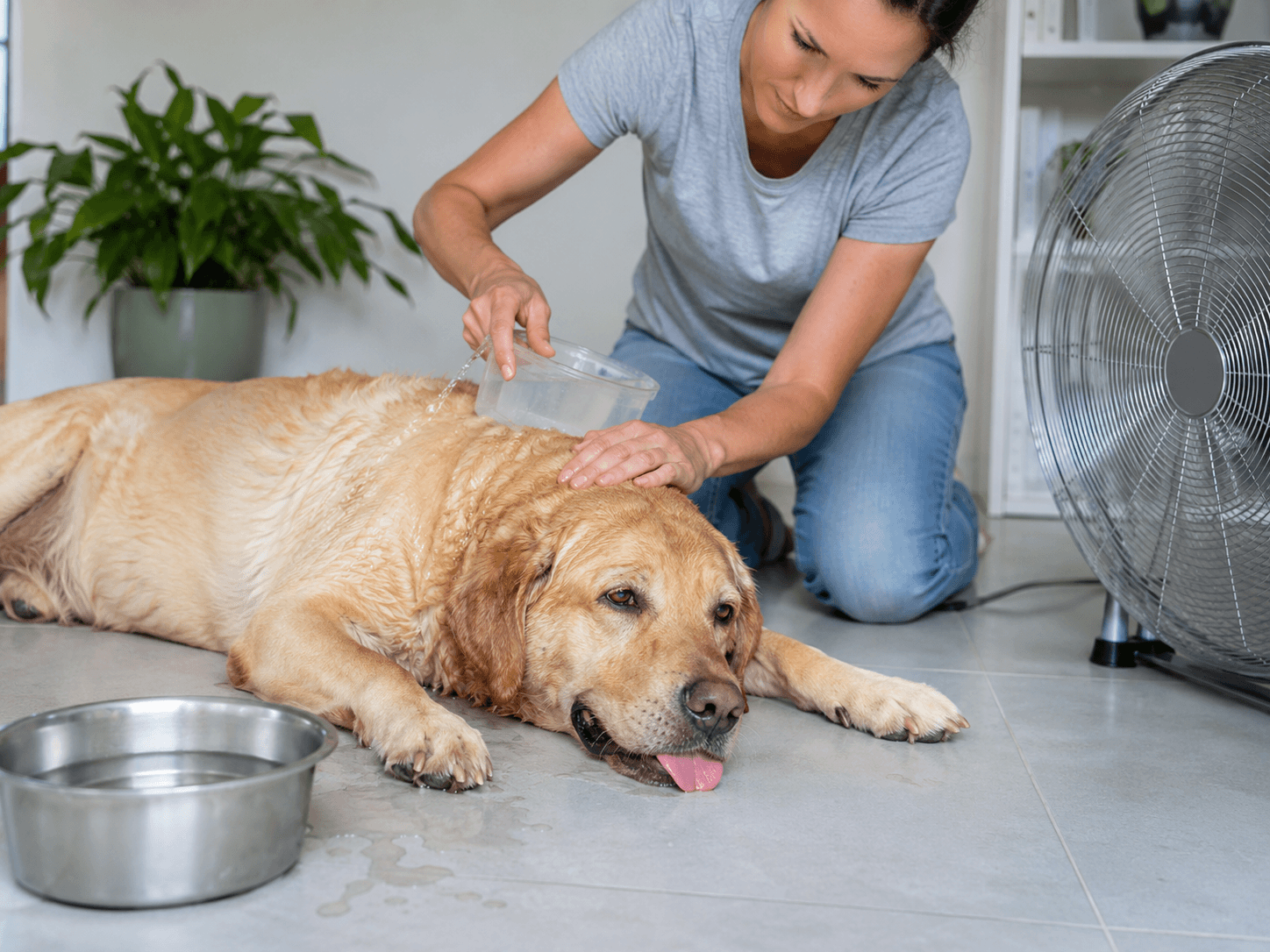
Heatstroke occurs when the body temperature rises dangerously and the pet cannot cool down effectively. It is common in hot weather, parked cars, overexertion, poor ventilation, obesity, thick coats, and short-nosed breeds such as Pugs, Bulldogs, Persian cats, and similar breeds.
Heatstroke Warning Signs
- Extreme panting
- Drooling
- Bright red, dark red, purple, or pale gums
- Vomiting or diarrhea
- Weakness or wobbliness
- Collapse
- Seizures
- Confusion or unconsciousness
Emergency Cooling Steps
- Move the pet to shade or a cool, ventilated area immediately.
- Apply cool water, not ice-cold water, over the body, especially neck, chest, belly, and paws.
- Use a fan or airflow if available.
- Offer small amounts of cool water only if the pet is conscious and able to swallow.
- Do not cover the pet with wet towels for long periods because trapped heat can slow cooling.
- Contact a veterinarian urgently, even if the pet seems better after cooling.
For a deeper guide, read our Heatstroke in Dogs: Signs, First Aid and Prevention.
Pet Seizure First Aid
Seizures may happen due to epilepsy, toxins, low blood sugar, liver disease, kidney disease, brain disease, fever, trauma, or unknown causes. During a seizure, the pet may fall, paddle, drool, urinate, defecate, vocalize, tremble, or lose awareness.
What to Do During a Seizure
- Do not put your hand in the mouth. Pets do not swallow their tongue.
- Do not restrain the pet tightly.
- Move furniture, sharp objects, and hazards away.
- Turn off loud noise, bright lights, and fans if safe.
- Time the seizure with your phone.
- Call a veterinarian urgently if the seizure lasts more than 5 minutes, repeats, or occurs after toxin exposure.
Seizure Emergency Signs
A seizure lasting more than 5 minutes, repeated seizures, seizures after poisoning, seizures in puppies/kittens, or seizures with collapse and breathing difficulty need urgent veterinary care.
Trauma: Falls, Fights and Road Accidents
Trauma can cause broken bones, internal bleeding, lung injury, bladder rupture, head injury, spinal injury, eye trauma, and shock. Even if a pet looks normal after an accident, internal injuries may appear later.
First Aid for Trauma
- Approach slowly because a painful pet may bite or scratch.
- Limit movement, especially if spine, hip, or leg injury is suspected.
- Use a board, towel, blanket, or firm surface as a stretcher when possible.
- Do not try to straighten broken limbs.
- Cover open wounds with clean cloth or gauze.
- Keep the pet warm if shocked, but do not overheat.
- Go to a veterinarian immediately after road accidents, falls from height, dog fights, or severe trauma.
A swollen painful abdomen, repeated retching, collapse, or sudden restlessness can also be serious. For a specific emergency guide, read our Dog Bloat and GDV Emergency Guide.
Shock in Dogs and Cats
Shock happens when the body cannot deliver enough oxygen to vital organs. It may follow blood loss, trauma, heatstroke, poisoning, severe infection, allergic reaction, or dehydration. Shock is life-threatening.
Signs of Shock
- Pale, grey, blue, or very red gums
- Weakness or collapse
- Cold paws or ears
- Rapid breathing
- Weak pulse
- Confusion or unresponsiveness
First Aid for Suspected Shock
- Keep the pet calm and still.
- Keep the pet warm if cold, but avoid overheating.
- Do not give food or large amounts of water.
- Control external bleeding if present.
- Transport to a veterinary clinic immediately.
Pet First Aid Kit Essentials
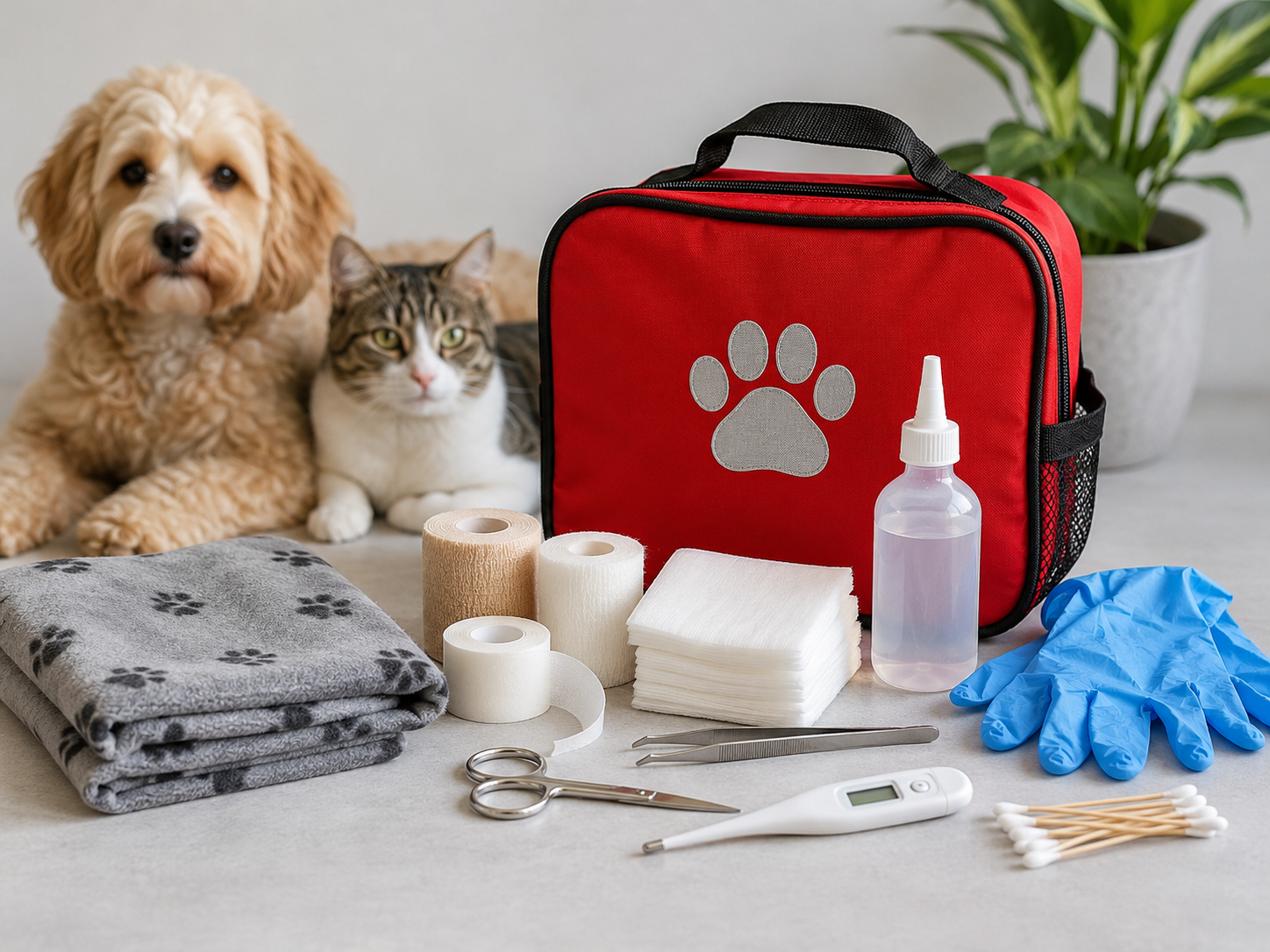
Every pet owner should keep a basic first aid kit at home and during travel. A first aid kit does not replace a veterinarian, but it helps you respond safely before reaching professional care.
What to Keep in a Pet First Aid Kit
- Sterile gauze pads
- Bandage rolls
- Adhesive tape
- Clean towel or blanket
- Disposable gloves
- Digital thermometer
- Saline rinse for eyes and wounds
- Tweezers
- Blunt scissors
- Instant cold pack
- Pet carrier or leash
- Emergency vet phone numbers
- Medication list and medical history
Medication Safety Warning
Do not give human painkillers, fever medicines, antibiotics, sedatives, or anti-vomiting medicines unless a veterinarian specifically instructs you. Many human medicines are toxic to dogs and cats.
When to Take Your Pet to an Emergency Vet Immediately
Go to an emergency veterinarian immediately if you notice any of the following:
- Difficulty breathing or blue gums
- Collapse or unconsciousness
- Severe bleeding or deep wounds
- Repeated vomiting or vomiting with weakness
- Blood in vomit, stool, or urine
- Seizure lasting more than 5 minutes
- Suspected poisoning
- Heatstroke signs
- Severe pain, crying, or inability to move
- Swollen painful abdomen
- Male cat straining to urinate or unable to pass urine
- Fast or labored breathing in cats
For cat-specific urgent signs, read Why Is My Cat Breathing Fast? and Urinary Blockage in Cats.
Emergency First Aid Is Only the First Step
First aid can help stabilize your pet, but emergencies need professional diagnosis and treatment. When in doubt, call your veterinarian and prepare safe transport.
Frequently Asked Questions
Can pets survive emergencies if treated quickly?
Yes. Many emergencies are survivable when correct first aid is followed by urgent veterinary treatment. Delays increase risk.
Should I give human medicines in a pet emergency?
No. Many human medicines are toxic to dogs and cats. Do not give any medication unless a veterinarian specifically tells you to do so.
What should I do if my pet is choking?
Check the mouth carefully and remove only a clearly visible object. Do not blind sweep. If the pet cannot breathe, collapses, or turns blue, contact an emergency vet immediately.
Should I induce vomiting after poisoning?
Only if a veterinarian or pet poison helpline tells you to. Inducing vomiting can be dangerous with some toxins, sharp objects, breathing problems, or unconscious pets.
What should I do for heatstroke?
Move the pet to a cool area, apply cool water, improve airflow, offer small sips only if conscious, and contact a vet urgently. Do not use ice-cold water.
What should I keep in a pet first aid kit?
Keep gauze, bandages, gloves, thermometer, saline, clean towels, tweezers, blunt scissors, cold pack, medical history, and emergency vet contact numbers.
By Dr. Zahid Afzal, DVM
For information about this guide and its sources, see Dr Zahid Afzal’s author information. This educational article does not replace an examination, diagnosis or individual treatment plan.
Related Emergency and Preventive Care Guides
Veterinary Disclaimer
This guide is for educational first-aid support only. It does not replace emergency veterinary care, physical examination, diagnosis, oxygen therapy, surgery, antidotes, fluid therapy, seizure control, or hospital treatment. If your pet is severely ill, injured, poisoned, choking, seizing, overheating, bleeding, collapsed, or struggling to breathe, contact an emergency veterinarian immediately.