
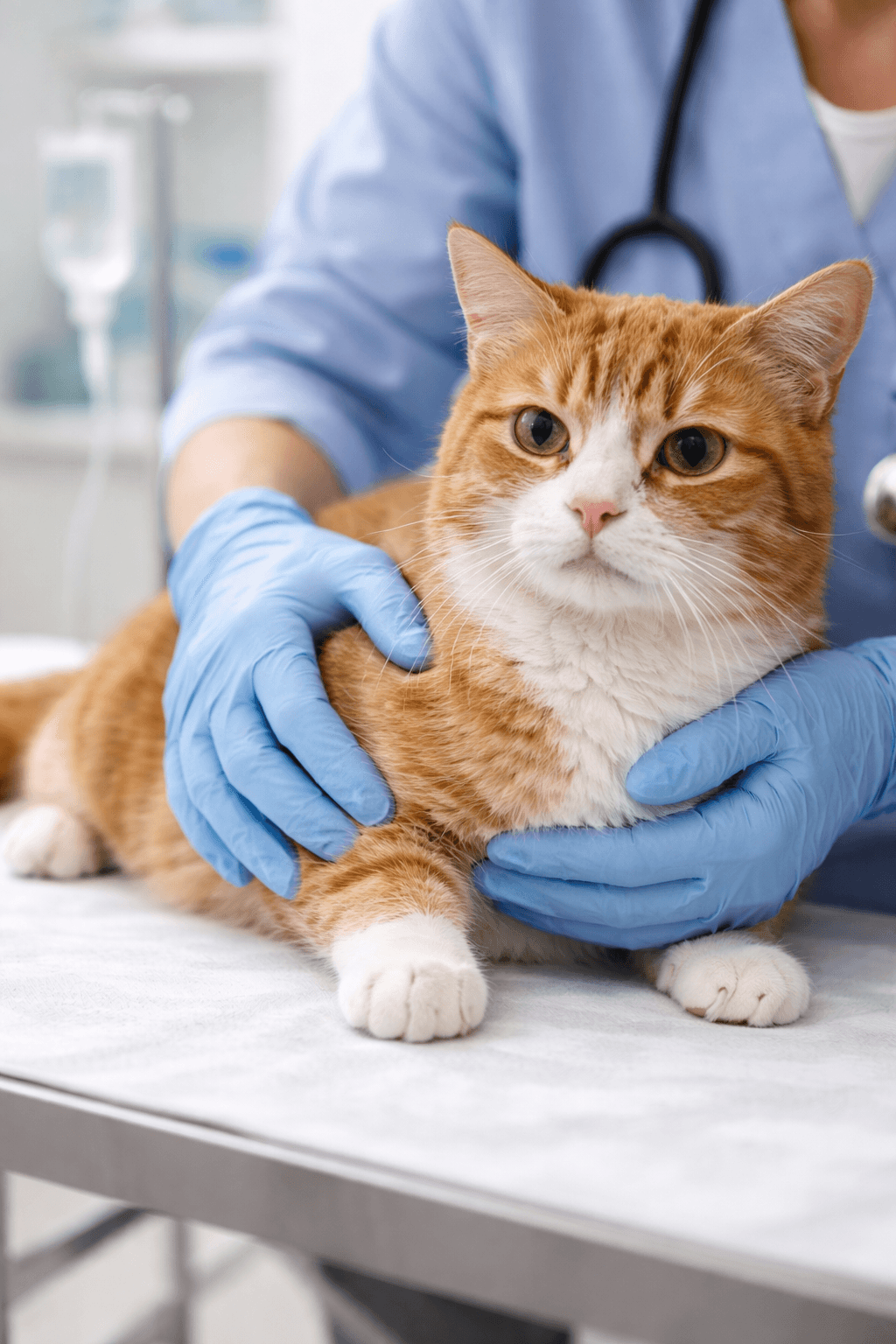
Urinary blockage in cats is one of the most serious emergencies we see in practice. When the urethra (the tube that carries urine out of the body) becomes blocked, your cat cannot pee normally. Toxins build up quickly in the bloodstream, the bladder becomes painfully over-distended, and without rapid veterinary care this condition can be fatal within a day or two.
This problem is especially common in male cats because their urethra is longer and narrower than in females. Many affected cats are indoor, neutered males that are slightly overweight, but any cat can develop a urinary blockage. Understanding the early warning signs and what happens at the vet can literally save your cat’s life.
In this vet-approved guide from the team at General Veterinary Hospital Lahore, we will explain what urinary blockage in cats is, how to recognize urgent symptoms, what treatment involves, and the practical steps you can take at home to reduce the risk of it ever happening again.
If you are worried that your cat might be blocked right now, treat it as an emergency. Contact your nearest veterinarian immediately or use our Online Vet Consultation service for urgent guidance.

What Is Urinary Blockage in Cats?
Urinary blockage in cats (also called cat urinary blockage or feline urinary obstruction) occurs when something obstructs the urethra so urine cannot flow from the bladder to the outside of the body. The blockage may be complete or partial, but even a partial obstruction can progress to a complete one in a short time.
The most common causes of urinary blockage in cats include inflammatory plugs of mucus and cells, small bladder stones (uroliths), blood clots, or severe urethral spasms. These problems usually occur as part of a wider syndrome known as feline lower urinary tract disease (FLUTD). Unlike a simple urinary tract infection, which is relatively uncommon in young cats, a urinary blockage physically stops urine from leaving the body.
When the urethra is blocked, the kidneys continue to produce urine but it has nowhere to go. The bladder stretches like an overfilled balloon, causing intense pain, and dangerous substances such as potassium and kidney waste products accumulate in the bloodstream. This is why urinary blockage in cats is always a true emergency, not something that can wait a few days.
Cats Most at Risk of Urinary Blockage
Any cat can develop this problem, but some are at much higher risk. Understanding these risk factors will help you spot urinary blockage in cats earlier and plan for prevention.
- Male cats, especially neutered males – their urethra is longer and narrower, so it clogs more easily.
- Indoor cats with low activity levels – less exercise and environmental stimulation can contribute to stress and weight gain.
- Overweight cats or those on high-calorie dry food only – obesity and low water intake are linked to urinary issues.
- Young to middle-aged adults (1–8 years) – this is the typical age group for cat urinary blockage.
- Cats in multi-cat households – competition over litter trays, food, or territory can increase stress.
- Cats with a history of FLUTD or previous blockage – once a cat has had urinary blockage, recurrence is unfortunately common.
If your cat fits several of these risk categories, it is especially important to monitor their litter box habits and to learn the key symptoms of urinary blockage in cats discussed below.
For more background articles on feline health, you can also browse our Cats Health Category and our Emergency Guides on the Vet & Pet Health Guide blog.
Early Signs of Urinary Blockage in Cats
Many guardians first notice that their cat is “having trouble in the litter tray.” Because constipation and urinary blockage can look similar from a distance, it is vital to look closely at exactly what your cat is doing. The earlier you recognize urinary blockage in cats, the better the outcome.
Common early symptoms of urinary blockage in cats
- Frequent trips to the litter box with little or no urine produced.
- Straining or crouching for a long time in the litter tray, sometimes outside the box as well.
- Crying, meowing, or showing signs of pain when trying to urinate.
- Passing only a few drops of bloody or very dark urine.
- Licking the genital area more than usual.
- Restlessness, hiding, or seeming unusually uncomfortable.
These are classic cat urinary blockage symptoms and should never be ignored. Even if your cat is still passing a very small amount of urine, they may already be partially blocked and could progress to a complete obstruction quickly.
Emergency red-flag symptoms
Immediately contact a veterinarian or use our online symptoms checker if you notice any of the following severe signs of urinary blockage in cats:
- A very swollen, hard, and painful belly when you gently touch the lower abdomen.
- Complete absence of urine for 8–12 hours despite repeated attempts to pee.
- Vomiting, drooling, or refusing all food and water.
- Weakness, collapse, or very rapid, shallow breathing.
- Sudden aggression when you try to pick them up or touch their belly.
These symptoms indicate that urinary blockage in cats has progressed to a life-threatening stage. Home remedies are not safe in this situation. Your cat requires urgent veterinary treatment to relieve the obstruction and stabilize their internal organs.
What You Should (and Should NOT) Do at Home
When you suspect urinary blockage in cats, it is natural to feel panicked and want to help immediately. The most important thing you can do is act quickly and safely.
Safe first-aid steps
- Call your vet or nearest emergency clinic right away and describe the symptoms clearly.
- Keep your cat in a quiet, warm room so you can monitor them and easily transport them when it is time to leave.
- Remove access to dry food for the moment, but you can offer a small amount of fresh water in case your vet visit is delayed.
- Prepare your carrier with a soft towel. If your cat is very painful, gently slide them in rather than forcing them.
Things you must never do
- Do not give human pain medications such as paracetamol, ibuprofen, or aspirin. These can be highly toxic to cats.
- Do not squeeze or massage your cat’s belly. Trying to “push out” the urine can rupture the bladder.
- Do not delay because the cat seems to improve slightly. Urinary blockage in cats often fluctuates before becoming suddenly worse.
- Do not rely on home remedies, herbs, or internet cures. Only prompt veterinary treatment can safely relieve a true obstruction.
Once you are on the way to the clinic, you have already taken the most important step toward saving your cat’s life.
How Vets Diagnose Urinary Blockage in Cats
When you arrive at the clinic, the veterinary team will first assess how sick your cat is overall. Cats with urinary blockage are often dehydrated, shocked, and in severe pain, so stabilizing them is a priority.
Initial assessment
- Checking heart rate, breathing, temperature, and gum colour.
- Gently palpating the abdomen to feel the bladder. In a blocked cat it usually feels large, firm, and painful.
- Obtaining a brief history about litter box habits, appetite, water intake, and any previous urinary issues.
If urinary blockage in cats is strongly suspected, your vet will explain the need for rapid treatment and may admit your cat to the hospital. At the same time, they will run tests to confirm the diagnosis and evaluate how the kidneys and other organs are coping.
Common diagnostic tests
- Blood tests to check kidney values, electrolytes (especially potassium), and hydration status.
- Urinalysis once urine can be obtained, to look for crystals, blood, and signs of infection.
- X-rays to detect bladder stones and assess the size and shape of the urinary tract.
- Ultrasound in some cases to visualize the bladder wall, urethra, and kidneys more clearly.
These tests help your vet decide on the safest and most effective treatment plan, and they are extremely important for cats with severe urinary blockage.
Treatment of Urinary Blockage in Cats
Treatment has three core goals: relieve the obstruction, correct life-threatening metabolic changes, and reduce the chance of recurrence. The exact approach depends on how sick the cat is and what is causing the urinary blockage.
Stabilizing your cat
Many blocked cats arrive at the clinic in shock or with dangerously high potassium levels, which can affect the heart. Before attempting to unblock the urethra, your vet may give:
- Intravenous (IV) fluids to correct dehydration and help flush toxins from the bloodstream.
- Pain relief and sedation so the cat is comfortable and calm during the procedure.
- Medications to protect the heart if blood potassium is severely elevated.
Unblocking the urethra
To relieve urinary blockage in cats, the vet will usually place a small catheter into the urethra under general anaesthesia or heavy sedation. Sterile lubricant and gentle flushing with saline are used to dislodge plugs and crystals and to push them back into the bladder where they can be managed more safely.
Once the urethra is clear, the catheter is often left in place for 24–72 hours and connected to a closed collection system. This allows continuous drainage of urine, gives the inflamed urethra time to heal, and makes it easier to monitor urine production accurately.
Hospitalization and monitoring
Cats with a urinary blockage usually stay in the hospital for a couple of days. During this time, your vet team will:
- Monitor urine output closely.
- Repeat blood tests to ensure kidney values and electrolytes are normalizing.
- Provide ongoing pain relief and anti-spasm medications.
- Adjust IV fluids based on your cat’s condition.
Once your cat is able to urinate on their own and seems comfortable, the team will remove the catheter and watch for any signs of re-blockage before sending them home.
Home Care After Cat Urinary Blockage Treatment
Bringing your cat home after treatment for urinary blockage can be both a relief and a worry. You are glad to see them again, but nervous about the risk of recurrence. Careful home management in the first few weeks is crucial.
Medications and litter box care
- Give all prescribed medications exactly as directed. These may include pain relief, muscle relaxants, anti-inflammatories, or urinary tract supplements.
- Use a clean, easily accessible litter tray with a soft, dust-free litter. Many cats prefer a low-sided box after hospitalization.
- Monitor every urination for the first 1–2 weeks. Note how often your cat goes, how much they pass, and whether they seem comfortable.
- Prevent other pets from harassing your recovering cat around the litter tray.
Warning signs after coming home
Contact your vet or seek emergency care immediately if, after treatment for urinary blockage in cats, you notice:
- Straining to urinate again, with little or no urine produced.
- Sitting in the litter box for a long time or repeatedly visiting it.
- Fresh blood in the urine or cries of pain when urinating.
- Loss of appetite, vomiting, or lethargy.
Some cats re-block within days of the initial episode, so rapid action is just as important the second time as the first.
Long-Term Prevention: Reducing the Risk of Urinary Blockage in Cats
Once your cat has experienced urinary blockage, you will want to do everything possible to prevent another episode. There is no single magic solution, but a combination of diet, lifestyle, and stress management can significantly reduce risk.
Increase water intake
- Feed a high-quality wet food diet or a prescription urinary formula if recommended by your vet.
- Offer multiple water bowls around the home and refresh them daily.
- Consider a cat water fountain if your cat prefers running water.
- Add a little extra water or low-salt broth to wet food to encourage fluid intake.
Use a vet-recommended urinary diet
Special urinary diets are designed to dilute the urine and to control minerals that contribute to crystal and stone formation. In many cats with urinary blockage these diets are a lifelong necessity. Always transition slowly to avoid stomach upset, and do not mix prescription diets with ordinary food unless your vet specifically advises it.
Keep the litter box perfect
- Provide at least one litter tray per cat plus one extra.
- Place trays in quiet, low-stress areas away from noisy appliances.
- Scoop at least once daily and perform a full clean weekly.
- Experiment with different litters if your cat seems fussy.
Reduce stress and maintain a healthy weight
Stress is a major contributor to FLUTD and urinary blockage in cats. Provide hiding places, vertical climbing options, interactive play sessions, and predictable routines. Use puzzle feeders or scatter feeding to encourage movement, and work with your vet to create a safe weight-loss plan if your cat is overweight.
For more nutrition and wellness tips, see the articles in our Nutrition Category on the Vet & Pet Health Guide blog.
When Is Surgery Needed for Recurrent Urinary Blockage?
Some male cats experience repeated episodes of urinary blockage despite excellent home care and strict urinary diets. In these difficult cases, your vet may discuss a surgery called perineal urethrostomy (PU). This procedure widens the narrow portion of the urethra in male cats by removing the genital tip and creating a new opening under the tail.
Perineal urethrostomy does not guarantee that urinary blockage in cats will never happen again, but it can greatly reduce the risk of life-threatening obstruction and make future blockages easier to relieve. It is usually considered only after multiple severe episodes or when strict medical management has failed.
Real Case from General Veterinary Hospital Lahore
At General Veterinary Hospital Lahore, we recently treated a three-year-old neutered male cat named Simba who was brought in for repeated trips to the litter tray and loud crying. On examination, his bladder was large, hard, and extremely painful. Blood tests confirmed that he was suffering from a severe urinary blockage with rising kidney values.
Simba was immediately placed on IV fluids and pain relief, and our team performed a gentle urethral catheterization to relieve the obstruction. Over the next 48 hours his urine output improved, his bloodwork normalized, and he started eating again. Simba was discharged with a prescription urinary diet, medications, and a detailed home-care plan. At his follow-up visit several weeks later he was comfortable, playful, and using the litter box normally.
This case is a typical example of how quickly urinary blockage in cats can become critical, but also how successfully it can be treated when care is sought early.
Support for Cat Owners: Health Guidebook and Online Vet Consultation
Managing urinary blockage in cats often raises many questions about long-term diet, lifestyle, and monitoring. To help cat and dog guardians feel more confident, we have created detailed step-by-step resources beyond this article.
Download Our Cat & Dog Health Guidebook
Learn how to prevent common emergencies, understand lab reports, and build daily routines that keep your pets healthier for longer.
Need Personal Advice About Your Cat’s Urinary Health?
If you are worried about urinary blockage in cats, have questions about diet, or are unsure whether your cat’s symptoms are urgent, our veterinarians can help.
Frequently Asked Questions About Urinary Blockage in Cats
Is urinary blockage in cats the same as a urinary tract infection?
No. Urinary tract infections involve bacterial overgrowth in the bladder or urethra, while urinary blockage in cats is a physical obstruction that prevents urine from leaving the body. Infections can occur along with an obstruction, but they are not the primary cause in most young male cats.
Can urinary blockage in cats resolve on its own?
Very rarely a mild partial obstruction may improve temporarily, but relying on this is extremely dangerous. Many cats seem better for a short time and then suddenly become critically ill. Always treat suspected urinary blockage as an emergency and seek veterinary help immediately.
How long can a cat live with a urinary blockage?
Without treatment, a completely blocked cat may only survive 24–48 hours. The sooner the obstruction is relieved, the better the chances for a full recovery and normal kidney function.
Is urinary blockage more common in male or female cats?
Urinary blockage in cats is far more common in males because their urethra is longer and narrower. Females can still develop lower urinary tract disease, but complete obstruction is comparatively rare.
Will my cat need a special diet forever?
Many cats that have experienced urinary blockage benefit from staying on a veterinary urinary diet long term. Your vet will advise how long your cat should remain on a prescription diet, but in recurrent or severe cases lifelong use is often recommended.
Key Takeaways for Cat Parents
- Urinary blockage in cats is a life-threatening emergency that requires immediate veterinary care.
- Early symptoms include straining to urinate, frequent litter box visits with little urine, and discomfort around the genital area.
- Prompt treatment typically involves unblocking the urethra with a catheter, IV fluids, pain relief, and several days of monitoring.
- Long-term prevention focuses on higher water intake, urinary diets, stress reduction, and excellent litter box hygiene.
- Cats that have had urinary blockage should be monitored closely for any recurrence of urinary signs and have regular check-ups with their veterinarian.
If you have any concerns about urinary blockage in cats or your pet’s overall health, the team at General Veterinary Hospital Lahore is here to help through in-clinic appointments and our Online Vet Consultation service.
Published Research: Antibiotic Resistance in Feline Urinary Infections
Our clinical team’s peer-reviewed study reviewed 200 feline bacterial infection cases at our own hospital and found urinary infections carried the highest antibiotic resistance burden of any site studied, underscoring why proper culture and sensitivity testing matters, particularly for cats with recurrent urinary symptoms.
Afzal, Z., Hina, I., Aziz, M.T., Yaqub, T., Baig, I. and Rafaqat, F. (2026) ‘Antimicrobial Resistance Patterns of Bacterial Isolates from Feline Clinical Infections in a Private Veterinary Practice in Lahore, Pakistan’, Bioscience Insights, 3(1), pp. 234–246.





I’m really grateful for the clear breakdown of symptoms to watch for. It’s hard to know what constitutes an emergency when it comes to cats, especially when they’re so good at hiding pain.