
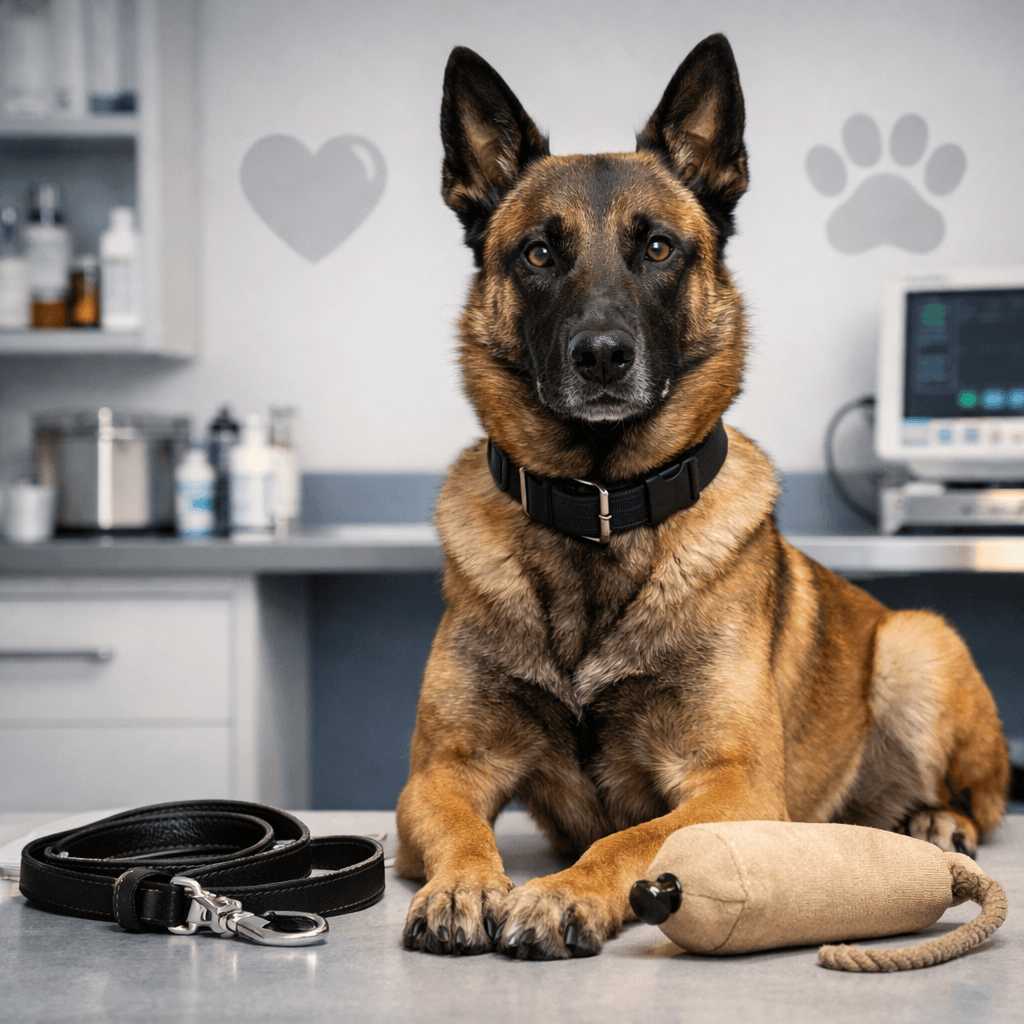
Belgian Malinois are active, responsive working dogs that need consistent training, suitable exercise and opportunities to use their minds. Without an appropriate routine, some develop barking, pacing, destructive behaviour or reactivity. This guide covers daily life with the breed, puppy development, training, exercise and health questions to discuss with your veterinarian. Consider those needs carefully before bringing one home. Before committing, ask who will provide daily training, how you will manage work absences and whether every household member can follow the same handling plan. Meet adult dogs in ordinary home settings where possible, and discuss temperament and support with a responsible breeder or rescue.
- Malinois temperament (what’s normal and what’s a red flag)
- How much exercise + mental work a Malinois actually needs
- A practical training plan (puppy + adolescent + adult)
- Feeding strategy for a lean, athletic Belgian Malinois
- Common health concerns and preventive care
- Emergency risks (heatstroke, injuries, bloat) and what to do
- Real anonymized clinic case from General Veterinary Hospital Lahore
Helpful internal links (open in new tabs):
- Dog Vaccination Schedule 2025
- Emergency First Aid for Dogs & Cats
- Heatstroke in Dogs: Signs, First Aid & Prevention
- Dog Bloat (GDV) Emergency Guide
- Dog Dental Care at Home
- Why Do Dogs Lick Their Paws?
Contents
- Belgian Malinois quick facts
- Temperament: the real-life Belgian Malinois
- Who should (and should not) own a Belgian Malinois
- Exercise and mental stimulation needs
- Home setup: preventing chaos from day one
1) Belgian Malinois quick facts
| Category | Typical Belgian Malinois profile |
|---|---|
| Breed group | Herding/working dog; high drive |
| Energy level | Very high; needs daily structure |
| Trainability | Extremely trainable; learns “good” and “bad” fast |
| Common roles | Sport, detection, protection work, search & rescue, advanced obedience |
| Biggest owner challenge | Creating an off-switch (calmness) and safe outlets |
2) Temperament: the real-life Belgian Malinois
The Malinois is famous for focus, speed, and responsiveness. In a normal home, that can look like:
- Velcro bonding: many Malinois follow their person room-to-room.
- Fast pattern learning: a Malinois notices routines (keys = outing; shoes = walk) and reacts fast.
- Movement sensitivity: bikes, runners, kids playing can trigger chasing/herding.
- Protective instincts: without guidance, a Malinois may become reactive to strangers.
- High arousal potential: the dog can go from calm to “100%” quickly.
What owners love: A Malinois can be deeply loyal, eager to train, and incredibly fun for active people. They can learn advanced obedience, scent games, and complex tasks that many dogs find difficult.
What surprises owners: A Belgian Malinois can become “busy” and restless if the day has no structure. Many owners try to fix this with endless running. The problem is that running often creates an even fitter Malinois with the same behavior issues—because the dog still lacks mental work and calmness training.
Common Belgian Malinois behavior pitfalls (and what they often mean)
| Problem | Often caused by | Best first fix |
|---|---|---|
| Nipping / mouthy play | Over-arousal, herding drive, poor bite inhibition | Structured play rules + calm rewards + redirection |
| Leash reactivity | Stress, lack of controlled exposure, frustration | Distance + reward calm + pattern games + trainer support |
| Destructive chewing | Boredom, too much freedom, separation stress | Crate/pen + enrichment + predictable routine |
| Obsessive ball/fetch | Unstructured reinforcement of high arousal | Limit ball; use as reward; teach settle after play |
3) Who should (and should not) own a Belgian Malinois
The Malinois is a brilliant match for some people and a terrible match for others. This isn’t about “good owner vs bad owner.” It’s about lifestyle fit.
| Good fit | Poor fit |
|---|---|
| People who enjoy daily training | People wanting a low-maintenance dog |
| Sport/working-dog households | Homes with long, bored alone time daily |
| Owners who teach calmness (off-switch) | Owners who think “more running solves everything” |
| People comfortable managing drive safely | People who allow rough, uncontrolled play |
4) Exercise and mental stimulation needs
A Malinois needs both physical activity and mental work. The best plan is not endless running; it’s structured sessions that teach skills and then teach recovery.
Daily structure example (realistic and effective)
| Session | Time | Examples |
|---|---|---|
| Training | 10–20 min (1–2× daily) | Recall, heel, place/settle, impulse control |
| Work games | 10–15 min | Scent finds, hide-and-seek, controlled tug |
| Walks/exercise | 45–90 min total | Training walks, hiking, low-impact conditioning |
| Off-switch | Daily | Mat settle, calm chew, crate/pen relaxation |
5) Home setup: preventing chaos from day one
- Use management tools: crate or pen prevents destructive habits while training is built.
- Choose calm routines: frantic greetings and uncontrolled play often increase nipping.
- Plan “jobs”: sniff walks, food puzzles, and training blocks reduce restless behaviors.
- Protect joints: avoid slippery floors and constant high jumping in young dogs.
6) Belgian Malinois training roadmap (puppy → adult)
A Malinois learns extremely fast, which is why clear structure matters. If you reward calm behavior, your Malinois becomes calm. If you reward frantic behavior (even by accident), your Belgian Malinois becomes frantic. The training goal is a balanced dog: high drive when asked, calm off-switch when not.
Golden rules for training a Belgian Malinois
- Short sessions: 5–15 minutes with breaks works better than long drilling.
- Reward calm: pay your Malinois for settling and doing nothing sometimes.
- Impulse control daily: doorways, leash starts, greeting rules, “leave it.”
- Don’t create a ball addict: use fetch as a controlled reward, not a lifestyle.
- Train with clarity: the Malinois thrives on consistent rules.
Puppy plan (8–16 weeks): foundations that prevent future problems
| Goal | What to practice | Why it matters for a Belgian Malinois |
|---|---|---|
| Name response | Say name → reward eye contact | Builds focus and recall foundation |
| Bite inhibition | Stop play when teeth hit skin; redirect to toy | Malinois puppies are often mouthy |
| Calm crate/pen | Short calm breaks; reward silence | Prevents “always on” behavior |
| Handling | Touch paws/ears/mouth gently, reward | Vet and grooming safety later |
Socialization: what it should look like for a Belgian Malinois
Socialization is not “let everyone pet the puppy.” Socialization is controlled exposure where your Malinois learns to stay calm around people, dogs, noise, traffic, and new environments. The win is neutrality, not excitement.
- Reward calm observation (watching people without lunging).
- Practice “look at that → look back to me → reward.”
- Avoid chaotic dog parks during early months.
Puppy safety reminder: follow your vaccine schedule and use low-risk environments while building confidence: Dog Vaccination Schedule 2025.
Adolescent plan (4–12 months): the “teenage” Belgian Malinois
Adolescence is when many Malinois owners struggle. The dog becomes faster, stronger, and more reactive if boundaries are inconsistent. This stage needs:
- Consistency: the same rules every day (jumping, barking, biting, pulling).
- Impulse control: “wait,” “leave it,” “place,” “down-stay.”
- Appropriate outlets: scent games, controlled tug, structured training walks.
- Recovery: rest days and calm days prevent injury and over-arousal.
Adult plan (1 year+): building a stable working companion
An adult Malinois can be amazing—if you maintain structure. A practical weekly plan:
| Type of work | Frequency | Examples |
|---|---|---|
| Obedience | Daily | Heel, recall, place, down-stay, leash manners |
| Scent work | 3–6× / week | Food finds, toy finds, odor games, tracking basics |
| Conditioning | 3–5× / week | Hiking, controlled fetch, hill walks, strength basics |
| Off-switch practice | Daily | Mat settle, calm chewing, quiet crate time |
Emergency risk: heatstroke in a driven breed
Belgian Malinois often keep working even when overheated. That is why heat safety is essential: Heatstroke in Dogs Guide.
7) Belgian Malinois health: common issues and prevention
A Malinois is often a hardy, athletic dog, but the breed still has predictable risks—especially because Malinois live such high-intensity lives. Prevention is simple: keep your Malinois lean, build fitness gradually, protect joints, maintain dental health, and respond early to warning signs.
Common health concerns in Belgian Malinois
| Issue | What you may notice | What helps |
|---|---|---|
| Hip/elbow dysplasia | Stiffness, reluctance to jump, abnormal gait | Lean weight, controlled exercise, early vet evaluation |
| Injuries (sprains, strains) | Sudden lameness after play/training | Warm-ups, avoid slippery floors, structured conditioning |
| Skin/allergy issues | Itching, paw licking, ear redness | Parasite control, allergy plan, diet review |
| Bloat/GDV risk | Distended belly, drooling, retching without vomit | Emergency response + feeding habits |
| Dental disease | Bad breath, tartar, gum redness | Home dental routine + vet cleaning when needed |
Internal resources:
8) Feeding a Belgian Malinois (lean athlete strategy)
Most Malinois do best when lean. Excess weight stresses joints and increases injury risk. A working Malinois also needs stable energy and recovery nutrition. Your goal is a visible waist and easy-to-feel ribs with a light fat cover—not a bulky body.
Feeding structure that works
- Use measured meals (not free-feeding) for most Belgian Malinois.
- Adjust weekly based on body condition and activity level.
- Use part of the meal for training to avoid treat overload.
- Hydration matters during sport and heat—plan water breaks.
| Life stage | Main feeding goal | Common mistake |
|---|---|---|
| Puppy | Steady growth without excess weight | Overfeeding “to make them big” |
| Adult worker | Lean muscle + recovery | Too many treats; inconsistent meals |
| Senior/retired | Lean comfort + joint support | Maintaining “working-dog calories” |
9) Grooming and daily care
- Coat: brush 1–2× weekly; more during seasonal shedding.
- Nails: keep short to prevent tears during sprinting and turns.
- Teeth: build a routine (see Dog Dental Care at Home).
- Paws: check pads and between toes; paw licking can signal irritation or allergy.
10) Preventive vet care checklist for Belgian Malinois
- Vaccines: follow schedule and boosters (see Dog Vaccination Schedule 2025).
- Parasite control: year-round plan based on region and lifestyle.
- Weight checks: monthly body condition check at home.
- Dental checks: routine home care + periodic vet assessment.
- Injury watch: any lameness lasting >24–48 hours needs evaluation.
11) Real case from General Veterinary Hospital Lahore (anonymized)
A young adult Malinois was brought to General Veterinary Hospital Lahore for escalating “behavior problems”—pacing, barking at movement, leash lunging, and sudden mouthy snapping during walks. The owner was giving the dog long runs daily, assuming that a tired Malinois would behave better. Instead, the dog became fitter and more intense. On exam, we also noticed early paw-pad irritation from repetitive hard-surface running and mild dehydration after training sessions in warm weather.
Our plan focused on (1) medical safety and (2) structured behavior. We advised heat-risk control using the principles from our heatstroke guide (cooler times, water breaks, reduced intensity): Heatstroke in Dogs. We treated the paw irritation and replaced endless running with short, focused training blocks: impulse control, “place/settle,” structured tug with rules, and sniff-based decompression walks. Within weeks, the Malinois became easier to handle—not because the drive disappeared, but because the drive finally had rules and recovery.
12) FAQs
Are Belgian Malinois good family dogs?
A Malinois can be a great family dog in a structured, active home that trains daily. In unstructured homes, a Malinois may become too intense, mouthy, or reactive.
How much exercise does a Belgian Malinois need?
Most Belgian Malinois need daily structured activity plus mental work. Running alone is not enough; training and calmness practice are equally important.
What are the most important emergencies for Belgian Malinois owners to know?
Heatstroke risk, injuries from high-intensity activity, and bloat/GDV risk in some dogs. Save: Emergency First Aid and GDV/Bloat Guide.

This guide really hits on what I’ve learned from working with Belgian Malinois over the years—namely, that they thrive when given a clear purpose and mental stimulation. The emphasis on structure and job-based engagement really resonates, especially since I’ve seen so many of them become destructive when under-challenged. It’s a helpful reminder that these dogs aren’t just pets, but highly capable working companions that need to be kept engaged both physically and mentally.