
Cat Emergency & Mobility Guide
Cat hind leg paralysis is frightening because it can happen suddenly and may signal a true emergency. If your cat’s back legs are not working, your cat is dragging the back legs, crying in pain, breathing fast, unable to stand, or has cold back paws, do not wait to see if it improves. Cat hind leg paralysis can be caused by a blood clot, spinal injury, trauma, nerve damage, severe weakness, toxin exposure, urinary pain, infection, or advanced disease. Some causes are treatable, but fast veterinary care is often the difference between recovery, long-term disability, and life-threatening decline.
Worried About Your Sick Pet?
Submit your pet’s symptoms, photos, videos or reports and get professional online vet guidance from Dr. Zahid Afzal, DVM.
Get Vet Advice Now →Online consultation • Second opinion • Report review • USA, UK & Worldwide
A cat that suddenly cannot use the back legs should always be taken seriously. Sometimes the problem looks like limping at first. Other times, the cat collapses, drags both hind legs, cries loudly, or tries to move but cannot place the paws normally. Owners may describe it as “my cat’s back legs stopped working,” “my cat is dragging his back legs,” or “my cat suddenly can’t walk.”
At General Veterinary Hospital Lahore, Dr Zahid Afzal DVM often explains these cases by separating them into two broad groups: cats with painful sudden paralysis that need emergency care immediately, and cats with gradual hind-leg weakness that still need diagnosis but may not collapse suddenly. Both matter, but sudden painful paralysis is the most urgent.
This article is written for cat owners in the US, UK, Canada, Australia, and other English-speaking countries who need clear, practical guidance. It will explain the most important causes, warning signs, home precautions, and what a veterinarian may check when a cat’s back legs are not working.
Emergency Warning: Go to a Vet Now If You See These Signs
Cat hind leg paralysis can be an emergency. Seek urgent veterinary care immediately if your cat has any of these signs:
- Sudden inability to stand or walk on the back legs
- Dragging one or both hind legs
- Crying, yowling, panting, hiding, or severe distress
- Cold back paws or pale, blue, or gray paw pads
- Fast breathing, open-mouth breathing, or collapse
- Weakness with vomiting, poisoning risk, or trauma
- Unable to urinate, straining, or repeated litter box visits
- Severe pain when touched around the back, hips, or legs
If the back paws feel cold and your cat is crying or suddenly paralyzed, treat it as an emergency and contact a veterinary clinic immediately.
What Does Hind Leg Paralysis in Cats Look Like?
Hind leg paralysis means the cat cannot use the back legs normally. It may affect one leg or both legs. Some cats are fully paralyzed and cannot move the legs at all. Others have partial weakness, also called paresis, where the legs move but are weak, wobbly, uncoordinated, or dragging.
The signs can vary depending on the cause. A cat with a blood clot may suddenly scream, collapse, and have cold back paws. A cat with spinal trauma may be painful and unable to move normally after a fall or accident. A cat with progressive nerve disease may slowly become weak over days or weeks. A cat with severe illness may look weak in all limbs but appear worse in the back legs because the hind limbs are harder to control.
Owners often notice one or more of these signs:
- Back legs sliding outward
- Knuckling, where the top of the paw touches the floor
- Dragging toes or nails
- Wobbling or falling to one side
- Difficulty jumping onto furniture
- Weakness after using the litter box
- Sudden crying and inability to move
- Loss of bladder or bowel control in severe cases
If your cat is only limping but still walking, your existing article on why a cat is limping can help readers understand milder leg pain. But a cat that cannot walk, drags the back legs, or has cold paws needs much faster attention.
Sudden Paralysis
Starts within minutes or hours. Often linked with blood clot, trauma, spinal injury, poisoning, severe pain, or emergency illness.
Gradual Weakness
Develops over days, weeks, or months. May involve arthritis, nerve disease, muscle loss, chronic illness, diabetes, kidney disease, or aging changes.
The Most Important Question: Are the Back Paws Cold?
When a cat suddenly cannot use the back legs, one of the most important clues is paw temperature. Cold back paws, pale pads, blue-toned pads, severe pain, and sudden collapse can suggest poor blood flow to the hind limbs. One of the most serious causes is a blood clot blocking circulation to the back legs.
Do not spend a long time checking at home if your cat is distressed. But if you can safely observe without hurting the cat, compare the front paws and back paws. If the back paws feel much colder than the front paws, this is highly concerning.
A cat with sudden back-leg paralysis and cold paws should not be treated as a simple sprain. This pattern can be life-threatening and extremely painful.
Vet Insight from Dr Zahid Afzal DVM
When a cat’s back legs suddenly stop working, the first priority is not home massage or waiting overnight. The priority is to identify whether there is pain, blood-flow loss, spinal injury, urinary emergency, or toxin exposure. A sudden painful case needs urgent veterinary assessment.
Common Causes of Cat Hind Leg Paralysis
There are several possible causes of cat hind leg paralysis. Some are sudden and life-threatening. Others develop gradually and may be linked with chronic disease, pain, or nerve damage. The safest plan is to treat sudden paralysis as urgent until a veterinarian proves otherwise.
Cat hind leg paralysis: 1. Saddle Thrombus or Feline Aortic Thromboembolism
Saddle thrombus, also called feline aortic thromboembolism or FATE, is one of the most feared causes of sudden cat back legs not working. It happens when a blood clot blocks blood flow where the main artery branches toward the hind legs. This can cause sudden severe pain, weakness, paralysis, cold back paws, and distress.
Many cats with saddle thrombus have underlying heart disease, sometimes without obvious previous signs. The first noticeable sign may be the sudden collapse of the back legs. Affected cats may cry loudly, breathe fast, hide, pant, or seem panicked. The back legs may feel cold, and the paw pads may look pale or bluish.
This is not a wait-and-watch condition. Cats with suspected saddle thrombus need emergency veterinary care, pain relief, circulation assessment, heart evaluation, and supportive treatment. Sadly, the prognosis can be guarded, but quick care gives the cat the best chance and reduces suffering.
2. Spinal Injury or Trauma
Falls, road accidents, crushing injuries, dog attacks, being stepped on, or high-impact jumps can injure the spine, pelvis, hips, or nerves. A cat with spinal trauma may drag the back legs, cry when touched, arch the back, refuse to move, or lose bladder control.
Do not pull the legs, stretch the spine, force the cat to walk, or give human pain medicine. Keep the cat confined and transport carefully in a carrier or firm box. Spinal injury needs professional examination and may require X-rays, pain control, neurological assessment, or referral care.
3. Intervertebral Disc Disease and Spinal Cord Compression
Intervertebral disc disease is less common in cats than in dogs, but it can happen. A damaged disc or other spinal problem may compress the spinal cord or nerves, causing pain, weakness, poor coordination, or paralysis. Some cats show sudden signs; others become gradually weaker.
Spinal tumors, inflammation, infection, abscesses, or congenital problems can also affect the spinal cord. These cases can look similar from the outside, which is why a neurological exam is important.
4. Nerve Damage
Nerves control movement and sensation. Damage to the sciatic nerve, spinal nerves, or peripheral nerves can make one or both back legs weak or abnormal. Causes may include trauma, injections, surgery complications, tumors, inflammation, or severe metabolic disease.
Signs may include knuckling, dragging toes, poor paw placement, reduced sensation, muscle wasting, or inability to bear weight. Some nerve injuries improve slowly with time and care, while others cause permanent problems. The outlook depends on the cause and severity.
5. Severe Pain from Hips, Pelvis, or Joints
Not every cat that “cannot walk” is truly paralyzed. Some cats refuse to use the back legs because movement is too painful. Hip injury, pelvic fracture, severe arthritis, dislocation, bite wounds, abscesses, or muscle injury can make a cat appear paralyzed.
Cats hide pain well. A painful cat may growl, hide, flatten the ears, avoid touch, stop jumping, or miss the litter box. Your article on subtle signs cats hide pain is a strong internal link here because many mobility problems are first noticed as behavior changes.
6. Urinary Blockage or Severe Litter Box Pain
A cat that is straining, crying, and weak near the litter box may look like the back legs are failing. Male cats with urinary blockage can become critically ill and may show weakness, collapse, vomiting, hiding, repeated litter box visits, or inability to pass urine.
Urinary blockage does not cause true hind leg paralysis in the same way as a blood clot or spinal injury, but it can cause severe pain and weakness that owners may confuse with leg problems. If a cat cannot urinate, this is an emergency. Link readers to your guide on urinary blockage in cats.
7. Poisoning or Toxic Exposure
Certain toxins can cause weakness, tremors, seizures, collapse, poor coordination, or paralysis-like signs. Possible risks include some insecticides, rodenticides, human medications, toxic plants, chemicals, and unsafe topical products. Cats are especially sensitive to many substances because of their unique metabolism.
If your cat may have been exposed to poison, do not wait for paralysis to worsen. Do not induce vomiting unless a veterinarian or poison helpline tells you to. Your existing article on cat poisoning emergency signs and first aid is an important internal link.
8. Advanced Weakness from Chronic Disease
Some cats do not become paralyzed suddenly but slowly lose strength. Chronic kidney disease, diabetes, cancer, severe anemia, malnutrition, dehydration, and advanced systemic illness can make a cat weak, wobbly, and unable to jump or walk normally.
A thin senior cat with poor appetite, vomiting, increased thirst, bad breath, or weight loss may have a chronic disease affecting strength. These cats may appear weak in the hind end because muscle loss is often visible around the hips and spine. Internal links can include cat kidney disease and why cats lose weight.
Symptom Clues: What Your Cat’s Signs May Suggest
| What You Notice | Possible Concern | Urgency |
|---|---|---|
| Sudden paralysis with cold back paws | Possible blood clot or circulation emergency | Emergency now |
| Dragging back legs after fall or accident | Spinal, pelvic, hip, or nerve injury | Emergency now |
| Weakness with repeated litter box visits | Urinary blockage or painful urinary disease | Emergency if little/no urine |
| Gradual back-leg weakness in older cat | Arthritis, muscle loss, chronic disease, nerve problem | Vet appointment soon |
| Weakness with vomiting or possible toxin exposure | Poisoning or systemic illness | Emergency now |
Important: Do Not Give Human Painkillers
Never give ibuprofen, paracetamol/acetaminophen, aspirin, naproxen, or leftover medication to a cat unless a veterinarian specifically instructs you. Many human pain medicines are dangerous or fatal for cats. A paralyzed or painful cat needs veterinary pain control, not home medication.
What to Do at Home Before Reaching the Vet
If your cat’s back legs are not working, your job at home is not to diagnose the exact cause. Your job is to prevent further injury, reduce stress, and get veterinary help quickly.
Keep Your Cat Still
Do not encourage walking. Do not make the cat climb stairs, jump, or move around. Place the cat gently in a carrier, box, or small safe area. If trauma is possible, keep the body supported and avoid twisting the spine.
Do Not Massage or Stretch the Legs
Massage may seem comforting, but it can worsen pain or injury in some cases. If the problem is a blood clot, spinal injury, fracture, or severe nerve damage, rubbing the legs will not fix it and may increase distress.
Check Breathing and Paw Temperature
If your cat allows safe observation, note whether breathing is normal or fast, whether the cat is crying, and whether the back paws feel cold compared with the front paws. Share this information with the vet clinic.
Prepare for Transport
Use a carrier with soft bedding. Keep the cat warm but not overheated. Avoid loud noise and repeated handling. If your cat is in severe pain, call the clinic before arrival so they can prepare.
Bring Key Information
Tell the vet when the signs started, whether they were sudden or gradual, whether one or both legs are affected, whether the paws are cold, whether your cat can urinate, and whether trauma or toxin exposure is possible.
What Your Vet May Check
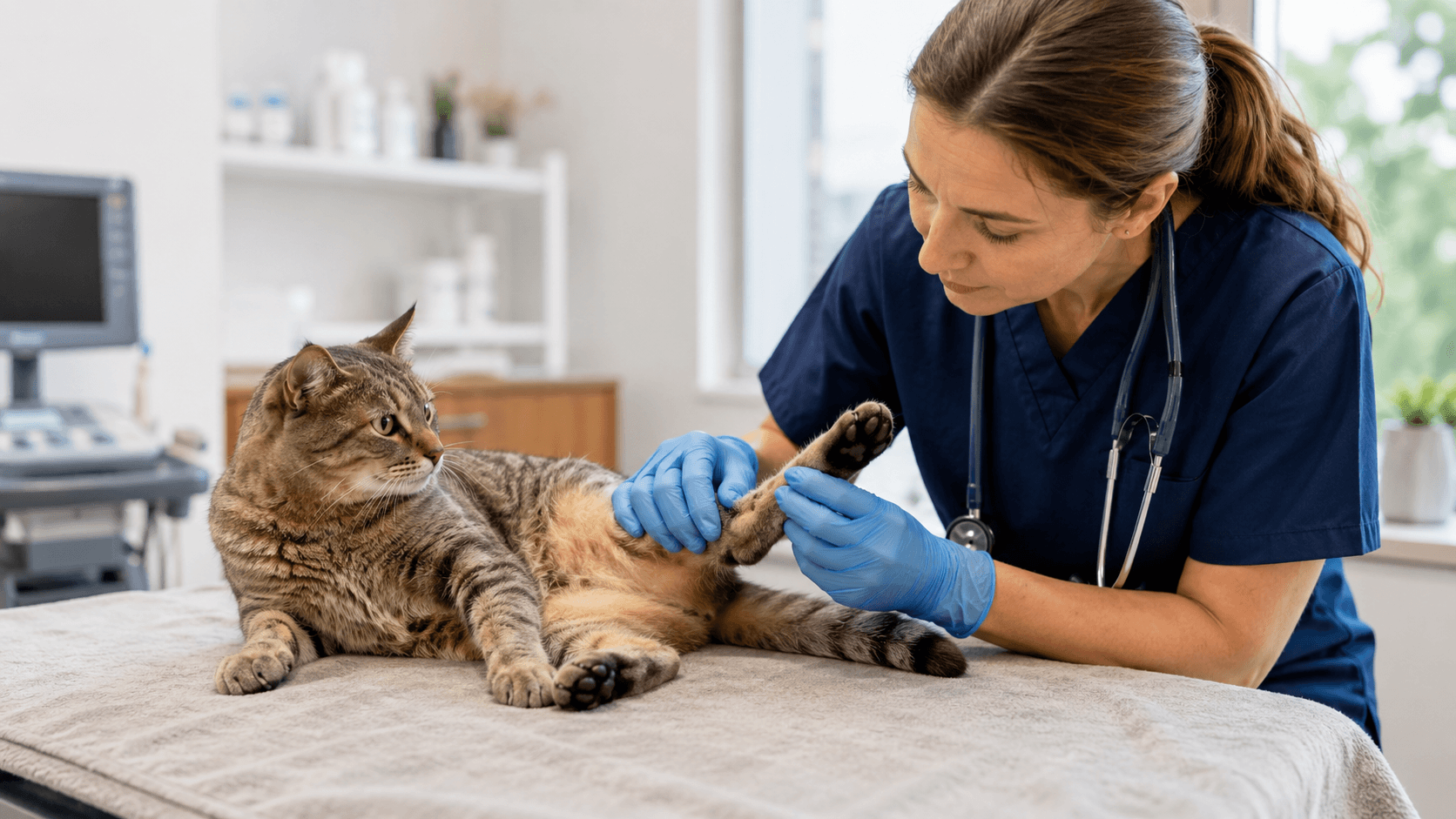
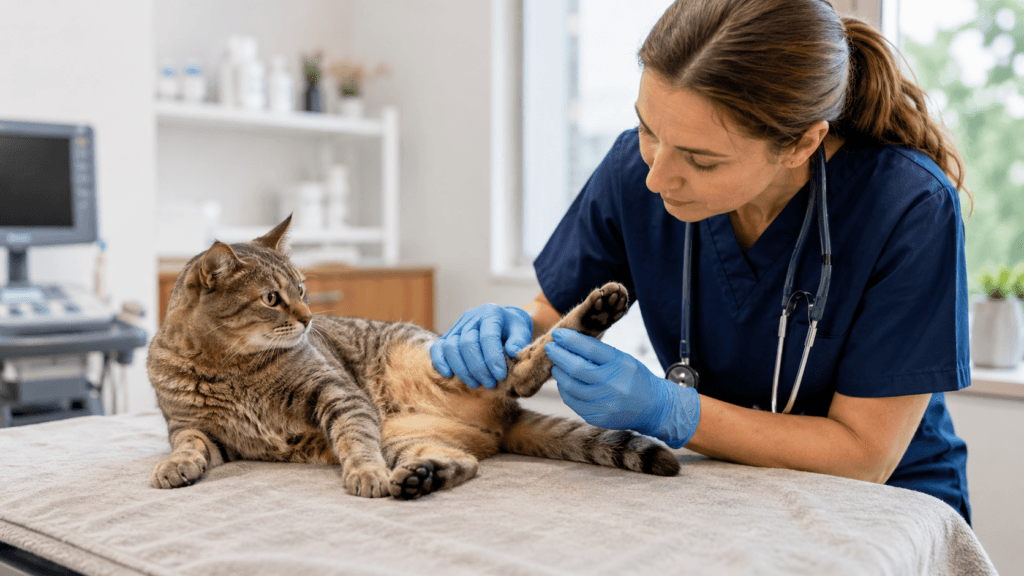
A veterinary exam for cat hind leg paralysis usually focuses on pain, circulation, nerve function, trauma, and underlying disease. The exact plan depends on your cat’s condition.
Neurological Exam
Checks reflexes, pain sensation, paw placement, spinal function, and whether the problem is nerve-related.
Circulation Check
Assesses paw temperature, pulse quality, pad color, and signs of reduced blood flow.
Pain Assessment
Helps identify spinal pain, hip pain, pelvic injury, abdominal pain, or severe muscle discomfort.
X-rays or Imaging
May be needed for trauma, fractures, spinal injury, pelvic injury, or chest/heart concerns.
Blood and Urine Tests
Can check kidney values, glucose, electrolytes, infection, anemia, dehydration, and systemic illness.
Heart Evaluation
May include listening to the heart, blood pressure, chest imaging, ultrasound, or referral if a clot is suspected.
Can a Cat Recover from Hind Leg Paralysis?
Recovery depends completely on the cause. Some cats with pain-related weakness improve after treatment. Some cats with nerve injuries recover slowly over weeks or months. Some cats with spinal trauma may have permanent damage. Cats with saddle thrombus have a guarded prognosis and need urgent pain control and careful medical decisions.
The presence of deep pain sensation, ability to move the legs, paw temperature, blood flow, severity of injury, time before treatment, and underlying disease all affect the outcome. This is why early veterinary assessment matters so much.
Owners should avoid making assumptions based only on how bad the first moment looks. Some cats improve with the right treatment, but some emergency causes are very serious. A veterinarian can help you understand whether recovery is realistic and what quality of life may look like.
Long-Term Care After Hind-Leg Weakness
If a cat survives the emergency or has a chronic mobility problem, long-term care may include pain management, medication for the underlying condition, weight control, safe flooring, low-entry litter boxes, easy-access food and water, ramps, restricted jumping, and follow-up exams.
Cats with heart-related clot risk may need ongoing heart evaluation and medication. Cats with kidney disease, diabetes, arthritis, or nerve problems may need a different care plan. The goal is not only movement, but comfort, dignity, hygiene, appetite, and quality of life.
For general emergency readiness, readers can also use your guide on emergency first aid for dogs and cats.
Emergency Today
Sudden paralysis, cold paws, crying, collapse, trauma, breathing difficulty, no urination, or suspected poisoning.
Vet Visit Soon
Gradual weakness, difficulty jumping, mild dragging, senior cat stiffness, muscle loss, or slow behavior changes.
FAQs About Cat Hind Leg Paralysis
Why are my cat’s back legs suddenly not working?
Sudden back-leg failure can be caused by a blood clot, spinal injury, trauma, severe pain, nerve damage, poisoning, urinary emergency, or serious systemic illness. If it happens suddenly, treat it as an emergency.
What does saddle thrombus look like in cats?
Saddle thrombus often causes sudden severe pain, crying, inability to use one or both back legs, cold hind paws, pale or blue-toned paw pads, fast breathing, and distress. It needs urgent veterinary care.
Can a cat recover from back-leg paralysis?
Some cats recover depending on the cause. Pain-related weakness, some nerve injuries, and certain treatable illnesses may improve. Severe spinal damage or blood-flow emergencies can have a guarded outlook. A vet exam is needed to judge prognosis.
Should I massage my cat’s paralyzed back legs?
No. Do not massage or stretch the legs before a diagnosis. If the cause is a clot, fracture, spinal injury, or severe pain, handling may worsen distress. Keep your cat still and seek veterinary care.
Are cold back paws in a paralyzed cat serious?
Yes. Cold back paws with sudden paralysis can suggest reduced blood flow and should be treated as an emergency.
Can urinary blockage look like hind leg paralysis?
Yes, severe urinary pain and weakness can make a cat appear unable to move normally. A cat straining with little or no urine needs emergency veterinary care.
What should I do if my cat is dragging the back legs?
Keep your cat still, place them carefully in a carrier, avoid giving human medication, and contact a veterinarian urgently. Sudden dragging can be serious.
Final Takeaway
Cat hind leg paralysis is never something to ignore. A cat whose back legs suddenly stop working may have a blood clot, spinal injury, trauma, nerve damage, poisoning, urinary emergency, or severe pain. Cold back paws, crying, collapse, fast breathing, or inability to urinate are urgent warning signs.
The safest action is to keep your cat still, avoid home medication or massage, and contact a veterinarian immediately. Fast assessment can reduce suffering, identify the cause, and give your cat the best possible chance of recovery.
Medical disclaimer: This article is for educational purposes only and does not replace veterinary examination, diagnosis, or treatment. If your cat suddenly cannot walk, is dragging the back legs, has cold paws, is crying in pain, cannot urinate, or is breathing abnormally, seek urgent veterinary care.







One Comment