
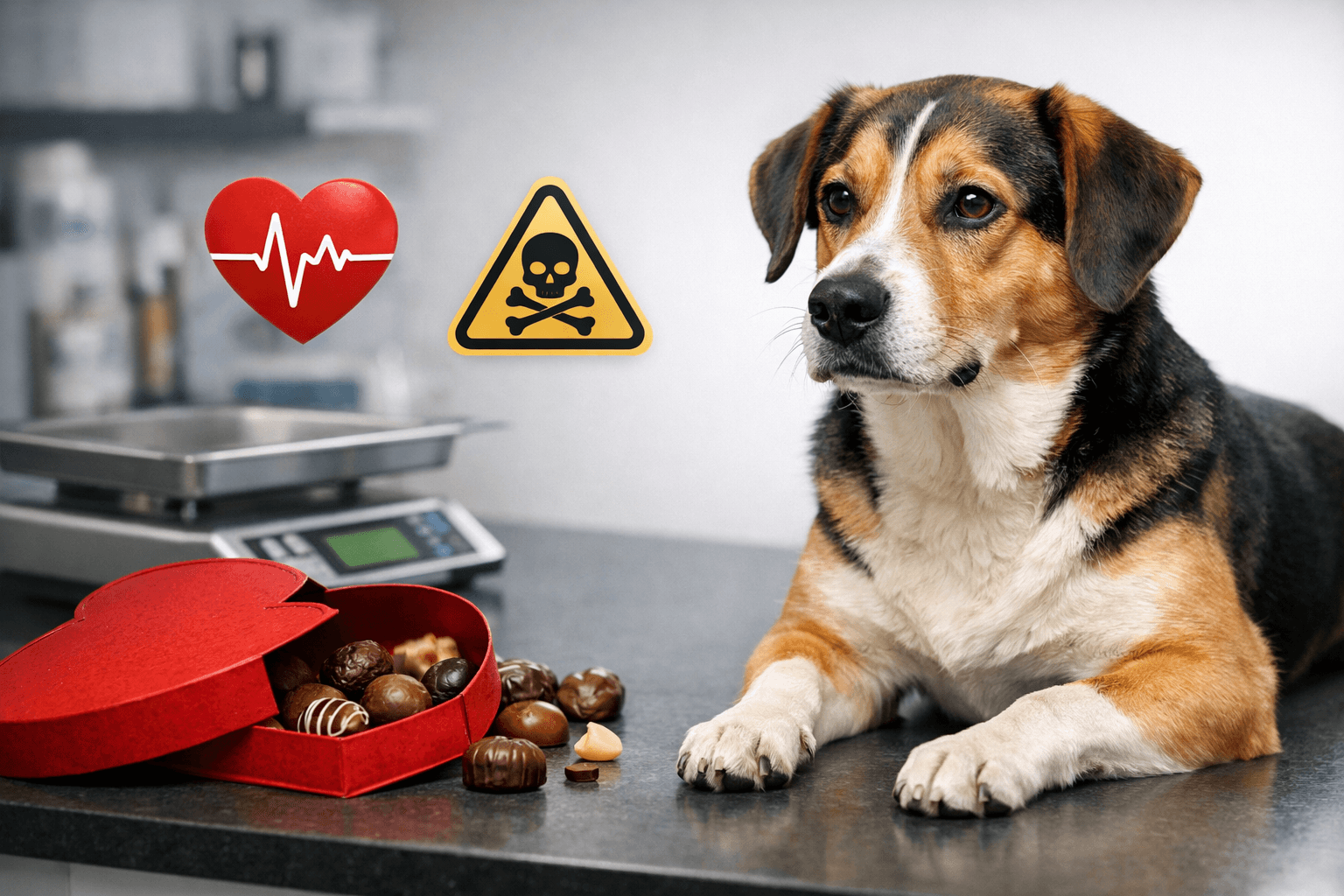
Chocolate poisoning in dogs is one of the most common holiday-and-kitchen emergencies, and chocolate poisoning in dogs can turn serious depending on the type of chocolate, the amount eaten, and your dog’s size. If your dog just ate chocolate, treat chocolate poisoning in dogs as time-sensitive: early action can prevent vomiting, tremors, dangerous heart rhythms, and hospital stays. This guide explains how to estimate risk, what symptoms to watch for, what you can safely do at home right now, and when to rush to an emergency vet.
- Dark/baking chocolate is far more toxic than milk chocolate.
- Small dogs are at higher risk even with “small” amounts.
- Symptoms may start within hours and can last a day or more.
- Early veterinary guidance is often the difference between mild upset and hospitalization.
Use these internal guides alongside this article:
Contents
- Why chocolate is toxic to dogs
- Chocolate types ranked by danger
- How much chocolate is toxic (practical guide)
- Symptoms timeline: early vs severe
- What to do immediately if your dog ate chocolate
1) Why chocolate is toxic to dogs
Chocolate contains methylxanthines, mainly theobromine and caffeine. Dogs metabolize these much more slowly than humans. As a result, methylxanthines build up and overstimulate the nervous system and heart. The effects can include:
- GI irritation: vomiting, diarrhea, abdominal discomfort
- Neurologic overstimulation: restlessness, tremors, seizures
- Cardiac effects: rapid heartbeat, abnormal rhythms, blood pressure changes
- Dehydration: from vomiting/diarrhea plus increased urination
The risk is not only “chocolate = bad.” The risk depends on type (theobromine concentration), amount, and dog size. A small dog eating dark chocolate is far more concerning than a large dog licking a small amount of milk chocolate.
2) Chocolate types ranked by danger
As a rule: darker = more dangerous, because darker products contain more theobromine.
| Chocolate type | Typical risk level | Notes |
|---|---|---|
| Cocoa powder / baking chocolate | Highest | Very concentrated; small amounts can be dangerous |
| Dark chocolate / bittersweet | High | Common cause of serious toxicity in small dogs |
| Milk chocolate | Moderate | Larger amounts needed, but still risky for small dogs |
| White chocolate | Low (for theobromine) | Usually causes stomach upset; still not “safe” |
3) How much chocolate is toxic (practical guide)
You don’t need perfect math to decide if this is urgent. Use a practical dose-thinking approach:
- Small dog + dark/baking chocolate → treat as urgent
- Any dog + cocoa powder → urgent
- Milk chocolate → depends on amount and dog size; small dogs can still be at risk
To estimate risk accurately, you need four details:
- Your dog’s weight (lbs/kg)
- Chocolate type (milk/dark/baking/cocoa powder)
- Amount eaten (grams/ounces/squares)
- Time since ingestion
4) Symptoms timeline: early vs severe
Symptoms usually start within a few hours, but timing varies depending on dose and what else was eaten.
| Time after eating | Possible signs | What it may mean |
|---|---|---|
| 0–4 hours | No signs yet, mild drooling, nausea | Best time to call a vet; early help can prevent severe toxicity |
| 4–12 hours | Vomiting, diarrhea, restlessness, pacing | GI + stimulant effects starting |
| 12–24 hours | Fast heart rate, tremors, panting, agitation | Higher risk period; may need hospital monitoring |
| 24+ hours | Persistent tremors, weakness, abnormal rhythms (severe cases) | Toxin clearance can take time; supportive care may be needed |
If vomiting/diarrhea occurs, supportive reading is here (still contact a vet for chocolate risk):
Vomiting in Dogs Guide and
Dog Diarrhea Home Care.
5) What to do immediately if your dog ate chocolate
- Remove remaining chocolate and packaging from reach.
- Estimate type + amount eaten and note the time.
- Call your vet or an emergency clinic with those details.
For a general “what to do on the way” emergency plan, keep this saved:
Emergency First Aid for Dogs & Cats.
6) “Monitor at home” vs “go to the ER now” (decision guide)
Because dose and dog size matter, some cases are mild while others are emergencies. Use this practical guide to decide urgency while you contact your vet.
- Your dog ate baking chocolate or cocoa powder (any meaningful amount)
- Your dog is small and ate dark chocolate
- There are symptoms: repeated vomiting, severe diarrhea, tremors, agitation, collapse, seizures
- You suspect other toxins (xylitol, raisins, medications)
- A large dog licked a small amount of milk chocolate
- No symptoms and the amount was clearly tiny
7) What NOT to do (common mistakes)
- Do not wait for symptoms if a risky dose is possible—early help is easier than treating tremors later.
- Do not give human medicines for nausea/diarrhea without veterinary guidance.
- Do not force large amounts of water (can worsen vomiting).
- Do not induce vomiting at home unless a vet specifically tells you to (wrong timing and certain situations can be dangerous).
If your dog is vomiting, use this for supportive reading (but keep the priority on toxin assessment):
Vomiting in Dogs Guide.
8) What the vet may do (so you know what to expect)
Veterinary treatment depends on dose, time since ingestion, and symptoms. Common clinic steps may include:
| Clinic step | Purpose | When used |
|---|---|---|
| Decontamination (vet-directed) | Reduce toxin absorption | Early after ingestion, when appropriate |
| IV fluids | Support circulation and help clearance | Moderate-to-severe cases or dehydration |
| Heart monitoring | Detect abnormal rhythms early | Higher doses, fast heart rate, tremors |
| Medications for tremors/agit. | Control neurologic stimulation | Tremors, severe restlessness, seizures |
| GI protectants/anti-nausea | Reduce vomiting and GI irritation | Vomiting/diarrhea present |
For a broader emergency checklist, keep this saved:
Emergency First Aid for Dogs & Cats.
9) Why symptoms can last a long time
Dogs clear theobromine slowly, and it can be reabsorbed from the bladder in some cases. That’s why vets often focus on hydration, monitoring, and controlling tremors/heart rate until the body clears the stimulant.
10) Aftercare at home (when your vet says it’s safe)
- Offer water normally; follow any diet plan your vet recommends.
- Keep activity calm for 24–48 hours (stimulant effects can linger).
- Watch for delayed signs: renewed vomiting, tremors, agitation, weakness.
11) Prevention: how to stop chocolate poisoning from happening again
- Store chocolate in closed cabinets (not counters).
- Use covered trash bins—many dogs get chocolate from wrappers in trash.
- Warn guests (especially during holidays) not to feed sweets.
- Teach a “leave it” cue and supervise kids’ snacks around pets.
12) Real case from General Veterinary Hospital Lahore (anonymized)
A small-breed dog was brought in after eating a significant amount of dark chocolate from a gift box. The owner noticed restlessness and repeated vomiting within hours. Because the type was dark chocolate and the dog was small, we treated it as high risk. We stabilized the dog with supportive care, monitored heart rate closely, and managed vomiting and agitation. The dog improved steadily over the next day with careful monitoring and went home once stable, with clear aftercare instructions. The key reason this case went well was early action—coming in before tremors and severe cardiac effects developed.
13) FAQs
My dog ate chocolate but seems fine—should I still worry?
Yes, depending on type and dose. Symptoms can be delayed. Contact a vet with your dog’s weight, chocolate type, amount, and time since ingestion.
Is white chocolate safe?
White chocolate has very low theobromine but can still cause stomach upset due to fat/sugar. It’s still not recommended.
What if my dog is vomiting after eating chocolate?
Vomiting is common and can lead to dehydration. Contact a vet. Supportive reading:
Vomiting in Dogs Guide.
What if diarrhea starts?
Diarrhea can occur from GI irritation. If it’s frequent, watery, bloody, or your dog seems weak, seek urgent care. Supportive reading:
Dog Diarrhea Home Care.
When is it definitely an emergency?
If your dog has tremors, seizures, collapse, severe agitation, fast breathing, or a very fast heartbeat—or ate cocoa powder/baking chocolate—go to emergency care.
14) Final note
Helpful internal guides:







This detailed breakdown of chocolate toxicity in dogs really highlights why quick action is so crucial—especially with dark chocolate, which can be devastating even in small amounts. It’s reassuring to see the emphasis on recognizing early symptoms and knowing when to seek emergency care, since I’ve seen too many cases where a delayed response made things much worse. Thanks for the clear, actionable guidance.
The explanation of how dogs metabolize theobromine really helps clarify why this is so much more serious than a simple stomach upset. It’s a great reminder that waiting for symptoms to appear is never the right move when it comes to chocolate ingestion.