

Dog dental care at home is one of the most powerful things you can do to protect your dog’s overall health. Periodontal (gum) disease is one of the most common medical problems in dogs, and studies suggest that up to 80–90% of dogs over three years old have some degree of dental disease, even if the teeth look “not too bad” from the outside.
When plaque and tartar are allowed to build up, bacteria move under the gum line and cause pain, infection, tooth loss and can even affect the heart, liver and kidneys. Effective home dental care slows this process dramatically and keeps your dog more comfortable throughout life.
This vet-approved guide explains what home dental care really means, why it is so important, what tools you actually need, and how to brush your dog’s teeth step by step. You will also learn which dental chews and diets can help, when home care is not enough, and when to see your veterinarian for a full dental cleaning under anesthesia.
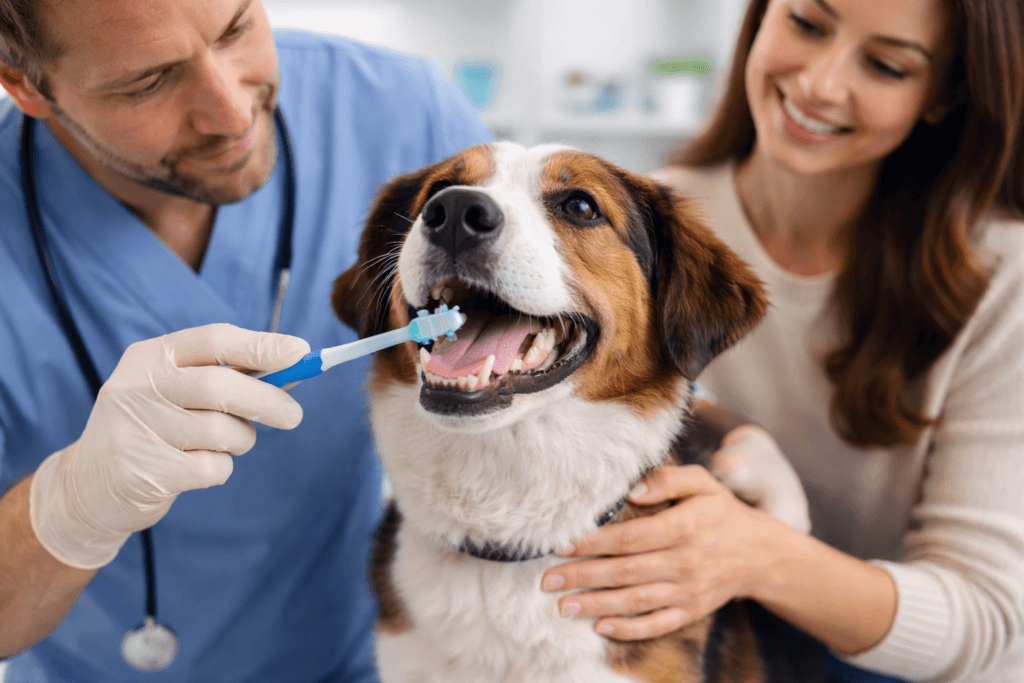
Why daily dental care matters
Plaque, the soft sticky film of bacteria on teeth, forms within hours after your dog eats. If it is not removed by brushing or appropriate chewing, plaque hardens into tartar (calculus). Tartar traps more bacteria under the gum line, leading to gingivitis, periodontitis and bone loss around the teeth. According to veterinary sources, periodontal disease is one of the most common diseases seen in small animal practice and affects the majority of adult dogs.
Good home dental care slows this entire process. Dogs that receive regular toothbrushing and proper dental care at home:
- Need fewer professional dental procedures under anesthesia
- Have less pain and tooth loss as they age
- Often have better breath and are more pleasant to cuddle
- Are less likely to suffer complications associated with severe dental disease
Home care is not a replacement for professional dentistry, but it can greatly extend the time between full cleanings and improve your dog’s quality of life.
What Counts as Dog Dental Care at Home?
home dental care includes everything you do between veterinary visits to keep your dog’s mouth healthy. The foundation is regular toothbrushing with a dog-safe toothpaste. Supporting tools can include dental chews, approved dental diets, oral rinses, water additives and dental wipes, but none of these are as effective on their own as brushing.
Veterinary organizations such as the AVMA and WSAVA emphasize that professional dental cleanings under anesthesia plus daily home care are the ideal combination for managing periodontal disease in dogs.
Signs Your Dog Needs Better Dental Care
Even if you already try some dog dental care at home, your dog may still have hidden periodontal disease. Watch for these warning signs:
- Persistent bad breath (halitosis)
- Red, swollen or bleeding gums
- Yellow or brown tartar along the gum line
- Difficulty chewing, dropping food, or chewing on one side
- Pawing at the mouth or rubbing the face on the floor
- Loose or missing teeth
- Drooling more than usual
- Blood on toys or bones after chewing
- Reluctance to play with chew toys
Any of these signs means your dog needs a full oral examination by a veterinarian. home dental care helps prevent problems and support the gums, but advanced dental disease cannot be cured with brushing or chews alone.
Tools for a comfortable brushing routine
You do not need a cupboard full of expensive products to start home dental care. Begin with these essentials and then add extras if your dog needs them.
1. Dog Toothbrush or Finger Brush
Choose a soft-bristled toothbrush designed for dogs, with a small head and long handle, or a rubber finger brush that slips over your fingertip. Soft bristles are less likely to damage the gums and are more comfortable, which is important for long-term home dental care.
2. Dog-Safe Toothpaste
Never use human toothpaste for home dental care. Human products may contain xylitol, fluoride or foaming agents that are unsafe if swallowed and can even be toxic. Instead, use a veterinary toothpaste that is safe to swallow and comes in dog-friendly flavours like chicken or beef. These flavours help your dog accept brushing as something positive.
3. Dental Chews and Treats
Certain dental chews have been studied and shown to reduce plaque and tartar when used as directed. Look for products recommended by your veterinarian or those carrying approval from recognized veterinary dental organizations. These chews are a useful part of home dental care, but they should supplement toothbrushing, not replace it.
4. Dental Diets and Water Additives
Some prescription and special dental diets have larger kibble or fibrous textures that help mechanically clean the teeth as the dog chews. Water additives and oral gels can reduce bacteria and freshen breath in some dogs. Always talk to your veterinarian before adding these to your dog dental care at home routine, especially if your pet has kidney disease, heart disease or food allergies.
For overall health, combine good dental care with balanced nutrition. If your dog is older, also review our guide on best diet for senior dogs so that their teeth and body stay healthy together.
Start brushing step by step
Many owners worry that their dog will never allow toothbrushing. With patience and small steps, most dogs learn to accept and even enjoy home dental care. The key is making the experience positive and gradual.
Step 1: Get Your Dog Used to Mouth Handling
For a few days, gently lift your dog’s lips and touch the teeth with your finger while you give a treat with the other hand. Keep sessions short and calm. If your dog pulls away, go slower and reward every small success. This step builds trust and prepares your dog for the rest of the home dental care routine.
Step 2: Introduce the Taste of Dog Toothpaste
Place a little dog-safe toothpaste on your finger and let your dog lick it off, then slowly rub it along the gum line. Repeat this for several days until your dog looks forward to the flavour. You are turning toothpaste into a reward, which makes home dental care much easier.
Step 3: Add the Toothbrush
When your dog is comfortable with toothpaste on your finger, switch to a soft toothbrush or finger brush. Gently lift the lip and brush just a few teeth at first, using a small circular motion where the tooth meets the gum line. Praise your dog and give a treat. Short, positive sessions are better than forcing a long one and making home dental care stressful.
Step 4: Build Up to a Full Brushing Routine
Over one to two weeks, gradually increase the number of teeth you brush in one session. Aim to brush the outside surfaces of all teeth at least once daily. Even brushing three to four times per week can significantly improve home dental care and reduce the need for frequent professional cleanings.
How Long Should a Brushing Session Take?
Once your dog accepts toothbrushing, a full session of dog dental care at home usually takes only two to three minutes. Focus mainly on the outer surfaces of the teeth, especially the large upper cheek teeth, where plaque and tartar build up fastest. The inner surfaces are harder to reach and less critical, because the tongue helps keep them cleaner.
Chews and other supporting options
Toothbrushing is the foundation of home dental care, but other tools can support your daily routine:
- Dental wipes: Useful if your dog will not accept a brush yet; you can wrap the wipe around your finger and rub along the teeth and gums.
- Dental rinses: Some chlorhexidine-based rinses or gels can reduce oral bacteria; your vet can advise if they are appropriate.
- Safe chew toys: Rubber toys designed for chewing can help scrape plaque. Avoid very hard items like natural bones, antlers or stones, which can fracture teeth.
- Dental treats: Low-calorie dental treats can be part of your home dental care plan, but watch the total calories, especially if your dog is prone to weight gain.
Remember that no chew, treat or toy has ever been proven to completely replace brushing. They are useful extras, not magic solutions.
Real Case from General Veterinary Hospital Lahore
At General Veterinary Hospital Lahore, we recently treated a six-year-old mixed-breed dog who had never received regular home dental care. The owner noticed a bad smell and a little blood on toys but thought it was “normal dog breath.” During examination we found severe tartar, inflamed gums and loose teeth. Under general anesthesia we performed full-mouth dental X-rays, scaling, polishing and had to extract several painful teeth.
After surgery, the dog was much more comfortable, started eating better and became more active. We then taught the family a simple home dental care routine with daily brushing and appropriate dental chews. At the recheck visit a few months later, the gums were healthier and no new heavy tartar had formed. This case shows how professional dentistry plus consistent home care can completely change a dog’s comfort level.
When a veterinary dental assessment is needed
Even with excellent home dental care, most dogs will eventually need professional dental cleanings under general anesthesia. Home care can slow plaque and tartar accumulation but cannot remove hardened deposits under the gum line or treat advanced periodontal pockets. Merck Veterinary Manual and other expert sources emphasize that proper diagnosis and treatment require an anesthetized oral examination, dental probing and full-mouth radiographs.
During a professional dental procedure your veterinarian will:
- Perform a complete oral exam with probing around every tooth
- Take dental radiographs to evaluate roots and bone
- Ultrasonically scale above and below the gum line
- Polish the teeth to smooth the enamel
- Flush the mouth to remove debris and bacteria
- Extract teeth that are loose, fractured or severely diseased
After this “reset,” your dog dental care at home routine keeps the teeth cleaner and gums healthier for much longer.
How Often Do Dogs Need Professional Dental Cleanings?
The ideal interval between professional cleanings depends on your dog’s breed, age, genetics, diet and how consistent you are with home dental care. Small breeds, brachycephalic (short-nosed) dogs and dogs with crowded teeth usually need more frequent cleanings. Some dogs need professional dentistry once a year, while others with excellent home care may go longer.
Your veterinarian will advise a schedule based on your dog’s mouth and general health. WSAVA Global Dental Guidelines highlight that individualized plans plus daily home care give the best results for long-term oral health in dogs and cats.
Common mistakes to avoid
Even well-meaning owners can make mistakes when trying to do home dental care. Avoid these common problems:
- Using human toothpaste: can contain xylitol or high levels of fluoride, which are dangerous if swallowed.
- Brushing too hard: scrubbing aggressively can cause gum trauma and make your dog fear the brush.
- Relying only on hard bones: chewing on real bones, antlers or stones can fracture teeth instead of cleaning them.
- Ignoring bad breath: assuming that smell is “normal dog breath” instead of a sign that home dental care and professional care are needed.
- Stopping when the dog resists: instead of going slower and using positive training, some owners give up entirely.
If you are unsure whether a product is safe or effective, ask your veterinarian for guidance. They can recommend scientifically supported options and help you design a realistic home dental care plan that fits your lifestyle.
Linking Dental Care with Overall Health
Dental care does not exist in isolation. Dogs with chronic disease, such as kidney or heart problems, are especially sensitive to the effects of oral infection. Good home dental care, routine veterinary checkups, vaccinations and parasite control together form a complete preventive health plan. To learn more about other aspects of your dog’s health, you can also read our guides on the dog vaccination schedule 2025 and complete deworming and parasite control.
A practical daily dental routine
To make dog dental care at home easy to follow, here is a simple daily routine many families find realistic:
- Morning or evening: brush your dog’s teeth for two to three minutes using dog-safe toothpaste.
- After brushing: reward with a small dental chew or low-calorie treat.
- Once or twice a week: inspect the gums, tongue and teeth for redness, swelling, chips or new tartar.
- Monthly: weigh your dog and review their diet and treats to avoid excess calories from dental chews.
- At least once a year: schedule a veterinary exam to review the success of your home dental care routine.
Consistency is more important than perfection. Even if you miss a few days, go back to the routine rather than giving up altogether.
Dog Dental Care at Home: Frequently Asked Questions
How soon should I start dog dental care at home?
It is best to start home dental care when your dog is still a puppy, because young dogs learn to accept toothbrushing easily. However, it is never too late to start. Older dogs can also learn, as long as you go slowly and ensure any painful teeth are treated by a vet first.
Can I clean my dog’s teeth at home instead of professional scaling?
No. home dental care helps prevent plaque and tartar and can manage mild gingivitis, but it cannot remove heavy tartar under the gum line or treat advanced periodontal disease. Professional cleaning under anesthesia is necessary when disease is already present.
How often should I brush my dog’s teeth?
Daily brushing is ideal for home dental care. Plaque forms within hours, and if it is not removed for several days it begins to harden. Brushing three to four times per week is better than nothing, but daily brushing gives the best protection.
What if my dog absolutely refuses toothbrushing?
Some dogs are very sensitive or have had bad experiences. Ask your vet to check for oral pain first. Then try rebuilding your home dental care plan with tiny, positive steps: touching the muzzle, lifting the lip, tapping teeth with a finger, then a brush, always paired with tasty rewards. In the meantime, use dental wipes, rinses and approved chews as temporary support.
Which breeds need the most attention to dental care?
All dogs benefit from dog dental care at home, but toy breeds, brachycephalic breeds (such as Pugs and Shih Tzus), and dogs with crowded or rotated teeth are at higher risk. These dogs often need more frequent professional cleanings plus very consistent home care to protect their teeth.
Can dental disease cause problems in other organs?
Chronic infection and inflammation in the mouth can release bacteria and inflammatory mediators into the bloodstream. Over time, this may contribute to problems in the heart, kidneys and other organs. That is why veterinary organizations emphasize professional dentistry and home dental care as key parts of preventive medicine.
Vet’s Final Thoughts
home dental care is not just about fresh breath or white teeth. It is about keeping your dog comfortable, free from chronic pain and better protected from systemic disease. When families commit to simple daily brushing and sensible dental products, combined with periodic professional dentistry, we see dogs at General Veterinary Hospital Lahore living longer, happier lives with far fewer mouth problems.
If you feel overwhelmed, start small: buy a dog-safe toothpaste, let your dog lick it from your finger, and gradually build a routine. Your dog does not know what plaque or periodontal disease is – but you do, and you can make a huge difference with a few minutes each day.
Get More Vet-Approved Help for Your Dog
📘 Dog & Cat Health Guidebook – Written by a Veterinarian
Want all of our vet-approved advice in one place? Our downloadable dog and cat health guidebooks cover dental care, nutrition, emergencies and preventive medicine in simple language, so you can confidently care for your pet at home.
🚑 Worried About Your Dog’s Teeth or Breath?
If you are seeing bad breath, red gums, broken teeth or pain while chewing, do not wait. A veterinarian can tell you whether home care is enough or if your dog needs a professional dental cleaning.







Great tips! I didn’t realize how dental care could affect other parts of my dog’s health like the heart and kidneys. It makes me think twice about skipping his regular brushing sessions.