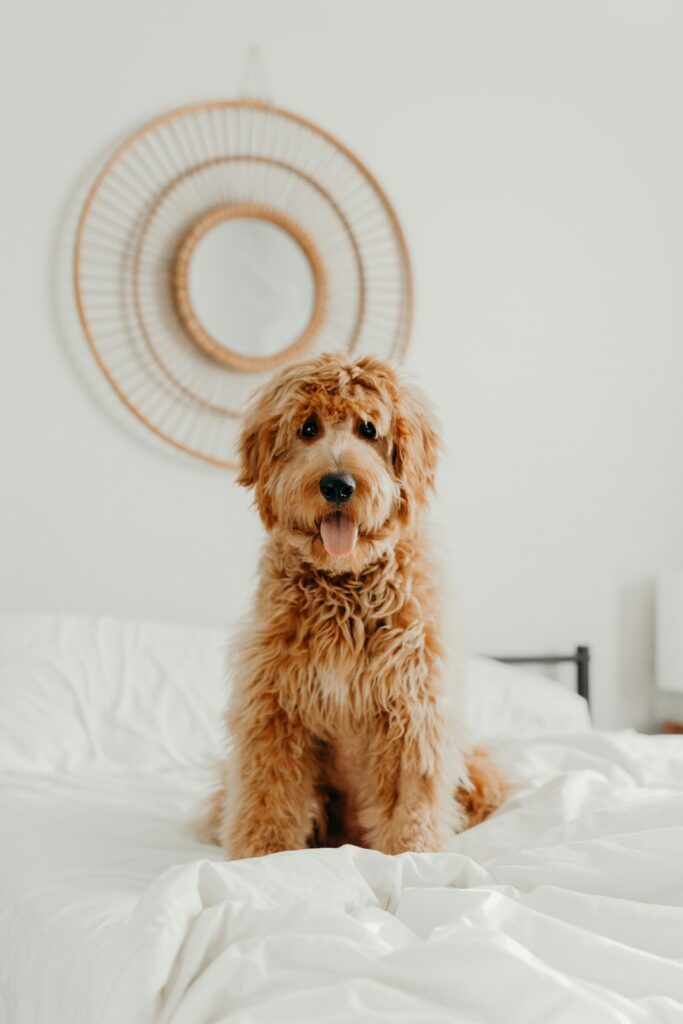
A mini goldendoodle is a smaller Goldendoodle-type cross, usually involving Golden Retriever and smaller Poodle ancestry, rather than a universally standardised size category. The name cannot guarantee an exact adult weight, a particular curl pattern, or an allergy-free companion. Evaluate the individual dog’s health, behaviour, parents where known, and practical care needs. A good home plan leaves room for variation instead of depending on the puppy remaining exactly like the image in a sales advertisement.
Mini goldendoodle: understand the name before the promises
Goldendoodles are crosses developed from Golden Retriever and Poodle ancestry. Smaller varieties may involve different parent sizes and subsequent generations, so ask what the particular description actually means. Terms such as mini, petite, or multigeneration may be used differently by organisations and sellers. A private association can publish its own standard without making every dog sold under the name uniform. Registration or a fashionable label is not proof of health, behaviour, or compatibility with your household.
Ask for clear information rather than relying on a generation code alone. Which dogs are the parents, what are their sizes, what screening was performed, and how has the puppy been raised? A seller should be willing to discuss uncertainty rather than guarantee every desired characteristic. Our Oodle crossbreed guide gives broader context, but the individual mini goldendoodle still needs an assessment of their own. Consider adult rescue dogs as well, because their established size and observed behaviour can make some practical decisions clearer.
Plan for adult size with a margin for variation
Parent measurements and the dog’s growth history can help form an estimate, but they cannot provide an exact promise. A very small puppy photograph is especially poor evidence of adult dimensions. Choose equipment that can be adjusted or replaced as the animal grows, and think about the space the adult will need for comfortable resting and travel. Do not select a dog solely because a seller says they will fit under a particular airline seat or remain easy for a child to carry.
A mini goldendoodle may be smaller than a large Goldendoodle yet still be an active, substantial companion. Housing decisions should include movement through the home, secure outdoor access, transport, and what happens if the dog needs help on stairs. Avoid chasing a smaller adult weight by limiting appropriate food. Growth and body condition need veterinary guidance, not a marketing target. If an exact size limit is essential to your living arrangement, consider whether a known adult dog would be a more reliable match than a puppy chosen from predictions.
Treat the coat as an individual grooming commitment
Coats can vary in curl, density, texture, and shedding. Facial furnishings and a fluffy puppy appearance do not establish how easy the adult coat will be to maintain. Ask a competent groomer to demonstrate suitable tools and how to check the coat near the skin, including friction areas beneath the legs and behind the ears. Brushing the surface while a dense layer tangles underneath can leave the dog looking tidy but uncomfortable. A practical shorter trim may be more manageable than an elaborate appearance.
Introduce handling in brief rewarding stages before the coat becomes difficult. A mini goldendoodle should not first meet a comb during a painful attempt to remove established mats. Make appointments and budget for ongoing professional help where needed, and understand what you must do between visits. If the dog resists grooming more than before, consider skin pain, matting, or another problem rather than assuming a stubborn temperament. Our dog skin and allergy guide explains why redness, odour, and itch deserve attention beyond choosing a different brush.
Separate low shedding from human allergy expectations
No dog breed or cross can be promised to be completely hypoallergenic. Allergic reactions involve more than loose hair, including proteins associated with skin and saliva. A person may react differently to individual dogs, but a curlier coat or generation label is not a medical guarantee. If someone in the household has a relevant allergy, discuss management with their healthcare professional before committing to a dog. A brief symptom-free visit does not necessarily predict life together in the same home.
Be cautious about claims that a mini goldendoodle is safe for every allergic child or that a particular coat test proves no reactions will occur. Our hypoallergenic-dog guide explains the distinction between shedding and allergens. Avoid relying on repeated bathing to fix a poorly considered match, because excessive or unsuitable washing can create skin discomfort. A responsible decision includes the person’s health, the animal’s welfare, realistic cleaning, and a plan if symptoms remain difficult, rather than assuming a fashionable cross resolves the issue automatically.
Review health records from both sides of the ancestry
Crossbreeding does not remove every inherited condition, and offspring can receive health risks associated with either parent. Ask for the exact relevant test results, the dogs they identify, and an explanation of what each result does and does not establish. A general veterinary examination is useful but is not interchangeable with indicated inherited-disease screening. A commercial DNA panel alone also does not evaluate every joint, eye, heart, or other concern that may matter to the parental lines.
Your veterinarian can help interpret records and choose appropriate ongoing care. A mini goldendoodle with unknown ancestry still deserves good healthcare; uncertainty is a reason for a thoughtful plan, not a prediction of disease. Take records from a rescue or previous home to the first appointment and note any signs already observed. Avoid a seller who dismisses all screening because a cross is supposedly healthier by definition. The useful question is what is known about these particular parents and this animal, not whether a broad promotional claim sounds reassuring.
Build a feeding plan around growth and body condition
Choose a complete diet appropriate to life stage and the dog’s actual needs, with your veterinary team’s help where needed. Measure food consistently, include training rewards, and review body condition as the puppy grows. Feeding directions are a starting point rather than a requirement to keep every animal on exactly the same amount. A dog that is eager to eat is not automatically underfed, and restricting a healthy growing puppy to preserve the word mini is not an appropriate goal.
Our puppy-feeding guide explains portions and growth planning in more detail. Keep dietary changes gradual when suitable and record the exact food if a gastrointestinal problem develops. A mini goldendoodle does not require expensive unbalanced homemade meals merely because they are marketed as a special cross. If home preparation is your preference, seek a properly formulated plan rather than assembling a diet from appealing ingredients. Persistent poor appetite, vomiting, diarrhoea, or an unexpected growth pattern should be discussed with the veterinarian.
Teach calm everyday skills rather than expecting instant ease
Retriever and Poodle ancestry does not make every puppy naturally fluent in household rules. Teach toileting, comfortable separation, gentle handling, settling, and lead skills through clear rewarding practice. Break tasks into small steps and manage the environment so mistakes do not become rehearsed habits. A confident-looking puppy can still be frightened by a busy street or unfamiliar person. Social experience should be appropriate and positive rather than a schedule of forced greetings intended to make the animal friendly quickly.
A mini goldendoodle may be attentive to people while still needing to learn how to rest away from constant interaction. Include quiet periods and suitable independent activities within the normal routine. If behaviour is difficult, describe the trigger and context instead of assuming the dog inherited the wrong parent personality. Our pet behaviour guide provides a starting point for identifying fear and frustration. Qualified reward-based help can make the plan practical without using punishment to create an outwardly quiet dog that remains worried underneath.
Match activity to the dog’s health and development
Offer suitable opportunities to sniff, explore, play, learn, and rest. There is no single exercise prescription that fits every dog carrying this label. A growing puppy, an adult with comfortable joints, and a senior with a medical condition need different plans. Ask your veterinarian about individual restrictions when appropriate, and avoid repeated high jumps, hard stopping, or long forced outings simply because a small fluffy dog appears energetic. Enthusiasm does not make every surface or activity comfortable.
Use manageable routes and watch recovery as well as the activity itself. Persistent limping, unusual tiredness, coughing, or reluctance to move deserves attention. A mini goldendoodle that becomes restless indoors may need a better balance of sleep, predictable interaction, and appropriate mental engagement rather than more intense running. Keep games achievable and allow the dog to disengage. A household that enjoys frequent outdoor activity still needs a backup routine for illness, poor weather, and busy working days, so the animal’s care is not dependent on one ideal version of the schedule.
Prepare the home for a curious companion
Secure rubbish, medicines, unsuitable food, cords, and small objects that can be swallowed. Choose a comfortable resting place and create manageable boundaries before the dog arrives. Gates or pens can support supervision when used appropriately, but they should not isolate a puppy for long periods without care and interaction. Make access to water and toileting predictable. Everyone in the home should understand the same basic routine so the dog is not praised for a behaviour by one person and frightened for it by another.
Supervise children and animals thoughtfully, giving the dog a genuine way to leave an interaction. A mini goldendoodle is not a soft toy to carry from person to person. Explain how to avoid disturbing sleep or meals and how to recognise a dog that is turning away. Introductions to other pets need planning according to the individuals involved. A friendly crossbreed reputation cannot guarantee that every dog will enjoy crowded handling, unfamiliar animals, or a new household immediately. Good management protects the relationship while confidence develops at a sensible pace.
Keep teeth, ears and routine healthcare in view
Introduce oral care gradually with appropriate equipment and veterinary guidance about a comfortable mouth. Our dog dental-care guide explains how home care supports professional assessment. Do not assume a dog with a small mouth has less need for dental attention. Watch for altered chewing, odour, or discomfort and seek advice rather than relying on a new treat. Handle ears gently and report persistent scratching, discharge, smell, or head shaking instead of cleaning more deeply without a diagnosis.
Keep vaccinations, parasite prevention, identification, and check-ups matched to lifestyle and local risk. Grooming visits are not a substitute for a veterinary examination, although a groomer may notice a change worth reporting. A mini goldendoodle that looks healthy still benefits from routine review, body-condition checks, and records that make new signs easier to recognise. Save product names and treatment instructions so multiple caregivers do not duplicate applications. Practical preventive care is more dependable than expecting the crossbreed label to provide protection against ordinary dog health problems.
Compare the promise with a realistic working week
Imagine the household on a rainy workday rather than during a weekend puppy visit. Who provides toilet access, grooming practice, meals, and appropriate company? What happens if professional coat care is temporarily unavailable or the adult dog is larger than predicted? Write down those answers before committing. A suitable match can tolerate ordinary uncertainty because the plan is based on resources and flexibility, not an exact combination of size, behaviour, and coat that nobody can guarantee.
If you already share your home with the dog, adapt the routine to what they actually need rather than trying to make them match the original advertisement. A shorter practical coat, a quieter walking route, or more structured rest may improve daily comfort. Keep a record of changes and ask for professional help when needed. Enjoy the individual animal’s personality without using it as proof that all dogs under the same name behave alike. Good care remains specific, observant, and willing to change as the dog grows and ages.
Compare a puppy promise with an adult care budget
Suppose a household chooses a puppy because the seller promises a tiny adult and an almost maintenance-free coat. Before committing, calculate whether the plan would still work if the dog grew larger and required regular professional grooming. Ask who would provide that care during a busy working week and how transport would be managed. A mini goldendoodle should not lose a suitable home because ordinary uncertainty was presented as a guarantee. If those variations would make ownership impractical, pause the decision or consider an assessed adult whose established size, coat and observed behaviour are clearer. A realistic match protects the dog as well as the household from a difficult avoidable surprise.
Frequently asked questions about this cross
Is the name an official size guarantee? No. Ask what the seller or organisation means and consider known parent sizes, growth, and uncertainty. If a strict adult limit is essential, an assessed adult dog can be easier to match than a puppy prediction.
Will every puppy have a non-shedding curly coat? No. Coat characteristics vary, and shedding is separate from whether a person experiences allergy symptoms. Plan for grooming and avoid a purchase that depends on an absolute allergy claim.
Is a cross automatically healthier? No. Individual health depends on several factors, and inherited risks can still be present. Relevant parent screening and ongoing veterinary care remain important.
Can this dog live in a smaller home? The practical fit depends on care, noise, activity, resting space, and the individual dog’s needs rather than the label alone. A small floor area does not remove the need for toilet access, suitable exploration, grooming, companionship, and a calm routine.