
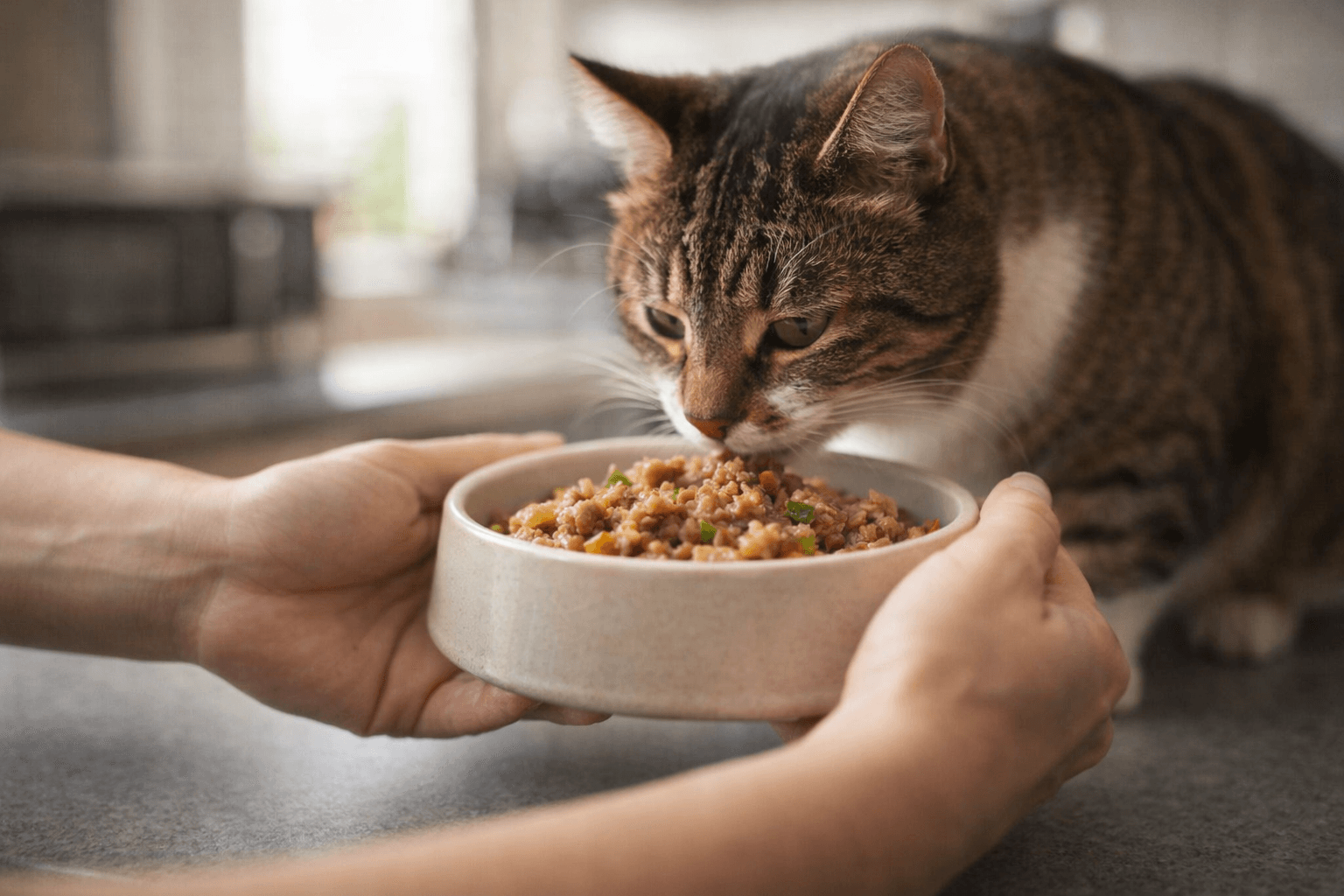
Is Homemade Cat Food a Good Idea for Your Cat?
Cats are strict (obligate) carnivores with very specific nutritional needs. Unlike dogs, they must receive dietary taurine, vitamin A, arachidonic acid, and higher levels of several amino acids and B-vitamins directly from their food. A bowl of chicken and rice that might work as a short-term bland diet for a dog is dangerously incomplete if you use it as long-term home-prepared cat food.Potential advantages of a home-prepared diet
- Control over ingredients: You can avoid particular proteins, grains, or additives that your cat does not tolerate.
- Highly palatable: Warm, freshly prepared homemade cat food can tempt fussy cats to eat during illness (when the recipe is balanced properly).
- Special medical needs: In selected cases, a board-certified veterinary nutritionist may design a therapeutic home-prepared cat food recipe tailored to kidney disease, food allergies, or other problems.
Important nutritional and hygiene risks
- Nutritional imbalance: Most “internet recipes” for home-prepared cat food are low in important nutrients (for example taurine, calcium, and certain vitamins) or provide them in unsafe amounts.
- Vitamin and mineral toxicity: Excess liver, bone, or poorly chosen supplements can cause vitamin A toxicity, skeletal problems, constipation, and other issues.
- Food-borne infection: Raw home-prepared cat food can carry Salmonella, E. coli, parasites, and other pathogens that infect both pets and people.
- Time and cost: Truly balanced home-prepared cat food usually requires precise weighing of ingredients and a veterinary-grade supplement mix. It is often more expensive than high-quality commercial cat food.
When a custom home-prepared diet may be considered
At General Veterinary Hospital Lahore, we occasionally recommend carefully designed homemade cat food, but only in specific situations and always under veterinary supervision.Situations that need a nutrition professional
- Confirmed food allergy or intolerance: when no suitable commercial diet is available and a nutritionist designs a hypoallergenic homemade cat food recipe.
- Extreme pickiness: the cat refuses multiple complete diets but accepts cooked, highly palatable home-prepared cat food.
- Multiple medical problems: for example, kidney disease plus food allergies, where a customised home-prepared cat food formula may be needed.
When an unformulated diet is unsuitable
- Kittens, pregnant or nursing queens: their needs are so high that unbalanced home-prepared cat food can cause rapid, severe deficiencies.
- Cats with chronic disease: kidney disease, diabetes, heart disease, or urinary crystals require precisely formulated diets. Random home-prepared cat food recipes can make these conditions worse.
- “Just to experiment”: trying home-prepared cat food for fun without a professionally formulated recipe is risky, especially long-term.
What Every Cat Diet Must Contain – Including Homemade Cat Food
Before learning how to make home-prepared cat food, it helps to understand the nutritional building blocks that any safe diet must provide.1. High-Quality Animal Protein
Protein is the foundation of home-prepared cat food. Chicken, turkey, rabbit, beef, fish, and eggs are common sources. The recipe must supply enough total protein and the right amino acids, especially taurine and arginine, for heart, eye, and immune health.2. Controlled Fat
Fat provides energy and essential fatty acids. A balanced home-prepared cat food plan uses a suitable level of animal fat plus carefully measured oils (for example fish oil) in vet-approved amounts. Excess energy can contribute to obesity. Feline pancreatitis is not reliably explained by dietary fat alone; an affected cat needs an individual medical and feeding plan rather than automatic fat restriction.3. Limited, Digestible Carbohydrates
Cats do not have a strict requirement for carbohydrates. Small portions of well-cooked rice, pumpkin, or sweet potato sometimes appear in home-prepared cat food recipes to provide energy and fibre, but the overall carbohydrate content should remain low compared with a typical human meal.4. Vitamins, Minerals, and Taurine
This is where many DIY homemade cat food recipes fail. Even if you rotate different meats and organs, they will not naturally provide all vitamins and minerals in the correct amounts. That is why most safe homemade cat food plans include a veterinary-grade vitamin and mineral supplement formulated specifically for cats.5. Water and Moisture
Whether you use commercial diets or home-prepared cat food, hydration is crucial. Many cooked homemade recipes are naturally moist, which is helpful for urinary health, but your cat must still have constant access to fresh, clean water.Illustrative Example: Why a Chicken-and-Rice Diet Needs Review
This is a hypothetical example, not a documented patient from General Veterinary Hospital. Imagine a cat whose main ration is boiled chicken and rice. That menu cannot be assumed to provide complete feline nutrition, even if the cat initially seems well.
If the cat develops weight loss, a coat change or poor appetite, a vet should investigate the signs and obtain the exact diet history. Those signs do not identify a particular deficiency, and a routine blood test should not be described as confirming taurine deficiency without appropriate evidence. Assessment and any testing depend on the individual.
A veterinary nutrition professional can help select a complete food or formulate a complete home-prepared ration. Do not promise a particular recovery timeline or add several supplements blindly. For the feeding consultation, record ingredient weights, preparation, treats and supplements, bring packaging where available and describe what the cat actually eats. Include previous weight measurements and any appetite or stool changes so the plan addresses health as well as food choice.
Treat, topper or complete diet?
Not every use of home-prepared cat food is the same. Understanding the different approaches helps you and your vet choose the safest option for your cat.Occasional Homemade Treats
Small pieces of cooked chicken, fish, or egg can be used as treats a few times per week. This is still technically home-prepared cat food, but it usually makes up less than 10 % of the daily calories. Most healthy cats tolerate this well.Using an occasional topper
Many families use a spoonful or two of tasty home-prepared cat food on top of a complete canned or dry diet. This keeps the commercial food as the nutritional “base” while adding variety and palatability. It is a safer compromise than feeding 100 % home-prepared cat food.When the entire ration is home-prepared
Feeding only homemade cat food is the highest-risk option. If you want to do this, a veterinary nutritionist should design the recipe, and your cat should have regular check-ups and blood tests to ensure the diet remains appropriate over time.Preparing a formulated diet safely
If, after discussion with your veterinarian, you decide to use home-prepared cat food, follow this step-by-step approach to minimise risk.Step 1 – Get a Recipe from a Reliable Veterinary Source
- Ask your vet for a referral to a board-certified veterinary nutritionist.
- Use only recipes that have been formulated specifically as homemade cat food and balanced for your cat’s age and health.
- Avoid random recipes from blogs or social media unless they clearly state that they were created by a veterinary nutritionist and include the correct supplements.
Step 2 – Buy the Correct Supplements
Your recipe will almost certainly include a vitamin-mineral supplement mix designed for home-prepared cat food. Do not substitute with human multivitamins or dog products. The wrong supplement can be just as dangerous as no supplement at all.Step 3 – Weigh, Don’t Guess
Use a digital kitchen scale. For home-prepared cat food, measuring by “cups” or “spoons” is not accurate enough, especially for smaller cats. The safe margin differs by nutrient and formulation; do not assume that an arbitrary percentage of extra supplement is harmless or toxic.Step 4 – Cook Ingredients Properly
- Cook all meats thoroughly unless your nutritionist has specifically approved a raw formula.
- Remove cooked bones completely; they can splinter and cause life-threatening blockages if left in home-prepared cat food.
- Cool food quickly, store in the refrigerator, and discard leftovers after 2–3 days to keep home-prepared cat food safe from bacterial growth.
Step 5 – Introduce Homemade Cat Food Gradually
Mix 10–20 % of the new home-prepared cat food into your cat’s usual diet for a few days, then slowly increase over 7–10 days. Watch for vomiting, diarrhoea, flatulence, or a drop in appetite. If problems appear, return to the previous diet and contact your vet.Step 6 – Monitor Weight, Coat, and Behaviour
Any new homemade cat food plan should be followed by regular weight checks and at least yearly blood tests. Unexpected weight loss, greasy or dull coat, flaky skin, increased thirst, or behaviour changes can all indicate that the homemade cat food is not meeting your cat’s needs.Example of a Vet-Guided Homemade Cat Food Plan
Every cat is different, so there is no single “perfect” recipe. However, most balanced home-prepared cat food plans share a similar structure:- Lean cooked meat or poultry as the main protein source.
- A small amount of organ meat (for example liver) measured very carefully.
- Added fat and fish oil in precise quantities to provide the correct essential fatty acids in home-prepared cat food.
- Optional fibre and small portions of carbohydrate (such as cooked pumpkin or rice) when recommended by your vet.
- The exact vitamin/mineral supplement and quantity specified by the professional who formulated the complete recipe; a general approval label alone is insufficient.
Feeding questions when a cat has a medical condition
Kidney and Urinary Disease
Cats with kidney disease or a history of urinary crystals need very specific levels of protein, phosphorus, sodium, and moisture. Poorly designed home-prepared cat food can worsen these conditions. In many cases a prescription renal diet or urinary diet is safer than any DIY recipe. You can learn more in our article on cat kidney disease .Obesity and Pancreatitis
An energy-dense ration can contribute to obesity if it exceeds the cat’s needs. In cats, the relationship between dietary fat and pancreatitis is not established in the same way often discussed for dogs. Portion control is essential, and your vet may recommend a calorie-restricted commercial diet instead of, or in addition to, homemade meals.Food Allergies
For confirmed food allergies, a carefully designed novel-protein home-prepared cat food recipe may be part of the treatment plan. This should always be supervised by a veterinarian and ideally a nutritionist so that the diet is both hypoallergenic and complete.Homemade cat food: common questions
Can Cats Eat Homemade Dog Food?
No. Dog diets—commercial or homemade—do not contain enough taurine, vitamin A, or certain fatty acids for cats. Feeding dog food as “easy homemade cat food” can lead to heart disease, vision problems, and serious illness.Is Raw Homemade Cat Food Better?
For most households, raw home-prepared cat food is not recommended. Raw meat greatly increases the risk of bacterial and parasitic infection for both your cat and your family. Carefully formulated cooked home-prepared cat food or high-quality commercial diets are usually safer choices.Can I Use Homemade Cat Food as a Topper Only?
Yes, this is often a safe compromise. Many families use a small amount of balanced home-prepared cat food on top of a complete commercial diet. Your vet can help you calculate how much home-prepared cat food is appropriate so it does not unbalance the overall nutrition.What Are the Warning Signs That Homemade Cat Food Is Not Working?
- Weight loss or muscle wasting despite a good appetite.
- Greasy or dull coat, excessive shedding, or dandruff.
- Recurrent diarrhoea, constipation, or vomiting.
- Lethargy, weakness, or reduced activity.
- New urinary problems such as straining or blood in the urine.
When Homemade Cat Food Is Not Enough – Emergency Situations
Regardless of what you feed, seek urgent veterinary attention if your cat:- Stops eating for more than 24 hours.
- Vomits repeatedly or has profuse diarrhoea.
- Strains in the litter tray, especially male cats (possible urinary blockage and life-threatening emergency).
- Shows yellow gums or eyes, seizures, collapse, or extreme weakness.

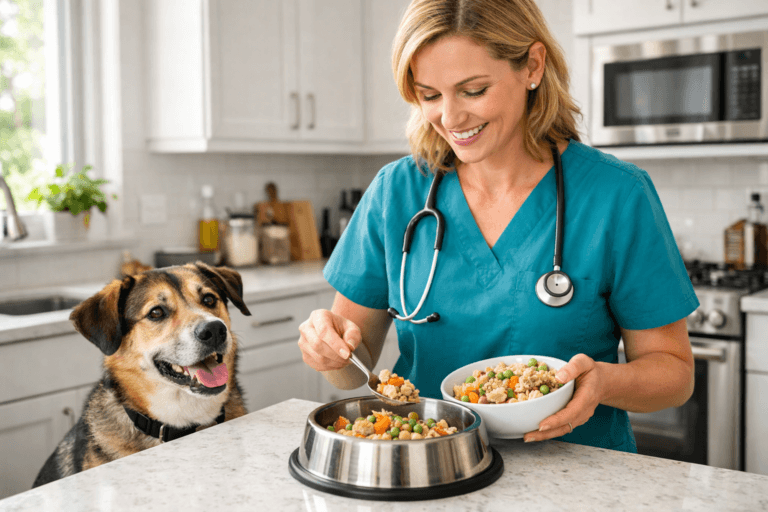


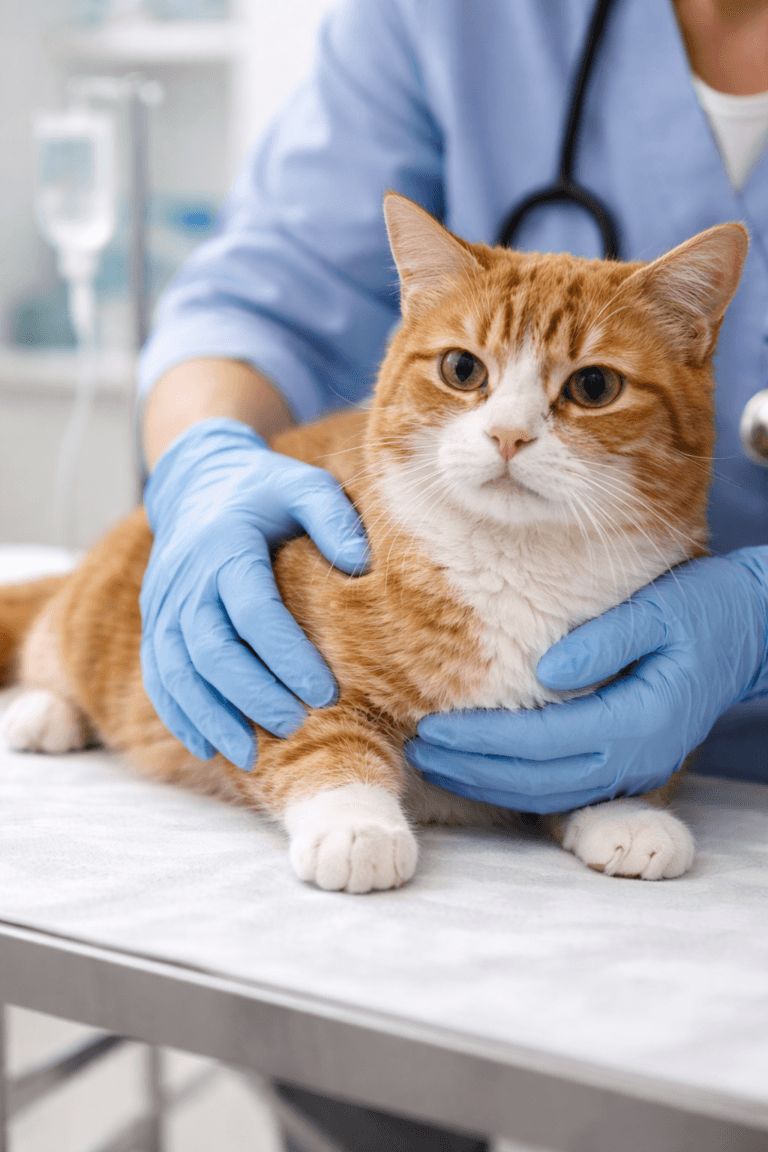

Homemade cat food can definitely be an appealing option, but after reading this, it’s clear that it requires a deep understanding of feline nutrition. It’s a good reminder to consult with a vet before switching to homemade recipes to avoid any risks.