
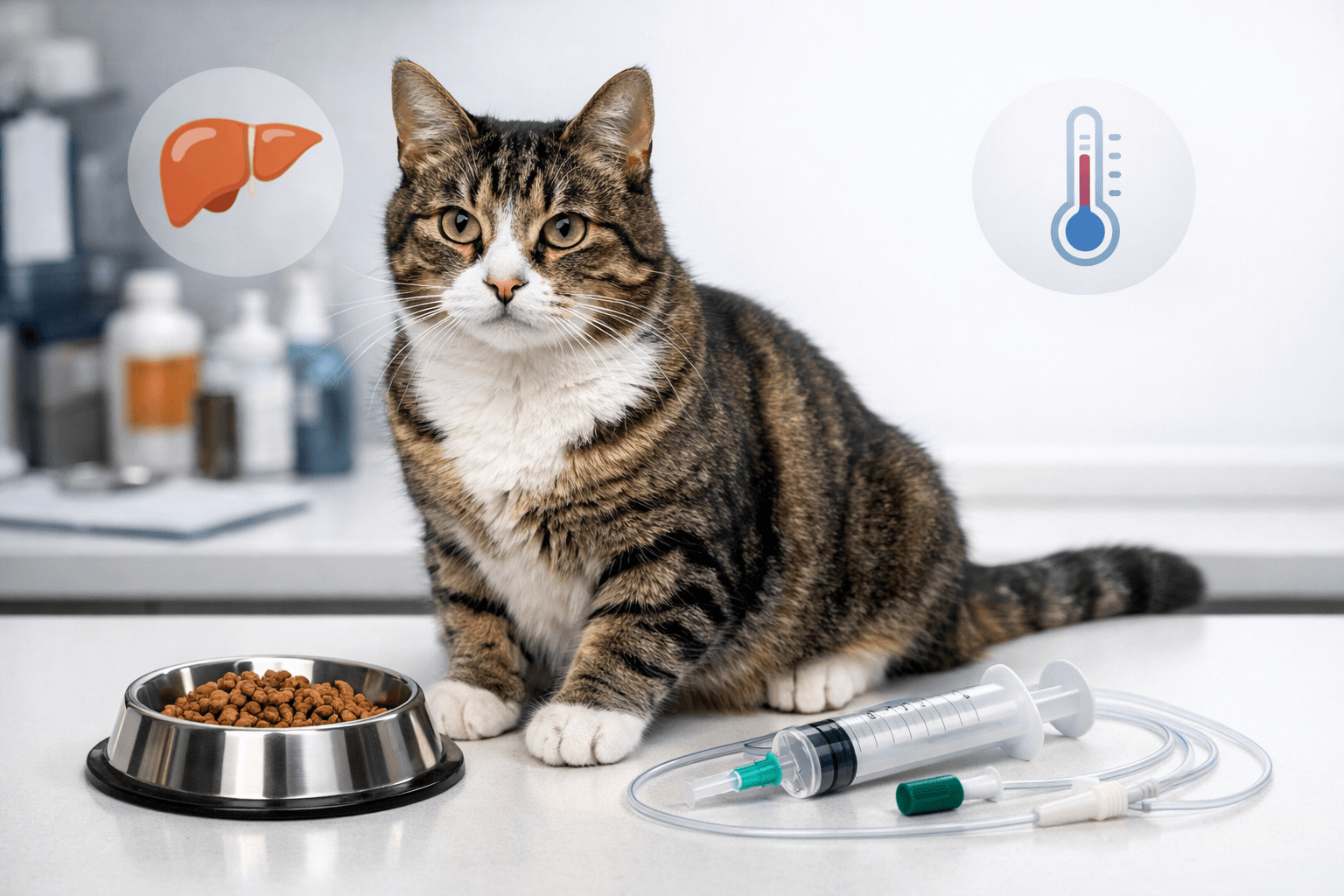
Hepatic lipidosis in cats is one of the most dangerous “silent emergencies” we see because hepatic lipidosis in cats can develop when a cat stops eating for only a few days. The reason hepatic lipidosis in cats is so serious is that a cat’s liver can become overwhelmed by fat mobilization during fasting, leading to liver failure if treatment is delayed. If your cat has not eaten properly for 24–48 hours, this article will help you understand what hepatic lipidosis is, the early warning signs, what to do at home immediately, and when to seek urgent veterinary care.
- What hepatic lipidosis (fatty liver) is and why cats are uniquely at risk
- How fast it can develop when cats stop eating
- Early signs at home (before severe jaundice appears)
- What you can safely do right now to help your cat eat
- When it becomes an emergency (red flags)
- How vets diagnose and treat hepatic lipidosis (including feeding tubes)
- A real anonymized case from General Veterinary Hospital Lahore
Important internal guides to use alongside this article:
- Why Is My Cat Not Eating? (Vet-Approved Causes + When to Worry)
- Home Treatment for Cat Vomiting (Vet Online Guide)
- Complete Cat Nutrition Guide 2025
Contents
- What is hepatic lipidosis in cats?
- Why cats are at risk when they stop eating
- How fast fatty liver can develop
- Early signs owners notice
- Red flags: when it’s an emergency
1) What is hepatic lipidosis in cats?
Hepatic lipidosis (often called fatty liver disease) is a condition where the liver becomes filled with fat and can no longer function properly. The liver is a critical “processing center” for the body: it helps regulate energy, produces proteins, supports digestion, processes toxins, and plays a major role in metabolism. When too much fat accumulates in the liver cells, the liver becomes swollen and stressed. Over time, liver function declines—leading to nausea, weakness, jaundice (yellow gums/eyes), abnormal bloodwork, and potentially liver failure.
This condition is especially important because many cat owners don’t realize that not eating can be more dangerous than the original cause of the appetite loss. The trigger might be stress, a move, dental pain, a stomach upset, pancreatitis, infection, or another illness—but once a cat stops eating, hepatic lipidosis can start to develop.
2) Why cats are uniquely at risk when they stop eating
Cats are not small dogs. Their metabolism is different. When a cat stops eating, the body tries to “survive the famine” by breaking down stored fat for energy. That fat travels to the liver to be processed. In cats, the liver can struggle to handle the sudden fat load, especially if the cat is overweight or if the cat has been eating poorly for days. The result is fat buildup inside liver cells—hepatic lipidosis.
Several factors increase risk:
- Overweight cats: more fat is mobilized during fasting, increasing liver burden.
- Stressful events: moving house, new pets, boarding, loud construction, travel.
- Vomiting or nausea: cats stop eating quickly when nauseated.
- Underlying illness: pancreatitis, infections, dental pain, kidney disease, diabetes.
- Sudden diet change: some cats refuse unfamiliar food completely.
If you’re unsure why your cat stopped eating, start here: Why Is My Cat Not Eating?
3) How fast can fatty liver develop?
There is no exact “day number” that applies to every cat, but hepatic lipidosis can develop quickly once a cat eats too little for several days. Some cats are vulnerable earlier—especially overweight cats or cats that were already ill and dehydrated. That’s why veterinarians take anorexia (not eating) seriously in cats.
| Time not eating well | What may be happening | What you should do |
|---|---|---|
| 24 hours | Early dehydration/nausea risk; appetite may drop further | Start appetite support at home + contact a vet if no improvement |
| 48 hours | Energy deficit increases; weakness and nausea often worsen | Vet assessment strongly recommended |
| 3–5 days | Higher risk zone for hepatic lipidosis, especially if overweight | Urgent veterinary care; likely needs assisted feeding |
4) Early signs owners notice (before severe yellowing)
Many owners expect fatty liver to start with obvious yellow eyes. In real life, the earliest signs are often vague and easy to miss:
- Reduced appetite or sniffing food then walking away
- Hiding more than usual, less social interaction
- Low energy, sleeping more, less grooming
- Mild vomiting or repeated lip-licking (nausea)
- Weight loss (can be quick if appetite is poor)
- Dehydration (dry gums, smaller urine output, constipation)
If vomiting is part of the picture, use this guide: Home Treatment for Cat Vomiting
5) Red flags: when it’s an emergency
- Not eating for 48 hours (or eating almost nothing for 3+ days)
- Yellow gums, yellow eyes, or yellow skin
- Repeated vomiting, especially with weakness or dehydration
- Severe lethargy, collapse, or trouble standing
- Drooling, confusion, or unusual behavior
- Very overweight cat with sudden appetite loss
If you need a broader “when to worry” framework, this is your best internal reference: Why Is My Cat Not Eating?
6) What causes hepatic lipidosis (the “trigger list”)
Hepatic lipidosis usually starts with a reason the cat stopped eating. Some triggers are obvious (vomiting), while others are subtle (dental pain). The most common categories include:
| Trigger category | Examples | Clues you may notice |
|---|---|---|
| GI nausea | Gastritis, hairball issues, pancreatitis | Vomiting, lip-licking, swallowing, hiding |
| Stress/anxiety | Move, new pet, visitors, construction noise | Hiding, eating less, litter box changes |
| Pain | Dental disease, injury, arthritis | Dropping food, chewing one side, less grooming |
| Infection | Respiratory infection, fever, abscess | Warm ears, lethargy, not interested in food |
| Metabolic disease | Diabetes, kidney disease, hyperthyroidism | Weight loss, thirst changes, appetite changes |
If you’re trying to figure out why your cat stopped eating, this internal guide helps you narrow it down safely: Why Is My Cat Not Eating?
7) The safest “get them eating” plan at home (before your appointment)
If your cat has only missed one meal, the goal is to restore normal eating quickly. If your cat has already missed a full day, the goal becomes “stop the spiral” while you arrange veterinary assessment. These steps are generally safe for most cats.
Hepatic lipidosis in cats: Step A: Reduce nausea triggers
- Offer food in a quiet area away from noise, dogs, and busy foot traffic.
- Clean bowls and use a wide, shallow dish (some cats dislike whisker contact).
- Remove strong smells in the room (air fresheners, cleaners).
Step B: Offer highly palatable, warm food
Warming increases aroma and can stimulate appetite:
- Warm wet food slightly (not hot) and offer small fresh portions.
- Try a different texture: pâté vs chunks vs shredded.
- Offer small frequent meals rather than one large plate.
Step C: Hydration support (without forcing)
- Ensure fresh water is available in multiple spots.
- Consider adding extra water to wet food to increase moisture intake.
- Do not force water into the mouth if your cat is struggling or vomiting.
Step D: Avoid sudden “diet wars”
Many owners keep changing foods rapidly. That can cause food aversion. If your cat shows interest in one food, continue it consistently while you seek veterinary help.
Nutrition guidance (safe structure and portions) is here: Complete Cat Nutrition Guide 2025
8) What NOT to do (common mistakes that worsen outcomes)
- Do not force-feed into the mouth with a syringe unless a vet has instructed you (aspiration risk).
- Do not use random human medicines for nausea or pain (many are toxic to cats).
- Do not “wait it out” once you reach the 48-hour mark without eating.
- Do not fast an overweight cat as a weight-loss plan—crash dieting is a major trigger for fatty liver.
9) When a feeding tube becomes the safest option
This is the part many owners fear, but feeding support is often what saves cats with hepatic lipidosis. If the cat is nauseated and refuses food, the liver keeps accumulating fat. Assisted feeding provides consistent calories and protein so the liver can recover.
A feeding tube is not “giving up.” In many cases, it is the safest, gentlest way to deliver nutrition while the underlying trigger is treated (nausea control, pain control, fluids, antibiotics if needed). Tubes also reduce stress compared to repeated force-feeding attempts.
10) What tests vets use to diagnose hepatic lipidosis
Veterinary diagnosis usually includes a combination of history (not eating), physical exam (weight loss, dehydration, jaundice), and tests to evaluate liver function and rule out other diseases.
| Test | What it helps with | Why it matters |
|---|---|---|
| Bloodwork (chemistry) | Liver enzymes, bilirubin, electrolytes | Shows liver stress and dehydration effects |
| CBC | Infection/inflammation clues | Helps identify underlying trigger |
| Urinalysis | Hydration and kidney screen | Important because dehydration worsens nausea |
| Ultrasound | Liver appearance + other organ evaluation | Helps rule out blockages/masses |
11) Treatment: what actually reverses hepatic lipidosis
The core treatment for hepatic lipidosis is nutrition support plus treating the cause of appetite loss. Most cats need multiple steps at the same time. The liver cannot recover without consistent calories and protein.
Typical treatment components
| Treatment | Purpose | Why it matters |
|---|---|---|
| Fluids | Correct dehydration, improve circulation | Dehydration worsens nausea and weakness |
| Anti-nausea medication | Reduce vomiting and nausea | Cats won’t eat if they feel sick |
| Appetite stimulant (when appropriate) | Encourage voluntary eating | Helps some cats, but not enough alone in advanced cases |
| Assisted feeding (often via feeding tube) | Deliver consistent calories/protein | The main driver of recovery |
| Treat underlying trigger | Fix the reason the cat stopped eating | Prevents relapse after liver improves |
If vomiting is part of the problem, use your internal reference for safe home signals and urgency: Home Treatment for Cat Vomiting
12) Feeding tube basics (what owners need to know)
Feeding tubes can sound scary, but many cats tolerate them surprisingly well. Tubes allow the cat to rest while still getting the nutrition needed to reverse fatty liver. Tubes are also safer than repeated mouth syringe-feeding attempts.
How feeding usually works at home
- You feed a prescribed diet in small portions several times daily.
- Feeds are increased gradually to avoid “refeeding syndrome” (electrolyte shifts).
- You flush the tube with water before and after feeding as instructed.
- You monitor appetite, vomiting, stool, and energy daily.
13) Home care after discharge (the “recovery checklist”)
Once your vet says your cat is stable at home, your job is to protect the recovery process. Many cats relapse when owners stop feeds too early or when stress triggers appetite loss again.
- Keep feeding consistent (even if the cat eats a little on their own).
- Use a quiet recovery room with easy access to litter, water, and resting spots.
- Track daily: appetite, vomiting, stool, energy, and body weight (weekly weigh-ins help).
- Follow recheck plans for bloodwork to confirm liver recovery.
For long-term diet structure after recovery, use: Complete Cat Nutrition Guide 2025
14) Real case from General Veterinary Hospital Lahore (anonymized)
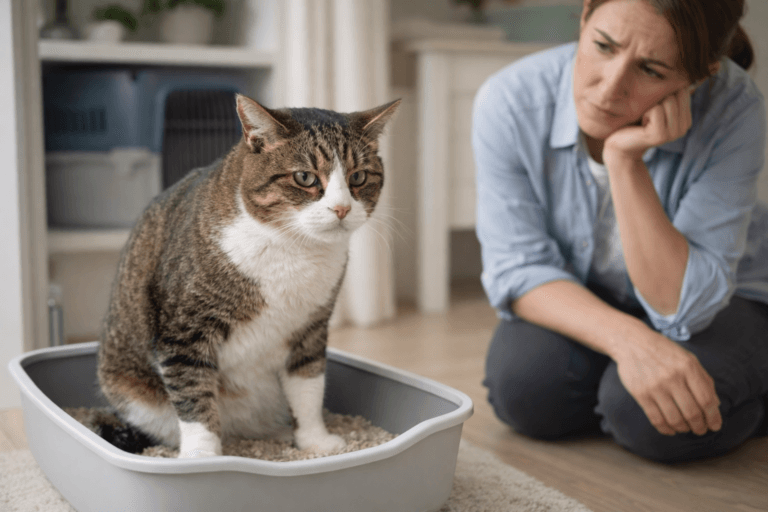
A middle-aged overweight indoor cat was brought to General Veterinary Hospital Lahore after a household change (new pet + schedule disruption). The owner reported the cat had been eating very little for several days, hiding more, and occasionally vomiting. The family tried multiple new foods, but the cat would sniff and walk away. By the time the cat arrived, the cat was dehydrated, weak, and starting to show early yellowing around the gums.
We stabilized the cat with fluids and nausea control, then confirmed liver involvement on bloodwork. At that point, the most important step was nutritional rescue. Because voluntary eating was not reliable, we recommended assisted feeding so calories could be delivered consistently while the trigger issues were treated and the cat’s nausea was controlled. With structured feeding, hydration support, and a strict calm recovery environment, the cat gradually regained strength. Follow-up checks showed improving liver markers and reduced jaundice. The owner’s biggest learning point was this: the original trigger might have been stress and nausea, but the real danger was the “not eating” spiral that created fatty liver. Once nutrition was stable, recovery became possible.
15) FAQs
How long can a cat safely go without eating?
Cats should not “fast.” If your cat has not eaten normally for 24–48 hours, contact your vet. Overweight cats are at higher risk of fatty liver.
Is hepatic lipidosis curable?
Many cats recover well with early treatment and consistent nutrition support, especially when the underlying trigger is treated. Delays reduce success.
My cat is overweight—should I put them on a strict diet?
Weight loss in cats must be slow and supervised. Crash dieting can trigger hepatic lipidosis. Use a structured plan: Complete Cat Nutrition Guide 2025
What if my cat vomits and won’t eat?
Vomiting and appetite loss together raises urgency. Use this internal guide for safe steps and red flags: Home Treatment for Cat Vomiting
What if my cat is “picky” and skips meals often?
Frequent meal-skipping deserves a vet check, especially in older cats or overweight cats. Repeated appetite dips can lead to dangerous fasting cycles.
16) Final note
Internal references:



2 Comments