
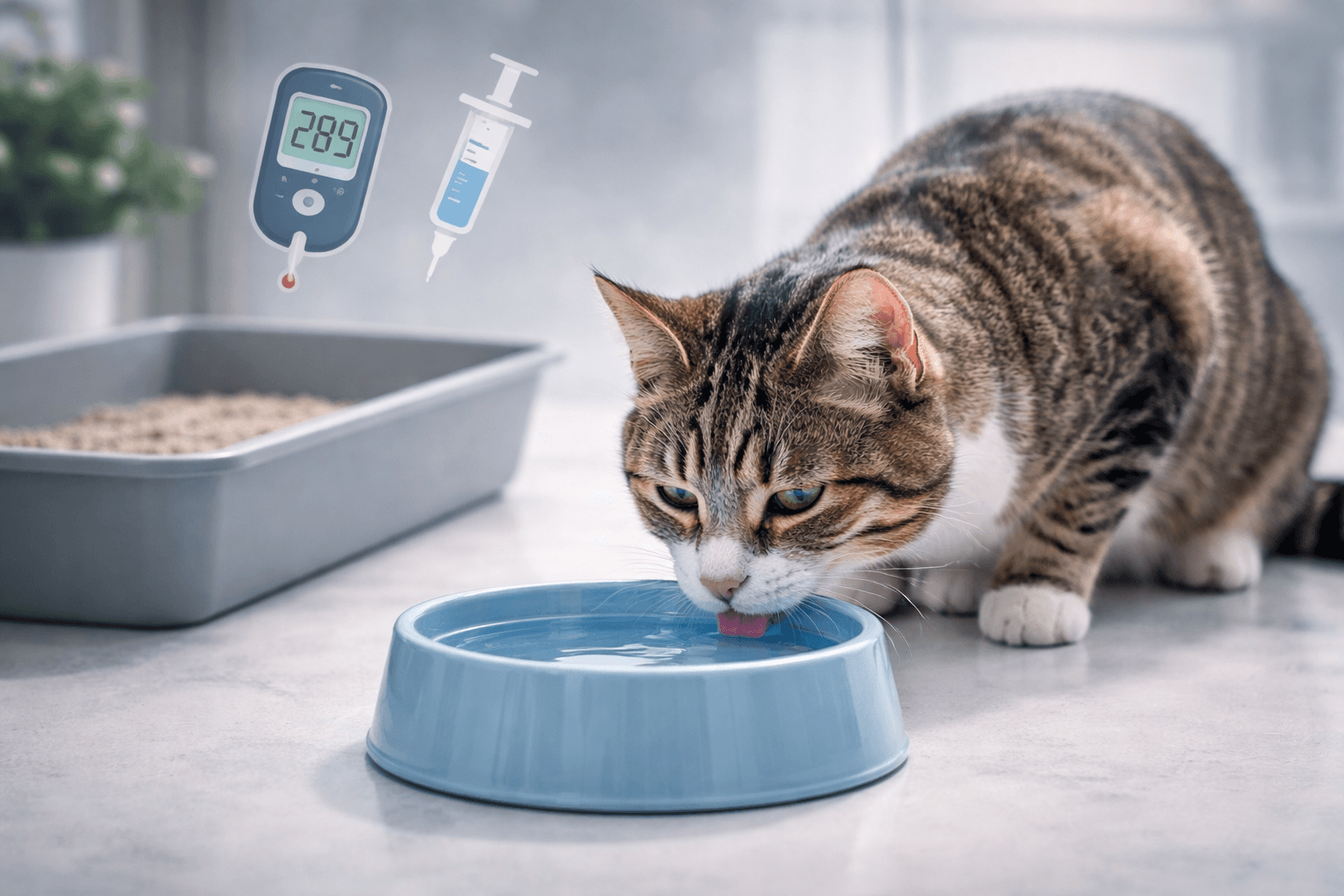
Diabetes in cats often shows up quietly at home: a cat that drinks more, urinates more, loses weight, or suddenly seems “old.” The tricky part is that diabetes in cats can look like other common problems (kidney disease, stress, infections), so many owners miss the early phase. The good news is that with early diagnosis and a consistent plan, many cats with diabetes in cats feel better quickly—and some even go into remission. This guide explains the early signs, how vets confirm diabetes in cats, what to do right now, and what diet and insulin care looks like in real life.
- The most common signs of diabetes in cats (and what owners notice first)
- Diabetes vs kidney disease vs “stress peeing” (how to tell)
- How vets test and confirm diabetes (blood + urine)
- What a safe home plan looks like before and after diagnosis
- Diet basics and insulin basics (no confusing jargon)
- A real anonymized case from General Veterinary Hospital Lahore
Related internal guides you may want to keep open while reading:
- Cat Kidney Disease: Symptoms, Stages & Treatment
- Why Is My Cat Not Eating? (Causes + When to Worry)
- Complete Cat Nutrition Guide 2025
Cat diabetes symptoms: Contents
- What is diabetes in cats?
- Why cats develop diabetes (risk factors)
- Signs and symptoms owners notice
- When diabetes becomes an emergency
- Diabetes look-alikes (kidney disease and more)
Cat diabetes symptoms: 1) What is diabetes in cats?
Diabetes mellitus in cats is a condition where the body cannot properly use glucose (blood sugar) for energy. In many cats, the main issue is that the cat’s body becomes resistant to insulin, or the pancreas does not produce enough effective insulin. Insulin is the hormone that helps glucose move from the bloodstream into cells. When insulin isn’t working properly, glucose builds up in the blood, and the body starts “dumping” sugar into the urine. That sugar pulls water with it—this is why many diabetic cats drink more and urinate more.
Over time, untreated diabetes can lead to weight loss (even with a good appetite), weakness, dehydration, urinary infections, and serious emergencies. The encouraging part is that cats often respond very well to consistent treatment, and many improve dramatically once blood sugar becomes stable.
Cat diabetes symptoms: 2) Why cats develop diabetes (risk factors)
Diabetes usually develops from a combination of genetics, lifestyle, and underlying health factors. These are the most common risk factors we see:
- Excess weight: obesity increases insulin resistance.
- Indoor lifestyle with low activity: fewer calories burned, higher risk of weight gain.
- Age: diabetes is more common in middle-aged to older cats.
- High-carb dry diets (in some cats): diet isn’t the only factor, but it can contribute in vulnerable cats.
- Steroid medications: repeated or high-dose steroids can trigger diabetes in predisposed cats.
- Other illnesses: chronic inflammation can increase insulin resistance.
Cat diabetes symptoms: 3) Signs and symptoms owners notice
Most owners don’t notice “high blood sugar.” They notice behavior and routine changes. Here are the most common signs of diabetes in cats:
| Sign | What it can look like at home | Why it happens |
|---|---|---|
| Drinking more | Empty water bowl faster, visits water source often | Sugar in urine pulls water out of the body |
| Urinating more | Litter box heavier, clumps larger, accidents outside box | Body excretes excess glucose in urine |
| Weight loss | Cat looks thinner along spine/hips even if eating | Cells can’t use glucose properly; body breaks down fat/muscle |
| Hungry appetite | Begging more, food obsession | Body feels “starved” despite high blood sugar |
| Low energy | More sleeping, less play, “not themselves” | Dehydration + poor energy use |
Some cats also develop urinary tract infections because sugar in urine can promote bacterial growth. Others show coat changes (dull coat) or weakness over time.
Cat diabetes symptoms: 4) When diabetes becomes an emergency
Most diabetic cats are stable at first, but diabetes can become dangerous if dehydration, infection, or insulin imbalance occurs. Treat these as urgent:
- Repeated vomiting, severe diarrhea, or not keeping water down
- Extreme weakness, collapse, or deep lethargy
- Fast breathing, unusual breathing effort, or “sweet/acetone” breath smell
- Seizures, tremors, disorientation (possible dangerously low blood sugar)
- Not eating for 24 hours in a known diabetic cat
If your cat is not eating, this guide helps you judge urgency: Why Is My Cat Not Eating?
Cat diabetes symptoms: 5) Diabetes look-alikes (kidney disease and more)
“Drinking more + peeing more” (often called PU/PD) is a common symptom cluster. Diabetes is one cause, but kidney disease is another major one—especially in older cats. Hyperthyroidism, certain medications, and infections can also cause similar signs. That’s why testing is essential instead of guessing.
If your cat is older and showing increased thirst and weight loss, kidney disease must be considered too: Cat Kidney Disease: Symptoms, Stages & Treatment.
Cat diabetes symptoms: 6) How vets confirm diabetes in cats (tests you can expect)
Diabetes should never be diagnosed from symptoms alone. Vets confirm diabetes by showing high blood glucose plus glucose in the urine (and often other supportive findings). The key tests include:
| Test | What it checks | Why it matters |
|---|---|---|
| Blood glucose | Sugar level in blood | High glucose supports diabetes, but stress can temporarily raise it |
| Urinalysis | Glucose in urine, ketones, infection signs | Glucose in urine strongly supports diabetes; ketones can signal higher risk |
| Fructosamine | Average blood sugar over ~1–3 weeks | Helps distinguish true diabetes from “stress hyperglycemia” |
| Blood chemistry + CBC | Organ function, hydration, infection markers | Finds complications and rules out similar diseases (kidney, infection) |
Because kidney disease can mimic diabetes symptoms, vets often check kidney markers at the same time. This internal guide helps you understand kidney disease signs too: Cat Kidney Disease: Symptoms, Stages & Treatment.
7) What you can do at home right now (safe steps before diagnosis)
If you suspect diabetes, the safest approach is to prepare for your vet visit without trying risky home “treatments.” Here’s what helps:
- Track water intake and litter box output for 2–3 days (approximate is fine).
- Note appetite changes (hungry, normal, reduced).
- Weigh your cat if possible (weekly weights help later too).
- Do not start insulin at home unless a vet has diagnosed diabetes and prescribed a plan.
8) The 3 biggest home mistakes I see
- Waiting too long because the cat still eats or still jumps sometimes.
- Changing everything at once (new food + new schedule + new supplements) making it hard to see what helps.
- Assuming it’s kidney disease (or assuming it’s diabetes) without testing.
9) Diet basics for diabetic cats (simple, practical)
Diet is a powerful tool in feline diabetes because cats are naturally designed for higher-protein, lower-carbohydrate eating. Many diabetic cats do better on a consistent diet plan that supports stable blood sugar and helps with weight control.
| Goal | What it looks like in real life | Why it helps |
|---|---|---|
| Consistency | Same food, same feeding routine daily | Reduces big glucose swings |
| Healthy weight | Structured portions (not free-feeding for most cats) | Weight loss improves insulin sensitivity |
| High protein focus | Vet-guided diet choice; often more wet food is used | Supports stable energy and may reduce post-meal spikes |
If you want a full, practical feeding framework (portions, frequency, diet types), use: Complete Cat Nutrition Guide 2025.
10) Insulin basics (what owners need to know)
Many diabetic cats need insulin, especially at the start. Insulin is not “failure”—it’s often what gives the body a chance to heal and stabilize. Your vet will select the insulin type and starting dose, then adjust based on follow-up checks and your cat’s response. The key owner skills are consistency, safe injection technique, and monitoring for low blood sugar signs.
11) Home monitoring (simple habits that improve outcomes)
Diabetic cats do best when owners follow a predictable routine and track a few key signals. You don’t need to become a “medical professional” to do this well—simple consistency is the biggest win.
| What to monitor | How often | Why it matters |
|---|---|---|
| Appetite | Daily | Sudden appetite drop can signal illness or instability |
| Water intake / urination | Daily/weekly trend | Improving thirst/urine often means better control |
| Body weight | Weekly | Unexpected weight loss suggests poor control or another disease |
| Energy and gait | Daily | Weakness or wobbliness can signal hypoglycemia |
If your diabetic cat stops eating, treat it seriously: Why Is My Cat Not Eating?
12) Can cats go into remission?
Some cats can go into diabetic remission, meaning they maintain normal blood sugar without insulin for a period of time. Remission is more likely when diabetes is diagnosed early and addressed with a consistent plan (diet adjustments, weight control, and careful insulin management if needed). Remission is not guaranteed, and it doesn’t mean “cured forever,” but it is one reason we take early testing and structured care seriously.
13) Diabetes and kidney disease (why vets often check both)
Kidney disease and diabetes can overlap in older cats, and both can cause increased drinking and urination. Some cats have both conditions, which changes diet and hydration planning. If kidney disease is present, treatment priorities may shift (hydration support becomes even more important). Use this internal guide to understand kidney disease patterns: Cat Kidney Disease: Symptoms, Stages & Treatment.
14) Real case from General Veterinary Hospital Lahore (anonymized)
A middle-aged indoor cat was brought to our clinic because the family noticed two changes: the litter box clumps had become much larger, and the cat was draining the water bowl faster than usual. They also felt the cat had become thinner along the back despite eating well. On exam, the cat was mildly dehydrated and had lost weight compared to a prior visit.
We ran blood and urine tests. Blood glucose was high, and the urine showed glucose as well—strongly supporting diabetes. We also checked kidney markers because thirst/urination can be kidney-related too. Kidney values were acceptable, so we focused on diabetes management: a structured feeding plan, hydration support, and an insulin plan with careful follow-up checks. Within the first couple of weeks, the family reported that thirst and urination decreased, appetite became more “normal,” and energy improved. The biggest reason this case went smoothly was consistency—the family followed the same schedule daily and contacted us immediately when they had questions instead of changing doses on their own.
15) FAQs about diabetes in cats
Cat diabetes symptoms: How do I know if my cat drinks “too much”?
Owners usually notice trends: the water bowl empties faster, the cat visits water sources more often, and litter box output increases. If you notice a clear change from your cat’s normal habits, that’s enough reason to test.
Is diabetes painful for cats?
Diabetes itself isn’t usually “painful,” but dehydration, infections, nausea, and weakness can make a cat feel unwell. The goal of treatment is to restore normal comfort and energy.
What if my cat is drinking more but also eating less?
That combination needs prompt evaluation. It can occur with diabetes complications, kidney disease, infections, or other illnesses. Use: Why Is My Cat Not Eating?
Do I need a special diet?
Your vet may recommend a specific diet approach based on your cat’s weight, preferences, and any other medical issues. A strong starting point for understanding options is: Complete Cat Nutrition Guide 2025.
Can I adjust insulin myself if my cat seems better?
No. Dose changes should be guided by your vet because “seems better” can be misleading, and lowering or increasing insulin incorrectly can be dangerous.
16) Final note
Helpful internal guides:







4 Comments